

TL;DR:
- Focus on consistent, evidence-backed nutrition, warm-up, hydration, and key supplements for optimal performance.
- Carbohydrates and moderate protein before exercise fuel high-intensity efforts and prevent muscle breakdown.
- Proper warm-up, hydration, and targeted supplements like caffeine, creatine, and beta-alanine enhance workout outcomes.
Every athlete has been there: three browser tabs open, five influencers contradicting each other, and a stack of supplements with no clear plan. The noise around pre-workout preparation is genuinely overwhelming. Yet the research paints a surprisingly clear picture. A handful of well-tested strategies, applied consistently, will outperform any complicated protocol built on guesswork. This article cuts through the clutter and delivers the most effective, evidence-backed pre-workout tips available. Whether you are a competitive bodybuilder, an endurance runner, or a strength athlete pushing for new personal records, these strategies will sharpen your preparation and help you perform when it counts.
Table of Contents
- Prioritise carbohydrates and protein for fuel
- Master your warm-up routine
- Harness the power of key pre-workout supplements
- Balance hydration and smart food choices
- Our take: Pre-workout routines are simpler—and more personal—than you think
- Take your training further with expert solutions
- Frequently asked questions
Key Takeaways
| Point | Details |
|---|---|
| Carbs are king | Use easily-digested carbohydrates before training to boost energy and maintain performance. |
| Warm-ups prevent injury | Dynamic warm-ups significantly reduce injury risk and prime your body for action. |
| Supplements work with strategy | Caffeine, creatine, and beta-alanine enhance workouts only when used intelligently and in the correct doses. |
| Hydration equals results | Drinking enough water with electrolytes is vital, especially for morning sessions or heavy sweat loss. |
Prioritise carbohydrates and protein for fuel
Nutrition is the foundation of every great session. Get it wrong and even the best warm-up or supplement stack cannot rescue your performance. Get it right and you will feel the difference from the first set or the first kilometre.
Carbohydrates are your body’s preferred fuel during high-intensity work. Research confirms that pre-workout carbohydrate intake should fall between 0.5 and 2 g per kilogram of bodyweight, consumed one to two hours before training, alongside moderate protein at 0.3 to 0.44 g per kilogram. The range is wide because your needs shift with session intensity. A 40-minute strength session demands far less carbohydrate than a 90-minute endurance event.
Protein earns its place in your pre-workout meal, but its primary role is preventing muscle breakdown rather than providing immediate energy. Studies show that carbs outperform protein pre-workout for fuelling performance, while protein’s effect on muscle protein synthesis can be achieved effectively post-session too. That said, including a moderate protein source before training still offers protective benefits, particularly for bodybuilders in a calorie deficit.
Here is a practical breakdown of meal choices based on training type:
- Strength training: Rice cakes with turkey, oats with whey protein, or a banana with Greek yoghurt
- Endurance events: Porridge with honey, white pasta with light sauce, or sports drinks with fast-digesting carbs
- Bodybuilding sessions: Chicken with jasmine rice, or a blended protein smoothie with oats and fruit
- Morning training: A smaller, fast-digesting option like white toast with jam and a protein shake
Food timing matters as much as food choice. Larger meals need two hours minimum to digest comfortably. Smaller snacks can be consumed 30 to 60 minutes before training without issue. For guidance on optimising workout nutrition across different training goals, the principles are consistent: keep fat and fibre low pre-session and lean into easy-digesting carbs.
Pro Tip: Adjust your carbohydrate intake upward on longer or more intense sessions and reduce it for shorter, lighter days. There is no single magic number. Track how you feel and dial in from there. For practical pre-workout meal ideas suited to different schedules, it pays to plan ahead rather than improvise on the day.
With a foundation in nutrition established, it is essential to recognise that what you eat only goes so far unless your body is sufficiently prepared to perform.
Master your warm-up routine
A proper warm-up is not just a box to tick before the real work begins. It is a genuine performance tool that changes how your muscles contract, how your joints move, and how your nervous system fires. Many athletes undervalue it until an injury forces the issue.
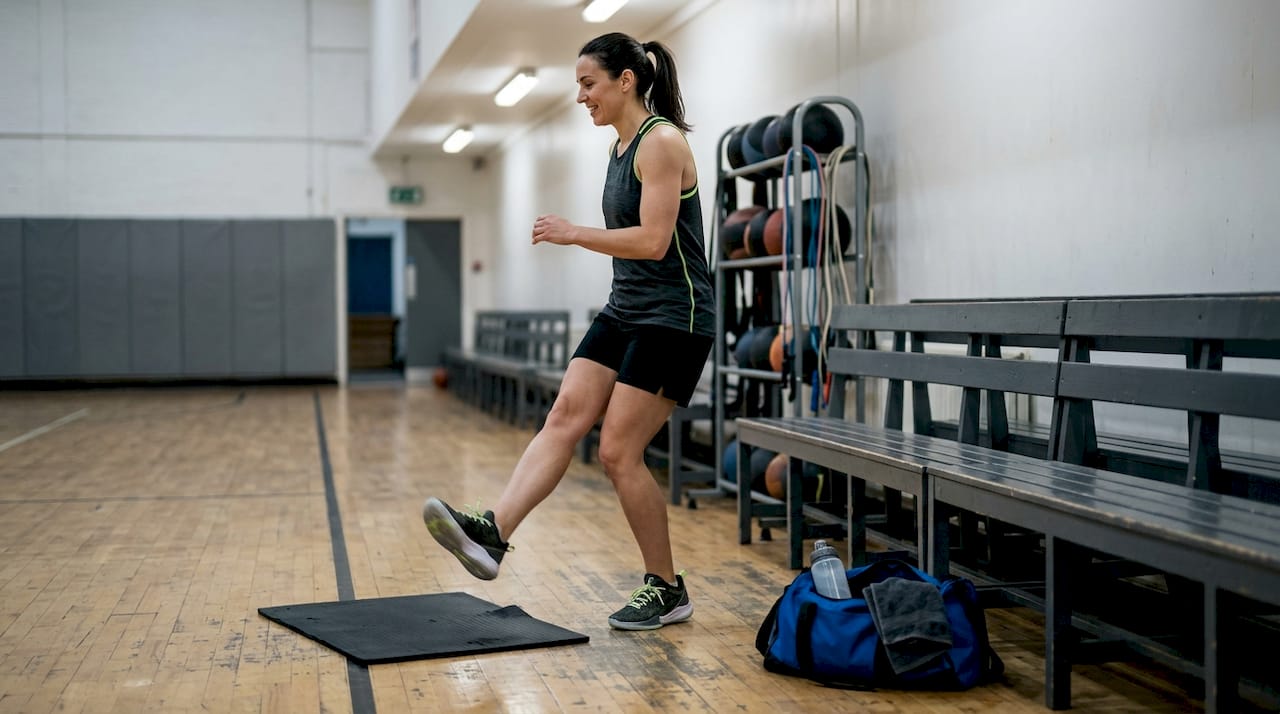
A dynamic warm-up lasting five to fifteen minutes, including movements like leg swings, arm circles, high knees, and lunges, can reduce injury risk by up to 50% while improving flexibility, blood flow, and reaction time. That is a remarkable return on a small investment of time.
Here is a structured warm-up sequence that works for most athletes:
- Light cardio (3-5 minutes): Jog, cycle, or row at low intensity to raise core temperature
- Leg swings (10 reps each leg, front/back and side to side): Opens up the hips and activates the hip flexors
- Arm circles and shoulder rolls (10 reps each direction): Mobilises the shoulder joint before upper body work
- High knees (20 seconds): Elevates heart rate and activates the core
- Walking lunges (10 reps each leg): Stretches the hip flexors and fires up the glutes and quads
- Sport-specific movement (2-3 minutes): Mimic the patterns of your session at reduced intensity
The goal is progressive activation, not exhaustion. You want your body warm and switched on, not fatigued before the session even begins. Review fitness programme design tips to see how leading coaches build warm-up structures into periodised plans.
For a complete step-by-step pre-workout routine, tailoring the sequence to your sport makes a genuine difference. A powerlifter needs more hip and thoracic spine mobility. A sprinter benefits from nerve flossing and rapid-fire plyometric activation.
Pro Tip: Identify your two or three weakest movement patterns or recurring tight spots and add targeted drills for those areas into every warm-up. This personalised approach pays dividends in both injury prevention and session quality over time.
Now that your metabolism is primed, the next step is targeting the specific supplements that can give you a meaningful edge.
Harness the power of key pre-workout supplements
Supplements do not replace good nutrition or a smart warm-up. What they do is add a measurable layer on top of a solid foundation. Three ingredients dominate the evidence base: caffeine, creatine, and beta-alanine.
Caffeine is the most studied ergogenic aid in sport. Taking caffeine at 3 to 6 mg per kilogram of bodyweight, 30 to 60 minutes before training, improves strength by 2 to 7%, alongside boosts in power output and endurance capacity. The caffeine pre-workout science is robust across multiple training modalities. The sweet spot for most athletes is 200 to 400 mg.
Creatine and beta-alanine serve distinct but complementary roles. Creatine at 3 to 5 g daily raises phosphocreatine stores, which fuels explosive efforts and improves power, strength, and sprint performance. Beta-alanine at 1 to 3 g buffers lactic acid build-up, making it particularly useful for endurance-heavy sessions and repeated jump efforts.
| Supplement | Dose | Timing | Best for |
|---|---|---|---|
| Caffeine | 3-6 mg/kg | 30-60 min pre-session | Strength, power, endurance |
| Creatine | 3-5 g daily | Any time, consistent daily use | Power, sprint, muscle gain |
| Beta-alanine | 1-3 g | 30-60 min pre-session | Endurance, repeated efforts |
For more on creatine performance tips or how beta-alanine for endurance athletes fits into a stack, the evidence is clear and accessible.
Who should exercise caution? Athletes sensitive to stimulants should reduce caffeine doses or avoid it after midday. Those with cardiac conditions should consult a doctor before using high-dose caffeine stacks. Beta-alanine causes a harmless tingling sensation called paraesthesia, which fades with consistent use.
Pro Tip: Do not introduce multiple new supplements simultaneously. Add one at a time, observe your response for one to two weeks, then layer the next. This approach reveals what actually works for your physiology rather than guessing which ingredient is responsible for any effect.
Fuel and supplements are only part of the equation. What, when, and how you hydrate dramatically influences your body’s response to training.
Balance hydration and smart food choices
Dehydration of as little as 2% of bodyweight impairs physical performance, cognitive function, and coordination. Yet many athletes arrive at training already in a mild deficit without realising it.
Hydration strategy before training is straightforward but often ignored. Start your session well hydrated and, for morning training especially, add electrolytes and potassium to your pre-session drink. Overnight fluid losses are real, and plain water alone may not restore electrolyte balance fast enough. For detailed hydration protocols suited to different training demands, intensity and session length both influence optimal intake.
Here are the most common pre-workout hydration and food mistakes, and how to fix them:
- Eating a high-fat meal too close to training: Fat slows gastric emptying, leaving you sluggish. Switch to low-fat options within two hours of training
- Consuming high-fibre foods pre-session: Fibre is valuable generally, but pre-workout it risks bloating and GI discomfort. Save fibre-rich foods for other meals
- Relying solely on plain water for long sessions: Add an electrolyte tablet or a sports drink with sodium and potassium for sessions over 60 minutes
- Skipping pre-workout food entirely for morning sessions: Even a small, fast snack beats training fasted for most performance goals
| Scenario | Recommended choice | Timing |
|---|---|---|
| Morning session, short | Banana + electrolyte drink | 30 min before |
| Afternoon session, intense | Oats + whey + water | 60-90 min before |
| Evening session, moderate | Rice cakes + peanut butter | 45-60 min before |
| Endurance event | Porridge + honey + sports drink | 90-120 min before |
For a deeper look at the pre-workout science behind energy and performance in 2026, the evidence consistently reinforces these core habits.
Pro Tip: For early morning sessions where you cannot face a full meal, try 20 to 30 g of fast-digesting carbs from a sports gel or banana alongside an electrolyte drink. It is enough to prime performance without causing digestive discomfort during training.
Our take: Pre-workout routines are simpler—and more personal—than you think
The supplement industry profits from complexity. New stacks, exotic ingredients, and baroque protocols keep athletes buying and experimenting. The honest reality is that the fundamentals, carbohydrates, a structured warm-up, proper hydration, and a few well-researched supplements, account for the vast majority of performance gains available to most athletes.
Research on multi-ingredient pre-workout supplements confirms that MIPS benefits physical performance in measurable ways, but conflicting cardiovascular data exists and more randomised controlled trials are needed. Whole foods remain a viable alternative to supplements for athletes whose baseline nutrition is already strong.
What we see consistently is that athletes who obsess over cutting-edge products but sleep poorly, skip warm-ups, or eat carelessly around training leave far more performance on the table than any supplement could recover. The basics executed with discipline beat elaborate protocols executed inconsistently. Test systematically. Adapt to your own response. Ignore the noise from anyone selling certainty in a tub.
Take your training further with expert solutions
Putting these strategies into practice is straightforward when you have the right products and guidance to hand. At MyGymSupplements shop, you will find a curated selection of pre-workouts, creatine, caffeine formulas, and electrolyte products chosen for quality and evidence-backed efficacy. Whether you are building your first pre-workout stack or refining an existing routine, the range covers every goal from strength and power to endurance and recovery. For a clear starting point, our best pre-workout supplement guide breaks down the top options for peak performance in 2026 and helps you match the right product to your training demands.
Frequently asked questions
What is the best food to eat before a workout?
A mix of easily-digested carbohydrates and a small amount of protein, such as a banana with peanut butter or oatmeal with whey, consumed one to two hours before training is ideal for most athletes.
How long before exercise should I take caffeine?
Take caffeine approximately 30 to 60 minutes before your workout. At 3 to 6 mg per kilogram of bodyweight, this timing delivers maximum benefit to strength, power, and endurance.
Is creatine or beta-alanine better for a pre-workout boost?
They serve different purposes. Creatine boosts power and strength, while beta-alanine supports muscular endurance. Research shows that creatine and beta-alanine together offer complementary benefits, making both valuable for athletes with mixed training demands.
Should I avoid fat and fibre before training?
Yes. Limit high-fat and high-fibre foods in the two hours before your session, as both slow digestion and can cause GI discomfort during training that undermines your performance.
How important is hydration before training?
Very important. Proper hydration with water and electrolytes is critical for energy, focus, and coordination, particularly for morning training sessions where overnight fluid losses need to be replaced before you start.

0 comments