

TL;DR:
- Pre-workout supplements contain ingredients like caffeine, beta-alanine, and creatine that enhance energy, strength, and focus. Their effectiveness varies based on individual response, training goals, and proper use timing. People with health issues or caffeine sensitivity should avoid or consult a doctor before using them.
Some gym-goers swear their session falls apart without a pre-workout shake, while others knock back the same formula and feel absolutely nothing different. That gap in experience is not random. Some athletes see significant boosts while others report no notable effects, and understanding why that happens is the difference between spending your money wisely and wasting it entirely. This article cuts through the noise with evidence-based clarity on what pre-workout actually does, who genuinely benefits, what the risks look like, and when a banana and a strong coffee might serve you just as well.
Table of Contents
- What is pre-workout and how does it actually work?
- Key benefits: energy, performance, and focus explained
- Potential risks and who should avoid pre-workout
- Is pre-workout always necessary? Placebo effect and natural alternatives
- Why smart supplementation means personalisation, not hype
- Ready to optimise your training?
- Frequently asked questions
Key Takeaways
| Point | Details |
|---|---|
| Proven ingredients matter | Caffeine, beta-alanine, and creatine are the most effective components for performance. |
| Benefits are modest but real | Pre-workouts slightly boost strength, endurance, and focus, but results vary between users. |
| Risks require caution | Some groups should avoid pre-workout, and overuse increases health risks and tolerance. |
| Natural options work too | Coffee or a banana can often replace supplements, especially for non-elite athletes. |
| Personalisation is key | Track your own results and prioritise basic health practices alongside supplements. |
What is pre-workout and how does it actually work?
Before understanding whether you should use pre-workout, let us break down how these supplements really function.
Pre-workout supplements are formally known as Multi-Ingredient Pre-Workout Supplements, or MIPS. They are powdered or capsule formulas designed to be taken roughly 30 to 60 minutes before training, and they typically combine several active compounds that each target a different aspect of performance. The idea is that combining them creates a synergistic effect greater than any single ingredient alone.
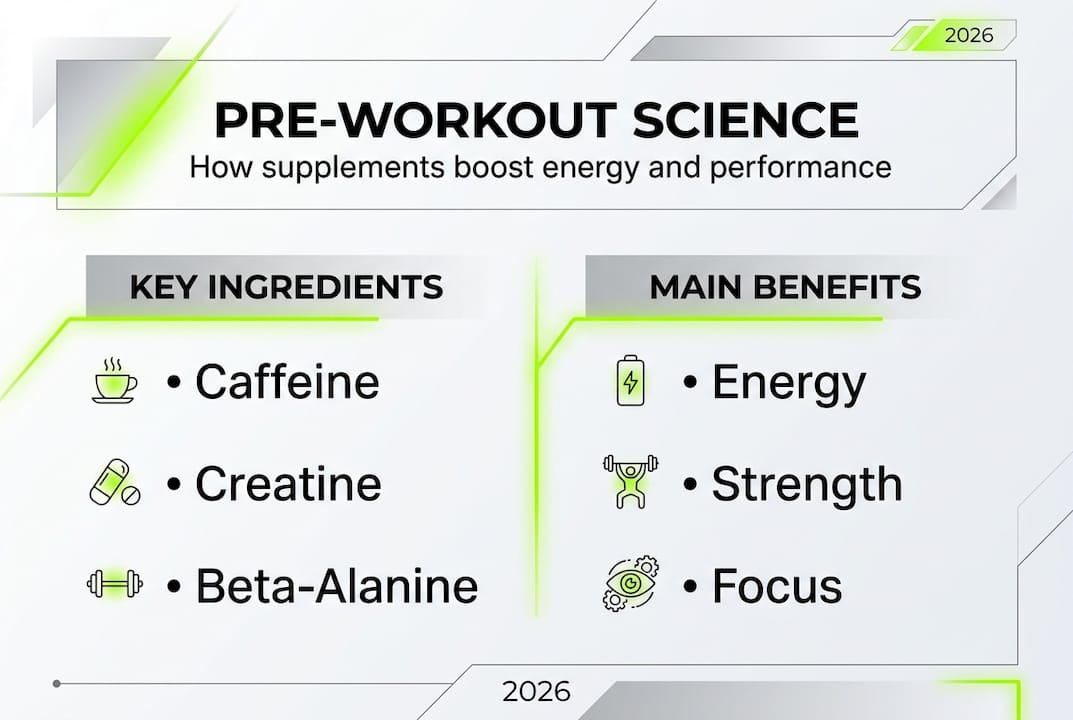
The most studied and consistently effective ingredient is caffeine. Caffeine stimulates the central nervous system, increases alertness, reduces your perceived effort during exercise, and triggers endorphin release. In plain terms, it makes hard work feel slightly easier and keeps your mind switched on when fatigue starts creeping in.
The second major player is beta-alanine, the ingredient responsible for that harmless tingling sensation many people feel after their first scoop. Beta-alanine buffers muscle acidity by increasing carnosine levels in muscle tissue, which delays the burning sensation that forces you to stop during high-intensity sets. Creatine, often included in the same formula, directly fuels the phosphocreatine energy system, improving power output and strength across repeated efforts.
Here is a quick breakdown of the core ingredients and what they target:
| Ingredient | Primary effect | Typical effective dose |
|---|---|---|
| Caffeine | Alertness, endurance, perceived effort | 150 to 300 mg |
| Beta-alanine | Delays muscular fatigue | 3.2 to 6.4 g |
| Creatine | Power output and strength | 3 to 5 g |
| Citrulline | Blood flow and muscle pump | 6 to 8 g |
Not every ingredient in every product has solid evidence behind it. Some formulas include proprietary blends with underdosed compounds that look impressive on the label but do little in practice. Always check the top pre-workout ingredients before committing to a product, and look for transparent labelling that shows exact doses.
Worth knowing: Timing matters. Taking your pre-workout 30 to 60 minutes before training allows caffeine to reach peak plasma concentration and beta-alanine to load properly. Too early or too late and you miss the window.
If you want a structured approach to pairing these ingredients with your session, the pre-workout routine steps guide walks you through it practically.
Key benefits: energy, performance, and focus explained
Now that you know the fundamentals, it is important to explore what pre-workout actually delivers for your energy, strength, and focus.
The performance benefits of MIPS are real, but they are measured and specific rather than dramatic. Research confirms that MIPS increase anaerobic power, improve knee flexor and extensor torque, and contribute to measurable strength gains. That matters most for athletes doing sprint intervals, heavy compound lifts, or any training that demands short bursts of maximum effort.
Caffeine alone is responsible for a surprisingly large portion of those gains. Studies show it boosts strength by around 7%, improves endurance performance by approximately 15%, and extends time to exhaustion. For a competitive athlete, a 7% strength increase on a heavy squat session is not trivial.
Here is how the benefits stack up across different training goals:
| Training goal | Most relevant ingredient | Expected benefit |
|---|---|---|
| Strength and power | Creatine, caffeine | 5 to 7% strength increase |
| Endurance | Caffeine, beta-alanine | Up to 15% endurance boost |
| Mental focus | Caffeine, L-theanine | Reduced distraction, sharper drive |
| Muscle pump | Citrulline | Improved blood flow and vascularity |
Beyond the physical, the mental focus effect is one of the most underrated benefits. When you are 45 minutes into a demanding session and your mind starts drifting, the alertness from caffeine keeps you locked in. That translates directly to better form, safer lifting, and more productive reps.
Key benefits you can realistically expect from a quality MIPS product:
- Faster warm-up and readiness to train at intensity
- Reduced perceived effort during hard sets
- Improved muscular endurance in high-rep or circuit work
- Sharper mental focus and reduced mid-session fatigue
- Better power output on explosive movements
Pro Tip: If you are new to pre-workout, start with half a serving to assess your caffeine tolerance before committing to a full dose. A product that works brilliantly for your training partner may feel overwhelming for you.
For a deeper look at which products deliver on these claims, check out the best pre-workout supplements guide, or explore how pre-workout fits into a broader approach to maximising performance and recovery.
Potential risks and who should avoid pre-workout
However, with any supplement, understanding the risks is just as vital as learning the benefits.

The most common side effect is the beta-alanine tingle, a harmless but sometimes alarming pins-and-needles sensation across the skin. It fades within 20 to 30 minutes and does not indicate any harm. More significant concerns arise from caffeine. Excess caffeine above 400 mg can cause anxiety, elevated blood pressure, heart palpitations, and disrupted sleep, particularly when taken in the afternoon or evening.
Some pre-workout products pack 300 to 400 mg of caffeine per serving, which is already at or near the upper daily limit for most adults. Stack that with a couple of coffees earlier in the day and you are in risky territory.
Groups who should exercise caution or avoid pre-workout entirely:
- People with existing heart conditions or irregular heartbeat
- Those with high blood pressure or cardiovascular concerns
- Individuals with caffeine sensitivity or anxiety disorders
- Adolescents and teenagers, whose developing systems are more vulnerable
- Pregnant or breastfeeding individuals
- Anyone on medication that interacts with stimulants
Important: If you have any underlying health condition, speak to a GP before starting any stimulant-based supplement. This is not a formality. Cardiovascular stress during intense exercise combined with high-dose caffeine is a genuine risk for vulnerable individuals.
Pro Tip: To avoid building tolerance and reduce cardiovascular strain, cycle your pre-workout use. Take it for four to six weeks, then take a one to two week break. Your sensitivity resets and the product works better when you return to it.
For those just starting out, the guide on supplements for beginners offers a safer entry point. If you want a structured way to match a product to your specific needs, the guide on how to select pre-workout is worth reading before you buy.
Always choose products that carry third-party testing certification such as Informed Sport or NSF. These verify that what is on the label is actually in the product, and nothing banned has been added.
Is pre-workout always necessary? Placebo effect and natural alternatives
While pre-workout offers clear benefits for some, it is crucial to understand when it is truly effective and when natural strategies might work just as well.
Here is something the supplement industry rarely advertises: some studies find similar results between MIPS and placebo, particularly among recreational gym-goers who are not training at high intensity. The expectation of performance improvement can itself create a measurable effect. If you feel sharper after your pre-workout, part of that may be the ritual and expectation rather than the formula.
That is not a reason to dismiss pre-workout entirely. It is a reason to be honest about your training level and goals. For most people, sleep and nutrition take precedence over any supplement, and elite athletes benefit most from data-driven ingredient use.
When natural alternatives are genuinely sufficient:
- You train at moderate intensity three or fewer times per week
- Your sleep is consistently under seven hours (fix this first)
- You are not fuelling properly before sessions
- You are a beginner whose adaptation response is already high without stimulants
- You are sensitive to caffeine or managing anxiety
A strong black coffee 45 minutes before training delivers roughly 80 to 150 mg of caffeine, which is enough to produce a measurable performance effect for most people. Pair it with a banana for fast-digesting carbohydrates and you have a functional, low-cost pre-workout alternative that works well for moderate training.
The honest take: Pre-workout supplements make the biggest difference when your training is already structured, your nutrition is solid, and you are pushing at intensities where marginal gains matter. If those foundations are not in place, the supplement is not going to compensate.
For athletes who are serious about building a complete approach, the guide on building a routine shows how pre-workout fits alongside other supplements in a coherent plan.
Why smart supplementation means personalisation, not hype
Reflecting on all of the evidence makes one thing clear: there is no universal answer when it comes to pre-workout. Individual response varies enormously based on caffeine metabolism, training history, sleep quality, and even genetics. What produces a sharp, focused session for one athlete creates jitteriness and a racing heart for another.
The supplement marketing world wants you to believe a single formula is the answer. It rarely is. The smarter approach is to track your performance honestly, note how you feel with and without a given product, and adjust based on real data rather than the way a product makes you feel in the first ten minutes.
Prioritise sleep, consistent nutrition, and progressive training before reaching for a scoop. When those are in order, a well-chosen pre-workout can genuinely add a measurable edge. If you are comparing options, the guide on comparing powders gives you a practical framework for making that decision without the hype.
Supplementation is a tool, not a shortcut. Use it with intention.
Ready to optimise your training?
If this article has helped you understand what pre-workout can and cannot do, the next step is finding a product that fits your specific goals and tolerance. At MyGymSupplements.shop, you can explore pre-workouts across a wide range of formulas, from stimulant-heavy performance blends to lower-caffeine options suited to those who train later in the day. Whether you are a beginner building your first supplement stack or an experienced athlete fine-tuning your edge, the range covers every level. Start by reviewing the top ingredients to understand what you are actually buying before you commit.
Frequently asked questions
What are the main ingredients in pre-workout supplements?
Caffeine, beta-alanine, and creatine are the most common and consistently effective ingredients found in MIPS products. Each targets a different aspect of performance, from energy and endurance to raw strength.
Can I take pre-workout every day?
It is not recommended. Use pre-workout no more than 3 to 4 times per week to prevent tolerance build-up and reduce the risk of cardiovascular strain over time.
Are there natural alternatives to pre-workout supplements?
Yes. Coffee or a banana can be genuinely effective for non-elite athletes, providing caffeine and fast-digesting carbohydrates without the cost or complexity of a full MIPS formula.
Who should avoid pre-workout products?
Anyone with heart conditions, high blood pressure, or caffeine sensitivity should avoid pre-workouts, as stimulant-based formulas carry real cardiovascular risks for vulnerable individuals.
Do pre-workout supplements really work?
Pre-workout offers modest benefits and can resemble a placebo in some users, while elite athletes see more targeted effects when ingredients are matched precisely to their training demands.
Recommended
- Top pre-workout ingredients for peak performance in 2026
- Best pre workout supplement for peak performance in 2026
- Best pre workout powder for peak performance in 2026
- Top pre workout ingredients for peak performance in 2026
- Pregame Routines in Basketball: 90% of Elite Athletes Use Them – Hoop Mentality

0 comments