

More than half of British gym enthusiasts admit they feel confused about when and how to use supplements for the best results. With the fitness market inundated by complex advice and trendy products, it is easy to lose sight of what actually helps your training. This guide breaks down each vital step, blending evidence based strategies with easy to follow advice to help British readers get the most from every workout session.
Table of Contents
- Stage 1: Set Clear Training Goals And Gather Supplements
- Stage 2: Fuel Your Body With Pre-Workout Nutrition
- Stage 3: Warm Up And Activate Key Muscle Groups
- Stage 4: Take Supplements At The Right Time
- Stage 5: Monitor Your Energy And Adjust As Needed
Quick Summary
| Key Insight | Explanation |
|---|---|
| 1. Define clear fitness goals | Specific goals guide your supplement choices and nutrition strategies effectively. |
| 2. Prioritise pre-workout nutrition | Balanced meals before training enhance performance and energy, ensuring optimal body function. |
| 3. Implement a structured warm-up | A thorough warm-up reduces injury risk and prepares key muscle groups for exercise. |
| 4. Time supplements correctly | Proper timing maximises the benefits of supplements during and after workouts for better results. |
| 5. Monitor energy and adjust | Tracking energy levels helps optimise nutrition and supplement protocol based on individual needs. |
Stage 1: Set clear training goals and gather supplements
Successful fitness journeys start with crystal clear objectives and strategic supplementation. Understanding your specific training goals allows you to select precisely the right nutritional support for peak performance.
Begin by defining your fitness targets with absolute precision. Are you aiming to build muscle mass, enhance endurance, improve strength, or achieve fat loss? Evidence based supplement strategies recommend tailoring your supplement approach directly to your desired outcomes. For muscle building, consider supplements like creatine and whey protein. Endurance athletes might prioritise beta alanine and electrolyte formulations. Fat loss goals could benefit from thermogenic compounds and protein support.
Gather your supplements strategically by matching ingredients to your specific training objectives. Pre workout supplement selection should focus on performance enhancers like caffeine for energy, beta alanine for muscular endurance, and branched chain amino acids for recovery. Always purchase from reputable sources and verify ingredient quality. Track your progress meticulously and adjust your supplement stack as your fitness goals evolve.
Pro tip: Start with fundamental supplements and gradually introduce specialised compounds as you become more experienced in understanding your body’s specific nutritional requirements.
Stage 2: Fuel your body with pre-workout nutrition
Optimising your nutrition before training is crucial for maximising performance and energy levels. Pre workout nutritional strategies highlight the importance of strategic meal timing and composition to support your fitness objectives.

Your pre-workout nutrition should focus on consuming balanced macronutrients that provide sustainable energy and support muscle function. Aim to eat a substantial meal containing complex carbohydrates and lean protein 2-4 hours before your workout. This allows sufficient time for digestion and nutrient absorption. If you are training closer to mealtime, opt for a smaller snack 30-60 minutes prior that includes easily digestible carbohydrates and a moderate protein source. Consider options like a banana with almond butter, Greek yoghurt with berries, or a small protein smoothie.
Carbohydrates are particularly essential as they provide readily available energy for intense physical activity. Prioritise whole grains, fruits, and vegetables that release energy gradually and prevent sudden blood sugar spikes. Protein helps support muscle preservation and recovery, so include lean sources like chicken, fish, or plant based proteins. Stay hydrated by drinking water consistently before your training session to ensure optimal physiological performance.
Pro tip: Experiment with different pre-workout nutrition combinations to discover what works best for your body and training intensity. Everyone metabolises nutrients differently, so personal trial and adaptation is key to finding your ideal nutritional approach.
Stage 3: Warm up and activate key muscle groups
A comprehensive warm up prepares your body for intense physical activity and significantly reduces injury risk. Pre-workout routine techniques involve strategically activating muscle groups to enhance overall performance and mobility.
Begin with five to ten minutes of dynamic mobility exercises targeting major muscle groups. Start with light cardiovascular movements like brisk walking, jogging in place, or jumping jacks to elevate your heart rate and increase blood flow. Follow this with dynamic stretches that mimic your upcoming workout movements. For strength training, incorporate arm circles, leg swings, bodyweight squats, and lunges. These movements help prepare your muscles, joints, and nervous system for more intense exercise by gradually increasing range of motion and muscular activation.
Focus on specific warmup techniques tailored to your primary workout. If performing upper body strength training, include shoulder rolls, arm windmills, and light resistance band exercises. For lower body workouts, prioritise hip mobility drills, ankle rotations, and progressive bodyweight movements. Always maintain controlled breathing and listen to your body ensure you are not overstretching or causing unnecessary strain. Aim to feel gradually warmed up rather than fatigued before your main training session.
Pro tip: A proper warm up should leave you feeling energised and prepared not exhausted. If you feel overly tired after warming up, you might be pushing too hard too soon.
Stage 4: Take supplements at the right time
Precise supplement timing can dramatically enhance your workout performance and recovery. Supplement intake strategies reveal critical windows for maximising nutritional benefits during your fitness routine.
Caffeine supplementation works best when consumed 30-45 minutes before exercise to peak your energy and mental focus. Creatine offers more flexibility and can be taken at any time during the day most convenient to you. Beta alanine performs optimally when consumed consistently 30 minutes prior to training to help buffer muscle fatigue and improve endurance. Protein supplements are most effective when taken within 30 minutes after completing your workout to support muscle protein synthesis and recovery processes.
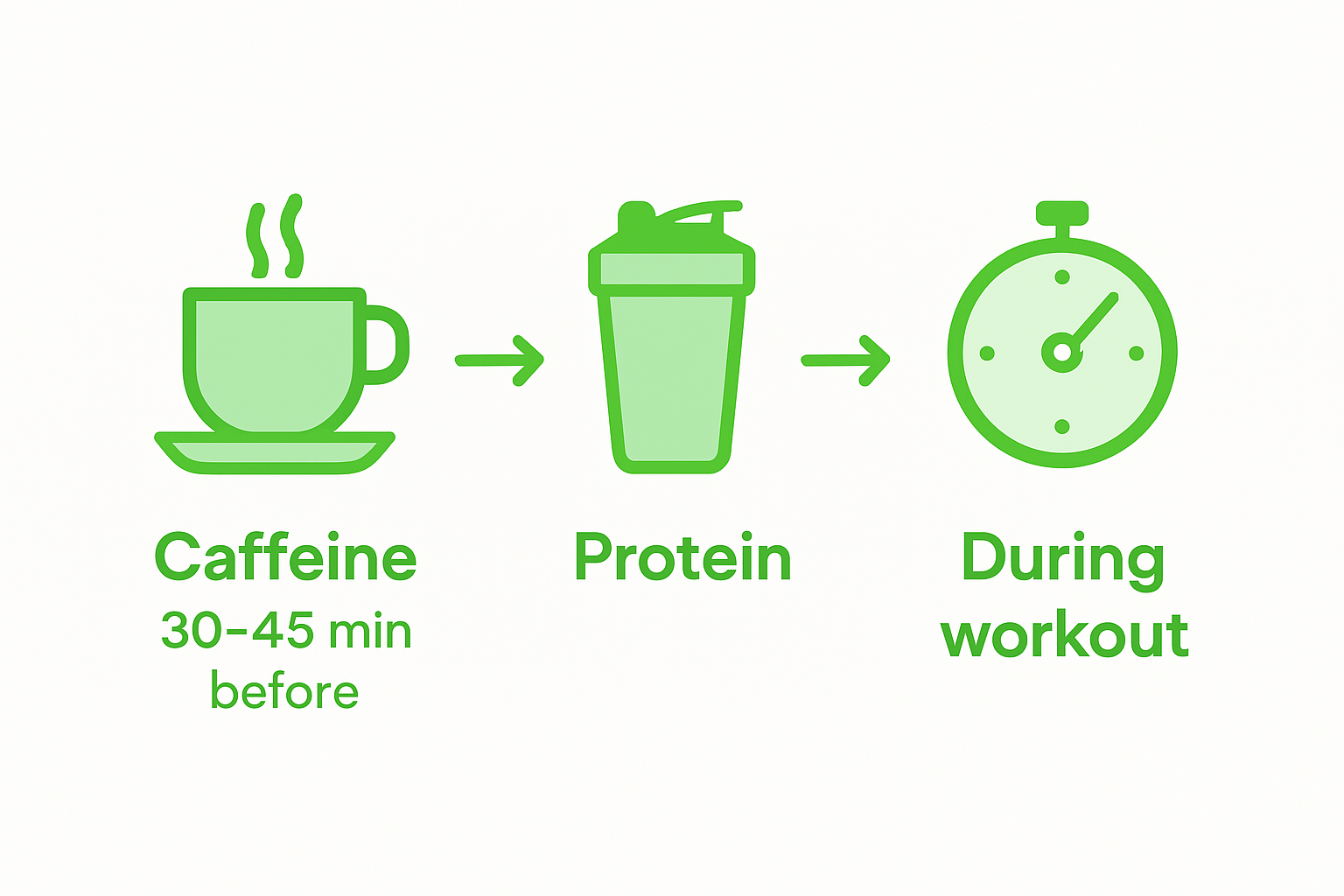
Individual supplement protocols can vary based on specific fitness goals and personal metabolic responses. Experiment with different timing approaches while monitoring your body’s performance and energy levels. Some athletes prefer splitting supplement doses throughout the day to maintain consistent nutrient availability. Always remain attentive to how your body responds and be prepared to adjust your supplementation strategy accordingly.
Pro tip: Consistency matters more than perfect timing. While precise windows can optimise performance, maintaining a regular supplement routine is ultimately more important than obsessing over exact minutes.
Stage 5: Monitor your energy and adjust as needed
Pre workout nutrition strategies emphasise the critical importance of listening to your body and understanding its unique energy dynamics during training. Learning to recognise and respond to your physiological signals is key to maintaining consistent workout performance.
Develop a personal energy tracking system by maintaining a detailed workout journal. Record your energy levels before, during, and after training sessions noting factors such as sleep quality, nutrition intake, supplement timing, and overall physical sensation. Pay attention to subtle changes in your body like muscle fatigue, mental focus, and recovery speed. If you consistently feel depleted or struggle to complete workouts, consider adjusting your pre workout nutrition or supplement protocol. This might involve modifying meal timing, changing macronutrient ratios, or experimenting with different supplement combinations.
Remember that energy management is highly individual. What works perfectly for one athlete might not yield the same results for another. Be patient and methodical in your approach. Start with small incremental changes and observe how your body responds. Some athletes find success by cyclically varying their nutrition and supplement intake to prevent metabolic adaptation and maintain optimal performance.
Pro tip: Create a baseline performance metric to objectively measure your energy changes. Track metrics like workout intensity, repetition count, recovery time, and subjective energy ratings to scientifically validate your adjustments.
Elevate Your Pre-Workout Routine with Targeted Supplements
Struggling to find the perfect supplement strategy to match your clear training goals and optimise every stage of your workout? Whether you aim to maximise energy, enhance endurance, or accelerate recovery, understanding the right supplements and timing is crucial. The article highlights key challenges such as selecting supplements aligned with your goals, perfecting pre-workout nutrition, and monitoring energy effectively. These pain points directly impact your ability to reach peak performance.
Unlock the full potential of your fitness journey by exploring a wide range of products designed specifically for these needs. From energising pre-workouts and muscle-supporting amino acids to recovery aids and targeted proteins, MyGymSupplements.shop offers everything you need to support each phase of your routine.
Discover supplements perfectly tailored for your goals and experience how precise timing and quality nutrition work hand-in-hand to boost your workouts and recovery.
Ready to transform your pre-workout preparation into a powerful advantage? Visit MyGymSupplements.shop now to shop top-rated supplements, check out pre workout products, and start your journey to optimal workout results today.
Frequently Asked Questions
What are the key components of a pre-workout routine?
To create an effective pre-workout routine, focus on setting clear training goals, optimising nutrition, warming up properly, timing your supplements, and monitoring your energy levels. Start by defining your fitness objectives, such as building muscle or enhancing endurance, and then design your routine around those goals.
How should I structure my pre-workout nutrition?
Your pre-workout nutrition should be balanced, including complex carbohydrates and lean protein consumed 2-4 hours before training. If you are eating closer to your workout time, opt for a small snack with easily digestible carbohydrates and moderate protein about 30-60 minutes prior.
What is the best way to warm up before exercising?
A proper warm-up should include 5-10 minutes of dynamic mobility exercises and light cardio to elevate your heart rate. Incorporate movements that mimic your workout, such as bodyweight squats or arm circles, to prepare your muscles and joints for more intense activity.
When is the best time to take my supplements?
To maximise the benefits of your supplements, take caffeine 30-45 minutes before your workout and protein within 30 minutes post-exercise. Experiment with different timing strategies to find what effectively supports your performance and recovery.
How can I track my energy levels during workouts?
Implement a workout journal to record your energy levels before, during, and after each session. Note additional factors, such as sleep quality and nutrition, and make gradual adjustments to improve your energy dynamics and workout performance.
Recommended
- Master Your Pre-Workout Routine Workflow for Peak Results – MyGymSupplements
- Step-by-Step Guide to Pre-Workout Usage for Results – MyGymSupplements
- Pre-Workout Supplement Workflow for Maximum Results – MyGymSupplements
- How to Select Pre-Workout for Your Fitness Goals – MyGymSupplements
- Jak wprowadzić suplementy do diety krok po kroku bezpiecznie – Yawn Horses
- Warm Up Exercises Before Climbing: Complete Guide - Gripnatic
- Improve Wellbeing Workflow: Step-by-Step Guide for Balance

0 comments