

Caffeine is the most researched performance-enhancing ingredient in sports nutrition, yet most gym-goers either underuse it, overuse it, or misunderstand why it actually works. It is not simply about feeling wired before you lift. The science behind caffeine’s effect on your body is surprisingly specific, and knowing it changes how you train. Whether you are chasing a new personal best on the squat rack or pushing through the final kilometres of a long run, caffeine can be a genuine game-changer when used correctly. This guide breaks down the mechanisms, the dosing, and the smart strategies so you can stop guessing and start performing.
Table of Contents
- How caffeine works in the body for exercise
- Why caffeine enhances endurance and power
- Dosing, timing, and individual response: What actually matters
- Recovery, side effects, and smart strategies
- The real reason caffeine works — and when to think twice
- Ready to optimise your workouts? Get started now
- Frequently asked questions
Key Takeaways
| Point | Details |
|---|---|
| Science-backed performance | Caffeine reliably improves endurance, power, and focus in most athletes when used before workouts. |
| Optimal dosing matters | 3-6 mg per kg of body weight, taken 30-60 minutes pre-training, provides the greatest benefit. |
| Individual variations | Benefits and side effects vary widely due to genetics and habitual use, so listen to your own body. |
| Smart supplementation | Use caffeine strategically, cycle intake, and pay attention to timing to maximise results and recovery. |
How caffeine works in the body for exercise
Caffeine does not create energy from nothing. What it actually does is block a chemical in your brain called adenosine. Adenosine builds up during waking hours and makes you feel progressively more tired. By sitting in adenosine’s receptors without activating them, caffeine essentially puts fatigue signals on hold. The result is sharper focus, greater alertness, and a reduced sense of effort during training.
This is not a minor effect. Caffeine antagonises adenosine receptors, reducing perceived exertion, delaying fatigue, and enhancing alertness and focus during workouts. In practical terms, that means you can push harder for longer before your brain starts telling your body to slow down.
Beyond the central nervous system, caffeine also stimulates adrenaline release, which primes your muscles for explosive effort. It improves neuromuscular signalling, meaning the communication between your brain and your muscles becomes faster and more efficient. This is particularly relevant for heavy compound lifts where coordination and force output are critical.
Here is what caffeine actually does during a training session:
- Blocks adenosine receptors to reduce perceived fatigue
- Increases adrenaline, preparing the body for high-intensity effort
- Sharpens mental focus and motivation throughout the session
- Improves neuromuscular efficiency for better force production
- Lowers your rating of perceived exertion, making hard work feel more manageable
“The adenosine-blocking mechanism is what separates caffeine from most other stimulants. It does not force your body into overdrive; it simply removes the brakes that fatigue applies.”
The evidence-based sweet spot for timing and dose is 3 to 6 mg per kg of body weight, consumed 30 to 60 minutes before training. This window allows caffeine to reach peak plasma concentration in the blood, which is when its effects are strongest. If you are curious about training without stimulants, caffeine-free pre-workout options are worth understanding too. For broader guidance on timing and preparation, pre-workout energy drink tips can help you build a smarter routine.
Why caffeine enhances endurance and power
Building on how caffeine energises your body, let us see exactly how it translates to better endurance and power. The benefits are not limited to one type of athlete. Runners, cyclists, and strength athletes all have strong reasons to use it strategically.
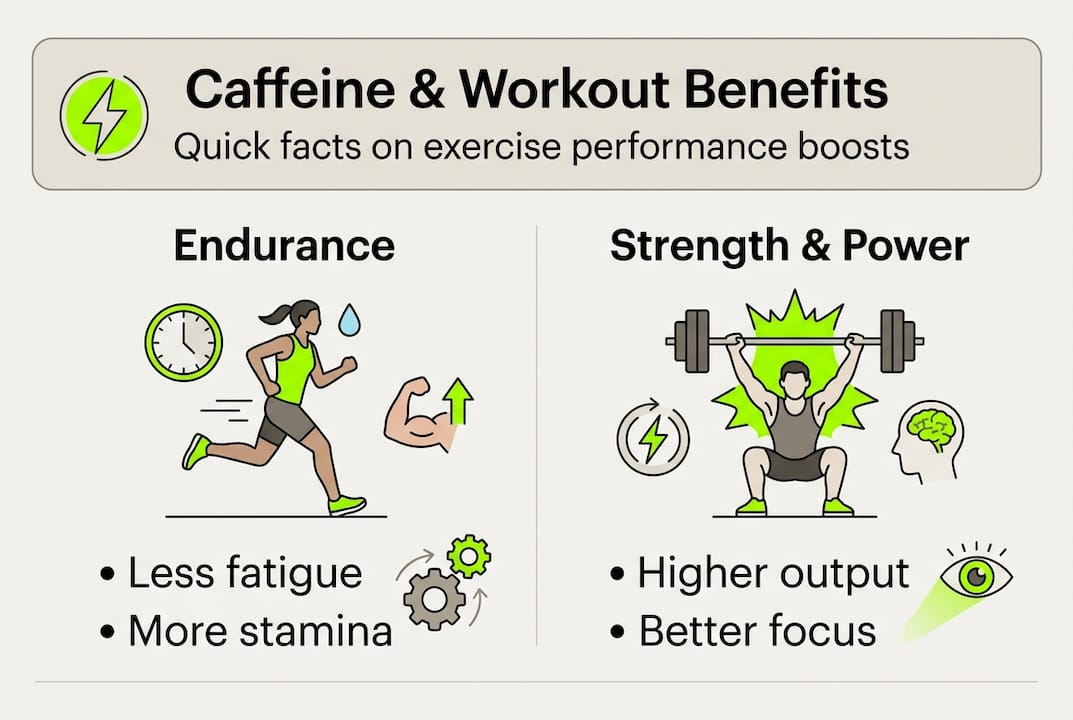
On the endurance side, caffeine improves aerobic performance by increasing fat oxidation and sparing glycogen. Glycogen is your muscles’ primary fuel source, and once it runs low, performance drops sharply. By encouraging your body to burn more fat for fuel, caffeine extends the time before glycogen depletion hits. This is why endurance athletes often report being able to sustain pace for longer before fading.
For strength and power, the picture is equally compelling. Caffeine enhances power output and muscular endurance in resistance training, increasing repetitions completed, movement velocity, and overall force production. That extra rep at the end of a hard set is often where the most growth stimulus occurs.
| Sport type | Primary benefit | Typical improvement |
|---|---|---|
| Endurance running | Glycogen sparing, time to exhaustion | 2 to 4% aerobic performance gain |
| Cycling | Fat oxidation, sustained power output | Measurable increase in time trial speed |
| Resistance training | Rep count, velocity, peak power | Greater volume completed per session |
| Team sports | Repeated sprint ability, focus | Reduced fatigue across multiple efforts |
Pro Tip: If you lift weights and do cardio in the same session, caffeine is particularly useful because it supports both energy systems simultaneously. Time your dose to cover the full session, not just the first exercise.
For a full picture of what works alongside caffeine, exploring top pre-workout ingredients gives you a broader toolkit. Understanding the best pre-workout ingredients helps you build a stack that genuinely complements your goals.
Dosing, timing, and individual response: What actually matters
Understanding what caffeine does is just the start; using it effectively depends on your own response and approach. The research is clear on the numbers, but the nuance lies in how your body specifically reacts.
The evidence-based dose is 3 to 6 mg per kg of body weight. For most adults, this translates to roughly 200 to 400 mg per session. A 75 kg person, for example, sits comfortably at 225 to 450 mg. Going above 6 mg per kg does not improve performance and significantly increases the risk of side effects like anxiety, nausea, and disrupted sleep.
Here is a practical approach to getting your dosing right:
- Calculate your body weight in kilograms
- Multiply by 3 for a conservative starting dose
- Take it 30 to 60 minutes before your session
- Assess how you feel during and after training
- Adjust upward gradually if needed, staying below 6 mg per kg
- Avoid caffeine within 6 hours of your intended sleep time
Statistic to know: Habitual low consumers of caffeine, those taking less than 3 mg per kg daily, and males tend to show greater performance benefits from pre-workout caffeine than habitual high consumers.
This matters because if you drink four cups of coffee every day, your adenosine receptors have adapted. The same dose that gives a casual coffee drinker a significant boost may do very little for you. Individual responses vary due to genetics, training status, and habitual intake, meaning caffeine is not ergogenic for everyone every time.
Pro Tip: Try a caffeine reset. Cut back for one to two weeks before a competition or a training block where performance matters most. Your sensitivity will increase noticeably, and the ergogenic effect will feel much stronger.
For more on building an effective routine, the best pre-workout supplement guide covers formulation choices in detail. General pre-workout tips and advice on cycling creatine and caffeine together are also worth reading.
Recovery, side effects, and smart strategies
Now that you have a dosing strategy, it is crucial to consider how to use caffeine for gains without harm. The benefits extend beyond the session itself, but so do the risks if you are not careful.
One underappreciated benefit is caffeine’s effect on post-exercise soreness. Caffeine reduces pain perception and ratings of perceived exertion, and this carries over into reduced muscle soreness after training. For athletes who train on back-to-back days, this can meaningfully affect how ready you feel for the next session.
However, the risks of overuse are real:
- Late-day caffeine disrupts sleep quality, which is where most muscle repair happens
- High doses can cause jitteriness, increased heart rate, and digestive discomfort
- Dependence develops quickly, making it harder to train effectively without it
- Anxiety and restlessness can impair focus rather than enhance it at very high doses
“Caffeine is a tool with a narrow optimal window. Below it, you leave performance on the table. Above it, you trade gains for side effects.”
| Factor | Caffeine pre-workout | Caffeine-free pre-workout |
|---|---|---|
| Performance boost | Strong, well-evidenced | Moderate, ingredient-dependent |
| Sleep impact | Risk if taken late | Minimal |
| Suitable for evening training | No | Yes |
| Cost | Generally lower | Often higher |
| Side effect risk | Moderate | Low |
For those training in the evening or who are sensitive to stimulants, caffeine-free options are a genuinely smart alternative rather than a compromise. Cycling caffeine use, taking planned breaks every four to six weeks, keeps your sensitivity high and your dependence low.
The real reason caffeine works — and when to think twice
With the science in hand, it is worth asking whether caffeine truly deserves its place at the centre of pre-workout routines. Our honest answer is yes, mostly, but with important caveats.
Caffeine is the most researched ergogenic aid in pre-workouts, providing CNS-mediated benefits that outperform most other single ingredients. But here is what the supplement industry rarely tells you: a strong black coffee often delivers near-identical results at a fraction of the cost. The fancy formulation around the caffeine matters less than most labels suggest.
The deeper truth is that caffeine works primarily by changing your perception of effort. It does not make your muscles physically stronger overnight. It makes hard work feel more manageable, which allows you to do more of it. That is genuinely valuable, but it also means that high habitual intake blunts effects, and some of what people attribute to caffeine may partly be expectation. Elite athletes with optimised nutrition and sleep sometimes find they need caffeine less than they assumed.
Use it as a deliberate tool. Know your dose, protect your sleep, cycle it regularly, and explore ingredients beyond caffeine to build a well-rounded approach. Caffeine should sharpen your training, not become the only reason you can get through it.
Ready to optimise your workouts? Get started now
Armed with the facts and a fresh perspective, here is how you can start applying this knowledge. The science is clear: caffeine, used correctly, is one of the most reliable performance tools available to you. But the right product and the right formulation matter just as much as the ingredient itself.
At MyGymSupplements.shop, you will find a curated range of pre-workout supplements built around evidence-based ingredients, including well-dosed caffeine formulas suited to different training goals and sensitivities. Whether you are new to pre-workouts or looking to upgrade your current stack, our best pre-workout guide walks you through exactly what to look for so you can train smarter, not just harder.
Frequently asked questions
Does caffeine really make a difference in pre-workout supplements?
Yes. Caffeine reliably boosts endurance, power output, and mental focus across most training types when taken at the right dose before exercise.
How much caffeine should I take before training?
The optimal range is 3 to 6 mg per kg of body weight, taken 30 to 60 minutes before your session for peak effect.
Are there downsides to using caffeine in pre-workout?
Overuse or late-day use can disrupt sleep and recovery, and some individuals experience jitters or digestive discomfort, particularly at higher doses.
What if caffeine does not seem to work for me?
Genetics and habitual intake both influence how strongly you respond; consider a two-week caffeine reset to restore sensitivity, or adjust your dose within the recommended range.

0 comments