

Muscle endurance is the deciding factor for many British bodybuilders striving to push past plateaus in the gym. Supplementing with beta-alanine has been shown to increase muscle carnosine levels, leading to a remarkable 20 percent boost in workout capacity for athletes during intense training. For those looking to achieve longer, more productive workouts and greater muscle stamina, understanding how beta-alanine works can help make a noticeable difference in performance and results.
Table of Contents
- What Is Beta Alanine and Its Function
- How Beta Alanine Boosts Muscle Endurance
- Forms and Use of Beta Alanine Supplements
- Safe Dosage, Side Effects, and UK Regulations
- Comparing Beta Alanine to Other Amino Acids
Key Takeaways
| Point | Details |
|---|---|
| Beta-Alanine Functions | Beta-alanine boosts muscle carnosine levels, helping to buffer lactic acid and reduce fatigue during high-intensity exercise. |
| Dosage Recommendations | A daily intake of 4-6 grams over a minimum of 2-4 weeks is advised for optimal performance enhancement. |
| Supplement Forms | Beta-alanine is available in various forms, including powders, capsules, and tablets, allowing for flexible incorporation into a fitness regimen. |
| Safety Considerations | Athletes should start with lower doses and monitor their body’s response, as excessive intake may strain kidney function. |
What Is Beta Alanine and Its Function
Beta-alanine is a specialised amino acid with unique properties that make it particularly interesting for athletes and fitness enthusiasts. Unlike standard amino acids used in protein synthesis, beta-alanine serves a distinctive metabolic role. This naturally occurring beta amino acid is structurally known as 3-aminopropionic acid and plays a crucial part in muscular performance and energy production.
The primary function of beta-alanine centres on its ability to boost muscle carnosine levels. When ingested, it combines with histidine to create carnosine, a compound stored in muscle cells that helps buffer lactic acid accumulation during intense exercise. This buffering mechanism allows athletes to push through muscle fatigue, potentially extending workout duration and intensity. By reducing acid buildup, beta-alanine helps muscles maintain performance during high-stress training sessions, making it a valuable supplement for strength training and endurance activities.
Biochemically, beta-alanine supports multiple physiological processes beyond muscle performance. It contributes to metabolism of tryptophan and vitamin B-6, while also serving as an energy source for muscles and the central nervous system. Its role in strengthening the immune system and helping regulate sugar metabolism makes it more than just a simple workout supplement. However, athletes should be mindful of dosage, as excessive intake may potentially strain kidney function.
Pro tip: Start with a moderate beta-alanine dose of 2-5 grams daily and assess your body’s tolerance before increasing intake, ensuring optimal performance benefits without potential side effects.
How Beta Alanine Boosts Muscle Endurance
Beta-alanine plays a critical role in enhancing muscle endurance through its unique biochemical mechanisms. Multiple weeks of supplementation significantly improve power output by increasing intramuscular carnosine levels, which directly impacts an athlete’s ability to sustain high-intensity performance. The amino acid works by binding with histidine to form carnosine, a powerful compound stored in skeletal muscle that helps athletes push through fatigue barriers.
The primary endurance-boosting effect of beta-alanine centres on its remarkable pH buffering capacity. By binding hydrogen ions during high-intensity exercise, carnosine helps delay muscle acidosis, which is the primary cause of muscular fatigue. This mechanism is particularly effective during anaerobic activities lasting between 60 seconds to 4 minutes, making it an invaluable supplement for athletes engaged in activities requiring sustained muscular effort such as sprinting, high-intensity interval training, and resistance training.

Research demonstrates that consistent beta-alanine supplementation can lead to substantial performance improvements. Athletes typically experience enhanced muscular endurance, reduced fatigue, and the ability to maintain higher power output during challenging workout segments. These benefits are most pronounced in exercise modes that rely on short to moderate-duration, high-intensity efforts where maintaining peak performance is crucial. The supplementation works by gradually increasing muscle carnosine concentrations, which means consistent, long-term use yields the most significant performance enhancements.
Pro tip: Combine beta-alanine supplementation with a structured training programme to maximise muscle endurance gains and track your performance improvements over several weeks.
Forms and Use of Beta Alanine Supplements
Beta-alanine supplements are available in multiple convenient forms designed to suit different athlete preferences and nutritional needs. Supplements come in capsules, powders, and tablets, providing athletes with flexible options for incorporating this performance-enhancing amino acid into their fitness regimen. Each form offers unique advantages: powders allow for precise dosage control and rapid absorption, capsules provide convenient portioning, and tablets offer ease of transportation during travel or between workout sessions.
Production and dietary sources play a crucial role in understanding beta-alanine supplementation. Beta-alanine is naturally produced in the liver and can be found in protein-rich foods like poultry and meats. However, athletes seeking performance enhancement often require supplementation beyond natural dietary intake. Typical supplementation protocols recommend consistent daily intake over several weeks to gradually increase muscle carnosine levels, with dosages typically ranging from 2-5 grams per day.
When selecting a beta-alanine supplement, athletes should consider several key factors. Purity, concentration, and third-party testing are critical evaluation criteria. Some athletes prefer instantised powder forms for quick mixing, while others might opt for time-release capsules to maintain steady amino acid levels throughout the day. Consulting with a sports nutritionist can help determine the most appropriate supplementation strategy based on individual training goals, intensity, and metabolic requirements.
Pro tip: Start with a lower beta-alanine dosage and gradually increase to assess individual tolerance, monitoring your body’s response and performance improvements.
Safe Dosage, Side Effects, and UK Regulations
Dosage guidelines for beta-alanine are critical for ensuring safe and effective supplementation. International Sports Nutrition experts recommend 4 to 6 grams daily for healthy individuals, with a minimum supplementation period of 2 to 4 weeks. These recommended amounts help athletes gradually increase muscle carnosine levels while minimising potential side effects, making it a calculated approach to performance enhancement.
The most commonly reported side effect is paraesthesia, a temporary tingling sensation that occurs shortly after consumption. This mild reaction can be effectively managed by dividing daily doses or selecting sustained-release formulations that distribute absorption more evenly. UK regulatory bodies consider beta-alanine supplements safe when used within recommended guidelines, ensuring athletes can confidently incorporate this performance-boosting amino acid into their nutritional strategy.
Individual tolerance varies, so athletes should start with lower doses and gradually increase intake while monitoring their body’s response. Consulting healthcare professionals is advisable for individuals with pre-existing medical conditions or those taking other supplements. Purchasing from reputable UK suppliers who adhere to strict quality control standards can further minimise potential risks associated with supplementation.
For a quick reference on safe usage and UK regulations, consult the summary table below:
| Factor | Recommended Amount | Noteworthy Side Effect | UK Regulation Status |
|---|---|---|---|
| Daily dosage | 4–6 grams | Temporary tingling (paraesthesia) | Approved for healthy adults |
| Supplement period | 2–4 weeks minimum | Reduced by dose splitting | Must follow purity standards |
| Risk for athletes | Kidney strain if excessive | Effect varies by dose | Third-party testing advised |
Pro tip: Begin with smaller beta-alanine doses and gradually increase, paying close attention to your body’s individual response and any mild side effects.
Comparing Beta Alanine to Other Amino Acids
Beta-alanine represents a unique category of amino acid with distinctive characteristics that set it apart from standard protein-building amino acids. Unlike traditional amino acids used in protein synthesis, beta-alanine serves a more specialised metabolic function. Its structural difference lies in the positioning of the amino group on the beta carbon, which fundamentally distinguishes it from alpha amino acids like standard alanine.
Functional differences are most evident in how beta-alanine interacts with the body’s physiological systems. While essential amino acids are crucial for protein construction, beta-alanine plays a critical role in creating dipeptides like carnosine, which are instrumental in muscle pH regulation. This non-proteinogenic amino acid contributes to muscle performance through carnosine synthesis, offering athletes a unique mechanism for reducing exercise-induced fatigue that differs from traditional amino acid supplementation.
Compared to branched-chain amino acids (BCAAs) or essential amino acids, beta-alanine provides a more targeted approach to performance enhancement. Its primary value lies in its ability to buffer lactic acid accumulation, which directly impacts muscle endurance and high-intensity exercise capacity. Athletes seeking specific performance improvements may find beta-alanine more beneficial than general amino acid supplements that focus solely on muscle protein synthesis.
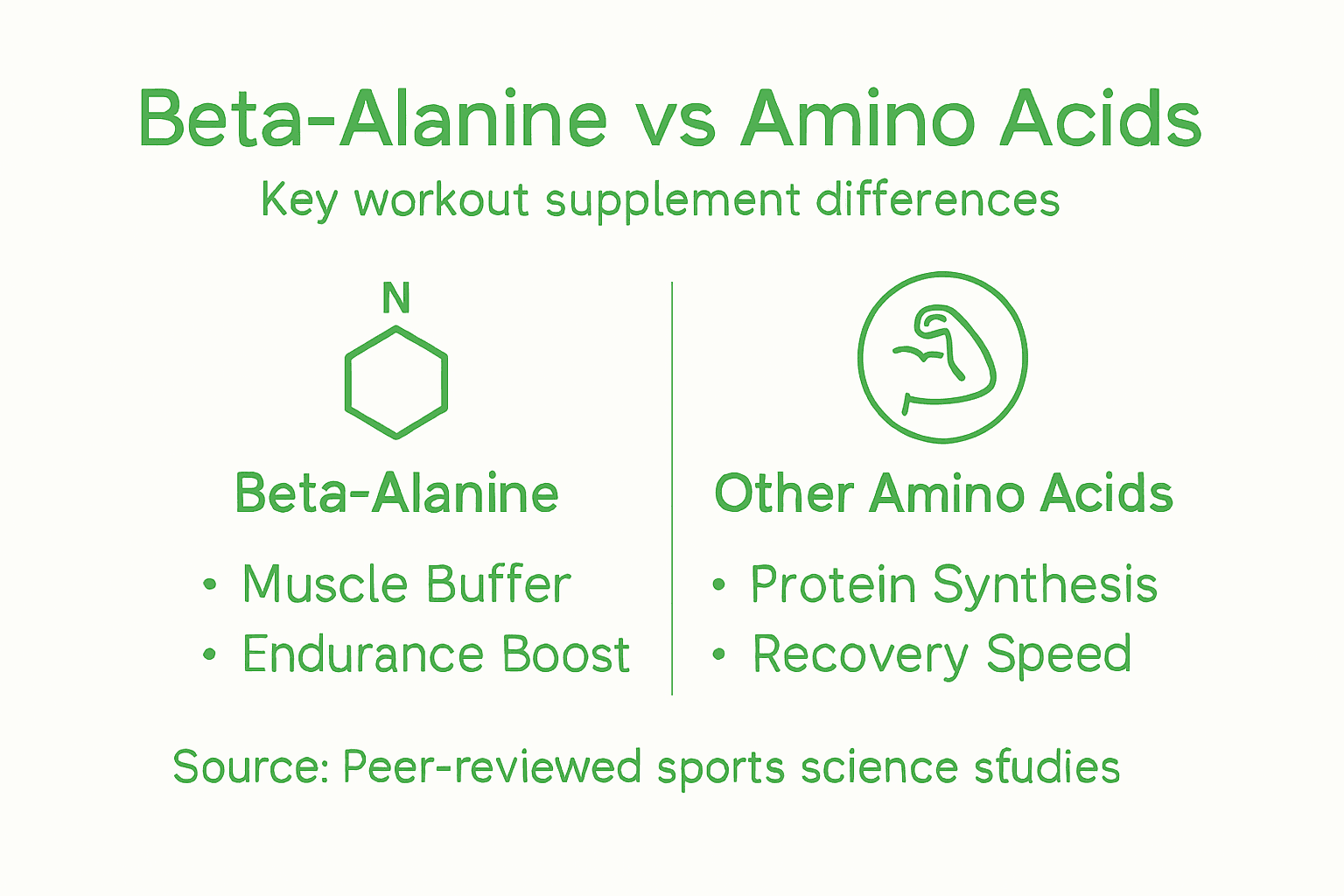
To help clarify how beta-alanine compares to other amino acids, see the table below:
| Attribute | Beta-Alanine | Essential Amino Acids | Branched-Chain Amino Acids |
|---|---|---|---|
| Protein synthesis role | Not used directly | Critical building blocks | Supports muscle repair |
| Main function | Buffers lactic acid | Forms muscle tissue | Reduces exercise breakdown |
| Exercise benefit | Extends endurance | Supports recovery | Boosts energy for workouts |
| Storage site | Skeletal muscle | Throughout body | Muscle tissue |
Pro tip: Consider combining beta-alanine with other amino acid supplements to create a comprehensive nutritional strategy that addresses both performance enhancement and muscle recovery.
Unlock Peak Performance with Beta-Alanine Supplements
If you want to break through workout fatigue and boost your muscle endurance like never before then beta-alanine is your go-to amino acid. This powerful supplement targets lactic acid buildup in muscles allowing you to push harder during high-intensity training sessions and extend your workout duration. With benefits such as enhanced power output and delayed muscle fatigue beta-alanine directly addresses the challenges athletes face in sustaining peak performance.

Experience the science-backed effects of beta-alanine by exploring a curated selection of amino acid supplements at MyGymSupplements.shop. Whether you prefer powders or capsules our range lets you personalise your dosage and maximise your training results. Don’t wait to tap into improved muscle buffering capacity and endurance gains Start your beta-alanine journey today and transform the way you train by visiting beta-alanine supplements to find your perfect match.
Frequently Asked Questions
What is beta-alanine and its main function?
Beta-alanine is a specialised amino acid that boosts muscle carnosine levels. It helps buffer lactic acid accumulation during intense exercise, aiding in muscle endurance and performance.
How does beta-alanine improve muscle endurance during workouts?
Beta-alanine enhances muscle endurance by increasing carnosine concentrations, which buffers hydrogen ions during high-intensity exercise, delaying muscle fatigue and enabling athletes to sustain performance.
What forms do beta-alanine supplements come in, and how should they be used?
Beta-alanine supplements are available in capsules, powders, and tablets. A typical dosage is 2-5 grams daily, taken consistently over 2-4 weeks to elevate muscle carnosine levels gradually.
Are there any side effects associated with beta-alanine supplementation?
The most common side effect of beta-alanine is paraesthesia, a temporary tingling sensation. This can be mitigated by dividing doses or opting for sustained-release formulations.

0 comments