

Scientific research demonstrates that MCT oil can increase energy expenditure by up to 10%, yet many fitness enthusiasts misunderstand how it works. This specialised fat source metabolises differently than standard dietary fats, offering rapid energy and enhanced fat burning when used correctly. You’ll discover what MCT oil truly is, how your body processes it, and practical strategies to integrate it into your fitness and weight management routine effectively.
Table of Contents
- Introduction To MCT Oil
- How MCT Oil Works In The Body
- Benefits Of MCT Oil For Fitness And Weight Management
- Common Misconceptions About MCT Oil
- Sources And Types Of MCT Oil
- Proper Usage, Dosage And Safety Considerations
- Summary And Practical Recommendations
- Discover MCT Oil And Supplements At MyGymSupplements
- Frequently Asked Questions
Key takeaways
| Point | Details |
|---|---|
| Rapid energy delivery | MCT oil metabolises directly in the liver, producing quick energy without complex digestion |
| Enhanced fat oxidation | Clinical studies show MCT supplementation can increase fat burning by up to 12% when combined with exercise |
| Not a miracle solution | Effectiveness depends entirely on proper dosing, timing, and integration with balanced nutrition and training |
| Product selection matters | Purified MCT oils containing caprylic and capric acids outperform coconut oil for performance benefits |
| Start gradually | Begin with 5 grams daily to avoid digestive discomfort, increasing slowly to optimal doses of 10 to 15 grams |
Introduction to MCT oil
MCT oil consists of medium-chain triglycerides, a specific type of fatty acid containing 6 to 12 carbon atoms in their molecular structure. This chemical composition distinguishes them fundamentally from the long-chain triglycerides found in most dietary fats, which contain 13 or more carbons. The shorter chain length creates dramatic differences in how your body absorbs and utilises these fats for energy.
Common natural sources include coconut oil and palm kernel oil, though commercial MCT products undergo additional processing to concentrate specific beneficial fatty acids. These purified oils typically contain higher percentages of caprylic acid (C8) and capric acid (C10), the two MCTs that provide the most pronounced metabolic advantages. Standard coconut oil, whilst containing some MCTs, primarily consists of lauric acid (C12), which behaves more like a long-chain fat during digestion.
The key functional difference lies in absorption speed. Long-chain fats require packaging into chylomicrons, transport through the lymphatic system, and eventual delivery to tissues before metabolism begins. MCTs skip this lengthy process entirely, moving directly from your intestines through the portal vein straight to your liver. This direct route enables rapid conversion into usable energy.
Understanding these fundamentals helps you recognise why MCT oil affects your energy levels and metabolism differently than other dietary fats:
- Chemical structure with 6 to 12 carbon chains enables faster processing
- Natural sources include coconut and palm kernel oils
- Purified commercial products concentrate beneficial C8 and C10 fatty acids
- Direct liver absorption bypasses standard fat digestion pathways
- Metabolic advantages stem from structural and processing differences
How MCT oil works in the body
Your body handles MCT oil through a dramatically accelerated metabolic pathway compared to conventional fats. When you consume MCTs, they absorb directly into the liver via the portal vein, bypassing the complex emulsification and packaging processes required for long-chain fats. This direct absorption means energy becomes available within minutes rather than hours.

Once in your liver, MCTs undergo rapid beta-oxidation, breaking down into ketone bodies including beta-hydroxybutyrate and acetoacetate. These ketones serve as an immediate fuel source for your brain, muscles, and other tissues. Unlike glucose, which requires insulin signalling and cellular transport mechanisms, ketones cross cell membranes freely, providing energy with minimal metabolic overhead.
This efficiency translates into practical performance benefits. During exercise, your muscles typically rely on stored glycogen for intense efforts. When you supplement with MCT oil, the resulting ketones provide an alternative fuel source that spares muscle glycogen, potentially extending endurance capacity. Your body essentially gains access to a parallel energy system.
For athletes seeking enhanced performance from MCT oil, timing becomes crucial. The metabolic pathway unfolds as follows:
- Ingestion triggers immediate absorption through intestinal walls
- Portal vein transport delivers MCTs directly to liver cells
- Hepatic mitochondria rapidly convert MCTs into ketone bodies
- Ketones enter bloodstream and distribute throughout the body
- Tissues utilise ketones for energy without insulin dependence
- Glycogen stores remain preserved for high-intensity efforts
Pro tip: Consume 10 to 15 grams of MCT oil 30 to 45 minutes before training to maximise ketone availability during your workout, providing sustained energy whilst preserving muscle glycogen for peak power output.
The metabolic efficiency of MCTs creates measurable physiological changes. Your liver prioritises MCT metabolism over other nutrients, sometimes processing them before glucose. This metabolic preference explains why MCT oil produces rapid energy effects that users notice within the first hour of consumption.
Benefits of MCT oil for fitness and weight management
Research demonstrates multiple mechanisms through which MCT oil enhances physical performance and supports body composition goals. The primary advantage centres on metabolic rate elevation. Clinical studies confirm that MCT oil supplementation increases energy expenditure by 5 to 10% compared to long-chain fats, creating a modest but consistent boost in daily calorie burning.
Fat oxidation represents another validated benefit. When you consume MCT oil regularly, your body upregulates fat-burning enzymes and increases the rate at which stored body fat mobilises for energy. Research shows fat oxidation improvements of up to 12% in individuals combining MCT supplementation with exercise, making it a valuable tool for physique enhancement when paired with proper training.
Clinical evidence shows MCT oil can increase daily energy expenditure by up to 10% whilst enhancing fat oxidation by 12%, creating measurable advantages for weight management when combined with structured nutrition and exercise programmes.
Beyond physical performance, MCT-derived ketones provide significant cognitive benefits. Your brain readily uses ketones as fuel, often with greater efficiency than glucose. Many users report improved mental clarity, focus, and sustained concentration during demanding cognitive tasks. These nootropic effects make MCT oil particularly valuable for athletes who require sharp decision-making alongside physical performance.
The documented fitness and weight management advantages include:
- Enhanced endurance through glycogen sparing during prolonged exercise
- Elevated metabolic rate creating additional daily calorie expenditure
- Increased fat oxidation supporting body composition improvements
- Improved mental focus and cognitive performance during training
- Reduced hunger and appetite in some individuals through ketone signalling
- Faster post-exercise recovery through alternative energy pathway availability
These benefits emerge most consistently when MCT oil supplements a well-structured nutrition and training programme rather than replacing fundamental dietary practices. The 5 to 10% metabolic boost translates to roughly 100 to 200 additional calories burned daily for most individuals, significant over time but insufficient to overcome poor dietary choices.
Common misconceptions about MCT oil
Marketing hype has created unrealistic expectations about MCT oil’s capabilities. The most persistent myth positions it as a standalone weight loss solution that burns fat regardless of overall dietary intake. Reality proves far more nuanced. Whilst MCT oil does increase energy expenditure and fat oxidation, these effects cannot overcome caloric excess. You must maintain appropriate total energy intake alongside structured nutrition strategies for meaningful body composition changes.
Another widespread confusion equates coconut oil with purified MCT oil. Standard coconut oil contains approximately 55% lauric acid (C12), which technically qualifies as a medium-chain fatty acid but metabolises much slower than caprylic (C8) and capric (C10) acids. Lauric acid requires lymphatic transport similar to long-chain fats, eliminating the rapid energy benefits that make purified MCT oils valuable. Products labelled simply as coconut oil will not provide equivalent effects.
Dosing misconceptions also create problems. Some users assume consuming larger quantities accelerates benefits, leading to excessive intake that triggers gastrointestinal distress without additional advantages. Your liver processes MCTs at a finite rate. Exceeding 15 grams per serving typically produces diminishing returns alongside uncomfortable digestive symptoms including cramping, diarrhoea, and nausea.
Clarifying these misunderstandings prevents disappointment and optimises results:
- MCT oil enhances but does not replace sound nutrition and training fundamentals
- Coconut oil provides minimal benefits compared to purified C8 and C10 MCT products
- More is not better: excessive doses cause discomfort without improved outcomes
- Individual responses vary: some people tolerate and benefit more than others
- Timing and context matter: random supplementation yields inferior results to strategic use
Pro tip: Begin with just 5 grams of MCT oil taken with food, gradually increasing by 5 grams weekly until reaching your target dose of 10 to 15 grams to minimise digestive side effects whilst allowing your system to adapt to increased fat metabolism.
Marketing claims sometimes suggest MCT oil directly targets belly fat or spot reduces problem areas. No dietary fat, including MCTs, can selectively burn fat from specific body regions. Fat loss occurs systemically based on genetics, hormones, and overall energy balance. Whilst MCT oil supports fat oxidation generally, it cannot override your body’s predetermined fat storage and mobilisation patterns.
Understanding how different supplements like green tea extract work alongside MCT oil in comprehensive programmes helps you maintain realistic expectations whilst maximising legitimate benefits through proper implementation.
Sources and types of MCT oil
Product selection significantly influences the benefits you experience from MCT oil supplementation. Commercial products vary substantially in composition, purity, and metabolic effects. Understanding these differences helps you choose options that align with your performance and body composition goals.
Purified MCT oils concentrate caprylic acid (C8) and capric acid (C10), the two fatty acids that metabolise most rapidly and produce the strongest effects on energy and fat burning. Premium products contain 60 to 100% C8, which converts to ketones faster than any other MCT. Mid-range options blend C8 and C10, offering excellent benefits at lower cost. Budget products sometimes include lauric acid (C12), reducing overall effectiveness.
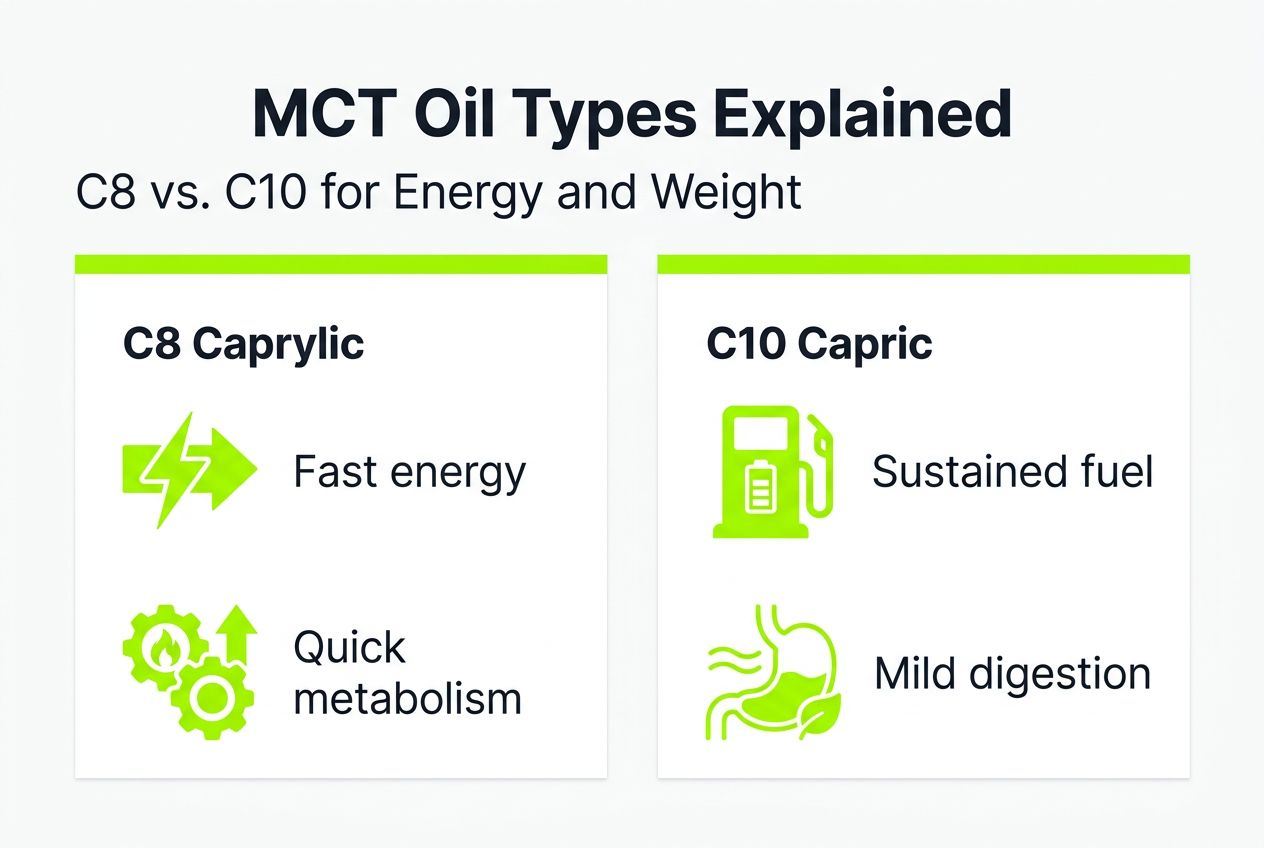
Coconut oil represents the most economical MCT source but provides limited benefits compared to purified alternatives. With only 15% combined C8 and C10 content, coconut oil requires consuming large quantities to match the effects of concentrated MCT products. The predominant lauric acid content means most fat undergoes standard long-chain digestion, eliminating the rapid energy advantage.
| Product type | C8/C10 content | Metabolism speed | Primary benefits | Typical cost |
|---|---|---|---|---|
| Pure C8 MCT oil | 95 to 100% C8 | Fastest ketone production | Maximum energy and cognitive effects | Premium |
| C8/C10 blend | 60 to 80% combined | Rapid with sustained release | Balanced energy and fat burning | Moderate |
| Standard MCT oil | 50 to 70% combined | Moderate speed | Good general benefits | Affordable |
| Coconut oil | 15% C8/C10 | Slowest MCT metabolism | Minimal rapid energy effects | Budget |
Price differences reflect production costs and concentration processes. Pure C8 products require additional refinement steps to isolate caprylic acid, increasing manufacturing expenses but delivering superior performance. For serious athletes and individuals prioritising maximum metabolic effects, the premium proves worthwhile.
Transparency varies across brands. Quality manufacturers provide detailed fatty acid breakdowns showing exact C8, C10, and C12 percentages. Less reputable companies use vague labelling like “MCT oil” without specifying composition, making informed comparisons impossible. Always verify the specific fatty acid profile before purchasing.
Sourcing matters for both quality and ethics. Palm kernel oil production raises environmental concerns about deforestation and habitat destruction. Sustainable coconut-derived MCT oils offer comparable performance with reduced ecological impact. Third-party testing for contaminants and accurate labelling provides additional assurance of product integrity.
Proper usage, dosage and safety considerations
Effective MCT oil supplementation requires attention to dosing, timing, and individual tolerance. Research supports 10 to 15 grams per serving as the optimal range for most individuals seeking performance and body composition benefits. This quantity provides sufficient MCTs for measurable metabolic effects without overwhelming your liver’s processing capacity or triggering digestive discomfort.
New users should implement gradual introduction protocols. Starting with 5 grams daily allows your digestive system to adapt to increased fat intake and MCT metabolism. After three to five days without adverse effects, increase to 10 grams. Maintain this dose for another week before considering advancement to 15 grams if desired. This progressive approach minimises the gastrointestinal issues that discourage many people from continued use.
Timing strategies depend on your specific goals. For workout performance enhancement, consume your dose 30 to 45 minutes pre-exercise to ensure peak ketone availability during training. For sustained energy throughout the day, split your total dose across two or three servings with meals. For appetite control and fat burning, morning consumption may provide advantages by establishing fat oxidation patterns early in your eating window.
Certain individuals should exercise caution or avoid MCT oil entirely:
- People with liver disease or hepatic impairment should consult medical professionals before use
- Individuals following very low-fat diets may experience digestive distress from sudden MCT introduction
- Those with diabetes should monitor blood glucose as ketone production can affect insulin requirements
- Anyone taking medications metabolised by the liver should verify no interactions exist
Pro tip: Mix MCT oil thoroughly into coffee, protein shakes, or smoothies rather than consuming it straight to improve palatability and reduce digestive discomfort, or add it to salad dressings and sauces for seamless integration into meals.
Side effects typically remain mild and transient when proper dosing protocols are followed. The most common complaints include stomach cramping, loose stools, and nausea, all of which usually resolve within one to two weeks as your body adapts. Taking MCT oil with food substantially reduces these effects by slowing absorption and providing other macronutrients that buffer the concentrated fat.
Quality and purity directly affect tolerability. Refined MCT oils with minimal impurities cause fewer digestive issues than lower-grade products containing processing residues or inconsistent fatty acid profiles. Investing in reputable brands reduces the likelihood of adverse reactions whilst ensuring you receive the advertised composition and benefits.
Summary and practical recommendations
MCT oil offers legitimate advantages for energy enhancement and weight management through its unique metabolic pathways and rapid conversion to ketones. The documented benefits including increased energy expenditure, enhanced fat oxidation, and improved cognitive function make it a valuable supplement when integrated properly into comprehensive fitness programmes. However, these effects emerge only when MCT oil complements rather than replaces fundamental nutrition and training practices.
Implementation success depends on several critical factors:
- Product selection favouring purified MCT oils high in C8 and C10 fatty acids
- Gradual introduction starting at 5 grams daily to establish digestive tolerance
- Strategic timing aligned with workout schedules or energy demands
- Realistic expectations understanding MCT oil enhances but does not replace proper diet
- Consistent use over weeks to months for cumulative metabolic adaptations
Begin your MCT oil integration by selecting a quality product with transparent labelling showing exact fatty acid composition. Start with a conservative 5-gram dose taken with breakfast or pre-workout, monitoring your response over the first week. Gradually increase to 10 to 15 grams as tolerance develops, spreading doses across the day or concentrating them before training based on your primary goals.
Combine MCT supplementation with sound nutritional practices, appropriate caloric intake for your goals, and structured training that creates the stimulus for adaptation. The metabolic boost and enhanced fat burning from MCT oil amplify results from these fundamentals but cannot compensate for their absence.
Discover MCT oil and supplements at MyGymSupplements
Ready to experience the energy and fat-burning benefits of high-quality MCT oil? MyGymSupplements offers carefully selected products designed specifically for athletes and fitness enthusiasts pursuing optimal performance and body composition. Our range includes purified MCT oils with verified fatty acid profiles, ensuring you receive genuine metabolic advantages rather than inferior substitutes.
Explore our complete selection of performance-enhancing MCT products backed by scientific research and formulated for maximum effectiveness. Each product includes detailed usage guidelines and transparent ingredient information, empowering you to make informed decisions aligned with your training goals. Beyond MCT oil, discover complementary supplements for pre-workout energy, post-workout recovery, and comprehensive nutritional support. Visit MyGymSupplements today to elevate your fitness routine with proven, premium supplements.
Frequently asked questions
What is MCT oil?
MCT oil is a concentrated supplement containing medium-chain triglycerides, specifically fatty acids with 6 to 12 carbon atoms that your body metabolises differently than standard dietary fats. These fats absorb directly into the liver through the portal vein, converting rapidly into ketones for immediate energy without requiring complex digestion. Purified MCT oils concentrate the most beneficial fatty acids, caprylic (C8) and capric (C10) acids, which provide faster energy and stronger metabolic effects than the lauric acid found predominantly in coconut oil.
How much MCT oil should I take daily?
Start with 5 grams daily to establish digestive tolerance, gradually increasing to 10 to 15 grams per serving over two to three weeks. Most research supporting performance and fat-burning benefits uses doses in this range. Exceeding 15 grams per serving typically produces diminishing returns whilst increasing the risk of gastrointestinal discomfort including cramping and diarrhoea. Split larger total daily doses across multiple servings or concentrate them pre-workout depending on your specific goals.
Is MCT oil the same as coconut oil?
No, MCT oil differs substantially from coconut oil in composition and metabolic effects. Coconut oil contains primarily lauric acid (C12), which behaves more like a long-chain fat requiring lymphatic transport and slower digestion. Purified MCT oils concentrate caprylic (C8) and capric (C10) acids that metabolise directly in the liver for rapid energy. Whilst coconut oil contains some beneficial MCTs, its overall profile provides minimal advantages compared to concentrated MCT products specifically formulated for performance enhancement.
Can MCT oil cause side effects?
Excessive or rapid introduction of MCT oil commonly causes digestive discomfort including stomach cramping, diarrhoea, and nausea. These effects result from your system adjusting to increased fat metabolism and typically resolve within one to two weeks. Starting with 5 grams daily and gradually increasing dosage minimises these issues. Taking MCT oil with food rather than on an empty stomach substantially reduces side effect severity. Individuals with liver disease should consult healthcare providers before use, as MCTs undergo hepatic metabolism.

0 comments