

Navigating supplement shelves often means weighing fact against fiction. For health-focused athletes and bodybuilders in the UK, green tea extract stands out for its rich concentration of antioxidant catechins, especially epigallocatechin-3-gallate (EGCG). While some myths promise miracle fat loss, scientific research confirms that benefits are moderate and dose-dependent. This guide clears up common misconceptions, sheds light on how green tea extract works, and offers practical insights for optimising your performance and body composition.
Table of Contents
- Green Tea Extract Explained And Myths
- Types Of Green Tea Extract Supplements
- How Green Tea Extract Works In The Body
- Benefits For Fat Loss And Athletic Recovery
- Risks, Interactions, And Safe Usage Guidance
Key Takeaways
| Point | Details |
|---|---|
| Concentrated Antioxidants | Green tea extract is derived from the Camellia sinensis plant and contains high levels of catechins, particularly EGCG, which may enhance metabolic processes. |
| Moderate Effects | While green tea extract can support fat loss and athletic recovery, its effects are moderate and require consistent use alongside a balanced lifestyle. |
| Supplement Variability | Different formulations of green tea extract exist, and selecting the right type is crucial for meeting individual health goals. |
| Safety Considerations | It’s important to consult healthcare professionals before starting supplementation, especially for individuals with pre-existing health conditions or those taking medications. |
Green tea extract explained and myths
Green tea extract represents a concentrated nutritional supplement derived from the Camellia sinensis plant, packed with potent antioxidants known as catechins. These bioactive compounds, particularly epigallocatechin-3-gallate (EGCG), have attracted significant attention for their potential metabolic and performance benefits.
Despite widespread claims, scientific research reveals a nuanced perspective on green tea extract’s effectiveness. Research indicates moderate metabolic impacts that are dose-dependent and not universally applicable across all individuals. The extract’s benefits are primarily linked to its high concentration of flavonoids and specific catechin compounds.
Key characteristics of green tea extract include:
- Rich source of antioxidant compounds
- Potential metabolic enhancement properties
- Contains concentrated EGCG levels
- May support oxidative stress reduction
Misconceptions about green tea extract often revolve around unrealistic weight loss expectations. While the supplement can contribute to metabolic processes, it is not a miracle solution. Clinical evidence suggests moderate effects that require consistent dosage and complementary lifestyle factors.
Pro tip: Consult a healthcare professional before integrating green tea extract into your supplement regimen, especially if you have pre-existing medical conditions or are taking medications.
Types of green tea extract supplements
Green tea extract supplements come in diverse formulations, each designed to meet specific nutritional and performance objectives. Supplement variations depend on extraction methods and targeted health benefits, offering consumers multiple options for incorporating this powerful antioxidant supplement into their wellness routine.
Primary types of green tea extract supplements include:
- Standardised extracts: Precisely measured EGCG content (typically 50%)
- Decaffeinated versions: Ideal for caffeine-sensitive individuals
- Combination formulas: Blended with additional antioxidants or performance compounds
- Liquid concentrates
- Capsule and tablet formats
- Powdered supplement forms
The quality and effectiveness of green tea extract supplements vary significantly based on processing techniques and concentration levels. Supplement selection requires understanding individual metabolic needs and potential interactions with existing health conditions or medications.
Most green tea extract supplements are categorised by their primary characteristics:
- Concentration of catechins
- Caffeine content
- Additional complementary ingredients
- Manufacturing standardisation
Pro tip: Always verify the EGCG percentage and consult healthcare professionals to select a green tea extract supplement most suitable for your specific health and fitness goals.
Here’s a comparison of popular green tea extract supplement types, helping you choose what suits your needs:
| Supplement Type | EGCG Content | Caffeine Level | Common Purpose |
|---|---|---|---|
| Standardised Extract | High, precise | Varies | Targeted metabolic effects |
| Decaffeinated | Moderate-high | Very low | Caffeine-free antioxidant use |
| Combination Formula | Moderate | Varies | Enhanced antioxidant support |
| Liquid Concentrate | Varies | Possible | Fast absorption, easy dosing |
| Capsule/Tablets | Fixed per serving | Varies | Convenience, standard dosing |
| Powdered Form | Adjustable | Varies | Custom blends, flexible dose |
How green tea extract works in the body
Green tea extract operates through complex metabolic mechanisms that influence multiple physiological processes. Catechins modify metabolic signaling pathways by targeting specific enzymes and cellular processes responsible for energy expenditure and fat metabolism.
Key metabolic interactions include:
- Stimulation of thermogenesis
- Enhancement of fat oxidation
- Modulation of insulin sensitivity
- Suppression of fat cell differentiation
- Reduction of oxidative stress markers
Green tea extract influences lipid metabolism through multiple biochemical mechanisms. The primary active compounds, particularly epigallocatechin gallate (EGCG), interact with cellular receptors and enzymatic pathways to promote metabolic efficiency and support weight management objectives.
The physiological impact of green tea extract can be understood through its primary action mechanisms:
- Increasing metabolic rate
- Promoting fat breakdown
- Regulating hormone production
- Supporting antioxidant defence systems
Pro tip: Combine green tea extract supplementation with consistent exercise and balanced nutrition to maximise its potential metabolic benefits.

Benefits for fat loss and athletic recovery
Meta-analysis reveals green tea extract’s potential for body composition management, demonstrating moderate yet significant impacts on metabolic health and fat loss strategies for athletes and fitness enthusiasts.
Key benefits for fat loss include:
- Reduction in body mass index (BMI)
- Decreased body fat percentage
- Enhanced metabolic rate
- Improved adiponectin levels
- Support for sustainable weight management
Green tea extract supports modest weight reduction with potential average losses around 1.27 kg over 12 weeks. Its primary mechanisms involve fat oxidation and metabolic enhancement, making it a strategic supplement for individuals pursuing body composition goals.
Athletic recovery benefits are equally promising:
- Reduction of exercise-induced oxidative stress
- Supporting antioxidant defence mechanisms
- Potentially mitigating muscle inflammation
- Enhancing post-exercise metabolic recovery
Pro tip: Integrate green tea extract systematically with balanced nutrition and consistent training to maximise its metabolic and recovery potential.
Risks, interactions, and safe usage guidance
Green tea extract safety requires careful consideration of individual health conditions and potential pharmaceutical interactions. While generally beneficial, the supplement demands a nuanced approach to consumption and personal health management.
Potential risks and interactions include:
- Interactions with cardiovascular medications
- Potential liver toxicity at high doses
- Possible interference with cancer therapies
- Interactions with anticoagulant drugs
- Risk of DNA damage in concentrated forms
Supplement dosage and individual health factors play crucial roles in determining safe consumption. Moderate intake is typically well-tolerated, but excessive consumption may lead to adverse effects requiring medical attention.
Recommended safety guidelines for green tea extract usage:
- Consult healthcare professionals before starting supplementation
- Start with lowest recommended dosage
- Monitor for potential side effects
- Avoid concurrent use with stimulant medications
- Discontinue use if adverse reactions occur
Pro tip: Always purchase green tea extract from reputable sources and maintain transparency with healthcare providers about your supplement regimen.
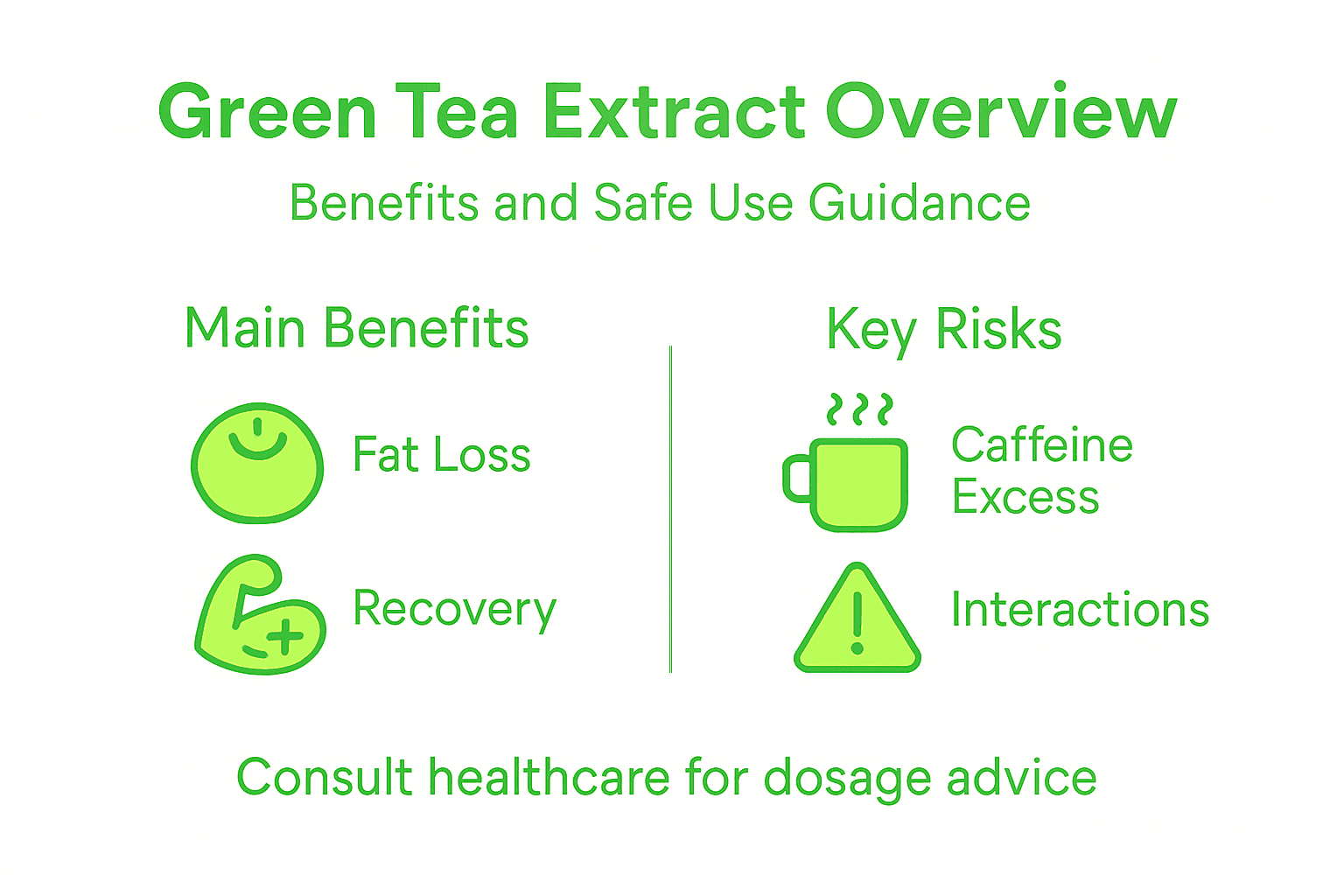
The following table summarises potential benefits and risks of green tea extract for balanced decision-making:
| Benefit | Typical Impact | Potential Risk | Guidance |
|---|---|---|---|
| Fat loss support | Modest weight reduction | Liver toxicity (high doses) | Use moderate dosage, monitor |
| Antioxidant protection | Reduces oxidative stress | Drug interactions | Consult healthcare provider |
| Athletic recovery | Improved post-exercise repair | Potential DNA damage | Avoid excessive amounts |
Unlock Your Fat Loss and Performance Potential with Targeted Supplements
Understanding how green tea extract supports fat loss and athletic recovery can be a game-changer for your fitness journey. The article reveals that while green tea extract offers moderate metabolic benefits through antioxidants and catechins like EGCG, the best results come from combining it with the right nutrition and exercise routine. If your goal is to enhance fat oxidation, improve metabolic rate, and support recovery after intense training, you need supplements that complement these effects and fit your individual needs.
At MyGymSupplements.shop, we specialise in providing carefully selected products designed to maximise your body composition goals and performance. Explore our range of Weight Management Solutions to find green tea extract supplements alongside other metabolism-boosting formulas. For comprehensive recovery support, our Performance Recovery Aids help reduce oxidative stress and muscle inflammation, enhancing your post-workout repair. Don’t wait to elevate your results—discover the supplements formulated with your goals in mind and start transforming your routine today.
Frequently Asked Questions
What is green tea extract and how does it work for fat loss?
Green tea extract is a concentrated supplement derived from the Camellia sinensis plant, rich in catechins, particularly epigallocatechin gallate (EGCG). It aids fat loss by enhancing metabolic rate, promoting fat oxidation, and modulating insulin sensitivity, thereby supporting weight management.
Are there specific dosages recommended for green tea extract to achieve fat loss benefits?
While the optimal dosage can vary, research suggests that moderate intake of green tea extract is effective. It’s essential to consult with a healthcare professional to determine the dosage tailored to individual needs and health conditions.
What are the benefits of green tea extract for athletic recovery?
Green tea extract may benefit athletic recovery by reducing exercise-induced oxidative stress, supporting antioxidant defence mechanisms, and potentially mitigating muscle inflammation. These effects can enhance post-exercise metabolic recovery, aiding overall performance.
Are there any risks or interactions associated with taking green tea extract?
Yes, potential risks include liver toxicity at high doses, drug interactions, and possible DNA damage in concentrated forms. It is crucial to monitor intake and consult a healthcare provider before starting supplementation, especially if taking other medications.
Recommended
- Unleash Your Fitness Potential: Top Pre-Workout Supplements Guide
- 7 Safest Weight Loss Supplements for Fitness Success – MyGymSupplements
- 7 Safest Weight Loss Supplements for Fitness Success
- 7 Top Antioxidant Supplements for Fitness Enthusiasts
- Fettverbrennung anregen: 8 einfache Tipps, die wirklich funktionieren – mybody®x

0 comments