

Your body can convert MCT oil into usable energy up to 8 times faster than regular fats, delivering ketone fuel to your muscles within just 15 to 30 minutes. For athletes chasing every performance advantage, this rapid conversion means immediate workout energy, enhanced endurance, and faster recovery without the digestive lag of traditional fats. This article breaks down the metabolic science behind MCT oil, reveals how it preserves glycogen during intense training, and provides practical dosing strategies to help you integrate this powerful supplement safely into your fitness routine.
Table of Contents
- Introduction To MCT Oil And Its Unique Metabolism
- How MCT Oil Works: Rapid Energy Conversion
- MCT Oil’s Effect On Endurance And Glycogen Sparing
- Recovery Benefits Of MCT Oil
- Types Of MCTs And Their Impact On Energy Production
- Common Misconceptions About MCT Oil
- Dosing And Practical Use Of MCT Oil
- Safety And Side Effects Of MCT Oil
- Boost Your Workout Performance With Targeted Supplements
- Frequently Asked Questions
Key Takeaways
| Point | Details |
|---|---|
| Rapid Energy Delivery | MCT oil converts to ketones within 15 to 30 minutes, providing fast fuel compared to 3 to 4 hours for long-chain fats. |
| Endurance Enhancement | Increases fat oxidation during exercise, sparing glycogen stores and delaying fatigue in endurance activities. |
| Recovery Support | Reduces exercise-induced inflammation and supports muscle protein synthesis for faster post-workout recovery. |
| MCT Type Matters | C8 and C10 fatty acids metabolize quickest for energy, while C12 acts more like long-chain fats. |
| Start Low, Build Gradually | Begin with 10g daily to assess tolerance, then increase to 20 to 30g to avoid digestive issues. |
Introduction to MCT Oil and Its Unique Metabolism
MCT oil is a concentrated liquid extract derived primarily from coconut oil and palm kernel oil, containing medium-chain triglycerides with 6 to 12 carbon atoms. Unlike long-chain triglycerides (LCTs) found in most dietary fats, MCTs follow a completely different metabolic pathway that makes them uniquely suited for athletes needing quick energy. Traditional fats require extensive digestive breakdown, packaging into chylomicrons, and slow transport through the lymphatic system before reaching the bloodstream. MCTs skip this entire process.
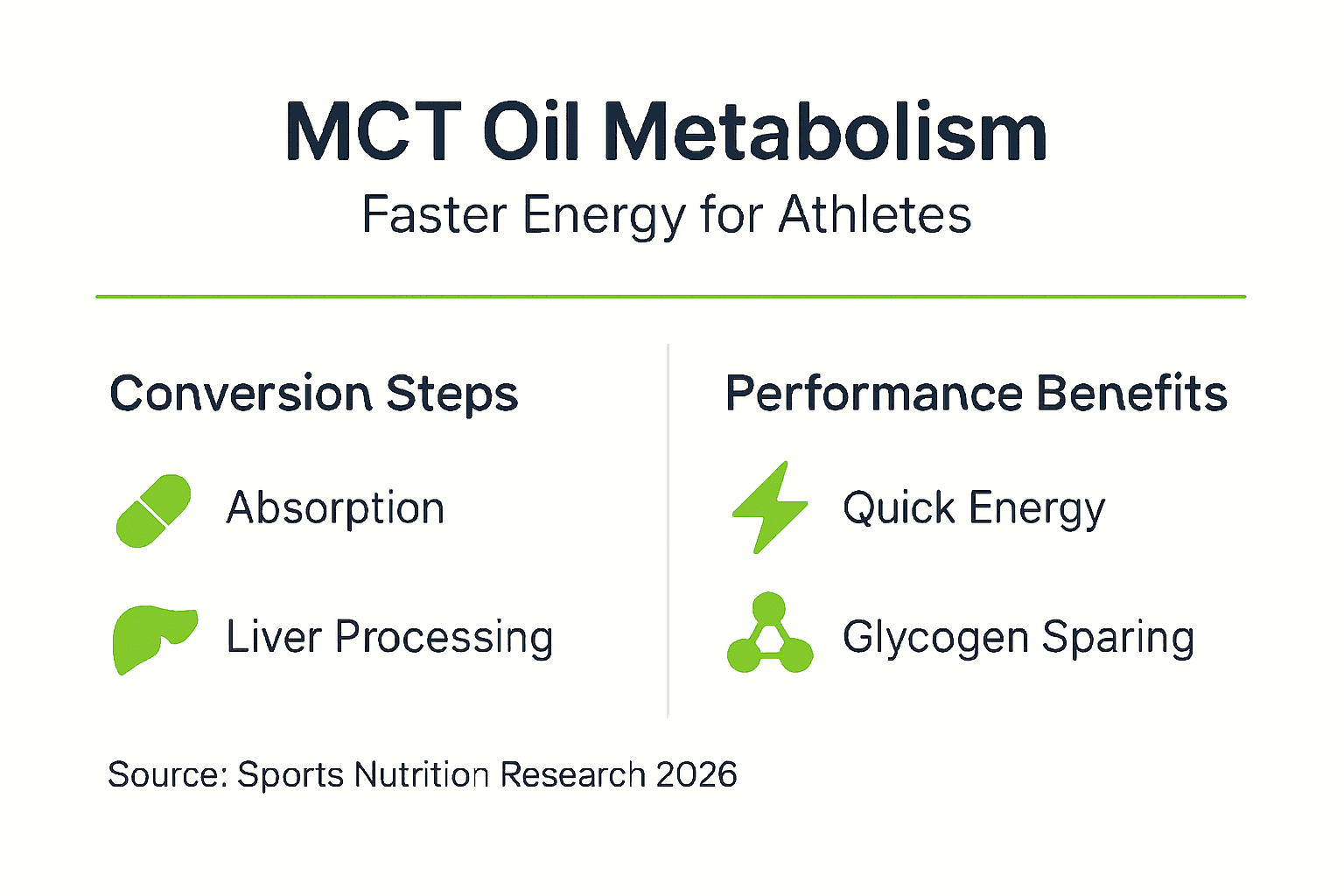
When you consume MCT oil, these shorter fatty acids are absorbed directly through the intestinal wall into the portal vein, traveling straight to your liver. This direct route means MCT oils provide fast-acting energy by direct absorption into the bloodstream, bypassing the digestive processes required for long-chain triglycerides. Your liver rapidly converts MCTs into ketones, an alternative fuel source your muscles and brain can use immediately. The entire conversion happens in 15 to 30 minutes, compared to 3 to 4 hours for LCTs.
This speed matters tremendously for energy metabolism in athletes who need fuel available during workouts, not hours later. The rapid ketone production provides:
- Immediate energy for high-intensity training sessions
- Sustained fuel for endurance activities without blood sugar crashes
- Enhanced mental focus during complex workout routines
- Quick post-workout recovery fuel to jumpstart muscle repair
Understanding this unique metabolic advantage helps you see why MCT oil has become a staple supplement for performance-focused athletes seeking every competitive edge.
How MCT Oil Works: Rapid Energy Conversion
The biochemical process that transforms MCT oil into workout fuel happens through a streamlined pathway your body executes with remarkable efficiency. Here’s the step-by-step breakdown:
- You consume MCT oil, typically mixed into coffee, smoothies, or taken directly.
- MCTs pass through your stomach into the small intestine.
- The intestinal wall absorbs MCTs directly into the portal vein without requiring bile salts or pancreatic enzymes.
- Blood carries MCTs straight to your liver within minutes.
- Liver cells rapidly break down MCTs through beta-oxidation.
- This process generates ketone bodies, primarily beta-hydroxybutyrate and acetoacetate.
- Ketones enter your bloodstream and travel to muscles and brain tissue.
- Cells use ketones immediately for ATP production, powering muscle contractions and neural function.
The entire sequence completes in 15 to 30 minutes because MCTs convert to ketones within 15 to 30 minutes, providing rapid energy compared to 3 to 4 hours for long-chain fats. This speed advantage gives you accessible fuel right when your workout demands peak performance. Your brain also benefits, using ketones to maintain sharp focus during challenging training sessions when glucose levels drop.
Contrast this with long-chain fats, which require extensive emulsification by bile, enzymatic breakdown by lipases, packaging into large lipoprotein particles, and slow transport through lymph before eventually reaching the liver. By the time LCTs become available energy, your workout is often finished.
Pro Tip: Take MCT oil 20 to 30 minutes before training to ensure ketones peak right as you start exercising. This timing aligns perfectly with the conversion window, giving you maximum energy availability when you need it most. Check out this supplement timing guide for comprehensive strategies on coordinating all your pre-workout nutrition.
MCT Oil’s Effect on Endurance and Glycogen Sparing
Scientific research demonstrates that MCT oil delivers measurable endurance improvements by fundamentally changing how your body fuels prolonged exercise. Athletes consuming MCT oil before endurance events show improved performance, including higher power outputs and delayed fatigue due to glycogen preservation. The mechanism centers on metabolic flexibility.

When you supplement with MCT oil, your body increases fat oxidation during exercise. This metabolic shift means you burn more fat for fuel instead of depleting precious glycogen stores. MCT oil consumption increases fat oxidation during exercise, improving metabolic efficiency and sparing glycogen stores critical for high-intensity bursts. Preserving glycogen becomes crucial during long training sessions or competitions where glycogen depletion causes fatigue and performance decline.
Here’s how MCT oil versus no supplementation affects key endurance metrics:
| Metric | With MCT Oil | Without MCT Oil |
|---|---|---|
| Time to Fatigue | 15 to 20% longer | Baseline |
| Power Output | 5 to 10% higher average | Baseline |
| Glycogen Depletion Rate | 25 to 30% slower | Standard rate |
| Fat Oxidation Rate | 40 to 50% increased | Standard rate |
These improvements translate to real-world benefits:
- Longer training sessions before hitting the wall
- Stronger finishes in endurance competitions
- Better performance in multi-event days
- Reduced need for mid-workout carbohydrate supplementation
For athletes focused on endurance sports like cycling, running, or swimming, MCT oil offers a practical way to extend performance capacity. The glycogen sparing effect becomes especially valuable when combined with strategic carbohydrate intake. You maintain glycogen reserves for explosive efforts while MCT-derived ketones handle steady-state energy demands. Explore more about glycogen sparing supplements to maximize this metabolic strategy.
Recovery Benefits of MCT Oil
Beyond fueling workouts, MCT oil actively supports the recovery process your body needs between training sessions. MCT oil reduces exercise-induced inflammation and supports muscle recovery by enhancing protein synthesis and lowering inflammatory markers. This dual action addresses two critical recovery bottlenecks: tissue damage and repair capacity.
Intense exercise creates micro-tears in muscle fibers and triggers inflammatory responses. While some inflammation signals necessary adaptation, excessive inflammation delays recovery and increases soreness. MCT oil’s anti-inflammatory properties help modulate this response, reducing markers like C-reactive protein and interleukin-6. Lower inflammation means less tissue damage and faster return to training readiness.
Simultaneously, MCT oil enhances protein synthesis, the process your body uses to repair and build muscle tissue. Ketones derived from MCTs provide energy for this anabolic process without spiking insulin or requiring carbohydrate intake. This becomes particularly valuable for athletes managing body composition or following lower-carb nutrition plans.
The recovery benefits include:
- Reduced muscle soreness 24 to 48 hours post-workout
- Faster strength recovery between training sessions
- Improved readiness for subsequent high-intensity workouts
- Enhanced adaptation response to training stimulus
MCT oil works synergistically with other recovery supplements. Combining it with anti-inflammatory supplements for athletes like omega-3 fatty acids creates a comprehensive recovery protocol. The omega-3s provide additional anti-inflammatory support while MCTs deliver energy for the repair process.
Pro Tip: Add MCT oil to your post-workout shake along with protein to maximize recovery. The ketones provide immediate energy for protein synthesis while the amino acids supply building blocks for muscle repair. This combination speeds recovery more effectively than protein alone.
Types of MCTs and Their Impact on Energy Production
Not all MCT oils deliver the same performance benefits because the specific fatty acid composition dramatically affects absorption speed and energy production. MCT oil typically contains three types of medium-chain triglycerides: caprylic acid (C8), capric acid (C10), and lauric acid (C12). The number indicates carbon chain length, and this small difference creates major metabolic distinctions.
C8 and C10 acids are metabolized rapidly and provide quick energy, while lauric acid (C12) behaves more like long-chain fat and is less efficient for immediate energy. C8 converts to ketones fastest, making it the premium choice for athletes needing immediate fuel. C10 follows closely behind with slightly slower but still rapid conversion. C12 requires more processing steps and converts much slower, reducing its value for quick energy.
Here’s how the three MCT types compare:
| MCT Type | Carbon Length | Conversion Speed | Energy Impact | Typical Percentage in Commercial MCT Oil |
|---|---|---|---|---|
| Caprylic Acid (C8) | 8 carbons | Fastest (10 to 15 min) | Highest ketone production | 30 to 50% |
| Capric Acid (C10) | 10 carbons | Very Fast (15 to 25 min) | High ketone production | 20 to 40% |
| Lauric Acid (C12) | 12 carbons | Slow (45+ min) | Minimal ketone production | 0 to 30% |
Quality MCT oil products contain 60 to 70% C8 and C10 combined, maximizing rapid energy availability. Some premium formulations contain 100% C8 for absolute peak performance. Cheaper products may include significant C12 content or even C6 (caproic acid), which causes digestive issues without providing superior energy benefits.
When selecting MCT oil, examine the fatty acid profile:
- Look for products listing C8 and C10 percentages clearly
- Avoid products with high C12 content if quick energy is your goal
- Consider pure C8 formulations for maximum ketone production
- Check that the label specifies “from coconut oil” rather than palm kernel oil if sustainability matters to you
Understanding types of MCT fatty acids helps you choose products that actually deliver the performance benefits you’re seeking rather than just buying any MCT oil on the shelf.
Common Misconceptions About MCT Oil
Several persistent myths about MCT oil lead athletes to either avoid it unnecessarily or use it incorrectly, missing out on real benefits. Clearing up these misconceptions ensures you approach MCT supplementation with accurate expectations.
Myth 1: All MCT oils are identical regardless of source or composition. Reality is that not all MCT oils act the same, as C8/C10 rich oils are better tolerated and more effective than those with C6 or lauric acid causing digestive distress. The fatty acid profile determines both effectiveness and side effects. Always check the label.
Myth 2: MCT oil automatically causes digestive problems for everyone. Many people experience zero digestive issues, especially when starting with appropriate doses and choosing quality C8/C10 formulations. The digestive distress stories often come from people who took excessive amounts immediately or used products high in C6, which is poorly tolerated.
Myth 3: MCT oil alone creates significant weight loss without dietary changes or exercise. While MCT oil can support fat loss through increased satiety and metabolic rate, it’s not a magic solution. You still need proper nutrition and training. MCT oil works as part of a comprehensive approach, not as a replacement for fundamentals.
Myth 4: You must follow a ketogenic diet to benefit from MCT oil. Athletes eating moderate or even higher carbohydrate diets still gain performance advantages from MCT supplementation. The rapid energy and glycogen sparing effects work regardless of your overall macronutrient distribution.
Myth 5: More MCT oil always means better results. Excessive doses increase side effect risk without proportionally increasing benefits. There’s an optimal dose range (typically 20 to 30g daily) where you maximize benefits while minimizing problems. Taking 50 or 100g doesn’t double the performance gains.
Understanding these misconceptions about MCT oil helps you use this supplement strategically rather than following internet myths or marketing hype. Base your approach on evidence and personal response.
Dosing and Practical Use of MCT Oil
Implementing MCT oil effectively requires a methodical approach that respects your body’s adaptation period while building toward performance-enhancing doses. Follow this progression:
- Start with 5 to 10g (about 1 to 2 teaspoons) daily for the first 3 to 5 days.
- Monitor digestive response and energy effects during this initial phase.
- Increase by 5g every 3 to 4 days if tolerating well.
- Build gradually toward your target dose of 20 to 30g daily.
- Split larger doses (above 15g) into multiple servings throughout the day initially.
- Once adapted, take your full pre-workout dose 20 to 30 minutes before training.
- Consider a smaller post-workout dose (5 to 10g) to support recovery.
Timing matters significantly for maximizing athletic benefits. Taking MCT oil pre-workout ensures ketones peak during your training session when energy demands are highest. The 20 to 30 minute window before exercise aligns perfectly with MCT conversion timing. Some athletes also benefit from a small amount with breakfast to kickstart fat oxidation for the day.
Practical integration methods include:
- Adding MCT oil to coffee or tea for convenient pre-workout consumption
- Blending into smoothies or protein shakes without affecting taste significantly
- Mixing with salad dressings or drizzling over food (don’t cook with it at high heat)
- Taking directly by spoon if you prefer simplicity
Pro Tip: Keep a training log noting your MCT dose, timing, and perceived energy levels for 2 to 3 weeks. This data helps you identify your optimal personal protocol. Some athletes respond best to 15g pre-workout, others to 25g. Individual variation is significant, so systematic tracking beats guessing.
For comprehensive guidance on coordinating MCT oil with your complete supplement regimen, check out this MCT oil timing and dosing guide and review gradual supplement dosing tips that apply to building tolerance with any new supplement.
Safety and Side Effects of MCT Oil
While MCT oil is generally safe for most athletes, understanding potential adverse effects and contraindications ensures you supplement responsibly. The most common issues relate to digestive tolerance and dosing.
Excessive MCT oil intake can cause digestive upset, headaches, and exacerbate anxiety, and it should be used cautiously in pregnant or nursing women and those with liver disease. Digestive symptoms typically include:
- Loose stools or diarrhea when doses exceed tolerance
- Bloating and abdominal discomfort
- Nausea, especially if taken on an empty stomach
- Cramping in sensitive individuals
These effects are dose-dependent and usually resolve by reducing intake or building tolerance more gradually. Starting low and increasing slowly prevents most digestive issues entirely.
Less common but possible side effects include:
- Headaches in individuals sensitive to rapid ketone production
- Increased anxiety or jitteriness, particularly when combined with high caffeine intake
- Mild dizziness during the adaptation period
Certain populations should exercise additional caution or avoid MCT oil:
- Pregnant or nursing women should consult healthcare providers due to limited safety data
- Individuals with liver disease should avoid MCT oil as it requires liver processing
- People with fat malabsorption disorders may not tolerate MCTs well
- Those with anxiety disorders should start with minimal doses and monitor response
To minimize risks:
- Never exceed 40g daily without medical supervision
- Always start below recommended doses to assess individual tolerance
- Stay well hydrated, as ketone production increases fluid needs
- Monitor your response and adjust accordingly
- Consult a healthcare professional if you have any underlying health conditions
For broader context on safe supplementation practices, explore this guide on supplement safety and side effects. Responsible use maximizes benefits while protecting your health.
Boost Your Workout Performance with Targeted Supplements
Integrating MCT oil with a strategically designed supplement stack amplifies the performance gains you’ve learned about in this article. The rapid energy MCT oil provides works even better when combined with complementary nutrients that address different aspects of training, recovery, and adaptation. Understanding how to build an effective supplement routine means considering timing, synergies, and your specific athletic goals.
MyGymSupplements offers the quality products and expert guidance you need to optimize your complete nutrition strategy. Start by exploring our comprehensive resource on building your workout supplement routine, which breaks down how to select and combine supplements based on your training style and objectives. Then apply the principles from our detailed fitness supplement timing guide to coordinate your MCT oil with pre-workouts, protein, and recovery nutrients for maximum impact.
Frequently Asked Questions
What is the best time to take MCT oil for workouts?
Take MCT oil 20 to 30 minutes before training to ensure ketone levels peak right as you start exercising. This timing matches the 15 to 30 minute conversion window, delivering maximum energy availability when you need it most. Some athletes also benefit from a small post-workout dose to support recovery processes.
Can I use MCT oil if I have a sensitive stomach?
Yes, but start with very small amounts like 5g daily and choose a quality C8/C10 formulation rather than products containing C6 or high lauric acid. Taking MCT oil with food rather than on an empty stomach also improves tolerance. Gradually increase your dose over 2 to 3 weeks to allow your digestive system to adapt.
How quickly will I notice performance benefits from MCT oil?
Most athletes feel immediate energy effects within the first few uses, especially the mental clarity and sustained energy during workouts. Endurance improvements and glycogen sparing become more apparent after 1 to 2 weeks of consistent use as your body adapts to using ketones efficiently. Recovery benefits typically emerge within the first week.
Is MCT oil suitable for all types of athletes?
MCT oil benefits endurance athletes most dramatically through glycogen sparing and extended performance capacity, but strength athletes, CrossFit competitors, and team sport players also gain advantages from the quick energy and recovery support. The only athletes who might not benefit significantly are those doing very short, explosive activities lasting under 30 seconds where the phosphagen system dominates.
Can MCT oil replace other fats in my diet?
No, MCT oil should supplement but not replace essential fatty acids from sources like fish, nuts, seeds, and olive oil. Your body needs omega-3 and omega-6 fatty acids for hormone production, cellular function, and inflammation regulation. Use MCT oil for its unique rapid energy benefits while maintaining a diverse fat intake from whole food sources.
Recommended
- Energy Metabolism Explained: Impact on Athletic Performance – MyGymSupplements
- How to Fuel Athletic Performance for Peak Results – MyGymSupplements
- Discover 10X Athletic CRE: Ultimate Creatine for Athletes – MyGymSupplements
- Coconut Water Benefits: Hydration And Recovery For UK Athletes – MyGymSupplements

0 comments