

Many believe eating more always means gaining fat. Yet science reveals a controlled calorie surplus drives muscle growth when paired with resistance training. This guide unpacks what calorie surplus truly means and how to harness it effectively for building lean mass without excessive fat accumulation. You’ll discover evidence-based strategies to fuel your gains intelligently.
Table of Contents
- What Is Calorie Surplus And How It Works
- Physiological Mechanisms Of Calorie Surplus In Muscle Gain
- Optimal Calorie Surplus Amounts And Timing
- Common Misconceptions About Calorie Surplus
- Risks And Trade-Offs Of Prolonged Calorie Surplus
- Role Of Supplements In Supporting Calorie Surplus
- Practical Implementation And Monitoring Of Calorie Surplus
- Calorie Surplus Benefits Beyond Muscle Gain
- Discover Our Expert Supplement Solutions For Muscle Gain
- Frequently Asked Questions
Key takeaways
| Point | Details |
|---|---|
| Calorie surplus provides muscle-building energy | Eating 250-500 kcal above maintenance creates an anabolic environment for hypertrophy. |
| Resistance training converts surplus to muscle | Without training, excess calories become fat rather than muscle tissue. |
| Moderate surplus balances gains and fat control | Small controlled surplus minimises fat accumulation whilst maximising lean mass gains. |
| Cycling surplus phases optimises results | Periods of 6-12 weeks prevent metabolic adaptation and excessive fat storage. |
| Supplements support but never replace surplus | Whey protein and creatine enhance training outcomes when combined with proper nutrition. |
What is calorie surplus and how it works
A calorie surplus occurs when daily calorie intake exceeds total daily energy expenditure, leading to energy availability for anabolic processes such as muscle hypertrophy. Your body uses this extra energy to repair damaged muscle fibres and construct new tissue. Without sufficient calories, muscle growth stalls regardless of training intensity.
The typical surplus range sits between 250-500 kcal daily for effective muscle gain without excessive fat. This moderate approach provides enough energy for muscle protein synthesis whilst limiting unnecessary fat storage. Larger surpluses often lead to disproportionate fat accumulation that obscures muscle definition.
Three key factors determine surplus effectiveness:
- Energy availability for anabolic hormone production and muscle repair processes
- Adequate substrate for increased muscle protein synthesis rates during recovery
- Sufficient fuel to support progressive training intensity and volume increases
The balance between intake and expenditure creates the foundation for muscle growth. Total daily energy expenditure includes basal metabolic rate, activity thermogenesis, and exercise energy. When intake consistently exceeds this total, your body enters an anabolic state conducive to hypertrophy.
Resistance training remains essential because it signals your body to partition surplus calories toward muscle rather than fat. Without this training stimulus, excess energy defaults to adipose tissue storage. The muscle gain nutrition guide explores optimal macronutrient ratios to maximise this partitioning effect.
Physiological mechanisms of calorie surplus in muscle gain
Calorie surplus fundamentally supports increased muscle protein synthesis, the biological process driving hypertrophy. Muscle protein synthesis rates increase significantly when in a calorie surplus combined with resistance training, facilitating hypertrophy through enhanced amino acid uptake and protein assembly. This elevated synthesis rate can improve by 20-40% compared to maintenance or deficit states.

The surplus creates an anabolic hormonal environment that accelerates recovery and adaptation. Insulin sensitivity improves with adequate energy availability, enhancing nutrient delivery to muscle cells. Testosterone and growth hormone production also benefit from surplus conditions, particularly when combined with heavy resistance work.
Key mechanisms include:
- Enhanced mTOR pathway activation driving protein synthesis and cellular growth
- Reduced protein breakdown rates preserving existing muscle tissue during training stress
- Improved glycogen supercompensation supporting training volume and intensity capacity
- Faster satellite cell recruitment enabling muscle fibre repair and hypertrophy
Research shows MPS rates can increase 25-30% during controlled surplus phases lasting 8-12 weeks when paired with progressive overload training.
Adequate energy helps repair microtrauma from resistance training more efficiently. Your body prioritises recovery processes when calories are abundant, reducing injury risk and improving training consistency. The surplus also buffers against overtraining by providing metabolic headroom for high-volume programmes. Understanding how calorie surplus enhances muscle gain helps you apply these principles practically.
Optimal calorie surplus amounts and timing
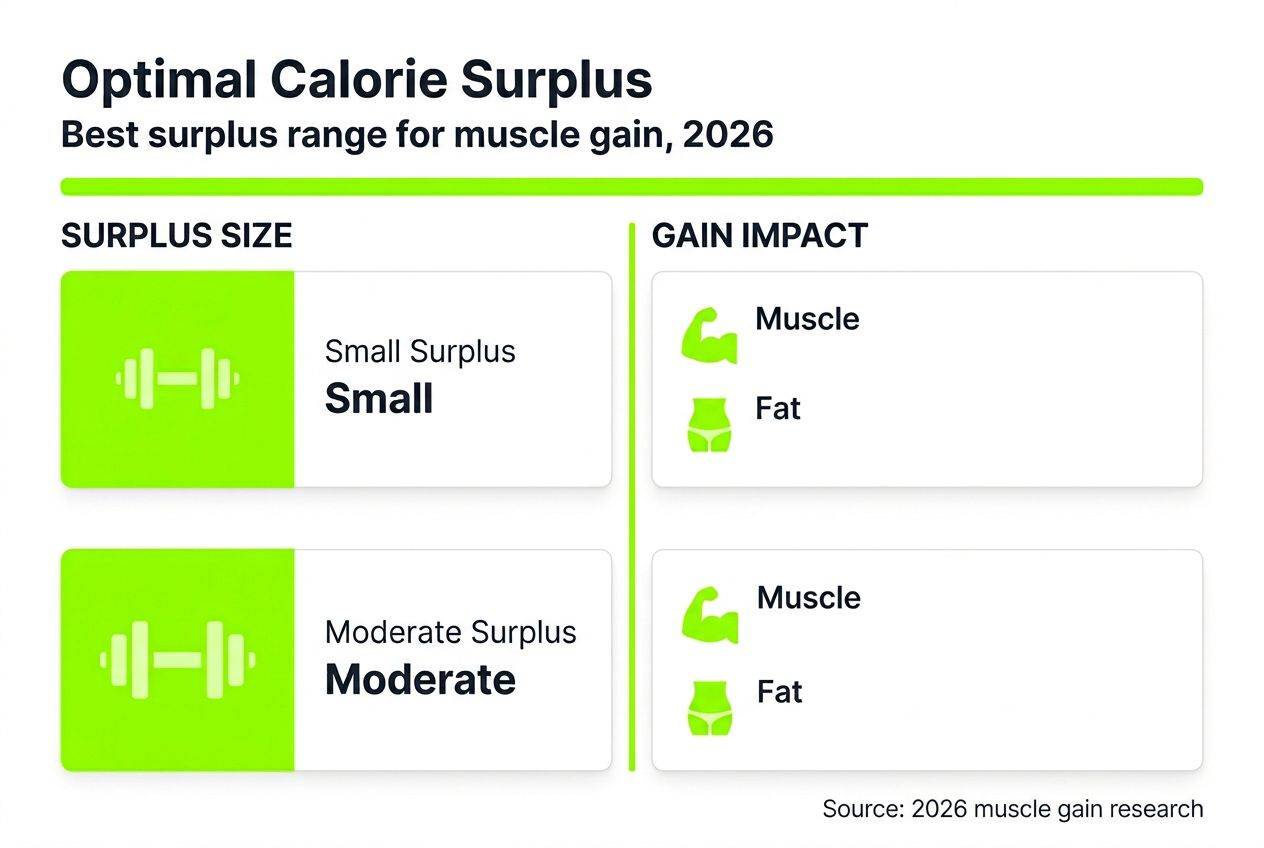
Most lifters achieve best results with a moderate surplus of 250-500 kcal daily above maintenance. This range balances muscle accretion against fat accumulation effectively. Smaller surpluses favour leaner gains but slower progress, whilst larger surpluses accelerate weight gain with more fat.
| Surplus Size | Daily Calories | Muscle Gain Rate | Fat Gain Risk | Best For |
|---|---|---|---|---|
| Small | 150-250 kcal | Slow, lean gains | Very low | Advanced lifters, recomposition |
| Moderate | 250-500 kcal | Balanced gains | Low to moderate | Most intermediate lifters |
| Large | 500+ kcal | Rapid gains | High | Hardgainers, beginners |
Typical surplus phases last 6-12 weeks before transitioning to maintenance or cutting. This duration allows meaningful muscle growth whilst limiting metabolic adaptation. Extending beyond 12 weeks often increases fat gain disproportionately without additional muscle benefit.
Follow this approach for planning your surplus:
- Calculate maintenance calories through tracking intake at stable weight for 2 weeks
- Add 250-500 kcal to establish initial surplus target based on experience level
- Monitor weight and body composition changes weekly using consistent measurement methods
- Adjust intake by 100-150 kcal if progress stalls or fat gain accelerates excessively
- Plan 6-12 week surplus blocks followed by brief maintenance phases for sustainability
Surplus size impacts the ratio of muscle to fat gained significantly. Research suggests optimal gains occur at roughly 0.25-0.5% bodyweight increase weekly for intermediates. Faster rates typically indicate excessive fat accumulation. The muscle gain nutrition guide and meal timing for muscle growth resources provide detailed implementation frameworks. Strategic timing and maximise muscle gain approaches ensure surplus calories drive hypertrophy efficiently.
Common misconceptions about calorie surplus
Myth: Any calorie surplus inevitably causes substantial fat gain regardless of training or surplus size. This oversimplification ignores nutrient partitioning and individual metabolic response. Controlled surplus combined with progressive resistance training prioritises muscle tissue growth over adipose storage through hormonal and cellular signalling.
Myth: More calories always translate to more muscle regardless of training stimulus or programme quality. Without adequate resistance training, surplus calories predominantly convert to fat because your body lacks signals to build muscle. Training volume, intensity, and progression drive hypertrophy whilst surplus provides necessary energy and substrate.
Myth: Supplements alone can replace calorie surplus for effective muscle gain and body recomposition. Supplements enhance training outcomes and nutrient timing but cannot substitute foundational calorie and macronutrient requirements. Muscle growth demands surplus energy that supplements cannot independently provide.
Fact-based approach:
- Moderate surplus (250-500 kcal) with training yields 70-85% lean mass gains in most individuals
- Training stimulus determines whether surplus partitions toward muscle or fat tissue
- Protein timing and quality influence outcomes but require adequate total energy intake
- Individual response varies based on training age, genetics, and hormonal status
Pro Tip: Track body composition fortnightly using consistent methods like progress photos and measurements. Adjust surplus size if fat gain exceeds 0.3-0.5% bodyweight weekly to maintain favourable muscle-to-fat ratio. Understanding bulking vs cutting explained helps you distinguish productive surplus from excessive overfeeding.
Risks and trade-offs of prolonged calorie surplus
Excessive calorie surplus beyond 500 kcal daily causes disproportionate fat accumulation that complicates subsequent cutting phases. Your body can only synthesise muscle tissue at a limited rate determined by hormonal environment and training stimulus. Surplus calories exceeding this capacity default to fat storage regardless of training quality.
Prolonged surplus periods risk metabolic downregulation where your body adapts by reducing energy expenditure. Thyroid function may decrease and non-exercise activity thermogenesis drops as your metabolism adjusts to chronic overfeeding. This adaptation reduces the effective surplus over time, requiring progressively higher intakes.
Key risks include:
- Insulin resistance development from prolonged elevated blood glucose and insulin levels
- Cardiovascular strain from rapid weight gain and increased blood lipid concentrations
- Joint stress from carrying excess bodyweight during training movements
- Psychological challenges from body image changes and prolonged dietary surplus
Cycling surplus phases with maintenance or brief deficit periods prevents these adaptations. Most experts recommend 8-12 week surplus blocks followed by 2-4 week breaks at maintenance. This approach sustains metabolic health whilst allowing continued muscle growth across multiple cycles.
Regular body composition monitoring enables timely adjustments before excessive fat accumulation occurs. Weekly weigh-ins, monthly measurements, and progress photos provide objective feedback. If fat gain accelerates beyond 0.5% bodyweight weekly or waist measurements increase disproportionately, reduce surplus by 100-150 kcal. Strategic planning helps manage risks of prolonged surplus through structured bulking and cutting cycles.
Role of supplements in supporting calorie surplus
Supplements such as whey protein can enhance the effectiveness of a calorie surplus by improving muscle protein synthesis and recovery when combined with resistance training. Whey protein provides rapidly absorbed amino acids that elevate MPS rates by up to 25% during the critical post-workout window. This enhanced synthesis helps convert surplus calories into muscle tissue more efficiently.
Creatine supplementation supports performance improvements allowing greater training intensity and volume. Increased work capacity translates to stronger hypertrophic stimulus, helping you capitalise on surplus energy availability. Creatine also promotes cellular hydration and satellite cell activity, both beneficial for muscle growth.
Key supplement roles:
- Protein powders help meet elevated protein requirements (1.6-2.2g/kg) without excessive calories from whole foods
- Creatine monohydrate increases training capacity enabling progressive overload necessary for hypertrophy
- Beta-alanine buffers lactate accumulation supporting higher training volumes during surplus phases
- Essential amino acids optimise MPS timing around training when whole food consumption proves impractical
Pro Tip: Prioritise protein intake through whole foods like chicken, fish, eggs, and legumes first. Consider supplements strategically to meet targets when appetite or schedule constraints make whole foods challenging. Aim for 0.25-0.4g protein per kilogram bodyweight per meal distributed across 4-5 feedings daily.
Supplements improve nutrient absorption and recovery but remain adjuncts rather than substitutes. The whey protein for recovery and mutant whey guide resources explain optimal supplementation strategies. Synergy between supplements, calorie surplus, and resistance training produces superior results compared to any single factor alone.
Practical implementation and monitoring of calorie surplus
Calculate maintenance calories accurately before establishing surplus targets. Track intake at stable bodyweight for 10-14 days, recording everything consumed. Average daily calories across this period represents your maintenance baseline. Online calculators provide estimates but actual tracking yields personalised accuracy.
Implementation steps:
- Establish baseline maintenance through 2 weeks of consistent tracking and stable weight
- Add 250-500 kcal daily based on training experience and body composition goals
- Implement progressive resistance programme with 3-5 sessions weekly focusing on compound movements
- Weigh yourself daily under consistent conditions and calculate weekly averages for trends
- Assess body composition fortnightly using measurements, photos, and performance metrics
- Adjust intake by 100-150 kcal every 2-3 weeks based on rate of weight gain and composition changes
Combine surplus with consistent progressive overload through increased weight, volume, or intensity. Training drives the adaptation signal whilst surplus provides necessary resources. Without progression, muscle growth plateaus regardless of calorie availability. Programme structure matters as much as nutrition.
Pro Tip: Use food tracking apps like MyFitnessPal for precise calorie and macronutrient monitoring. Invest in a digital food scale for accuracy during initial weeks until portion estimation improves. Maintain detailed training logs recording weights, sets, reps, and perceived exertion to correlate nutrition with performance.
Cycle surplus phases every 6-12 weeks to optimise gains whilst minimising fat accumulation. Brief maintenance periods allow metabolic recovery and prevent adaptation. This cyclical approach sustains long-term progress better than continuous surplus. The nutrition guide for muscle gain and maximise muscle gain through tracking provide comprehensive monitoring frameworks.
Calorie surplus benefits beyond muscle gain
Calorie surplus enables higher training volume and intensity by providing abundant energy reserves. You can push harder during sessions and recover faster between workouts. This increased work capacity accelerates strength gains and skill development beyond just hypertrophy.
Improved recovery reduces downtime between training sessions and lowers injury risk. Adequate energy supports immune function, hormonal balance, and tissue repair processes. Athletes in surplus report fewer overuse injuries and better training consistency compared to deficit or maintenance states.
Additional performance benefits:
- Enhanced glycogen storage capacity supporting sustained high-intensity training efforts
- Improved neuromuscular function and power output from optimal energy availability
- Better mood and motivation supporting training adherence and mental resilience
- Increased work capacity allowing greater training frequency and volume accumulation
Surplus phases contribute to mental wellbeing by reducing dietary restriction stress. The psychological freedom from constant calorie counting supports healthier relationships with food and training. Many athletes report improved training enjoyment and reduced burnout during properly managed surplus periods.
Energy surplus supports overall athletic output including endurance capacities and explosive power. Sports requiring strength, power, or repeated high-intensity efforts benefit significantly from surplus nutrition. Even endurance athletes strategically use surplus phases to build muscular resilience and power reserves.
Surplus benefits extend well beyond simple muscle hypertrophy into comprehensive athletic development. Strategic implementation enhances multiple performance dimensions simultaneously when combined with appropriate training stimulus.
Discover our expert supplement solutions for muscle gain
Maximise your calorie surplus results with high-quality supplements designed for serious lifters. MyGymSupplements offers premium whey protein, creatine, and performance aids that complement your nutrition and training programme perfectly. Our products help you meet elevated protein requirements and support intense training demands during muscle-building phases.
Build a tailored supplement routine guide that aligns with your surplus goals. Explore our whey protein supplements for post-workout recovery and convenient protein intake. Learn optimal supplement timing workflow to maximise muscle protein synthesis throughout your day. Our expert guides help you apply evidence-based strategies for superior muscle gain results in 2026.
Frequently asked questions
What is a calorie surplus and why is it important?
A calorie surplus occurs when you consume more calories than your body burns daily through metabolism and activity. This extra energy provides the raw materials and fuel needed for muscle protein synthesis, the biological process that builds new muscle tissue. Without surplus energy, your body lacks resources to construct muscle even with proper training stimulus.
How much of a calorie surplus should I aim for to gain muscle without excess fat?
Most lifters achieve optimal results with a moderate surplus of 250-500 kcal daily above maintenance calories. This range balances muscle accretion against fat accumulation effectively. Monitor progress fortnightly and adjust intake by 100-150 kcal if weight gain exceeds 0.5% bodyweight weekly or stalls completely.
Can supplements replace a calorie surplus for muscle gain?
Supplements support training outcomes and nutrient timing but cannot replace foundational calorie requirements for muscle growth. Muscle gain demands surplus energy that supplements alone cannot provide. Combine quality supplements with proper calorie surplus and progressive resistance training for best results.
How can I minimise fat gain whilst on a calorie surplus?
Use a moderate surplus of 250-500 kcal daily rather than aggressive overfeeding to limit fat accumulation. Combine surplus with consistent progressive resistance training that signals your body to partition calories toward muscle. Track body composition fortnightly and reduce intake if fat gain exceeds 0.3-0.5% bodyweight weekly.

0 comments