

Pushing through intense training sessions often means finding ways to sharpen mental clarity and keep focus dialled in. Many British athletes and fitness enthusiasts are turning to nootropics as a tool for enhanced cognitive performance and quicker recovery during demanding routines. This guide brings together the latest research on cognitive enhancement compounds, explaining how these substances work, their different types, and the principles behind safe, effective use for optimal brain health.
Table of Contents
- What Are Nootropics And Core Principles
- Types Of Nootropics And Key Differences
- How Nootropics Enhance Cognitive Performance
- Legal Status And Regulations In The UK
- Potential Side Effects And Safety Risks
Key Takeaways
| Point | Details |
|---|---|
| Understanding Nootropics | Nootropics are cognitive enhancers aimed at optimising mental performance for high-performers, targeting memory, concentration, and brain health. |
| Types and Mechanisms | Nootropics can be natural, synthetic, or prescription, each with distinct mechanisms impacting brain chemistry and varying onset times. |
| Regulatory Landscape | In the UK, legal frameworks govern nootropic substances, with prescription medications facing stringent controls compared to natural compounds. |
| Safety Considerations | Potential side effects can arise from nootropic use, necessitating careful monitoring and professional guidance to mitigate risks. |
What Are Nootropics And Core Principles
Nootropics are specialised cognitive enhancement compounds designed to optimise mental performance for athletes and high-performers. Cognitive enhancement substances have evolved from treating neurological disorders to supporting peak mental capabilities across various domains.
The core principles of nootropics centre around three fundamental objectives:
- Improving cognitive functions like memory and concentration
- Enhancing neurological processing speed
- Supporting overall brain health without significant side effects
Traditionally, these compounds span both natural and synthetic categories, including herbal extracts and laboratory-developed molecules. Brain Performance Modulators represent a sophisticated approach to mental optimization, working through complex neurochemical pathways.
Historically, nootropics emerged from scientific research targeting specific cognitive challenges. Substances like modafinil demonstrate remarkable potential in promoting wakefulness and sustained attention, particularly beneficial for athletes requiring extended mental focus during training and competition.
Mechanism of Action
Nootropics typically operate through several key neurological mechanisms:
- Neurotransmitter modulation
- Neuroprotective processes
- Metabolic enhancement in brain tissue
- Improved cerebral blood flow
Nootropics represent a targeted approach to cognitive enhancement, bridging the gap between natural potential and optimal mental performance.
Pro tip: Always consult healthcare professionals before integrating any new cognitive enhancement supplement into your training regimen.
Types Of Nootropics And Key Differences
Nootropics encompass a diverse range of cognitive enhancement compounds, each with unique characteristics and mechanisms of action. Cognitive enhancement substances can be broadly categorised into several distinct types, offering athletes and high-performers targeted mental performance strategies.
Primary Categories of Nootropics:
- Natural Compounds: Herbal extracts like L-theanine, Ginkgo biloba
- Synthetic Molecules: Laboratory-developed substances such as piracetam
- Prescription Medications: Modafinil, methylphenidate
- Amino Acid Derivatives: Compounds targeting neurotransmitter pathways
Each category presents unique benefits and potential performance enhancements. Synthetic nootropics like modafinil and racetam analogues typically provide rapid cognitive improvements, targeting specific neurological mechanisms with precision.

Mechanism Breakdown
The key differences between nootropic types lie in their specific interactions with brain chemistry:
- Neurotransmitter modulators
- Metabolic enhancers
- Neuroprotective agents
- Blood flow optimisers
Natural nootropics often work more subtly, supporting long-term brain health, while synthetic variants can produce more immediate cognitive effects. Some compounds, like L-theanine, offer balanced approaches by promoting relaxation without sedation.
Selecting the right nootropic depends on individual cognitive goals, physiological response, and specific performance requirements.
Comparative Characteristics
Different nootropic types demonstrate varying profiles:
To clarify the distinctions between nootropic categories, consult the comparison below:
| Category | Example Compounds | Onset of Effects | Typical Use Case |
|---|---|---|---|
| Natural | Ginkgo biloba, L-theanine | Gradual, cumulative | Daily brain health |
| Synthetic | Piracetam, racetams | Fast, targeted | Intense mental tasks |
| Prescription Medicines | Modafinil, methylphenidate | Rapid, sustained | Clinical cognitive support |
| Amino Acid Derivatives | L-tyrosine, L-carnitine | Moderately quick, supportive | Stress and concentration |
- Natural compounds: Gentle, sustainable effects
- Synthetic molecules: Targeted, rapid cognitive enhancement
- Prescription medications: Clinically validated, strict regulation
- Amino acid derivatives: Metabolic support and neurotransmitter optimization
Pro tip: Consult sports nutrition specialists to develop a personalised nootropic strategy aligned with your specific athletic performance objectives.
How Nootropics Enhance Cognitive Performance
Nootropics function as sophisticated cognitive performance boosters, targeting multiple neurological mechanisms to optimise mental capabilities. Cognitive performance enhancement involves complex interactions within brain chemistry that can significantly improve athletic mental resilience and focus.
Key Performance Enhancement Mechanisms:
- Neurotransmitter Activity Modulation
- Cerebral Blood Flow Optimization
- Neural Plasticity Stimulation
- Oxidative Stress Protection
- Mental Fatigue Reduction
The primary cognitive domains enhanced by nootropics include:
- Attention and concentration
- Executive functioning
- Memory consolidation
- Problem-solving capabilities
- Mental processing speed
Natural and synthetic nootropics interact differently with brain chemistry. Natural compounds like Ginkgo biloba and Lion’s Mane mushroom support gradual, sustainable cognitive improvements, while synthetic variants such as modafinil provide more immediate neurological performance boosts.
Effective cognitive enhancement requires a nuanced understanding of individual neurological responses and targeted nootropic selection.
Neurological Performance Pathways
Nootropics enhance cognitive performance through multiple sophisticated mechanisms:
- Increasing neurotransmitter efficiency
- Promoting neurogenesis
- Supporting mitochondrial energy production
- Reducing neuroinflammation
- Improving synaptic connections
Pro tip: Maintain a comprehensive log of cognitive performance metrics to track the specific impacts of different nootropic interventions.
Legal Status And Regulations In The UK
Navigating the complex landscape of nootropic regulations requires careful understanding of UK legal frameworks. Medical device regulations in the United Kingdom establish strict guidelines for cognitive enhancement substances, emphasising consumer safety and product quality.
Key Regulatory Considerations:
- Possession is generally legal
- Supply without licensing is prohibited
- Online sales require strict compliance
- Prescription-only substances have additional restrictions
- Import regulations vary by substance type
The Medicines and Healthcare products Regulatory Agency (MHRA) plays a critical role in monitoring and controlling nootropic distribution. Their primary responsibilities include:
- Preventing sale of unlicensed cognitive enhancers
- Protecting consumers from potentially dangerous substances
- Enforcing stringent quality control measures
- Investigating unauthorized product distributions
- Maintaining comprehensive regulatory standards
Compliance Landscape
Nootropic regulation in the UK differs significantly between various substance categories. Prescription medications require formal medical authorisation, while some natural compounds exist in a more flexible regulatory environment.
Navigating nootropic regulations demands vigilance, understanding, and strict adherence to evolving legal frameworks.
Regulatory Zones
Different nootropic categories face varying levels of regulatory scrutiny:
Here is a summary of regulatory requirements across main UK nootropic classes:
| Substance Class | Regulatory Control Level | Typical Access Route | Main Legal Challenge |
|---|---|---|---|
| Prescription Medicines | Very strict | Medical prescription | Unlicensed distribution banned |
| Synthetic Compounds | Strict licensing | Specialist retailers | Licensing and labelling rules |
| Natural Supplements | Moderate | Health shops, online | Ingredient purity standards |
| Research Chemicals | Highly restricted | Academic use only | Prohibited for personal use |
| Dietary Supplements | Flexible | Supermarkets, online | Product claims oversight |
- Prescription medications: Highest level of control
- Synthetic compounds: Strict licensing requirements
- Natural herbal supplements: More flexible regulations
- Research chemicals: Heavily restricted
- Dietary supplements: Moderate regulatory oversight
Pro tip: Always verify the legal status of specific nootropic compounds with official MHRA guidelines before purchasing or consuming.
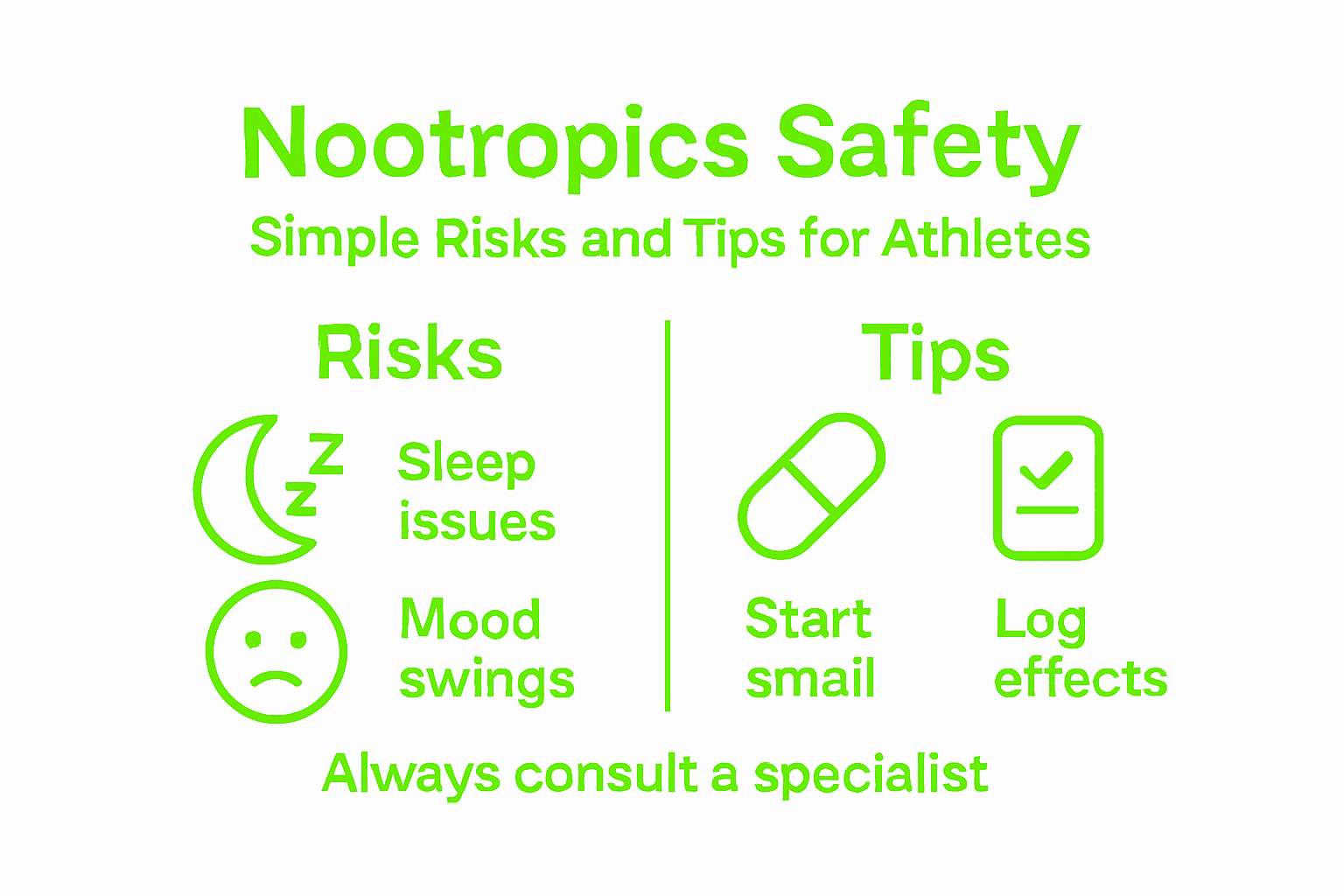
Potential Side Effects And Safety Risks
Nootropics, while promising cognitive enhancement, present complex safety considerations for athletes and high-performers. Cognitive enhancement risks encompass multiple physiological and psychological potential complications that demand careful evaluation.
Primary Side Effect Categories:
- Cardiovascular complications
- Neurological disruptions
- Psychological alterations
- Sleep pattern disturbances
- Potential dependency risks
The spectrum of potential adverse reactions varies significantly across different nootropic classes, with synthetic compounds typically presenting more pronounced risks compared to natural alternatives. Stimulant-type nootropics like methylphenidate and modafinil demonstrate particularly complex risk profiles.
Physiological Risk Domains:
- Cardiovascular system stress
- Neurotransmitter system disruption
- Metabolic function alterations
- Hormonal balance interference
- Potential cognitive performance degradation
Long-term usage introduces additional complexity, with insufficient longitudinal research highlighting significant knowledge gaps regarding sustained nootropic consumption in healthy individuals.
Responsible nootropic use requires comprehensive understanding of individual physiological responses and potential interaction risks.
Risk Mitigation Strategies
Minimising potential side effects involves:
- Consulting healthcare professionals
- Conducting thorough personal medical assessments
- Starting with lowest effective dosages
- Monitoring individual physiological responses
- Implementing regular health check-ups
Pro tip: Maintain a detailed personal health journal to track subtle physiological changes when experimenting with cognitive enhancement compounds.
Unlock Your Cognitive Edge with Targeted Supplement Solutions
Athletes striving for peak mental performance face unique challenges such as enhancing focus, sustaining attention, and speeding up mental processing — all key principles highlighted in the article on nootropics. Whether you seek natural cognitive support or precise, rapid cognitive enhancement, understanding neurotransmitter modulation and brain performance optimisation is crucial for achieving your goals safely and effectively.
At MyGymSupplements.shop, we provide carefully curated health and wellbeing products that complement your cognitive enhancement journey. From vitamins and minerals that support neurological health to performance recovery aids helping reduce mental fatigue, our range is designed to help you maintain brain health while pushing your fitness limits. Discover how supplements tailored for energy enhancement and overall mental resilience can be a game changer for your training regime.
Ready to boost your focus and mental edge responsibly? Explore our collection today to find the right nutritional products that align with your cognitive performance goals. Take control of your brain health and athletic performance now by visiting MyGymSupplements.shop and accelerating your path to peak mental fitness.
Frequently Asked Questions
What are nootropics and how do they work?
Nootropics are cognitive enhancement compounds designed to improve mental performance, such as memory, concentration, and processing speed, while supporting overall brain health without significant side effects. They operate through mechanisms like neurotransmitter modulation and improved cerebral blood flow.
What types of nootropics are available and how do they differ?
Nootropics can be broadly categorised into natural compounds (e.g., L-theanine, Ginkgo biloba), synthetic molecules (e.g., piracetam), prescription medications (e.g., modafinil), and amino acid derivatives (e.g., L-tyrosine). The key differences lie in their onset of effects and specific interactions with brain chemistry, with synthetic variants often providing rapid cognitive improvements.
Are there any potential side effects associated with nootropic use?
Yes, potential side effects can include cardiovascular complications, neurological disruptions, psychological alterations, sleep pattern disturbances, and dependency risks. The risks tend to be more pronounced with synthetic compounds compared to natural alternatives.
How can athletes safely incorporate nootropics into their training regimens?
Athletes should consult healthcare professionals before using nootropics, start with the lowest effective dosages, monitor physiological responses, and keep a detailed health journal to track any changes. Regular health check-ups are also recommended to ensure safe usage.
Recommended
- 7 Essential Tips for Using Performance Enhancement Supplements – MyGymSupplements
- What Is Nitric Oxide Booster – Performance and Energy – MyGymSupplements
- Elevate Your Endurance: Applied Nutrition & CLIF Supplements Guide
- 7 Top Antioxidant Supplements for Fitness Enthusiasts – MyGymSupplements
- Why Chiropractic for Sports Injuries Matters Most

0 comments