

Chasing improved recovery and lean muscle in the British fitness scene means searching for supplements that truly make a difference. For bodybuilders and dedicated gym-goers, understanding Conjugated Linoleic Acid’s unique isomers and their role in fat metabolism offers new opportunities for progress. This guide highlights how CLA, found in beef and dairy, interacts with the body’s metabolic pathways, arming you with expert-backed facts to help shape your supplement choices.
Table of Contents
- What Is CLA? Core Definition And Facts
- Different Types And Natural Sources Of CLA
- How CLA Supplements Work In The Body
- Benefits For Weight Management And Muscle Recovery
- UK Rules For CLA Supplement Health Claims
- Risks, Side Effects, And Common Misconceptions
Key Takeaways
| Point | Details |
|---|---|
| Understanding CLA | Conjugated Linoleic Acid (CLA) is a group of fatty acid isomers with potential health benefits, notably in metabolic health and body composition. |
| Dietary Sources | CLA is primarily found in ruminant meat and dairy products, with grass-fed variants offering higher concentrations. |
| Supplement Mechanism | CLA supplements may influence fat metabolism and body composition through biochemical interactions at the cellular level. |
| Regulatory Compliance | In the UK, strict regulations govern health claims on CLA supplements, ensuring they are substantiated by scientific evidence. |
What Is CLA? Core Definition and Facts
Conjugated Linoleic Acid (CLA) represents a fascinating group of fatty acid isomers with intriguing potential health benefits. First scientifically isolated during a skin cancer prevention study, CLA has since captured the attention of researchers and health enthusiasts alike.
At its core, CLA is a specific type of omega-6 fatty acid with unique structural characteristics. Unlike standard linoleic acid, CLA features conjugated double bonds that distinguish its molecular arrangement. The most prevalent natural form is the cis 9-trans 11 isomer, which predominantly occurs in meat and dairy products from ruminant animals.
Key characteristics of CLA include:
- Naturally produced by bacteria in animal digestive systems
- Predominantly found in beef, lamb, and dairy products
- Consists of multiple chemical isomers with varying potential effects
- Primarily derived from the biohydrogenation process in ruminant animals
Researchers have explored CLA’s potential benefits across multiple domains, including metabolic health, body composition, and potential anti-inflammatory properties. Scientific investigations into CLA’s health impacts suggest promising avenues for understanding its role in human nutrition.
Pro tip: When considering CLA supplementation, always consult with a healthcare professional to understand its potential interactions and appropriate dosage for your specific health goals.
Different Types and Natural Sources of CLA
Conjugated Linoleic Acid (CLA) exists in multiple distinct isomers, each with unique molecular configurations. Natural production occurs through complex bacterial processes within ruminant digestive systems, resulting in two primary isomeric forms that dominate scientific research.
The two most significant CLA isomers are:
- Cis 9-trans 11 (Rumenic Acid): The most abundant natural form
- Trans 10-cis 12: Another important variant with distinct metabolic interactions
Natural dietary sources of CLA are predominantly animal-based, with the highest concentrations found in specific food products. Ruminant meat and dairy products contain the highest CLA levels, making beef, lamb, milk, cheese, and butter excellent nutritional sources.

Below is a summary table comparing the two primary CLA isomers and their key characteristics:
| CLA Isomer | Natural Abundance | Main Dietary Sources | Notable Effects on Metabolism |
|---|---|---|---|
| Cis 9-trans 11 | Most prevalent form | Beef, lamb, dairy | Supports fat metabolism |
| Trans 10-cis 12 | Less common in nature | Supplements, some meats | Alters lipid processing |
Dietary sources can be categorised as follows:
- High-Fat Dairy Products
- Whole milk
- Butter
- Cheese
- Full-fat yoghurt
- Grass-Fed Animal Proteins
- Beef
- Lamb
- Goat meat
- Processed Meat Products
- Certain sausages
- Speciality meat cuts
Grass-fed animal products typically contain higher CLA concentrations compared to grain-fed alternatives.
Pro tip: When seeking CLA-rich foods, prioritise grass-fed and organic animal products to maximise potential nutritional benefits.
How CLA Supplements Work in the Body
Conjugated Linoleic Acid (CLA) supplements interact with the body’s metabolic processes through complex biochemical mechanisms. Absorption occurs within the digestive tract, where these specific fatty acid isomers begin their physiological interactions.
The primary metabolic pathways of CLA involve several key mechanisms:
- Modulation of enzyme activity related to fat metabolism
- Influencing gene expression in lipid handling
- Potential reduction of inflammatory responses
- Regulation of body composition processes
CLA supplements primarily target cellular metabolism by interacting with specific receptors and metabolic pathways. Metabolic supplementation occurs through targeted fatty acid mechanisms, which can potentially impact body fat distribution and muscle recovery processes.
Specific physiological interactions include:
- Lipid Metabolism Regulation
- Potential enhancement of fat oxidation
- Modulation of insulin sensitivity
- Interaction with adipose tissue metabolism
- Immune System Modulation
- Potential anti-inflammatory effects
- Support for immune cell function
- Metabolic Signalling
- Gene expression modification
- Cellular energy utilisation
CLA supplements work by providing specific fatty acid isomers that can influence metabolic processes at the cellular level.
Pro tip: Consult with a healthcare professional to understand how CLA supplements might interact with your individual metabolic profile and health goals.
Benefits for Weight Management and Muscle Recovery
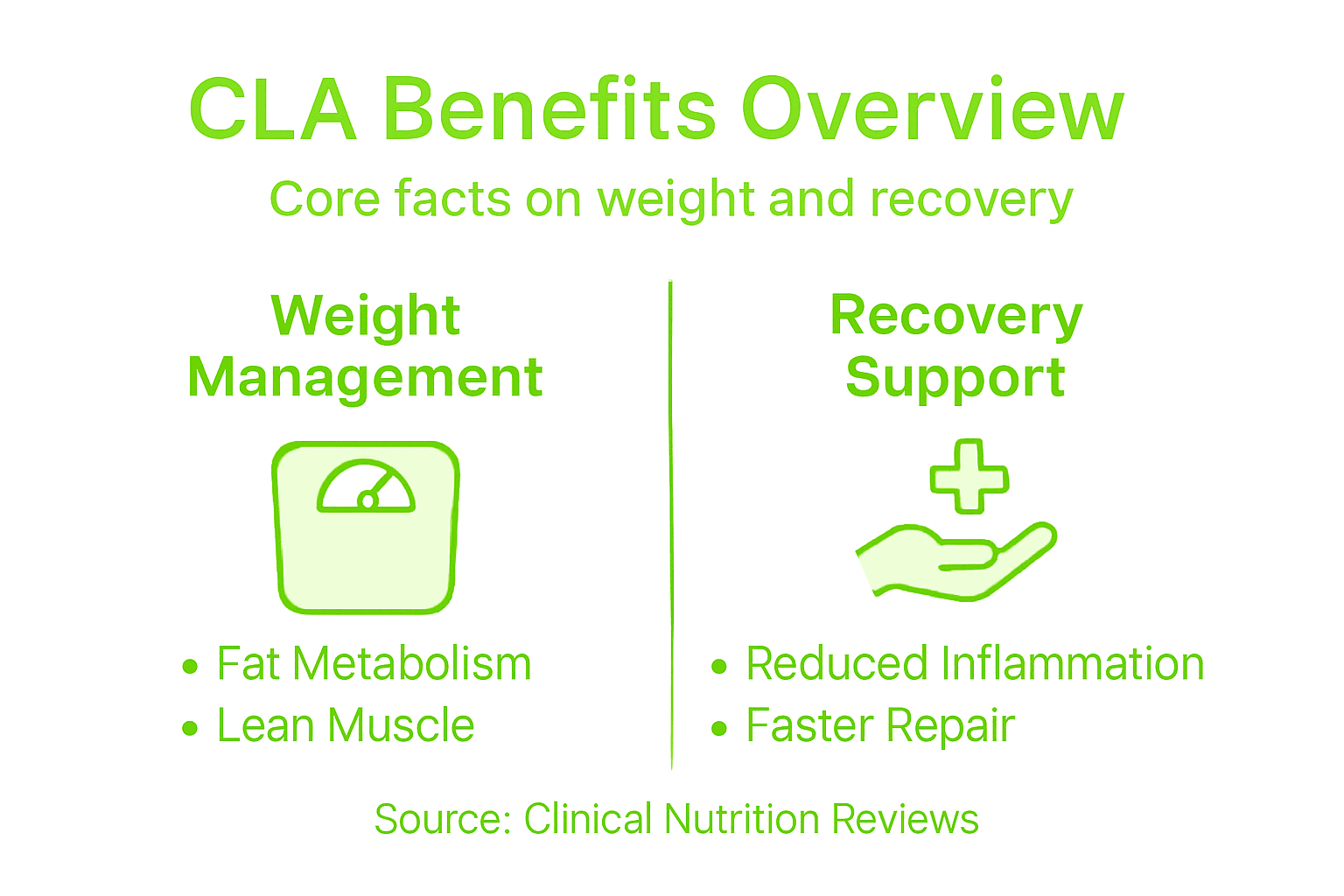
Conjugated Linoleic Acid (CLA) demonstrates promising potential for individuals seeking comprehensive body composition improvements. Scientific research indicates potential metabolic benefits, particularly in supporting weight management and muscle recovery processes.
Specific benefits for weight management include:
- Potential reduction in body fat mass
- Support for lean muscle preservation
- Modulation of metabolic processes
- Enhanced fat oxidation mechanisms
Muscle recovery represents another critical area where CLA shows interesting physiological interactions. Metabolic supplementation may support inflammatory responses, potentially accelerating post-exercise muscle repair and reducing recovery time.
Comprehensive physiological impacts encompass:
- Body Composition Modification
- Potential fat mass reduction
- Preservation of muscle tissue
- Metabolic rate enhancement
- Recovery Support
- Reduced muscle inflammation
- Accelerated tissue repair
- Enhanced protein synthesis
- Metabolic Optimization
- Improved insulin sensitivity
- Enhanced energy utilisation
CLA’s multifaceted approach targets both weight management and muscle recovery through complex metabolic interactions.
Pro tip: Combine CLA supplementation with consistent resistance training and balanced nutrition for optimal body composition results.
UK Rules for CLA Supplement Health Claims
Food Supplement Regulations in the United Kingdom impose strict guidelines on marketing and labelling of nutritional products, including Conjugated Linoleic Acid (CLA) supplements. Health claims must strictly comply with regulatory standards, ensuring consumer protection and accurate product representation.
Key regulatory restrictions include:
- Prohibition of unverified health claims
- Requirement for scientific substantiation
- Mandatory compliance with Section 15 of CAP Code
- Adherence to Great Britain Nutrition and Health Claims Register
UK regulations mandate precise nutritional communication for supplements, preventing misleading marketing practices. Currently, no authorised health claims exist specifically for CLA on the official GB register, which means manufacturers cannot legally claim direct therapeutic benefits.
Here is a quick reference table outlining important differences between UK supplement regulations and typical marketing practices:
| Regulatory Standard | UK Requirements | Common Marketing Practice | Key Risk to Consumers |
|---|---|---|---|
| Health Claims Allowed | Only with scientific proof | Often unsubstantiated claims | Misinformation |
| Disease Treatment Claims | Strictly prohibited | Occasionally implied | False sense of security |
| Labelling and Information | Must be accurate and transparent | May use vague terminology | Confusion over ingredients |
Important regulatory considerations:
- Marketing Restrictions
- Cannot claim disease treatment
- No implied medical benefits
- Scientific evidence required for any claims
- Labelling Requirements
- Clear ingredient listing
- Accurate dosage information
- No misleading terminology
- Compliance Obligations
- Regular regulatory updates
- Independent scientific verification
- Transparent product information
Supplement manufacturers must obtain legal advice before making any health-related claims about CLA products.
Pro tip: Always consult official regulatory guidelines and seek professional legal consultation before marketing CLA supplements to ensure full compliance.
Risks, Side Effects, and Common Misconceptions
Dietary Supplements carry inherent risks, and Conjugated Linoleic Acid (CLA) is no exception. Potential health risks require careful consideration, with consumers needing to understand potential side effects and limitations.
Potential side effects of CLA supplementation include:
- Digestive system disruptions
- Potential gastrointestinal discomfort
- Inflammatory responses
- Metabolic system interactions
Regulatory bodies highlight several misconceptions about CLA supplements, warning against overstated claims of miraculous weight loss or muscle-building capabilities. The scientific community emphasises that ‘natural’ does not automatically equate to ‘safe’ or ‘effective’.
Common misconceptions to be aware of:
- Weight Loss Claims
- Not a standalone weight loss solution
- Requires diet and exercise
- Limited scientific evidence
- Muscle Building Myths
- Minimal direct muscle-building impact
- Supplementation cannot replace training
- Marginal performance enhancement
- Health Benefit Exaggerations
- No guaranteed disease prevention
- Individual results vary significantly
- Potential adverse interactions
Consumers should approach CLA supplements with realistic expectations and medical guidance.
Pro tip: Always consult healthcare professionals before starting any new supplement regimen and monitor your body’s individual response.
Unlock Your Best Body with CLA Support
Struggling to manage your weight or speed up muscle recovery can feel frustrating and slow your fitness progress. This article reveals how Conjugated Linoleic Acid, or CLA, influences fat metabolism, body composition, and muscle repair. If your goal is to reduce body fat while preserving lean muscle, understanding the right supplements to complement your routine is essential.
At MyGymSupplements.shop we offer tailored weight management solutions and performance recovery aids designed to work alongside natural compounds like CLA. Our selection of trusted supplements can help you optimise fat oxidation and support faster muscle recovery. Don’t wait to transform your fitness journey. Explore our range today and take control of your body composition with informed supplementation.
Frequently Asked Questions
What is CLA and how does it work in the body?
Conjugated Linoleic Acid (CLA) is a fatty acid that affects metabolic processes in the body. It interacts with fat metabolism, modulates enzyme activity, and influences gene expression related to lipid handling, potentially aiding in fat loss and muscle recovery.
What are the potential benefits of CLA for weight management?
CLA may help reduce body fat mass while preserving lean muscle. It has been shown to enhance fat oxidation mechanisms and support metabolic processes that contribute to an improved body composition.
Are there any risks or side effects associated with CLA supplements?
Potential side effects of CLA supplementation can include digestive discomfort, gastrointestinal issues, and inflammation. It’s important to consult with a healthcare professional before starting supplementation.
How should CLA supplements be taken for optimal results?
For best results, CLA supplements should be combined with a balanced diet and regular exercise. It’s advisable to consult with a healthcare professional to determine the appropriate dosage and ensure they align with individual health goals.
Recommended
- Complete Guide to Post-Workout Nutrition for Athletes – MyGymSupplements
- What Is Muscle Recovery? A Complete Overview – MyGymSupplements
- Rapid Recovery Explained: Benefits for Fitness UK – MyGymSupplements
- Post-Workout Recovery Workflow for Optimal Results – MyGymSupplements
- Cortex : Flow – Cortex Supplements

0 comments