

TL;DR:
- Sports-specific supplementation tailors choices and timing to each sport’s energy systems and demands.
- Key proven supplements include caffeine, creatine, and beta-alanine, with efficacy varying by sport.
- Personalizing protocols based on individual factors, diet, and training enhances effectiveness and safety.
Not every supplement belongs in every athlete’s kit bag. The idea that a single protocol can serve a marathon runner, a powerlifter, and a rugby player equally well is one of the most persistent myths in sports nutrition. Sports-specific supplementation refers to choosing and timing supplements according to the precise demands, energy systems, and goals of your sport rather than following a generic approach. In this guide, you will find evidence-based, practical insight into which supplements actually match which sports, how to personalise your protocol, and where the science genuinely supports the use of ergogenic aids.
Table of Contents
- What does sports-specific supplementation actually mean?
- Key supplements for different sports and training goals
- Personalised protocols: why one size never fits all
- Evidence, benefits and limitations: what the science says
- A fresh perspective: why personalisation and food-first thinking always win
- Take your performance further with expert guidance
- Frequently asked questions
Key Takeaways
| Point | Details |
|---|---|
| Tailor supplements by sport | Effective supplementation means matching choices to the specific demands and goals of your sport. |
| Evidence over hype | Choose proven supplements like creatine or caffeine, not generic formulas with little support. |
| Personalisation is essential | Your nutrition, gender, deficiencies, and training phase require individualised supplement protocols. |
| Start with food-first | Supplements should fill nutrition gaps, not replace a comprehensive, whole-food diet. |
What does sports-specific supplementation actually mean?
With the groundwork set, it is vital to clarify exactly what sports-specific supplementation means and why it differs from general use. Walk into any gym and you will find athletes using identical stacks regardless of whether they compete in cycling, wrestling, or sprinting. That approach is not just inefficient; it can actively work against your goals.
The concept of defining sports supplements goes beyond simply buying a protein powder. Sports-specific supplementation matches supplements to demands, energy systems, and goals of sports like endurance, strength, or combat. This is a fundamentally different framework from the one most athletes start with.
Ergogenic aids (substances that enhance physical performance) are classified both by their form and their function:
- Form: powders, gels, capsules, liquids, and chewables
- Function: energy provision, endurance support, strength and power, recovery, and hydration
- Evidence level: from well-supported (creatine, caffeine) to speculative (many proprietary blends)
- Sport category: power, endurance, intermittent, combat, or team-based
To understand the sports nutrition basics that underpin these classifications, it helps to think about what your sport actually demands of your body. A sprinter relies almost entirely on the phosphocreatine energy system during competition. A cyclist completing a four-hour ride depends heavily on glycogen and fat metabolism. A judoka needs explosive power, lactate buffering, and rapid recovery between bouts.
“The most effective supplement strategy is not the most expensive one. It is the one most precisely matched to what your body and your sport actually need.”
Creatine, for instance, is one of the most studied ergogenic aids in existence and shows clear benefits for power-based sports. Beta-alanine, which raises muscle carnosine levels to buffer lactic acid, is particularly useful for intermittent sports with repeated high-intensity efforts. Knowing the difference between these two is the starting point for building a smarter protocol.
Key supplements for different sports and training goals
Now that the concept is clear, let us look at how sports-specific supplementation plays out for different athletic contexts. The evidence is not uniform across all supplements or all sports, and that nuance matters enormously.
Caffeine at 3 to 6 mg/kg improves power and technical performance across a wide range of sports, while beta-alanine and creatine show more sport-specific results. Meanwhile, power and strength athletes benefit most from creatine, beta-alanine, caffeine, and protein, particularly when dosing and timing are matched to training blocks.
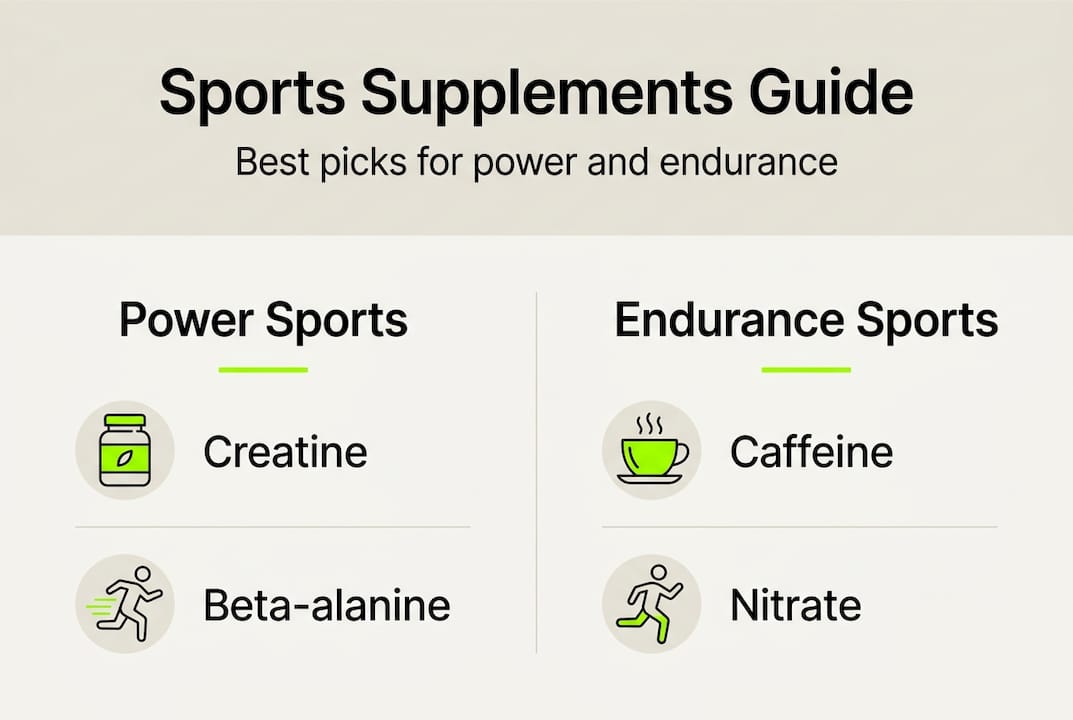
Here is how the picture changes across different sporting contexts:
| Sport type | Primary supplements | Key benefit |
|---|---|---|
| Endurance (cycling, running) | Carbohydrates, caffeine, amino acids | Fuel, fatigue delay, muscle preservation |
| Power/strength (weightlifting) | Creatine, protein, beta-alanine | Force output, recovery, buffering |
| Team/intermittent (football) | Caffeine, creatine, electrolytes | Sprint capacity, hydration, power |
| Combat sports (MMA, judo) | HMB, sodium bicarbonate, caffeine | Muscle retention, acid buffering, alertness |
A few practical examples bring this to life:
- A competitive cyclist preparing for a time trial would prioritise carbohydrate loading, caffeine pre-race, and branched-chain amino acids during long training blocks.
- A sprinter in a strength phase would benefit from creatine monohydrate (3 to 5 g daily) and a high-protein diet to support fast-twitch muscle development.
- A footballer playing twice weekly would focus on electrolyte replenishment, creatine for repeated sprint ability, and caffeine on match days.
Pro Tip: Nitrate supplementation (from beetroot, for example) shows impressive results in recreational athletes but has limited additional benefit in highly trained elites. If you are an advanced athlete, do not assume every trend applies to you.
For a broader look at fitness supplement examples across training goals, or a dedicated endurance supplement guide if distance sport is your focus, there are resources that go deeper into each category.
Personalised protocols: why one size never fits all
After understanding which supplements may help, the next step is knowing how to tailor them to your unique profile. Gender, body weight, training phase, and existing nutritional deficiencies all alter how your body responds to supplementation.

Individualised protocols are essential: dosing, timing, gender, and deficiencies must all be considered, and food should always come first. Supplements exist to fill specific gaps, not to replace a well-structured diet.
Consider vitamin D. Indoor athletes face higher deficiency risk, and supplementation can meaningfully improve musculoskeletal health and reduce injury risk. An outdoor triathlete training in summer may have sufficient vitamin D from sun exposure, while a gymnast training indoors year-round almost certainly does not.
Factors that shape your personal supplement protocol:
- Gender: Women may have different iron and calcium needs, particularly around training load and menstrual cycle phases
- Body weight: Dosing for caffeine and creatine is typically calculated per kilogram of body weight
- Training phase: A building phase calls for different support than a competition taper
- Existing deficiencies: Blood testing can reveal gaps that no generic protocol will address
| Factor | Why it matters | Example |
|---|---|---|
| Gender | Hormonal differences affect absorption and needs | Iron needs higher in female athletes |
| Training phase | Nutritional demands shift across cycles | More carbs in high-volume blocks |
| Deficiency status | Supplementing without deficiency has limited benefit | Vitamin D only helps if you are low |
| Body weight | Dosing is weight-dependent for most ergogenics | 70 kg athlete needs 210 to 420 mg caffeine |
Pro Tip: Get a basic blood panel at least once a year. Knowing your vitamin D, iron, and B12 status takes the guesswork out of supplementation and saves you money on products you may not need.
For guidance on vitamin selection for athletes or building a supplement plan by training cycle, targeted resources can help you map this out practically.
Evidence, benefits and limitations: what the science says
The final piece is understanding not just the potential, but the limits and evidence behind sports-specific supplements. The research landscape is more nuanced than most marketing would have you believe.
No universal definition exists for sports supplements, and evidence-based options such as creatine, caffeine, and beta-alanine consistently outperform generic protocols. Training quality and whole foods remain the primary drivers of performance.
Here is what the evidence actually supports:
- Carbohydrates and caffeine improve time trial performance by 2 to 3% in controlled trials, which is meaningful at competitive level.
- Creatine has decades of robust data behind it for power output and recovery between bouts.
- Beta-alanine consistently raises muscle carnosine, reducing fatigue in efforts lasting 60 to 240 seconds.
- High-dose antioxidants (vitamin C and E at very high doses) can actually blunt training adaptations by interfering with the oxidative signalling that drives muscle growth.
- Most proprietary blends lack independent evidence and rely on ingredient lists that look impressive but are often under-dosed.
“Supplements are the last five percent of the performance puzzle. Training, sleep, and nutrition are the other ninety-five.”
Gender differences also matter here. Some research suggests women may respond differently to creatine and caffeine due to hormonal variation, though this area is still developing. The honest answer is that the science is strong for a small number of supplements and weak for the majority.
For a broader view of how nutrition boosts performance as a whole, the evidence consistently points to food quality, training consistency, and sleep as the foundation everything else is built upon.
A fresh perspective: why personalisation and food-first thinking always win
Here is something the supplement industry rarely wants you to hear: most athletes who struggle with performance are not under-supplemented. They are under-recovered, under-fuelled with real food, or following a training programme that does not match their current capacity.
The pursuit of the newest, most advanced supplement is understandable. It feels like action. But the sports nutrition basics that have been proven for decades, adequate protein, consistent carbohydrate intake, quality sleep, and progressive training, deliver results that no capsule can replicate.
Personalisation is not just about picking the right supplement. It is about asking whether you need a supplement at all right now, and whether your fundamentals are actually in place. The athletes who benefit most from targeted supplementation are those who have already optimised everything else. When your diet is dialled in and your training is structured, a well-chosen ergogenic aid can provide a genuine, measurable edge. Used as a shortcut, it rarely delivers anything but a lighter wallet.
Take your performance further with expert guidance
If you are ready to move beyond guesswork and put these principles into action, the right products are easier to find than you might think. At MyGymSupplements.shop, you will find a curated range of science-backed, sport-specific supplements organised by goal, whether that is building strength, improving endurance, accelerating recovery, or supporting overall health. Every product category is designed to help you match your supplementation to your actual training demands, not a generic one-size-fits-all stack. Browse by sport, by goal, or by ingredient and find the targeted support that fits your protocol.
Frequently asked questions
What is the difference between general and sports-specific supplementation?
General supplementation uses a single protocol for all athletes, while sports-specific supplementation is tailored to match the unique demands, energy systems, and goals of your particular sport.
Which supplements are proven to work for most athletes?
Caffeine, creatine, and beta-alanine have the strongest evidence base, but efficacy varies by sport and dosage; matching the supplement to the sport is what makes the difference.
How should I personalise my supplement plan?
Start with your sport, training phase, diet quality, and any known deficiencies; individualised protocols that account for gender, body weight, and timing consistently outperform generic approaches.
Are there risks with sports-specific supplementation?
Most supplements are safe when used appropriately, but supplements must be personalised and treated as additions to a solid diet and training plan, not replacements for them.
Recommended
- Guide to Sports Nutrition Basics for Optimal Results – MyGymSupplements
- Guide to Sports Nutrition Basics for Optimal Results – MyGymSupplements
- Effective fitness supplements: key examples for athletes
- Defining sports supplements: Evidence, safety and optimal use
- Self-optimization guide for resilience and performance 2026

0 comments