

Finding the right vitamins for your body can feel complex when every training session demands peak output and rapid recovery. For competitive endurance athletes in the UK, personalised nutrition planning goes far beyond guesswork or generic supplements. Targeted vitamin strategies support energy, muscle repair, and long-term wellbeing, but matching supplements to your unique needs requires more than just reading labels. Here you will learn what matters most when evaluating your athletic goals, analysing your diet, and choosing safe, effective vitamins tailored to your performance journey.
Table of Contents
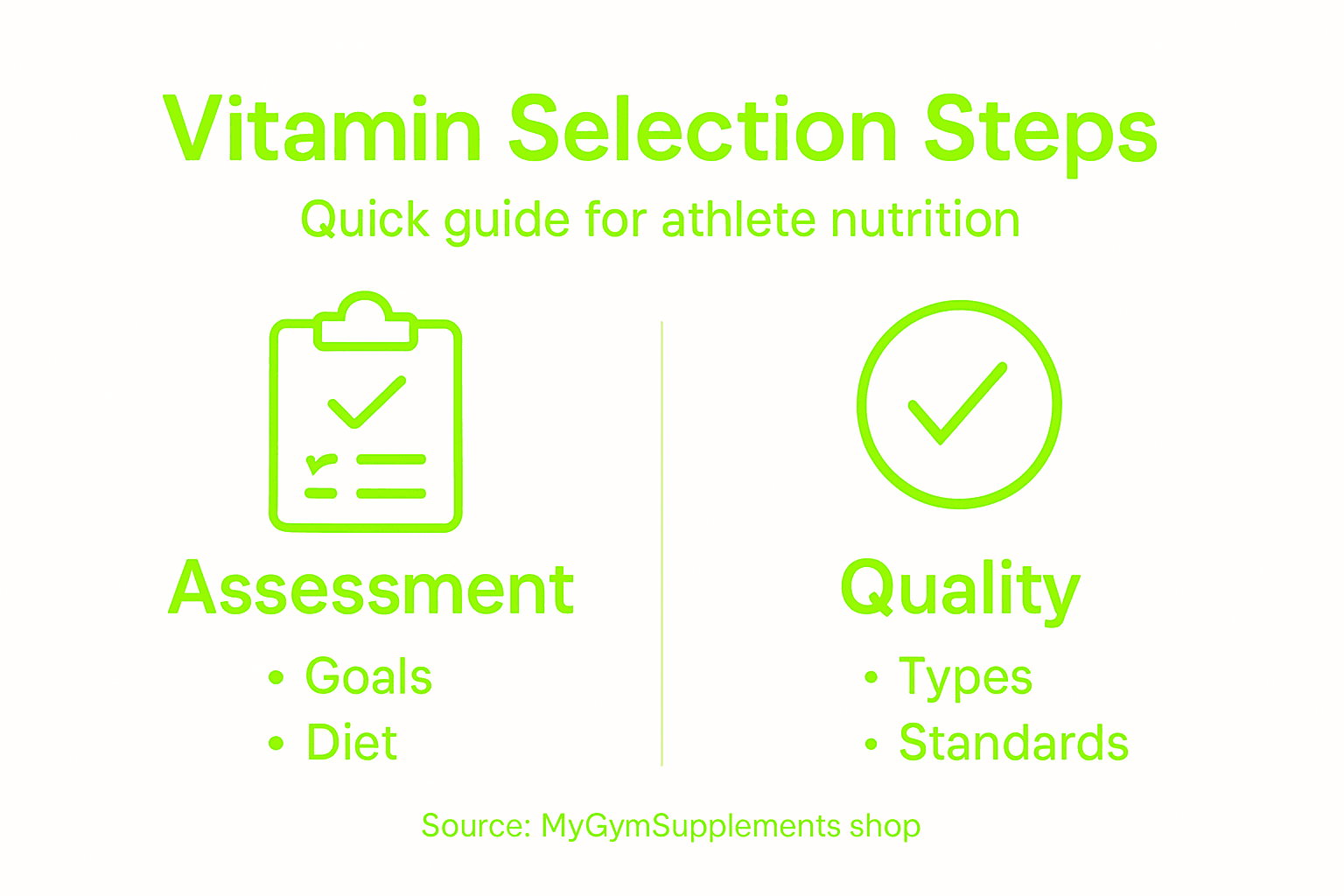
- Step 1: Assess Your Athletic Goals And Nutritional Demands
- Step 2: Evaluate Current Diet And Identify Vitamin Gaps
- Step 3: Compare Vitamin Types And Supplement Forms
- Step 4: Review Product Quality And Regulatory Standards
- Step 5: Monitor Effects And Adjust Vitamin Intake
Quick Summary
| Key Point | Explanation |
|---|---|
| 1. Assess your athletic goals | Understanding your specific athletic objectives is crucial for creating a tailored nutritional plan that meets your unique needs. |
| 2. Evaluate your current diet | Tracking your dietary intake helps identify deficiencies and informs your supplementation strategy, enabling targeted improvements. |
| 3. Choose appropriate supplement forms | Different supplement formats affect absorption and convenience; select what best matches your body’s needs and preferences. |
| 4. Prioritise product quality | Always verify the safety and effectiveness of supplements by considering manufacturing standards and third-party testing. |
| 5. Monitor and adjust your intake | Regularly assess your body’s response to supplements to adapt your nutritional strategy and optimise performance. |
Step 1: Assess your athletic goals and nutritional demands
Setting up a strategic nutritional plan requires a deep understanding of your individual athletic objectives and physiological requirements. Every athlete has unique demands that cannot be satisfied through a one-size-fits-all approach.
To begin effectively assessing your nutritional needs, you’ll want to conduct a comprehensive evaluation of several critical factors. Nutritional assessment techniques provide systematic methods for understanding your specific requirements. Key elements to consider include:
- Your primary athletic discipline (endurance, strength, team sports)
- Training intensity and weekly workout volume
- Current body composition and metabolic rate
- Specific performance goals (muscle gain, weight management, recovery enhancement)
- Individual energy expenditure levels
Understanding these parameters allows you to develop a targeted vitamin and nutritional strategy. Athletes engaged in high-intensity training will have distinctly different requirements compared to recreational fitness enthusiasts. Nutrition for exercise emphasises that carbohydrate intake, protein consumption, and hydration play pivotal roles in supporting athletic performance.
Consider working with a sports nutritionist who can provide personalised guidance tailored to your specific physiological profile and performance objectives. Professional assessment ensures you’re not just supplementing, but strategically nourishing your body for optimal results.
Pro tip: Keep a detailed training and nutrition journal to track how different vitamin and nutritional approaches impact your performance and recovery.
Step 2: Evaluate current diet and identify vitamin gaps
Identifying potential nutritional deficiencies is a crucial step in developing an effective vitamin supplementation strategy for athletes. Understanding your current dietary intake will help you pinpoint exactly where your nutritional profile might be lacking.
To systematically evaluate your diet, start by tracking everything you consume for a minimum of one week. Dietary reference values provide essential benchmarks for comparing your actual nutrient intake. Key areas to examine include:
- Macronutrient balance (proteins, carbohydrates, fats)
- Micronutrient consumption (vitamins and minerals)
- Caloric intake relative to training intensity
- Frequency and quality of food sources
- Potential gaps in essential nutrients
Most athletes discover unexpected nutritional blind spots through detailed tracking. Some common vitamin deficiencies include vitamin D, B12, iron, and magnesium. By understanding balanced diet principles, you can develop a more targeted supplementation approach.

Here is a comparison of common vitamin supplementation gaps and their potential impact on athletic performance:
| Vitamin Deficiency | Potential Symptoms | Performance Impact |
|---|---|---|
| Vitamin D | Fatigue, frequent injury | Reduced strength, slower recovery |
| Vitamin B12 | Anaemia, low energy | Decreased endurance, impaired focus |
| Iron | Tiredness, pale skin | Poor oxygen transport, reduced stamina |
| Magnesium | Muscle cramps, poor sleep | Increased injury risk, impaired recovery |
Precise nutritional assessment is the foundation of an effective athletic performance strategy.
Consider consulting a sports nutritionist who can provide a comprehensive analysis of your current diet and recommend specific vitamin supplements tailored to your individual needs and athletic goals.
Pro tip: Use a digital nutrition tracking app to simplify the process of documenting and analysing your daily dietary intake.
Step 3: Compare vitamin types and supplement forms
Navigating the world of vitamin supplements requires understanding the various forms and delivery methods available to athletes. Different supplement formats offer unique advantages depending on your specific nutritional needs and absorption preferences.
Food supplement regulations outline the primary forms of nutritional supplements athletes can consider. Key supplement types include:
- Tablets: Compact and convenient, with precise dosage control
- Capsules: Often faster absorption, easier to swallow
- Powders: Flexible dosing, can be mixed into drinks or meals
- Liquid supplements: Rapid absorption, ideal for quick nutrient delivery
- Chewables: Good for those who struggle with swallowing pills
Each supplement form has distinct characteristics. Oral nutritional supplements demonstrate that the format can significantly impact nutrient bioavailability and ease of consumption. Athletes should consider factors like digestibility, taste preferences, and specific nutritional requirements when selecting a supplement form.
The following table summarises different supplement formats and their key attributes for athletes:
| Format | Absorption Speed | Ideal For |
|---|---|---|
| Tablets | Moderate | Routine, precise dosing |
| Capsules | Fast | Easy swallowing, fast action |
| Powders | Variable | Custom blends, large doses |
| Liquids | Rapid | Quick energy, rapid results |
| Chewables | Fast | Pill aversion, on-the-go usage |
Not all supplement forms are created equal - choose wisely based on your body’s unique needs.
Consider consulting a sports nutritionist to determine which supplement form will best support your athletic performance and nutritional goals.
Pro tip: Experiment with different supplement forms to find the one that feels most comfortable and provides optimal nutrient absorption for your body.
Step 4: Review product quality and regulatory standards
Ensuring the quality and safety of vitamin supplements is crucial for athletes seeking optimal performance and health. Understanding regulatory standards helps protect you from potentially harmful or contaminated products.
Supplement regulations provide critical guidance for athletes navigating the complex supplement marketplace. Key quality assessment criteria include:
- Manufacturing standards: Good Manufacturing Practice (GMP) certification
- Third-party testing: Independent laboratory verification
- Ingredient transparency: Clear labelling of all components
- Banned substance screening: Verification of product purity
- Regulatory compliance: Adherence to UK food supplement guidelines
UK Anti-Doping recommendations emphasise the athlete’s responsibility in selecting rigorously tested supplements. Professional athletes must be particularly vigilant about potential contamination that could trigger unintended positive doping tests.
Quality supplements are an investment in your athletic performance and long-term health.
Consider consulting sports nutrition professionals who can help you navigate complex regulatory landscapes and identify high-quality, trustworthy supplement brands.
Pro tip: Always request and verify supplement batch testing reports before making a purchase to ensure maximum safety and quality.
Step 5: Monitor effects and adjust vitamin intake
Effective vitamin supplementation requires ongoing monitoring and strategic adjustments to ensure optimal athletic performance and overall health. Understanding how your body responds to different nutritional interventions is key to developing a personalised supplementation strategy.
Vitamin supplementation guidelines recommend systematic tracking of your body’s response to supplement intake. Key monitoring parameters include:
- Physical performance indicators: Energy levels, recovery speed
- Biochemical markers: Blood test results for vitamin levels
- Subjective wellness: Mood, sleep quality, general vitality
- Training performance: Strength, endurance, muscle recovery
- Potential side effects: Digestive comfort, potential interactions
Nutritional monitoring recommendations emphasise the importance of periodic assessment and tailored adjustments. Professional athletes should consider quarterly comprehensive health evaluations to ensure their supplement regimen remains aligned with their evolving physiological needs.
Individual responses to vitamin supplementation vary significantly - what works for one athlete may not work identically for another.
Consult a sports nutritionist who can help you interpret biological markers and design a dynamic supplementation strategy that adapts to your changing athletic requirements.
Pro tip: Maintain a detailed nutrition and performance journal to track subtle changes and correlations between vitamin intake and athletic performance.
Unlock Your Peak Performance with Tailored Vitamin and Supplement Choices
Understanding how to select the right vitamins for your athletic goals is essential for overcoming challenges like nutritional gaps, recovery delays, and inconsistent energy levels. The article highlights critical pain points such as identifying vitamin deficiencies, choosing the optimal supplement forms, and maintaining quality and safety standards. These factors can make or break your progress towards muscle gain, endurance enhancement, and faster recovery.
At MyGymSupplements.shop, we provide an extensive range of high-quality vitamins and minerals alongside other fitness supplements designed to support your specific needs. Whether you are focused on weight management, enhancing performance recovery, or boosting your energy, our easy-to-navigate platform helps you make informed choices with confidence. Start bridging your nutritional gaps today by exploring our trusted health & wellbeing products and discover how personalised supplementation can elevate your athletic potential.
Don’t wait for fatigue or nutritional shortfalls to hold you back. Visit MyGymSupplements.shop now and take the first step towards smart, effective supplementation crafted for peak results.
Frequently Asked Questions
How can I assess my athletic goals to select the right vitamins?
To assess your athletic goals, evaluate your primary discipline, training intensity, body composition, and performance objectives. Conduct a comprehensive review of your needs to create a tailored vitamin strategy. Track your progress over a training cycle to identify areas needing adjustment.
What dietary factors should I evaluate to identify vitamin gaps?
Start by tracking everything you eat and drink for at least a week, focusing on macronutrient balance and micronutrient intake. Use this assessment to pinpoint any deficiencies that could affect your performance. Look for patterns in your energy levels and recovery to guide your supplementation choices.
How do different forms of vitamin supplements affect absorption?
Different supplement forms, such as tablets, capsules, and powders, offer varying rates of absorption and convenience. For example, liquids are often absorbed more quickly than tablets, making them ideal for immediate nutrient delivery. Consider your personal preferences and dietary needs when choosing a format.
What quality standards should I look for in vitamin supplements?
Ensure that any vitamin supplements you consider are manufactured according to Good Manufacturing Practice (GMP) standards and include third-party testing. Also, look for clear ingredient labels and banned substance screenings to guarantee the quality and safety of the products.
How can I effectively monitor the effects of my vitamin supplementation?
Monitor your body’s response by tracking performance indicators, mood, and any potential side effects regularly. Conduct periodic health check-ups to evaluate biochemical markers, like vitamin levels, and adjust your intake as needed. Keep detailed records to identify correlations between supplementation and performance recovery.
What should I do if I suspect a vitamin deficiency?
If you suspect a deficiency, consult a sports nutritionist for a comprehensive evaluation of your diet and specific needs. They can recommend targeted supplements to help address the deficiency and improve your athletic performance. Implement adjustments based on their professional guidance within a few weeks to gauge effectiveness.

0 comments