

Choosing the right fitness supplements can feel overwhelming with countless products promising rapid gains and peak performance. Athletes face the challenge of distinguishing genuinely effective options from marketing hype whilst considering their unique training demands and physiological needs. This article provides an evidence-based guide to key fitness supplements that deliver measurable benefits for performance, recovery, and overall health. You’ll discover which supplements have robust scientific backing, how to evaluate options based on your sport and goals, and practical insights to optimise your supplementation strategy without wasting money on ineffective products.
Table of Contents
- Key takeaways
- Criteria for selecting effective fitness supplements
- Key examples of performance-enhancing supplements
- Supplements for recovery and muscle health
- Less effective supplements and emerging considerations
- Explore quality fitness supplements at MyGymSupplements
- FAQ
Key Takeaways
| Point | Details |
|---|---|
| Caffeine efficacy | Caffeine taken at three to six milligrams per kilogram reliably enhances power output, endurance and perceived exertion across a range of sports, with a person weighing seventy kilograms needing roughly two hundred and ten to four hundred and twenty milligrams. |
| Creatine benefits | Creatine monohydrate is the gold standard for strength and power, improving muscle strength, jump performance and sprint speed, with loading of twenty grams daily for five to seven days followed by three to five grams maintenance. |
| Beta alanine buffering | Beta alanine increases muscle carnosine to buffer hydrogen ions, extending power output during repeated high intensity efforts when taken three to six grams daily for four to eight weeks. |
| Protein importance | Protein supplementation yields the greatest improvements in muscular strength and helps meet daily targets of 1.6 to 2.2 grams per kilogram of body weight, with supplements offering convenient options alongside a food first approach. |
Criteria for selecting effective fitness supplements
Selecting the right supplements requires understanding that efficacy varies by supplement type, sport, dosing, timing, and individual factors like training status and gender. What works brilliantly for a powerlifter may offer minimal benefit to an endurance cyclist. Your training experience matters too, as elite athletes often respond differently than recreational exercisers to the same supplement protocol.
The foundation of athletic performance remains proper nutrition. Research consistently supports a food-first approach where supplements serve as adjuncts for specific deficiencies or ergogenic needs rather than replacements for balanced meals. Think of supplements as the final 5% that optimises an already solid nutritional base, not a shortcut around proper eating habits.
When evaluating options, consider these essential factors:
- Scientific evidence quality and consistency across multiple studies
- Dosing protocols that match research-proven amounts
- Timing relative to training sessions for maximum absorption
- Potential interactions with other supplements or medications
- Cost-effectiveness compared to dietary alternatives
Pro Tip: Before adding any supplement, assess your current diet and training programme for gaps. Track your baseline performance metrics for at least two weeks so you can objectively measure whether a supplement delivers real benefits rather than relying on subjective feelings.
Key examples of performance-enhancing supplements
Caffeine stands out as one of the most reliable performance enhancers available. Studies show that caffeine at 3-6 mg/kg consistently improves power output, technical performance, and endurance across various sports. A 70kg athlete would consume 210-420mg, roughly equivalent to 2-4 cups of strong coffee. The benefits extend beyond just feeling more alert, caffeine actually enhances muscle contraction efficiency and reduces perceived exertion during intense efforts.
Creatine monohydrate remains the gold standard for strength and power development. Research demonstrates that creatine supplementation enhances muscle strength, power, jump performance, and reduces sprint time with an effect size of 0.42. Loading with 20g daily for 5-7 days followed by 3-5g maintenance dosing saturates muscle creatine stores. Unlike many supplements with marginal effects, creatine produces measurable improvements in gym performance and body composition.
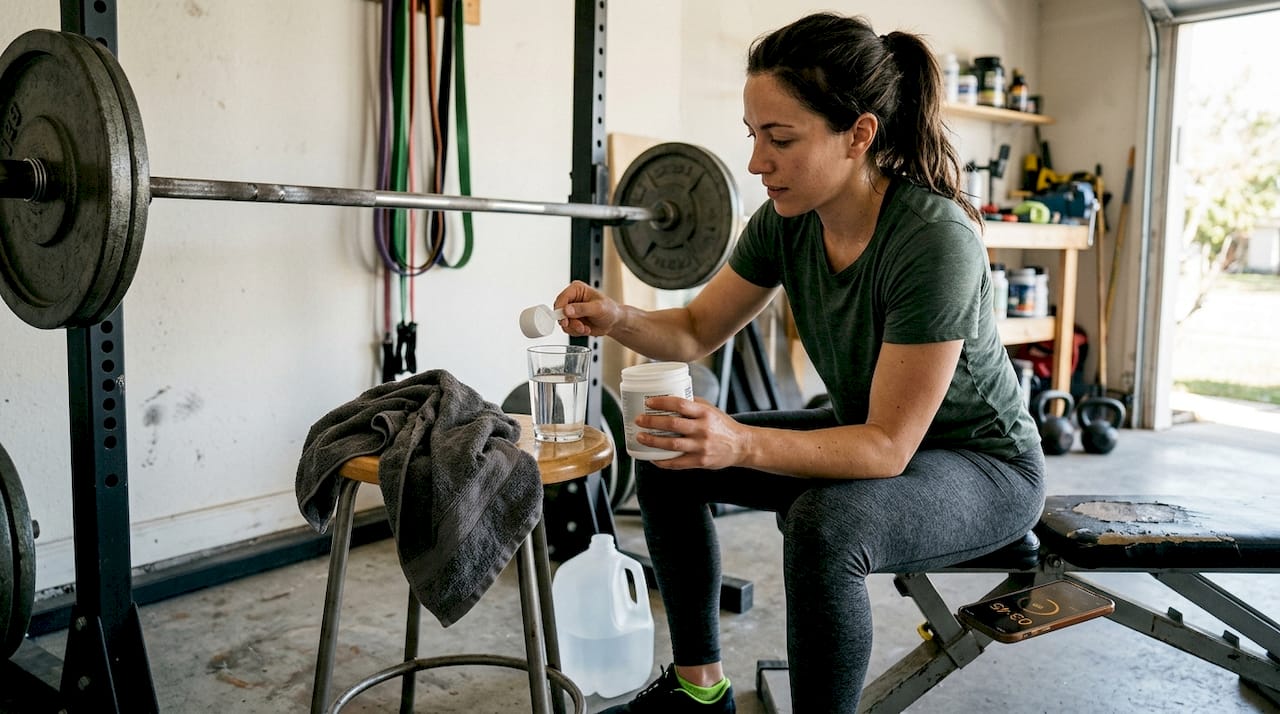
For endurance athletes, beta-alanine demonstrates sport-specific benefits for buffering capacity and jump performance with an effect size of 0.41. This amino acid increases muscle carnosine levels, which helps neutralise the hydrogen ions that cause that burning sensation during high-intensity efforts. Taking 3-6g daily over 4-8 weeks builds carnosine stores, extending your ability to maintain power output during repeated sprints or sustained efforts above lactate threshold.
Protein supplementation deserves special attention because it yields the greatest improvement in muscular strength with an effect size of 0.64 and a SUCRA score of 99.6%. Whilst whole food protein sources remain ideal, supplements offer convenience for hitting daily targets of 1.6-2.2g per kilogram bodyweight. Whey protein digests rapidly for post-workout recovery, whilst casein provides sustained amino acid release overnight.
| Supplement | Primary Benefit | Typical Dose | Best Timing |
|---|---|---|---|
| Caffeine | Power and endurance | 3-6 mg/kg | 30-60 min pre-exercise |
| Creatine | Strength and power | 3-5g daily | Consistent daily, timing flexible |
| Beta-alanine | Endurance buffering | 3-6g daily | Split doses, timing flexible |
| Protein | Muscle strength | 20-40g per serving | Post-workout and daily targets |
Pro Tip: Start with single supplements rather than complex blends so you can identify which actually benefit your performance. Add one supplement at a time over 4-6 weeks whilst tracking objective metrics like training volume, sprint times, or strength gains.
Supplements for recovery and muscle health
HMB (beta-hydroxy beta-methylbutyrate) offers comprehensive benefits for athletes seeking improved body composition and recovery. Research shows that HMB at 3g daily improves lean mass, strength, power, recovery, and endurance performance with an effect size of 0.58 for endurance outcomes. This leucine metabolite reduces muscle protein breakdown, particularly valuable during calorie restriction or intense training phases. Athletes often notice reduced muscle soreness and faster recovery between sessions when supplementing consistently.
Vitamin D plays a crucial role beyond bone health. Studies demonstrate that vitamin D supplementation addresses deficiencies, improves musculoskeletal health, reduces injury risk, and supports performance. Many athletes training predominantly indoors or living in northern latitudes have suboptimal vitamin D status. Testing your levels and supplementing to maintain 75-100 nmol/L provides the foundation for optimal muscle function and immune health.
Amino acid supplements and probiotics represent emerging areas with promising research. Evidence suggests that amino acids like BCAAs, arginine, and citrulline along with probiotics show potential for recovery, fatigue prevention, and exercise tolerance. BCAAs may reduce central fatigue during prolonged exercise, whilst citrulline enhances nitric oxide production for improved blood flow. Probiotics support gut health, which influences nutrient absorption and immune function.
Consider these practical applications for recovery supplements:
- HMB supplementation particularly during cutting phases or intense training blocks
- Vitamin D testing before supplementing to establish baseline status
- BCAA use during fasted training or extended endurance sessions
- Amino acid timing around training for maximum recovery benefit
- Probiotic strains selected for specific athletic outcomes
| Supplement | Recovery Benefit | Typical Dose | Additional Notes |
|---|---|---|---|
| HMB | Lean mass, reduced breakdown | 3g daily | Split into 1g doses |
| Vitamin D | Musculoskeletal health | 1000-4000 IU daily | Test levels first |
| BCAAs | Reduced central fatigue | 5-10g per session | During prolonged exercise |
| Probiotics | Gut health, immunity | Strain-dependent | Choose research-backed strains |
Less effective supplements and emerging considerations
Not every popular supplement delivers on its promises. Research indicates that nitrate supplementation shows limited effects in elite athletes despite theoretical benefits for oxygen efficiency. Beetroot juice and nitrate supplements may help recreational athletes or those with lower baseline fitness, but well-trained individuals already maximise nitric oxide production through regular training adaptations.
Antioxidant vitamins present a nuanced picture that challenges conventional wisdom. Whilst antioxidant vitamins C and E attenuate oxidative stress, excess amounts may impair training adaptations. Your body uses controlled oxidative stress as a signal to trigger beneficial adaptations like improved mitochondrial function and antioxidant enzyme production. Megadosing antioxidants might blunt these signals, potentially limiting your training gains.
The emerging consensus emphasises targeted supplementation over blanket approaches. Rather than taking every supplement marketed to athletes, focus on addressing specific deficiencies or performance gaps identified through testing and careful self-monitoring. This strategy maximises benefits whilst minimising unnecessary expense and potential interference with natural adaptations.
Key cautions for these supplements include:
- Nitrates work better for recreational athletes than elite performers
- High-dose antioxidants may reduce training-induced adaptations
- Individual response varies significantly for marginal supplements
- Cost-benefit analysis often favours whole food sources
- Timing and context determine whether these supplements help or hinder
“The science of sports nutrition continues evolving, revealing that more isn’t always better. Athletes benefit most from strategic supplementation that complements their training, addresses genuine deficiencies, and respects the body’s adaptive processes rather than attempting to override them.”
Explore quality fitness supplements at MyGymSupplements
Now that you understand which supplements offer genuine benefits backed by scientific evidence, finding reliable sources matters for achieving your athletic goals. MyGymSupplements provides a comprehensive range of quality fitness supplements formulated to support performance, recovery, and overall health. Browse categories including proteins, creatine, amino acids, pre-workouts, and essential vitamins tailored for athletes and fitness enthusiasts.
The platform organises products by specific goals like muscle gain, endurance enhancement, and recovery optimisation, making it straightforward to find supplements that match your training objectives. Whether you’re seeking research-backed performance enhancers or recovery aids discussed in this article, you’ll discover options that align with evidence-based recommendations. Shop with confidence knowing you’re investing in supplements that support your fitness journey with quality ingredients and transparent formulations.
FAQ
What are the best fitness supplements for endurance athletes?
Endurance athletes benefit most from beta-alanine and HMB for improved endurance performance, whilst caffeine enhances endurance across multiple sports. Beta-alanine buffers hydrogen ions during sustained efforts, HMB preserves lean mass during high-volume training, and caffeine reduces perceived exertion. These three supplements have the strongest evidence for extending endurance capacity when dosed appropriately.
Can supplements replace a balanced diet for athletes?
Supplements support but never replace whole foods for athletic performance. Research consistently advocates a food-first approach where supplements address specific deficiencies or provide targeted ergogenic benefits. Whole foods deliver complex nutrients, fibre, and phytochemicals that isolated supplements cannot replicate, forming the irreplaceable foundation of athletic nutrition.
Are high doses of antioxidant vitamins beneficial for training?
Moderate antioxidant intake supports health, but excess antioxidant vitamins may impair training adaptations despite reducing oxidative stress. Your body uses controlled oxidative stress to signal beneficial adaptations like enhanced mitochondrial function. Megadosing vitamins C and E can blunt these signals, potentially limiting the very improvements you’re training to achieve. Balance proves more effective than excess.

0 comments