

Most athletes and gym-goers believe sports supplements are ‘must haves’, but evidence disagrees. Defining sports supplements accurately requires clarifying their ingredients, uses, and what science actually shows. This guide will reveal what sports supplements really are, how they are categorised, and ways to assess their potential role for your fitness goals.
Table of Contents
- What are sports supplements?
- How are sports supplements classified?
- Key ingredients: What actually works?
- How do regulations and quality concerns affect you?
- Optimising nutrition: Supplements versus whole foods
- Tailoring choices: How to select supplements for your goals
- Your next step: Smart supplement choices start here
- Frequently asked questions
Key Takeaways
| Point | Details |
|---|---|
| Know the definition | Sports supplements are purpose-designed products to enhance performance, recovery, or fill nutritional gaps. |
| Focus on evidence | Only a small number of supplements, like creatine and caffeine, have strong support for athletic use. |
| Safety is crucial | Supplements are less strictly regulated, so always choose tested and reputable brands. |
| Whole foods first | Prioritise a balanced, whole-food diet; use supplements only to address real needs. |
| Personalise choices | Supplement needs should be matched to individual goals, sport, and health profile. |
What are sports supplements?
Sports supplements are products designed to enhance performance, aid recovery, or address nutrition gaps. They come in powders, capsules, tablets, and drinks. Active ingredients include proteins, amino acids, creatine, vitamins, minerals, and botanicals.
These products serve specific purposes: boosting endurance, building strength, repairing muscle tissue, or providing targeted nutritional support. A dietary supplement contains ingredients intended to supplement the diet, taken by mouth, and labelled as such.
Common forms include:
- Protein powders for muscle repair
- Pre-workout formulas for energy
- Recovery drinks for post-training
- Capsules for vitamins and minerals
Understanding athletic nutrition strategies helps you determine whether supplements fit your routine. The key is recognising that supplements are additions to, not replacements for, proper nutrition.
“Sports nutritional supplements are foods or food components used to enhance athletic performance, promote recovery, or meet nutritional needs of athletes.”
How are sports supplements classified?
Defining what goes into a sports supplement leads naturally into how they’re grouped and what sets one product apart from another. Sports supplements are classified by chemical characteristics and function.
You can sort them by core ingredient, delivery format, or intended function. The function often determines athlete choice—muscle gain, endurance, or rapid recovery.
| Type | Primary purpose | Example products |
|---|---|---|
| Protein supplements | Muscle repair and growth | Whey, casein, plant-based protein |
| Carbohydrate supplements | Energy replenishment | Maltodextrin, energy gels |
| Amino acids | Recovery and performance | BCAAs, glutamine |
| Creatine | Strength and power output | Creatine monohydrate |
| Vitamins and minerals | Nutritional support | Multivitamins, iron, vitamin D |
| Pre-workout formulas | Energy and focus | Caffeine-based blends |
Classification by function:
- Endurance support: carbohydrates, electrolytes
- Muscle maintenance: proteins, amino acids
- Situation-specific: creatine for power, caffeine for alertness
Exploring supplements for strength and recovery shows how different products target different training goals. Your choice depends on what you’re trying to achieve.
Key ingredients: What actually works?
Understanding the types and functions of supplements raises a crucial question: which ingredients are genuinely worth your attention, and which should you skip? Only a handful of supplements are consistently backed by evidence for performance gains.
Creatine, caffeine, beta-alanine, bicarbonate, and nitrate show real benefits. Protein aids recovery. Most other ingredients lack strong supporting data.
| Ingredient | Evidence strength | Effective dose | Caveats |
|---|---|---|---|
| Creatine monohydrate | Strong | 3-5g daily | May cause water retention |
| Caffeine | Strong | 3-6mg per kg body weight | Tolerance develops; timing matters |
| Beta-alanine | Moderate | 4-6g daily | May cause tingling sensation |
| Protein (whey/casein) | Strong | 20-40g post-workout | Whole foods preferred when possible |
| Nitrate | Moderate | 300-600mg | Timing critical (2-3 hours pre-exercise) |
| BCAAs | Weak (if protein adequate) | 5-10g | Redundant with sufficient protein intake |
Whole foods are preferred over supplements. High-dose antioxidants may blunt adaptations. Focus on reputable sources to avoid contamination risks.
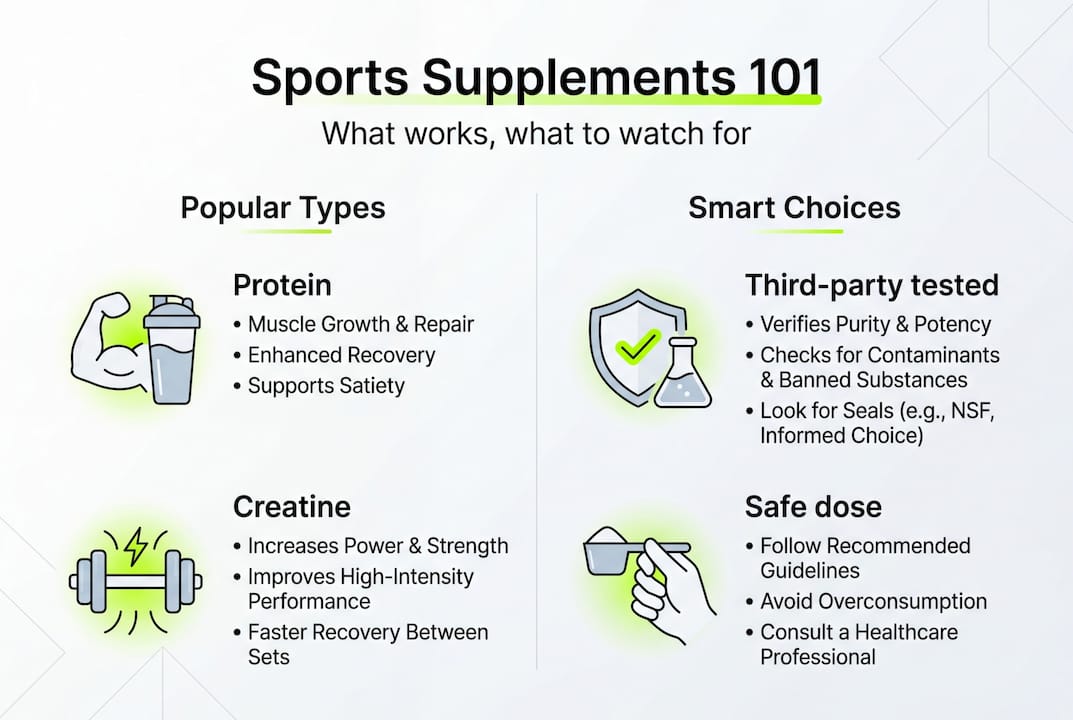
Pro Tip: Prioritise whole foods and proven supplements—avoid the hype around products with weak scientific support. Check proven supplement examples and amino acids for recovery to make informed choices.
How do regulations and quality concerns affect you?
Before selecting any sports supplement, it’s essential to be aware of how product standards and regulations function—and what that means for your safety. Sports supplements are regulated differently from drugs. The FDA oversees manufacturing but not pre-market efficacy or standardisation.
Three key risks you should know:
- Contamination: Products may contain unlisted substances, including banned substances
- Inaccurate labelling: Ingredient amounts may not match labels
- Lack of proof: No requirement for safety or effectiveness testing before sale
Tips for buyers:
- Check for third-party testing (Informed Sport, NSF Certified for Sport)
- Stick to reputable brands with transparent ingredient lists
- Beware of ‘miracle’ claims or proprietary blends
- Research ingredients independently before purchasing
“In the US, dietary supplements are regulated differently from drugs. The FDA oversees manufacturing but not pre-market efficacy or standardisation. This means you must be an informed consumer.”
The regulatory environment places responsibility on you to verify quality. Don’t assume all products are safe or effective simply because they’re available for purchase.
Optimising nutrition: Supplements versus whole foods
Even with strong regulatory awareness, it’s crucial to put supplements in perspective when it comes to overall daily nutrition and performance. Supplements can support gaps but should not push out core dietary habits.
Optimal nutrition comes from whole foods. Supplements are useful for specific needs like increased protein or carbohydrates during intense activity.
Scenarios where supplement use is justified:
- High-volume training exceeding normal dietary capacity
- Specific nutrient deficiencies (iron, vitamin D)
- Special medical or dietary needs (vegan athletes needing B12)
- Convenience during travel or competition
- Recovery windows when whole food isn’t practical
For most athletes, optimal nutrition and recovery are reached by prioritising real, unprocessed foods. High-dose antioxidants may blunt adaptations. Special cases like low energy availability may need professional input.
Pro Tip: For edge cases (restricted diets, heavy endurance loads), consult a nutritionist before introducing supplements. Consider post-workout shakes for recovery only after establishing solid dietary foundations.
A healthy diet supports performance better than any supplement alone. Build your nutrition strategy on whole foods first.
Tailoring choices: How to select supplements for your goals
Armed with the knowledge on what supplements actually do and when they’re necessary, the last crucial step is making sure your supplement strategy matches your unique needs and goals. Supplements should be individualised depending on athlete type, training demands, and health needs.
Steps to identify best-fit supplements:
- Assess your training: What are your specific performance goals?
- Evaluate your diet: Are you meeting nutritional needs through food?
- Identify gaps: Where do deficiencies or increased demands exist?
- Research evidence: Does science support the supplement for your goal?
- Check quality: Is the brand reputable and third-party tested?
Questions to ask before purchasing:
- Is this supplement evidence-based for my sport or goal?
- Do I have a genuine nutritional need or performance gap?
- Is the brand reputable with transparent labelling?
- Have I optimised my whole food intake first?
- Does the timing and dosage match research recommendations?
No supplement is ‘one-size-fits-all’. Customise to your sport, intensity, and health. A powerlifter’s needs differ vastly from an endurance runner’s. Your supplement strategy should reflect that.
Explore post-workout supplement science and sport-specific supplement advice to refine your approach. Personalisation is everything.
Your next step: Smart supplement choices start here
From understanding what sports supplements truly are to clarifying the best approach for your body, getting practical support is the logical next step. We offer evidence-based and trusted supplement options designed for athletes who value quality and transparency.
Explore our gym supplements shop to find products backed by science and manufactured to high standards. Use our practical articles and guides to make informed supplement decisions tailored to your needs. Whether you’re seeking protein for recovery, creatine for strength, or amino acids for endurance, we provide the resources to help you choose wisely.
Check out effective sport supplement examples to see how evidence-based products fit into real training programmes. Smart supplementation starts with knowledge, continues with quality products, and succeeds through personalised application.
Frequently asked questions
Are sports supplements necessary for improving performance?
Supplements are not needed if diet is adequate. They’re useful for specific requirements like high training volumes or nutrient deficiencies.
What are the safest sports supplements to use?
Creatine, caffeine, and protein are considered effective and safe when sourced from reputable manufacturers and used correctly.
Can supplements replace whole foods in an athlete’s diet?
Supplements should not replace whole foods. A balanced diet provides superior nutrition and recovery benefits.
How can I check if a supplement is safe and effective?
Look for third-party tested brands, check ingredient transparency, and consult scientific sources. Regulations do not guarantee pre-market efficacy or purity.
Do I need supplements if I eat a balanced diet?
Most athletes with balanced diets don’t need supplements. Consider them only for specific gaps, intense training demands, or medical requirements identified by a professional.
Recommended
- Effective fitness supplements: key examples for athletes
- Top fitness supplements for muscle gain and performance
- Top supplement shopping tips for effective fitness gains
- Guide to Sports Nutrition Basics for Optimal Results – MyGymSupplements
- Swimming Nutrition – Peak Performance Swim Camp
- Ernährung für Sportler: Leistungsfähig und Gesund bleiben – Kühlkern UG (Haftungsbeschränkt)

0 comments