

TL;DR:
- Post-workout shakes can accelerate recovery when timed around high-volume or back-to-back training sessions.
- Key nutrients include 20-40 grams of fast-digesting protein, especially whey, combined with carbohydrates.
- Shakes are most essential during short recovery windows, fasted training, or limited access to whole foods.
Post-workout shakes sit at the centre of one of fitness nutrition’s most heated debates. Some coaches insist they’re overrated marketing, while many athletes swear they’re non-negotiable. The truth, as usual, sits somewhere more interesting. The research on immediate post-exercise nutrition has matured significantly, and the evidence now tells a nuanced story: shakes aren’t magic, but in the right context, they genuinely accelerate recovery, support muscle repair, and keep performance high across sessions. This guide breaks down the science, the optimal composition, and the specific situations where a shake moves from useful to essential.
Table of Contents
- The science behind post-workout shakes
- Why composition matters: protein, carbs, and more
- When shakes are essential (and when they’re not)
- Shakes vs whole food: convenience, effectiveness, and context
- Why nuance trumps dogma in post-workout nutrition
- Power your recovery with quality shakes
- Frequently asked questions
Key Takeaways
| Point | Details |
|---|---|
| Timing boosts recovery | Consuming protein and carbs soon after training speeds muscle repair and reduces fatigue when needed. |
| Shakes solve practical issues | Shakes are useful when a meal is not possible, appetite is low, or recovery time is short. |
| Total nutrition is vital | Meeting daily protein and energy needs matters more than strict shake timing for most. |
| Composition counts | An effective shake includes 20-40g protein and carbs, with fast-digesting sources preferred in some cases. |
The science behind post-workout shakes
For years, the concept of the post-exercise “anabolic window” was treated as gospel. Gym folklore held that you had roughly 30 minutes after training to consume protein, or your gains would evaporate. That version is an oversimplification, but dismissing nutrient timing entirely is equally wrong.
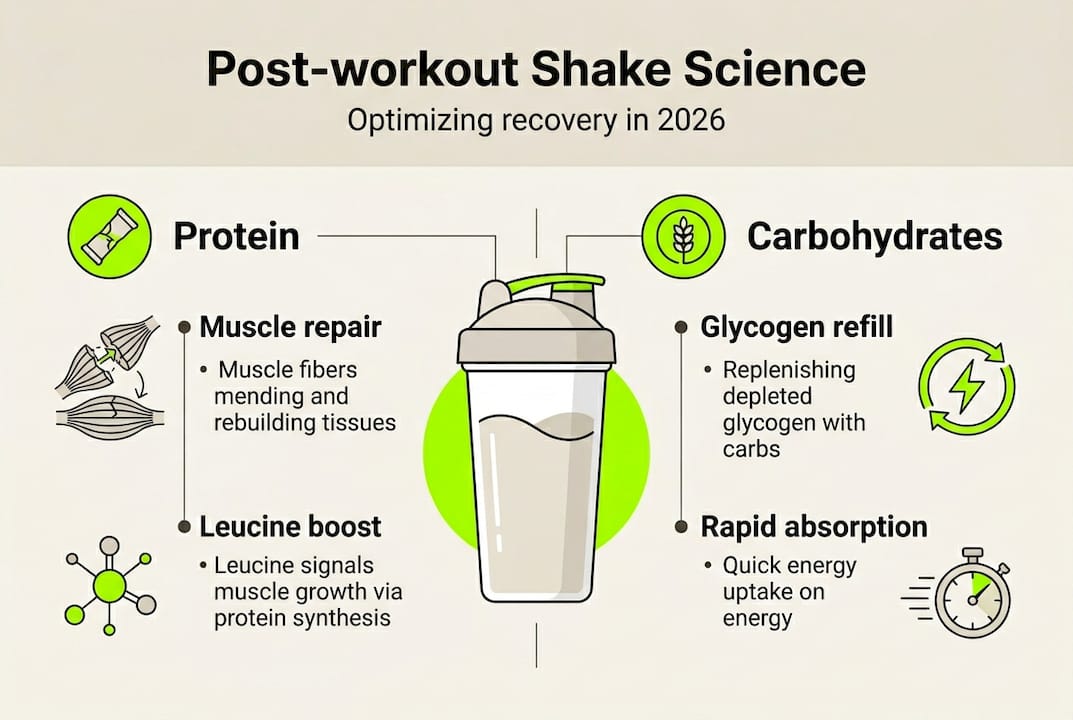
Muscle protein synthesis (the process by which your body builds and repairs muscle fibres) is elevated for several hours after resistance training. During this window, your muscles are primed to absorb amino acids and replenish glycogen (the stored carbohydrate your muscles burn for fuel). The question is whether the timing of your shake matters as much as its content.
Recent evidence suggests timing does matter in specific circumstances. Immediate post-exercise supplementation accelerates muscle recovery compared to delayed intake, particularly when the gap between training and a proper meal exceeds 90 minutes, or when multiple sessions are planned within 24 hours.
Here’s a snapshot of what the data shows for key recovery markers:
| Recovery marker | Immediate shake | Delayed intake (2h+) | Whole food meal |
|---|---|---|---|
| Muscle protein synthesis | High | Moderate | High (if timed well) |
| Glycogen resynthesis rate | Rapid | Slower | Moderate to rapid |
| Perceived fatigue reduction | Significant | Modest | Moderate |
| Convenience for athletes | Very high | N/A | Variable |
Key statistic: Athletes consuming protein and carbohydrates immediately post-exercise show measurably faster recovery of strength and reduced muscle soreness compared to those who delay intake by two or more hours.
The benefits for muscle recovery are most pronounced when training volume is high and recovery time is short. For the average gym-goer training once daily with meals planned around sessions, the window is more forgiving. For athletes doubling up or competing on consecutive days, immediate nutrition becomes far more critical.
Understanding protein after workout timing is only half the picture. What you put in that shake determines how effectively your body uses it.
Why composition matters: protein, carbs, and more
Now that we understand why timing helps, let’s examine what goes into an effective post-workout shake and why composition makes a real difference.
The two non-negotiables are protein and carbohydrates. Protein provides amino acids for muscle repair, with leucine (an essential amino acid that directly triggers muscle protein synthesis) being the most critical. Research consistently supports 20 to 40 grams of protein per shake, depending on body mass and training intensity. Whey protein is the gold standard here because it digests quickly and is naturally rich in leucine.

Carbohydrates replenish glycogen stores and, when combined with protein, create a hormonal environment that supports recovery. CHO-PRO supplementation improves performance and protein synthesis more effectively than carbohydrates alone, making the combination significantly more powerful than either nutrient in isolation.
| Option | Protein | Carbs | Recovery effect | Best for |
|---|---|---|---|---|
| Protein shake only | High | Low | Good for muscle repair | Strength athletes, low-carb diets |
| Carbohydrate drink only | None | High | Glycogen refuel only | Endurance top-up, not muscle repair |
| CHO-PRO shake | High | High | Optimal all-round recovery | Most athletes, double sessions |
| Whole food meal | Variable | Variable | Excellent if timed right | Home setting, extended recovery |
Key benefits of a well-composed post-workout shake include:
- Faster muscle repair through rapid amino acid delivery
- Reduced muscle damage markers such as creatine kinase in the hours after training
- Improved performance in subsequent sessions, particularly within 24 hours
- Reduced fatigue through glycogen restoration and hormonal support
Fat and fibre are worth a brief mention. Both slow digestion, which is useful at other times of day but counterproductive immediately post-exercise when you want rapid nutrient absorption. Keep your post-workout shake lean on fat and low in fibre.
For a deeper breakdown of macros and meal structure, the post-workout nutrition guide covers this in practical detail.
Pro Tip: If you train twice a day or have a morning session before breakfast, increase your carbohydrate ratio in the shake. Aim for a 2:1 carb-to-protein ratio to maximise glycogen replenishment before your next session.
When shakes are essential (and when they’re not)
Understanding composition helps you build a strategic shake, but it’s just as important to know when they provide real advantages.
Shakes earn their place most clearly in the following situations:
- Short recovery windows. If you’re training again within 24 hours, immediate nutrition for athletes is critical for restoring performance capacity before the next session.
- Fasted or morning training. Training without eating beforehand depletes glycogen faster and leaves you in a catabolic (muscle-breaking) state. A shake immediately after is the fastest way to reverse this.
- Reduced appetite post-exercise. High-intensity training suppresses hunger for many athletes. A liquid shake is far easier to consume than a full meal when appetite is low.
- Multiple daily sessions. Team sport athletes, endurance competitors, and those in training camps often cannot afford to wait for a meal. A shake bridges the gap efficiently.
- Travel or limited food access. When you’re on the road and a quality meal isn’t available within 90 minutes, a shake is the practical solution.
Conversely, shakes are less urgent when:
- You train once daily and have a balanced meal planned within an hour of finishing
- Your total daily protein and carbohydrate intake is consistently meeting your needs
- You have no back-to-back sessions and adequate overnight recovery time
The science behind post-workout supplements supports this context-dependent view. A recreational gym-goer training three times per week with solid meals has far less urgency than a rugby player with two sessions on the same day.
Pro Tip: Assess your own need by asking three questions. How long until my next meal? How soon am I training again? Did I train fasted? If the answer to any of these creates a gap or a deficit, a shake fills it.
Shakes vs whole food: convenience, effectiveness, and context
Having clarified when and why shakes matter, how do they compare to traditional post-workout meals?
The honest answer is that shakes vs whole food is less a competition and more a context question. Total daily nutrition is the single biggest driver of recovery and adaptation. Shakes solve specific practical problems rather than being inherently superior to food.
Scenarios where shakes clearly win:
- Poor appetite immediately after intense training
- Travel, competitions, or environments without kitchen access
- Quick refuelling between back-to-back sessions
- Fasted training where rapid nutrient delivery matters
- Situations where precise macronutrient control is needed
Scenarios where whole food is equally good or better:
- You’re at home with time to cook and eat within an hour
- Extended recovery periods of 12 hours or more between sessions
- You prefer the satiety and micronutrient density of a real meal
- Budget is a concern and whole food sources are more cost-effective
“The fundamentals of recovery nutrition are not complicated. Eat enough protein, enough carbohydrates, and don’t let recovery gaps go unfilled. Shakes are a tool for filling those gaps, not a replacement for getting the basics right.” Sports nutrition researcher perspective on practical recovery strategies.
Building your own shake is straightforward. Combine a quality whey or plant-based protein source, a fast-digesting carbohydrate like banana or oats, and water or milk. That covers the essentials without unnecessary complexity.
For a full breakdown of structuring your post-training nutrition, the guide to post-workout nutrition and our resource on how to optimise workout nutrition are worth reading alongside this article.
Why nuance trumps dogma in post-workout nutrition
With the facts and practicalities laid out, it’s worth stepping back for a broader perspective.
The fitness industry has a habit of turning nuanced research into rigid rules. The anabolic window became a 30-minute countdown. Protein became something you had to consume every two hours. These rules make for compelling marketing but poor science.
The reality is that an elite athlete training twice daily has genuinely different nutritional urgency compared to someone doing three moderate gym sessions per week. Applying the same strict post-workout protocol to both is unnecessary and, frankly, exhausting for the person who doesn’t need it.
Obsessing over the exact timing of your shake while consistently under-eating protein across the day is like worrying about the colour of your running shoes while training in the wrong shoes entirely. The fundamentals matter far more than the fine details for most people.
That said, for those in high-performance contexts, the fine details do matter. If you’re competing, training twice daily, or pushing hard volume blocks, boosting recovery with science becomes genuinely worthwhile. Use shakes as one intelligent tool in your recovery strategy, not as a substitute for building solid nutritional habits first.
Power your recovery with quality shakes
For those ready to apply this science practically, the right shake starts with quality ingredients and clear labelling. At MyGymSupplements.shop, you’ll find a curated selection of post-workout proteins, carbohydrate blends, and recovery formulas chosen for their ingredient transparency and performance credentials. Whether you need a fast-digesting whey, a plant-based alternative, or a complete CHO-PRO blend, the range is built around what the evidence actually supports. Pair your shake choice with our recovery workflow guide to structure your nutrition around your training demands and get the most from every session.
Frequently asked questions
Do you need a post-workout shake if you eat a meal soon after?
If you have a balanced meal containing protein and carbohydrates within an hour of training, a shake is not essential for most people, as whole foods are equally effective when total daily nutrition is met.
How much protein should a post-workout shake have?
Aim for 20 to 40 grams of protein per shake, ideally from a high-leucine source like whey, to maximise muscle repair signals.
Is nutrient timing still important?
Immediate shakes help most when quick recovery or multiple sessions are needed, but timing depends on context and overall daily nutrition remains the most important factor.
What is the best carb to use after a workout?
Fast-digesting carbohydrates like dextrose or maltodextrin support rapid glycogen replenishment, with 1 to 1.2g per kg per hour recommended for athletes needing to recover quickly between sessions.
Recommended
- Post-workout shakes: real benefits for muscle and recovery
- Post-workout recovery: boost your results with science
- Muscle recovery explained: evidence-based strategies for 2026
- Why use post-workout supplements? Science & real results
- Enhance Recovery Steps: 5 Evidence-Based Approaches for Faster Results – NeuroStack
- 7 Ways Clean Plant Based Protein Enhances Your Daily Wellness – Granavitalis

0 comments