

Most athletes assume that if they’re not sore the next day, they didn’t train hard enough. That belief is not just wrong — it’s actively slowing your progress. Muscle soreness and muscle recovery are two entirely different processes, and confusing them leads to poor decisions around nutrition, rest, and supplementation. Muscle repair involves a precise biological sequence that nutrition and targeted strategies can either accelerate or derail. This article breaks down the real science of muscle recovery and gives you practical, evidence-based tools to rebuild faster and stronger.
Table of Contents
- How muscle recovery actually works
- The crucial role of nutrition in muscle rebuilding
- Evidence-based supplements for muscle recovery
- Personalising recovery strategies: individual needs and common pitfalls
- Beyond nutrition: other science-backed recovery techniques
- Where to find trusted nutrition and recovery solutions
- Frequently asked questions
Key Takeaways
| Point | Details |
|---|---|
| Recovery is a process | Muscle repair happens in stages, involving both inflammation and regeneration for strength building. |
| Nutrition powers muscle growth | Timing and quality of protein and carbs accelerate muscle recovery after training. |
| Supplements add targeted benefits | Evidence supports creatine, HMB, BCAAs, and omega-3 for faster, stronger recovery—used appropriately. |
| Personalisation is key | Adjust recovery strategies for your training, body type, and diet for best results. |
| Support beyond nutrition | Techniques like massage and cold water immersion can further reduce soreness and enhance performance. |
How muscle recovery actually works
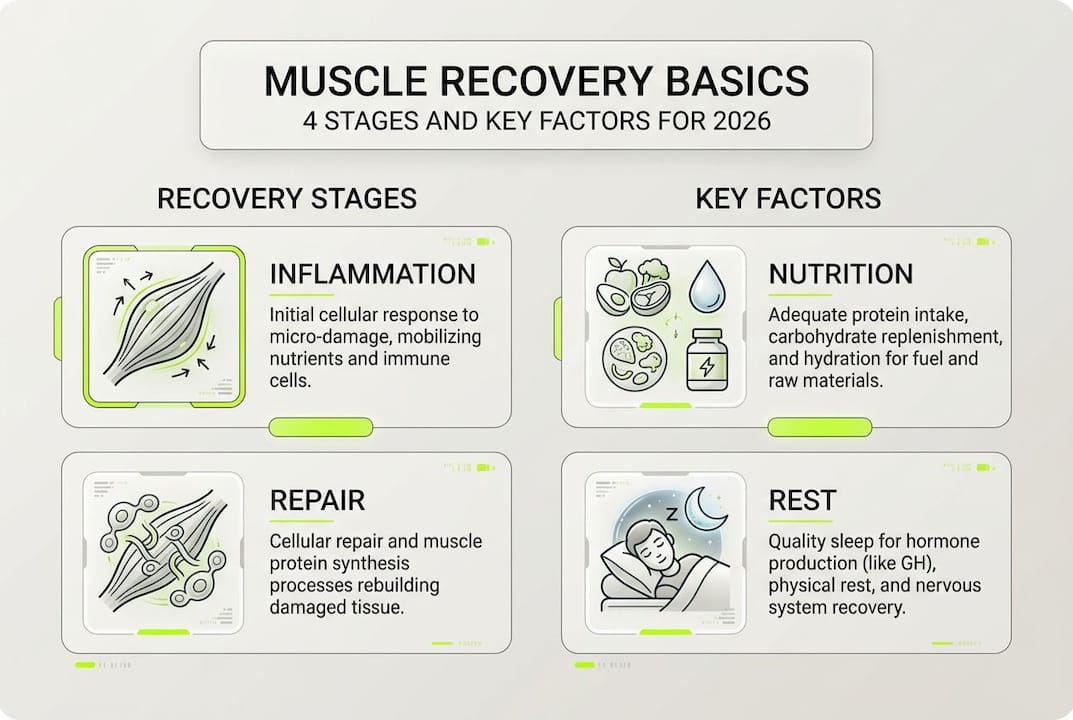
After a hard session, particularly one involving eccentric movements like squats or deadlifts, your muscle fibres develop microscopic tears. This is normal and necessary. The damage triggers an inflammatory response, which is your body’s first step toward repair, not a sign that something has gone wrong.
What follows is a four-stage process. First comes the initial damage and acute inflammation. Then satellite cells (muscle stem cells) activate and migrate to the damaged site. Next, protein synthesis ramps up to rebuild the fibres thicker and stronger. Finally, adaptation occurs, leaving you more resilient than before. You can explore this in more detail through our recovery workflow guide.
| Stage | Timeframe | What happens |
|---|---|---|
| Damage | 0–6 hours post-exercise | Microtears form, inflammation begins |
| Inflammation | 6–24 hours | Immune cells clear debris, soreness rises |
| Repair | 24–72 hours | Satellite cells rebuild fibres, DOMS peaks |
| Adaptation | 72 hours+ | Fibres remodel, strength increases |
Delayed onset muscle soreness (DOMS) typically peaks between 24 and 72 hours after exercise. Creatine kinase (CK), an enzyme released when muscle fibres are damaged, is widely used as a recovery marker. A drop in CK levels signals that repair is progressing well.
“Reductions in serum CK activity over successive days indicate that muscle damage mechanisms are resolving and adaptation is underway.”
Key points to remember:
- Soreness is a symptom of damage, not a measure of training quality
- Recovery has distinct biological stages that cannot be rushed arbitrarily
- Nutrition and supplementation influence every stage of this process
The crucial role of nutrition in muscle rebuilding
Now that you know what your muscles undergo, let’s explore the nutrients that rebuild them and how to time your nourishment for maximum benefit.

Protein is the primary building block for muscle repair. 20–30g post-exercise, combined with adequate carbohydrate intake to replenish glycogen, maximises muscle protein synthesis. Spread across the day, aim for 1.6–2.2g of protein per kilogram of bodyweight. Carbohydrates are equally important — they restore energy stores and reduce the catabolic (muscle-breaking) hormonal response after training.
| Strategy | Protein timing | Carb intake | Recovery outcome |
|---|---|---|---|
| Optimal | Within 2 hours post-workout | Moderate to high | Fastest glycogen and fibre repair |
| Suboptimal | 3+ hours post-workout | Low | Slower recovery, higher soreness |
| Plant-based optimal | Within 2 hours, varied sources | Moderate to high | Comparable recovery with planning |
Practical meal ideas to hit your targets:
- Grilled chicken with rice and steamed vegetables
- Greek yoghurt with banana and oats
- Tofu stir-fry with quinoa and edamame (plant-based)
- Whey protein shake with a piece of fruit
- Lentil soup with wholegrain bread (plant-based athlete nutrition can absolutely meet these needs)
For a deeper breakdown of what to eat and when, our post-workout nutrition guide covers the full picture.
Pro Tip: Missing the post-workout window is not a disaster. Total daily protein intake matters most. Timing is optimal, not mandatory — consistency across the day beats one perfect post-workout meal.
Evidence-based supplements for muscle recovery
While nutrition provides the foundation, certain supplements can amplify your muscle recovery results if you choose wisely.
Creatine and HMB reduce muscle damage and support strength gains when paired with resistance training. BCAAs and omega-3 reduce DOMS and inflammation, making them particularly useful during high-volume training blocks. Caffeine can reduce perceived soreness and improve performance in subsequent sessions. Sodium bicarbonate buffers lactic acid during intense efforts, though it’s more relevant for endurance and high-intensity interval work.
“Creatine monohydrate reliably increases lean muscle mass and strength output when combined with progressive resistance training — it remains one of the most evidence-supported supplements available.”
How to sequence supplements after training:
- Immediately post-workout: Whey protein (20–30g) with fast-digesting carbohydrates
- Within 30 minutes: Creatine monohydrate (3–5g daily, timing is flexible)
- With a meal: Omega-3 fatty acids (2–3g EPA/DHA) to reduce inflammation
- As needed: BCAAs during fasted training or when total protein intake is low
- Pre-bed: Casein protein if total daily intake needs topping up
For more on how BCAAs fit into your routine, read our BCAA supplement guide. If you’re considering HMB, our HMB supplement info page explains the research clearly.
Common mistakes and safety concerns:
- Taking multiple stimulants together (caffeine stacking) raises cardiovascular risk
- Exceeding creatine loading doses without adequate hydration causes cramping
- Relying on BCAAs as a protein replacement rather than a supplement
- Ignoring plant-based supplement options when whole food protein is insufficient
Pro Tip: More is not better with supplements. Overdoing certain compounds, particularly antioxidants like vitamin C and E in high doses, can actually blunt the training adaptations you’re working hard to achieve.
Personalising recovery strategies: individual needs and common pitfalls
Success isn’t one-size-fits-all. Now let’s see how to personalise these principles for what your body and training require.
Protein requirements shift depending on your situation. Trained athletes, low-carb diets, and energy deficits all raise relative protein needs. If you’re cutting calories while training hard, your protein target should sit at the higher end of the 1.6–2.2g/kg range. Female athletes are significantly underrepresented in sports nutrition research, meaning many recommendations are extrapolated from male data — something worth keeping in mind.
Adjusting your approach based on your profile:
- Endurance athletes: Prioritise carbohydrate replenishment alongside protein; glycogen depletion is the primary concern
- Plant-based athletes: Combine complementary protein sources (rice and peas, for example) and consider leucine-rich supplements to match animal protein’s anabolic signal
- Heavier training loads: Increase protein frequency (every 3–4 hours) rather than just total daily intake
- Female athletes: Monitor energy availability carefully; low energy availability impairs recovery more severely than in male counterparts
- Masters athletes (40+): Protein synthesis efficiency declines with age; aim for the upper end of protein targets and consider creatine
Our athlete nutrition guide goes further on tailoring intake to your specific goals. For whole food protein sources that support recovery without supplements, natural protein sources offers a solid starting point.
Pro Tip: Reassess your recovery plan every 8–12 weeks. What works during a hypertrophy block may not serve you during a strength or endurance phase. Stagnation often signals that your nutrition hasn’t kept pace with your training demands.
If you’re unsure where to start or have specific health conditions, a registered sports dietitian can provide personalised guidance that generic advice simply cannot match.
Beyond nutrition: other science-backed recovery techniques
With nutrition and supplementation covered, it’s time to address the recovery tools you might see in elite and recreational settings.
Non-nutrition strategies can speed up short-term relief and reduce perceived soreness, but they do not replace the biological necessity of adequate protein and energy intake. Think of them as supporting tools, not substitutes.
Cold water immersion, massage, vibration, and FES (functional electrical stimulation) all show evidence for reducing inflammation markers and improving short-term recovery. CWI (cold water immersion) is particularly effective in the 24 hours following intense exercise.
“Significant reductions in CK levels following cold water immersion and massage confirm that these techniques actively support the inflammatory resolution phase of muscle repair.”
What works and when:
- Cold water immersion (10–15°C, 10–15 minutes): Best within 1–2 hours post-exercise for acute soreness reduction
- Sports massage: Most effective 24–48 hours post-exercise; reduces perceived tightness and improves range of motion
- Vibration therapy: Useful pre and post-exercise to reduce DOMS and improve blood flow
- Functional electrical stimulation (FES): Emerging evidence for reducing CK and supporting active recovery in trained athletes
Do’s and don’ts for practical use:
- Do use CWI after competition or particularly brutal sessions
- Do combine massage with adequate sleep for compounding benefit
- Don’t rely on ice baths after every session — chronic use may blunt hypertrophy adaptations
- Don’t skip nutrition in favour of physical recovery tools; they work best together
For a full breakdown of how to structure your recovery days, our post-exercise recovery techniques guide covers both nutrition and physical strategies in one place.
Where to find trusted nutrition and recovery solutions
Evidence-based supplementation is not about buying everything on the shelf. It’s about choosing the right products, at the right doses, for your specific training demands. The research is clear: creatine, BCAAs, omega-3, and quality protein sources make a measurable difference when used correctly alongside a solid nutrition plan.
At MyGymSupplements.shop, you’ll find a curated range of muscle recovery supplements covering everything from creatine and HMB to plant-based proteins and omega-3s. Each category is organised by goal, so whether you’re focused on reducing soreness, rebuilding faster, or maintaining performance across a heavy training block, you can find what fits your plan. If you want to go deeper on the nutritional side, our post-workout nutrition guide is a practical next step.
Frequently asked questions
How soon after exercise should I eat for fastest muscle recovery?
Immediate post-exercise nutrition is optimal, but consuming protein and carbohydrates within two hours of finishing your session still delivers strong recovery benefits. The total daily intake across all meals remains the most important factor.
Is muscle soreness necessary for muscle growth?
DOMS marks muscle fibre microtrauma but is not a reliable indicator of growth or training quality. You can make consistent strength and size gains without significant soreness, particularly as your body adapts to a given stimulus.
Do women need different recovery supplements from men?
Core recovery needs are broadly similar, but females under energy deficits have higher relative protein requirements. More female-specific research is needed before firm gender-differentiated supplement recommendations can be made.
Can plant-based diets support optimal muscle recovery?
Yes. Plant-based protein and carb timing can produce comparable recovery outcomes to omnivorous diets when total protein targets are met and complementary sources are combined thoughtfully.
What are early signs of over-supplementation blunting muscle gains?
Stalled progress despite consistent training is a key warning sign. Over-supplementing can blunt adaptations, particularly with high-dose antioxidants — scaling back and reassessing your stack is often the most effective fix.
Recommended
- Post-workout shakes: real benefits for muscle and recovery
- What Is Muscle Recovery? A Complete Overview – MyGymSupplements
- Rapid Recovery Explained: Benefits for Fitness UK – MyGymSupplements
- Best Vitamins for Muscle Recovery – Expert Comparison 2025 – MyGymSupplements
- Understanding Gluten Free for Athletes: A Comprehensive Guide – naturessoulshop

0 comments