

You’ve probably seen athletes sprinting to their gym bags the moment a session ends, desperately shaking up a protein drink as if every second counts. The truth is, for most people training once a day, that frantic rush is largely unnecessary. The so-called ‘anabolic window’ is far narrower in importance than fitness culture suggests, and immediate post-exercise nutrition only becomes genuinely critical under specific conditions. What actually drives recovery and muscle growth is a smarter combination of nutrients, timing, and consistency. This guide breaks down exactly what the science says and how you can apply it.
Table of Contents
- Why post-workout recovery matters
- Core nutrients: What and when to eat after exercise
- Supplements and recovery: Separating must-haves from hype
- Timing and recovery: How crucial is the ‘anabolic window’?
- Our perspective: What most miss about post-workout recovery
- Find your edge with science-backed recovery options
- Frequently asked questions
Key Takeaways
| Point | Details |
|---|---|
| Carb-protein synergy | Combining carbohydrates and protein soon after exercise boosts muscle repair and energy replenishment best. |
| Timing depends on goals | Quick nutrition matters most for athletes with short recovery windows, less so for casual gym-goers. |
| Supplements have limits | Only a few supplements like creatine and omega-3s have strong scientific support for recovery. |
| Consistency wins | Focusing on total daily intake and overall recovery habits yields better long-term gains than obsessing over timing. |
Why post-workout recovery matters
After a hard training session, your body is not simply tired. It is actively rebuilding. Muscle fibres that were stressed and partially broken down during exercise begin a repair process called muscle protein synthesis (MPS). Glycogen stores, which are the carbohydrate fuel your muscles burn during exercise, need replenishing. Inflammation rises temporarily as part of the healing response. Understanding these processes is the foundation of any smart recovery strategy.
The ‘anabolic window’ refers to a period after exercise when your body is supposedly primed to absorb nutrients for maximum muscle repair. For years, this was treated as a narrow 30-minute slot. The reality is more nuanced. Immediate carb and protein intake does accelerate glycogen resynthesis and MPS, but the urgency of that window depends heavily on your training schedule and goals.
Key physiological processes triggered after training include:
- Muscle protein synthesis: The rebuilding of damaged muscle fibres, driven by amino acid availability
- Glycogen replenishment: Restoring carbohydrate stores in muscle tissue for your next session
- Inflammation response: A controlled inflammatory process that, when managed well, supports adaptation
- Hormonal shifts: Elevated insulin sensitivity that improves nutrient uptake in the hours post-exercise
“The timing of nutrient intake post-exercise is most critical when recovery windows between sessions are short. For athletes training once daily, total daily intake is the primary driver of adaptation.”
Who benefits most from optimised post-workout strategies? Athletes training twice a day, endurance competitors with back-to-back events, and hard gainers who struggle to meet calorie targets all see the greatest return from precise timing. Casual lifters training three to four times per week have far more flexibility. For a deeper look at how to structure your intake, the post-workout nutrition guide covers practical frameworks for different training types.
Pro Tip: If you train twice a day, treat your post-workout window as non-negotiable. If you train once daily, focus on hitting your daily totals rather than stressing about the clock.
Core nutrients: What and when to eat after exercise
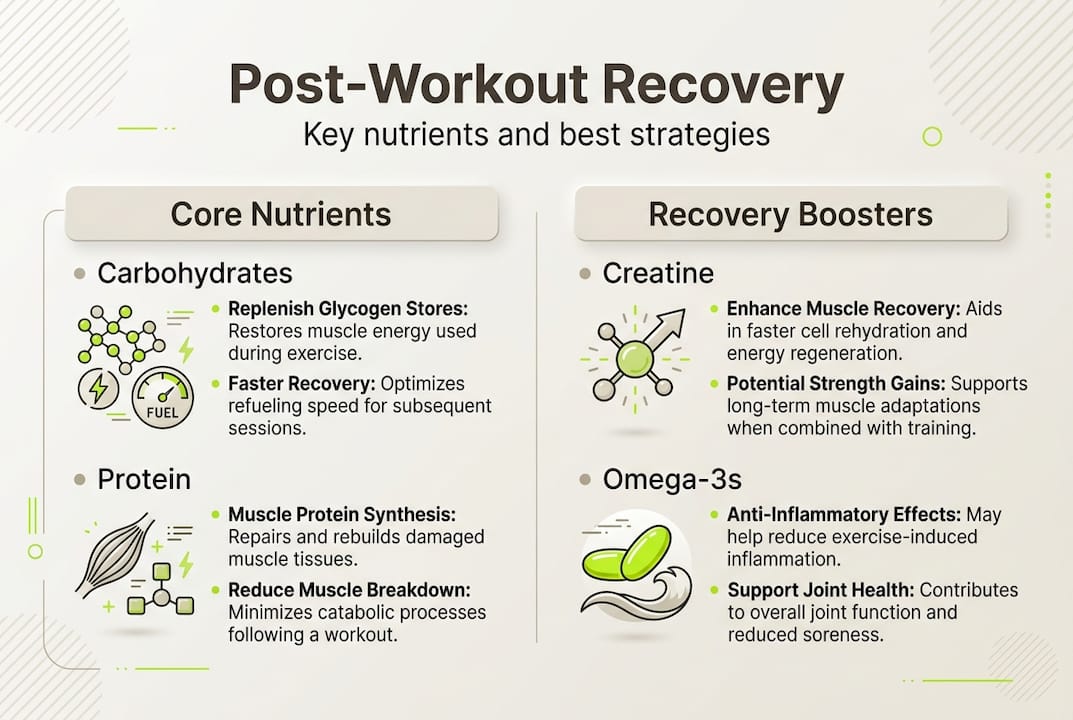
Now that the groundwork is covered, let’s focus on exactly what to consume, how much, and when. The combination of carbohydrates and protein is where the real recovery magic happens. Carbs alone replenish glycogen. Protein alone stimulates MPS. Together, they outperform either nutrient in isolation.
Research shows that 1 to 1.2g of carbs per kg of bodyweight per hour, combined with 20 to 40g of protein in the first two hours, accelerates recovery when your next session is close. And carb and protein co-ingestion consistently outperforms carbs alone for glycogen recovery and subsequent performance, with chocolate milk frequently cited as a practical, accessible example.

| Nutrient | Timing | Quantity | Practical examples |
|---|---|---|---|
| Carbohydrates | Within 30 to 60 minutes | 1 to 1.2g per kg bodyweight | Rice, oats, banana, sports drink |
| Protein | Within 2 hours | 20 to 40g | Whey shake, chicken, Greek yoghurt |
| Carbs and protein combined | Within 30 minutes (if training again soon) | As above, combined | Chocolate milk, rice and chicken, protein shake with fruit |
Building a post-workout meal plan does not need to be complicated. Follow these steps:
- Calculate your bodyweight in kilograms
- Multiply by 1 to 1.2 to find your carbohydrate target in grams
- Add 20 to 40g of a quality protein source
- Consume within two hours, or sooner if you train again the same day
- Adjust quantities based on session intensity and personal goals
Your workout type matters too. A 90-minute endurance run demands more aggressive glycogen replacement than a 45-minute strength session. Understanding protein after workout requirements for your specific training style helps you avoid both under-fuelling and unnecessary excess. For food-based options, exploring best post-workout foods gives you a practical starting point.
Pro Tip: Use your bodyweight as your calculator. A 75kg athlete needs 75 to 90g of carbs post-session, not a vague “handful of rice.” Precision here pays off.
Supplements and recovery: Separating must-haves from hype
Once nutrition is considered, the next step is knowing which supplements or tools are actually worth your time and money. The market is flooded with products making bold claims, but the evidence base for most of them is thin. A few, however, genuinely earn their place in a recovery routine.
Creatine at 3 to 5g per day and omega-3 fatty acids both reduce exercise-induced muscle damage and inflammation. Cold immersion (ice baths) has a role, but using it routinely after strength training can actually blunt the hypertrophic adaptations you are working hard to achieve. It is a tool for acute soreness management, not a daily habit for muscle builders.
| Supplement or method | Intended effect | Evidence rating |
|---|---|---|
| Creatine (3 to 5g/day) | Strength, power, recovery | Strong |
| Omega-3 fatty acids | Reduces inflammation and muscle damage | Moderate to strong |
| Whey protein | Stimulates MPS | Strong |
| BCAAs | Reduces soreness, supports MPS | Moderate (less useful if protein intake is adequate) |
| Cold immersion | Reduces acute soreness | Moderate (may blunt hypertrophy if used chronically) |
Here is a straightforward breakdown:
- Genuinely beneficial: Creatine, whey protein, omega-3s, magnesium
- Marginal benefit: BCAAs (only if total protein is low), glutamine
- Overhyped: Most proprietary blends with undisclosed dosages, excessive antioxidant supplements post-workout
For a thorough look at the evidence behind each option, the post-workout supplement science resource is worth your time. If you are considering a recovery shake, understanding post-workout shakes benefits helps you choose wisely rather than defaulting to whatever is most heavily marketed.
Keep your supplement routine simple, consistent, and evidence-led. More products do not equal more recovery.
Timing and recovery: How crucial is the ‘anabolic window’?
Now, let’s tackle one of the most hotly debated topics: timing, and whether the so-called anabolic window really exists. The short answer is yes, but its importance is wildly overstated for the average gym-goer.
Research confirms that the anabolic window is less critical for athletes completing a single daily session. Overall daily intake of protein and carbohydrates matters far more than whether you consumed your shake within 20 minutes of your last rep. Additionally, some studies show that delayed supplementation produces similar outcomes when total daily nutrition targets are met, though this varies by exercise type, intensity, and individual factors.
When does rapid fuelling genuinely matter? Here are the key scenarios:
- Marathon or endurance events: Glycogen depletion is severe; immediate carb intake is critical
- Tournament play or multi-match days: Back-to-back performance demands fast replenishment
- Double training days: Less than eight hours between sessions makes the window real and important
- High-frequency training blocks: Five or more sessions per week with limited rest days
For everyone else, flexibility is your friend. Eating a balanced meal within two hours of training is perfectly adequate. Stressing over a 30-minute window when you train once a day and sleep eight hours before your next session is simply not worth the mental energy. The full post-workout nutrition guide covers these scenarios in detail, and understanding how to boost performance with nutrition across your whole day is a far more productive focus.
Elite athletes and those on high-frequency programmes are the exception. For them, every hour counts.
Our perspective: What most miss about post-workout recovery
Here is something rarely said plainly: the obsession with post-workout timing is often a distraction from the bigger levers. Most athletes we see optimising their 30-minute window are sleeping six hours a night, skipping vegetables, and carrying chronic low-grade inflammation from poor lifestyle habits. No shake fixes that.
Recovery is not a single act after training. It is the sum of everything you do in the other 23 hours. Sleep quality, total daily protein, hydration, and managing stress all contribute more to your long-term progress than whether you drank your shake five minutes faster. The science supports this, and so does practical experience.
The athletes who make the most consistent gains are not the ones with the most elaborate supplement stacks. They are the ones who eat well consistently, sleep deeply, and train with appropriate intensity. Supplements and timing are the final 10%, not the foundation. Exploring pre and post-workout supplement strategies is worthwhile, but only once the basics are locked in.
Track how you feel and perform week to week, not just what you consumed in the hour after training. That data tells you far more.
Find your edge with science-backed recovery options
Ready to make your recovery smarter and more effective? At MyGymSupplements, we stock a carefully curated range of post-workout proteins, recovery stacks, and science-led supplements designed to support real results. Whether you are after a quality whey protein, creatine, omega-3s, or a complete recovery shake, our range is built around what the evidence actually supports, not marketing noise.
Browse our bestsellers, explore goal-specific categories, and find the products that match your training style and recovery needs. Your next session deserves the right foundation.
Frequently asked questions
Why is post-workout nutrition important for muscle growth?
Post-workout nutrition boosts muscle protein synthesis and replenishes glycogen stores, directly supporting faster recovery and stronger muscle adaptations over time.
Is it necessary to eat immediately after exercise?
Immediate nutrition is most important when you train multiple times a day or have a short recovery window; for most people, total daily intake is the primary driver of progress.
What is the best post-workout supplement for recovery?
Creatine and omega-3s are the most evidence-backed options for recovery, while cold immersion has specific uses but should not be a daily habit for those focused on muscle growth.
Does delaying my post-workout meal hurt progress?
For most athletes, delaying a meal seldom harms progress if total daily nutrition is on track; timing becomes more critical only when sessions are closely spaced.
Recommended
- Why use post-workout supplements? Science & real results
- Post-workout shakes: real benefits for muscle and recovery
- Post-Workout Recovery Workflow for Optimal Results – MyGymSupplements
- Post-Workout Recovery Workflow for Optimal Results – MyGymSupplements
- Ice Baths: Chilling Out for Post-Workout Relief – LifeUnlocked

0 comments