

You’ve probably heard that missing the so-called ‘anabolic window’ after training will cost you your gains. The idea that you must down a protein shake within 30 minutes of your last rep has been repeated so often it feels like gospel. But the science tells a more nuanced story. This guide cuts through the noise to give you an evidence-driven look at what post-workout supplements actually do, when they genuinely matter, and how to build a recovery routine that works for your specific training goals.
Table of Contents
- The science behind post-workout supplements
- Do you really need to ‘rush’ your supplement? The anabolic window explained
- Key benefits of post-workout supplements for recovery and performance
- Who benefits most? Individual needs and training scenarios
- Risks, safety, and what to watch out for
- How to get the most from your post-workout routine
- Get started: Trusted supplements for your recovery
- Frequently asked questions
Key Takeaways
| Point | Details |
|---|---|
| Muscle recovery boost | Post-workout supplements help speed muscle repair and reduce soreness after intense training. |
| Timing flexibility | You do not need to rush your supplement—total daily intake is more important for most people. |
| When timing matters | Fasted training and back-to-back sessions require quicker refuelling for optimal performance. |
| Watch for risks | Choose reputable, tested supplements to avoid contaminants and stick to recommended amounts. |
| Supplements or whole foods | Supplements offer convenience, but whole food meals can deliver similar recovery benefits. |
The science behind post-workout supplements
After a hard session, your muscles are primed. Blood flow is elevated, muscle fibres are broken down, and your body is actively seeking nutrients to begin repair. This is the biological basis for post-workout nutrition and it is very real, even if the strict timing rules around it are overblown.
Protein is the key driver of muscle protein synthesis (MPS), the process by which your body rebuilds and strengthens muscle tissue. Carbohydrates play a separate but equally important role: they replenish glycogen, the stored fuel your muscles burn during exercise. Without adequate glycogen restoration, your next session suffers before it even begins.
A protein and carbohydrate supplementation study found that combining both macronutrients post-exercise produced superior recovery outcomes compared to either alone. And a recent meta-analysis confirmed that post-workout protein and carbs accelerate muscle protein synthesis, replenish glycogen stores, reduce muscle soreness and fatigue, and improve exercise performance.
| Timing of intake | Effect on MPS | Glycogen restoration | Soreness reduction |
|---|---|---|---|
| Immediate (0-30 min) | High | Rapid | Significant |
| Delayed (1-2 hours) | Moderate | Slower | Moderate |
| Very delayed (3+ hours) | Lower | Minimal | Minimal |
“The combination of protein and carbohydrates post-exercise consistently outperforms single-macronutrient approaches for both recovery speed and performance in subsequent sessions.”
For athletes training at high intensity or for extended periods, the case for immediate supplementation is strong. The window is real. It is just wider than the fitness industry has traditionally claimed.
Do you really need to ‘rush’ your supplement? The anabolic window explained
Understanding the biological mechanisms is one thing, but how urgent is supplement timing really? The short answer: less urgent than you think, for most people.
The classic 30-minute rule has been largely overstated. Muscle protein synthesis stays elevated for 24 to 48 hours post-exercise, and timing has minimal impact on hypertrophy if your total daily protein intake is adequate. In other words, if you hit your protein targets across the day, the exact minute you consume your shake matters very little.
That said, timing does become relevant in specific situations:
- Fasted training: If you trained without eating beforehand, your body has no amino acid reservoir to draw from. Getting protein in quickly matters here.
- Multiple daily sessions: If you train twice in one day, rapid glycogen replenishment between sessions is critical for performance in the second.
- Endurance events: Long-duration efforts deplete glycogen significantly, making immediate carbohydrate intake more impactful.
- Older athletes: Research suggests older individuals may benefit more from prompt protein intake due to reduced anabolic sensitivity.
“For most recreational lifters training in a fed state, total daily protein intake is the dominant factor in muscle adaptation. Timing is a secondary variable.”
For guidance on structuring your intake around sessions, the pre and post-workout timing guide offers a practical framework. And for a deeper look at what the protein timing guide recommends, the evidence consistently points to daily totals over clock-watching.
Pro Tip: Rather than stressing about the exact post-workout minute, focus on hitting your total daily protein target. Consistency across the day beats perfect timing every time.
Key benefits of post-workout supplements for recovery and performance
Having clarified timing, let’s focus on the tangible benefits you can expect from the right post-workout supplements.

One underrated advantage is convenience. After a tough session, decision fatigue is real. Having a ready-made shake removes the friction of preparing a balanced meal immediately, which means you are more likely to actually refuel properly.
Here are the top evidence-based benefits, backed by a meta-analysis showing expedited recovery with immediate protein and carbohydrate supplementation:
- Faster muscle repair: Protein provides the amino acids needed to rebuild damaged muscle fibres.
- Reduced soreness: Adequate post-workout nutrition blunts delayed onset muscle soreness (DOMS), helping you train harder sooner.
- Glycogen restoration: Carbohydrates refuel your muscles, directly supporting next-session performance.
- Lower fatigue: Replenishing nutrients reduces the systemic fatigue response after intense training.
- Greater long-term adaptation: Consistent post-workout nutrition compounds over time, supporting progressive strength and endurance gains.
For a broader look at post-workout recovery strategies and how to structure your approach, or to explore best post-workout foods as whole-food alternatives, both resources complement what supplements offer.
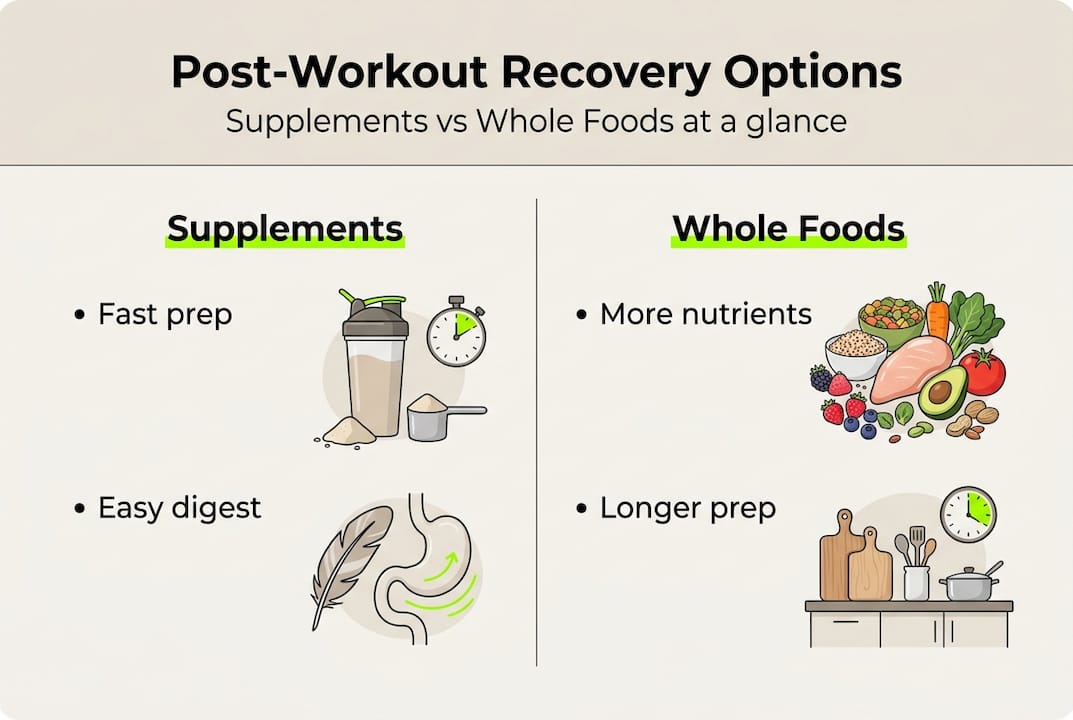
| Factor | Supplements | Whole foods |
|---|---|---|
| Speed of preparation | Immediate | 15-30 minutes |
| Digestibility | Fast (especially whey) | Variable |
| Nutrient precision | Exact macros | Harder to control |
| Cost per serving | Moderate | Often lower |
| Satiety | Lower | Higher |
For fasted training, endurance athletes, or those doing twice-daily sessions, supplements offer a clear practical edge over whole foods in the immediate post-exercise window.
Who benefits most? Individual needs and training scenarios
So who exactly stands to gain the most from tailored post-workout supplementation? The answer depends heavily on your training style, diet, and recovery demands.
Immediate post-workout intake is most critical for those training fasted or performing multiple sessions in less than 24 hours. For everyone else, the benefits are real but less time-sensitive.
Those who benefit most from immediate supplementation:
- Athletes training fasted (morning sessions without breakfast)
- Anyone doing two sessions per day
- Endurance athletes with high glycogen demands
- Individuals with limited appetite post-exercise who struggle to eat a full meal
Those who may manage well with whole foods alone:
- Recreational lifters training three times per week in a fed state
- Those with easy access to balanced meals within one to two hours of training
- Low-frequency trainers with ample recovery time between sessions
For those competing in endurance sports, the supplements for endurance athletes guide covers specific needs in detail. And if you want to understand the role of protein after workout more deeply, the evidence strongly supports its use across training types.
Pro Tip: Individualise your approach. A powerlifter training four times per week in a fed state has very different needs from a triathlete doing double sessions. Match your supplementation to your actual training load.
Risks, safety, and what to watch out for
With all the positives, it is also important to shine a light on the potential risks and how to make safe choices.
The supplement industry is not uniformly regulated, and that creates real risks. Common concerns include:
- Contamination: 90% of supplements tested contained endocrine disruptors, stimulants, or other adulterants not listed on the label.
- Overdosing: Excessive protein intake over long periods may place strain on the kidneys, particularly in those with pre-existing conditions.
- Unknown ingredients: Some products include proprietary blends that obscure individual ingredient doses.
- GI distress: High doses of certain supplements, particularly creatine or magnesium, can cause digestive discomfort.
“Standard protein and carbohydrate supplements from reputable brands, used at recommended doses, are generally safe for healthy adults. The risk rises sharply with unverified or exotic formulations.”
To protect yourself, look for products with third-party testing certification (such as Informed Sport or NSF Certified for Sport). Read labels carefully, avoid anything with a long list of unrecognisable ingredients, and consult a sports dietitian if you have any underlying health conditions. For a broader overview of recovery best practices, including how to layer supplements safely, that resource is worth bookmarking.
How to get the most from your post-workout routine
Now that you know the science, strengths, and pitfalls, here is a step-by-step guide to nailing your post-workout routine.
Total daily nutrition trumps timing for most people, but that does not mean structure is irrelevant. Here is how to build a routine that actually works:
- Assess your training load: High frequency or fasted training? Prioritise immediate post-workout nutrition. Lower frequency in a fed state? Focus on daily totals.
- Choose the right supplement type: Whey protein for fast absorption, casein for slower release, a carbohydrate blend for glycogen replenishment, or a combined recovery formula.
- Check quality: Only buy from brands with third-party testing. Do not compromise on this.
- Hit your daily targets: Aim for 1.6 to 2.2 grams of protein per kilogram of bodyweight per day, spread across meals.
- Use timing strategically: If you train fasted or twice daily, consume your supplement within 30 to 60 minutes post-session. Otherwise, within two hours is fine.
- Pair or swap as needed: A chicken and rice meal works just as well as a shake if you can prepare it quickly. Supplements are a tool, not a requirement.
For a clear explanation of why take protein after workout, including the physiological rationale, that guide reinforces the practical steps above with solid evidence.
Get started: Trusted supplements for your recovery
Building a recovery routine that actually delivers results starts with choosing supplements you can trust. Quality matters enormously, and not all products are created equal. At MyGymSupplements, you will find a carefully curated range of post-workout proteins, carbohydrate blends, and recovery formulas designed to support your specific training goals. Whether you are a strength athlete focused on muscle repair, an endurance runner chasing faster glycogen restoration, or someone simply looking to reduce soreness and train more consistently, the range covers every scenario. Browse by goal, training type, or product category to find exactly what fits your routine.
Frequently asked questions
Is a post-workout supplement necessary if I eat a meal after training?
No. A balanced meal with sufficient protein and carbohydrates after exercise often provides similar recovery benefits to supplements. Supplements are primarily a convenience tool when a meal is not practical.
Does the timing of post-workout protein really matter?
For most people, total daily protein intake is more important than consuming it immediately after exercise. No significant hypertrophy difference has been found when daily protein is matched, regardless of timing.
Are there risks with post-workout supplements?
Certain supplements may contain contaminants, but protein and carbohydrate products from reputable sources are generally safe at recommended doses. Always look for third-party testing certification before purchasing.
Who benefits most from immediate post-workout supplementation?
Those training fasted or completing multiple intense sessions per day benefit most from immediate supplementation, as their glycogen and amino acid demands are highest in the post-exercise window.
Recommended
- Pre and post workout supplements: maximise performance
- Complete Guide to Post-Workout Nutrition for Athletes – MyGymSupplements
- Complete Guide to Post-Workout Nutrition for Athletes – MyGymSupplements
- Post-Workout Recovery Workflow for Optimal Results – MyGymSupplements
- Un corpo snello e tonico senza sacrifici - Master Pro Academy

0 comments