

Most gym-goers have been told they must down a protein shake within 30 minutes of finishing their last rep or the session was wasted. That idea, the so-called anabolic window, has driven more rushed locker-room shake mixing than any other piece of gym folklore. The truth is that muscle protein synthesis stays elevated for up to 24 to 48 hours after exercise, meaning the window is far wider than most people realise. This guide cuts through the noise, explains what post-workout shakes actually do for your body, and gives you a practical framework for using them effectively.
Table of Contents
- Why post-workout shakes matter
- Science behind recovery and muscle building
- Fact-check: Timing, total protein, and the ‘anabolic window’
- Shakes vs whole foods: Which is better?
- What to look for in an effective post-workout shake
- Best practices and common mistakes with post-workout shakes
- Level up your recovery with the right supplements
- Frequently asked questions
Key Takeaways
| Point | Details |
|---|---|
| Convenience counts | Post-workout shakes offer an easy way to get protein and carbs after exercise, especially when whole meals aren’t practical. |
| Not just timing | Total protein intake during the day is more important than drinking a shake immediately after your workout. |
| Balanced ingredients | Effective shakes combine 20-40g protein with carbohydrates and minimal added sugar for optimal recovery. |
| Whole foods matter | Shakes help when quick nutrition is needed, but whole foods supply essential micronutrients for overall health. |
| Quality over hype | Selecting high-quality, third-party tested ingredients maximises the real benefits of your post-workout shake. |
Why post-workout shakes matter
Post-workout shakes have earned their place in sports nutrition for good reason, and it goes well beyond convenience. When you train hard, your muscles deplete glycogen stores and sustain microscopic damage that needs repairing. A well-formulated shake addresses both problems simultaneously, which is something a single food source rarely does as efficiently.
Research confirms that carbs and protein combined improve subsequent exercise performance and muscle recovery more than carbohydrates alone. That combination triggers faster muscle glycogen resynthesis and stimulates muscle protein synthesis at the same time. Understanding post-workout nutrition in this context helps you see shakes as a delivery mechanism, not a magic potion.
Who benefits most from post-workout shakes?
- Strength athletes who train multiple sessions per week and need rapid muscle repair between sessions
- Endurance athletes who deplete glycogen heavily and require fast carbohydrate replenishment
- Recreational gym users who struggle to hit daily protein targets through food alone
- Anyone training in a fasted state or with limited appetite immediately after exercise
“The goal after training is not just protein. It is restoring energy and providing the building blocks for repair. A shake that does both is a genuine performance tool.”
Learning more about protein after workout timing and dosing will sharpen how you use these products day to day.
Science behind recovery and muscle building
Understanding why shakes matter leads directly to how the ingredients interact with your body to yield better results. After a training session, your body enters a state of heightened metabolic activity. Glycogen is depleted, muscle fibres are damaged, and cortisol levels are elevated. What you consume in the hours that follow directly influences how quickly you bounce back.
Immediate post-exercise protein and carbohydrate supplementation accelerates muscle recovery and reduces fatigue compared to delayed intake. Meta-analyses back this up, showing significant effects on fatigue and muscle recovery with p-values of 0.022 and 0.034 respectively. Those are not marginal gains; they are meaningful differences in how your body responds.
Here is what happens step by step after a hard session:
- Glycogen depletion triggers the body to prioritise carbohydrate uptake for energy restoration
- Muscle protein breakdown begins as damaged fibres are cleared for repair
- Insulin release from carbohydrate intake helps shuttle amino acids into muscle cells
- Muscle protein synthesis ramps up when amino acids are available, rebuilding stronger fibres
- Cortisol levels drop as nutrients signal the body to shift from breakdown to recovery
Pro Tip: Pair your shake with a small amount of fast-digesting carbs like a banana or a handful of berries. This combination accelerates glycogen restoration and gives protein synthesis the insulin boost it needs. Your post-workout recovery workflow should treat carbs and protein as a team, not separate choices.
Fact-check: Timing, total protein, and the ‘anabolic window’
These science-backed benefits prompt the logical question: when is the best time to have your shake? The honest answer is that timing matters less than most people think, provided your overall daily intake is on point.
“Total daily protein is more important than immediate timing when intake is adequate, with muscle protein synthesis remaining elevated for 24 to 48 hours post-exercise.”
Muscle protein synthesis stays elevated for up to 48 hours after training, which means missing the 30-minute mark is not a catastrophe. What matters far more is hitting your daily protein target of 1.6 to 2.2 grams per kilogram of bodyweight consistently. Spread across three to five meals or shakes, that target drives muscle growth regardless of whether one of those servings comes at 6pm or 8pm.
That said, there are situations where earlier intake genuinely helps. If you train fasted, have back-to-back sessions, or are in a caloric deficit, getting protein and carbs in quickly reduces muscle breakdown and speeds glycogen restoration. Understanding meal timing for muscle growth in these specific contexts gives you a real edge.
Pro Tip: Stop stressing about the clock and start tracking your total daily protein. Use a simple app for one week to see whether you are actually hitting 1.6 to 2.2g per kilogram. Most people find they are falling short, and that gap matters far more than a 20-minute timing difference.
Shakes vs whole foods: Which is better?
So, is a shake always the best choice, or do whole foods hold distinct advantages for recovery? The answer depends on your situation, your schedule, and what you are actually eating.

Whole foods provide additional micronutrients and are equally effective for recovery when protein content matches that of a shake. A chicken breast with rice and vegetables ticks every box nutritionally. The problem is that it takes time to prepare, digest more slowly, and is not always practical straight after a session.
| Factor | Post-workout shake | Whole food meal |
|---|---|---|
| Speed of digestion | Fast (20 to 30 minutes) | Slower (1 to 2 hours) |
| Convenience | Very high | Moderate to low |
| Micronutrient content | Low to moderate | High |
| Cost per serving | Moderate | Variable |
| Appetite required | Minimal | Higher |
| Customisation | Easy | Requires preparation |
When whole foods win: when you have time to eat, when appetite is good, and when you want the broader nutritional profile that real food delivers. Explore best post-workout foods for ideas on building meals that rival shakes in effectiveness.
When shakes win: immediately after training when appetite is suppressed, during travel, or when you simply cannot hit your protein targets through food alone. Neither option is universally superior. The best choice is the one you will actually follow consistently.
What to look for in an effective post-workout shake
Once you decide to use a shake, making it truly effective means looking closely at what goes inside. Not all shakes are created equal, and label reading is a skill worth developing.
Effective shakes include whey protein at 20 to 40 grams per serving, fast-digesting carbohydrates, and optional additions like creatine. Low added sugar and third-party testing are markers of quality worth prioritising.
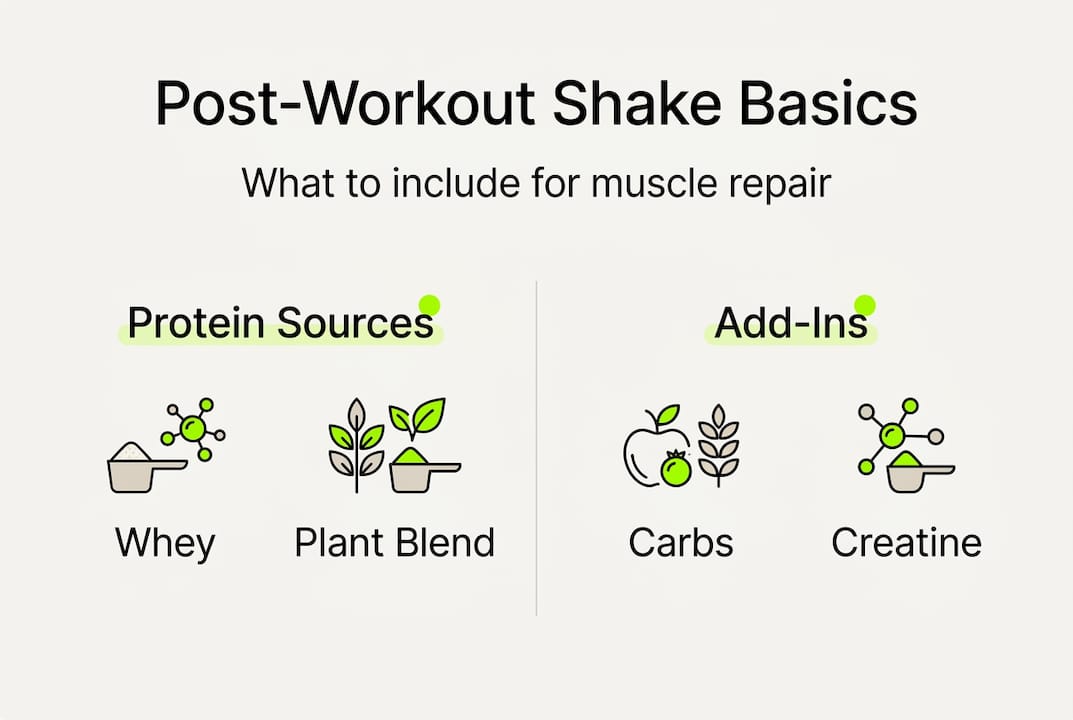
| Ingredient | Recommended amount | Purpose |
|---|---|---|
| Whey protein | 20 to 40g | Muscle protein synthesis |
| Fast carbs (e.g. dextrose) | 30 to 60g | Glycogen restoration |
| Creatine monohydrate | 3 to 5g | Strength and power output |
| Leucine | 2 to 3g | Triggers protein synthesis |
| Added sugar | Under 5g | Limit for health reasons |
How to build a DIY recovery shake at home:
- Start with 25 to 30g of whey or plant-based protein powder
- Add 200ml of milk or a dairy-free alternative for extra protein and carbs
- Blend in one banana or 100g of frozen berries for fast carbohydrates
- Add 3 to 5g of creatine monohydrate if strength is a priority
- Optional: a tablespoon of oats for slower-releasing energy if your next session is within 12 hours
Pro Tip: Always check for third-party certification such as Informed Sport or NSF on any supplement you buy. These labels confirm the product has been tested for banned substances and label accuracy, which matters whether you compete or simply want to know what you are putting in your body. Dive deeper into post-workout supplements to understand which ingredients are backed by solid evidence.
Best practices and common mistakes with post-workout shakes
Knowing how to choose and tailor your shake leads to a crucial question: what do successful athletes consistently get right, and where do most people go wrong?
Shakes support both endurance and strength when paired with carbohydrates and used as part of a balanced diet. The keyword there is balanced. Shakes are a supplement to your nutrition, not a replacement for it.
What successful athletes do consistently:
- Hit daily protein targets across all meals, not just post-workout
- Include carbohydrates in their post-workout shake rather than protein alone
- Rotate whole foods and shakes based on schedule and appetite
- Track progress and adjust intake based on performance and recovery quality
- Choose quality products with minimal additives and verified ingredient lists
Common mistakes that undermine results:
- Skipping carbohydrates entirely and relying on protein powder alone
- Using shakes as meal replacements rather than supplements to a solid diet
- Choosing products loaded with added sugars, artificial fillers, or underdosed ingredients
- Obsessing over the 30-minute window while ignoring total daily intake
- Expecting shakes to compensate for poor sleep, inadequate calories, or inconsistent training
Pro Tip: If your recovery feels slow despite using a shake, look at your sleep and overall calorie intake before adjusting your supplement stack. No shake fixes a 500-calorie deficit or five hours of sleep. Get the foundations right first. The guide to post-workout nutrition athletes covers these foundations in practical detail.
Level up your recovery with the right supplements
Harnessing the real-world advantages of post-workout shakes is easier with the right tools and trusted resources. At MyGymSupplements.shop, we stock a carefully selected range of recovery products built around the science covered in this guide. Whether you are after a high-quality whey protein, a complete recovery formula with carbs and creatine, or plant-based options that deliver the same results, you will find products that match your goals and training style. Shop post-workout shakes and browse by goal, ingredient, or product type to find exactly what your recovery routine needs. Every product we carry is chosen with performance and quality in mind.
Frequently asked questions
Do I need a shake if I eat enough protein from food?
No. If you consistently meet your daily protein needs through whole foods, shakes are entirely optional and serve mainly as a convenience tool. Whole foods are equally effective when protein content matches that of a shake.
What is the ideal ratio of protein to carbohydrates in a post-workout shake?
Aim for 20 to 40g of protein alongside an equal or slightly higher amount of carbohydrates after intense training. Fast carbs like banana or berries pair well with whey protein for rapid recovery.
Is timing crucial for post-workout shakes?
Timing is less critical than most people believe. Total daily protein matters more than the exact moment you consume your shake, though earlier intake helps in fasted or back-to-back training scenarios.
Are there negatives to using post-workout shakes?
Some shakes contain high levels of added sugar or lack the micronutrients found in whole foods. Choose shakes with low added sugar and look for third-party testing to ensure quality and label accuracy.

0 comments