

Many athletes believe complex pre workout supplements vastly outperform simple carbohydrates, yet recent research shows minimal difference in performance outcomes. What truly matters is understanding how each supplement type functions, when to take it, and which ingredients deliver measurable benefits. This guide cuts through marketing claims to reveal science-backed strategies for optimising both workout intensity and recovery through strategic supplementation.
Table of Contents
- Introduction To Pre And Post Workout Supplementation
- How Pre-Workout Supplements Enhance Performance
- Benefits Of Post-Workout Supplements For Recovery And Muscle Growth
- Timing And Impact Of Supplementation: Busting Myths And Best Practices
- Safety Considerations And Cardiovascular Impacts
- Common Misconceptions About Pre And Post Workout Supplements
- Personalising Your Supplement Strategy For Optimal Gains
- Conclusion And Practical Takeaways
- Find The Right Supplements For Your Workout Needs
Key takeaways
| Point | Details |
|---|---|
| Pre workout supplements boost energy and endurance | Caffeine, beta-alanine, and nitric oxide boosters enhance power output, blood flow, and delay fatigue during training sessions. |
| Post workout supplements accelerate recovery | Proteins and carbohydrates repair muscle tissue, replenish glycogen stores, and reduce delayed onset muscle soreness. |
| Timing flexibility is wider than believed | The optimal supplement window spans 4-6 hours post-exercise, not the outdated 45-minute anabolic window myth. |
| Safety is generally sound for healthy adults | Pre workouts are safe when used responsibly, though individuals with cardiovascular concerns should consult medical professionals first. |
| Personalisation maximises effectiveness | Tailoring supplement choices to your workout type, goals, and individual response produces superior results compared to generic protocols. |
Introduction to pre and post workout supplementation
Pre workout supplements primarily enhance energy, focus, and endurance through carefully selected ingredients that prepare your body for intense physical demands. These formulations typically contain caffeine, amino acids, and vasodilators that increase alertness and blood flow whilst reducing early fatigue.
Post workout supplements serve an entirely different purpose: accelerating recovery, repairing muscle tissue, and replenishing depleted glycogen stores. Fast-digesting proteins and carbohydrates work synergistically to rebuild damaged muscle fibres and restore energy reserves.
Timing and personalisation are crucial variables that determine supplement success. Your individual needs vary based on workout intensity, training goals, body composition, and even genetic factors. What works brilliantly for a powerlifter may not suit an endurance runner.
Understanding the three distinct phases of supplementation helps optimise your approach:
- Preparation phase: Pre workout supplements taken 30-45 minutes before training to prime energy systems
- Performance support: Intra-workout nutrition for sustained effort during extended sessions
- Recovery phase: Post workout supplementation within 4-6 hours to maximise muscle repair and glycogen restoration
Each phase serves specific physiological goals that collectively enhance your training outcomes and body composition improvements.
How pre-workout supplements enhance performance
Pre-workout supplements can enhance power output and exercise performance through key ingredients like caffeine, citrulline, and beta-alanine. These compounds work through distinct mechanisms to boost workout intensity and delay fatigue.
Caffeine stands as the most researched and effective pre workout ingredient. It blocks adenosine receptors in your brain, reducing perceived effort whilst increasing power output. The effective dose ranges from 3-6 mg per kilogram of body weight, meaning a 75 kg athlete would consume 225-450 mg approximately 30-60 minutes before training.
Beta-alanine contributes to endurance by buffering lactic acid accumulation in muscles. When you perform high-intensity repetitions, hydrogen ions build up and cause that burning sensation. Beta-alanine combines with histidine to form carnosine, which neutralises these ions and extends your working capacity.
Nitric oxide boosters like citrulline and arginine enhance blood flow by dilating blood vessels. This increased circulation delivers more oxygen and nutrients to working muscles whilst removing metabolic waste products more efficiently. The result is improved muscle pumps and sustained performance throughout your session.

Multi-ingredient pre-workout supplements often include caffeine, amino acids, and nitric oxide boosters, which collectively enhance alertness and reduce early fatigue. However, individual ingredient quality matters more than flashy proprietary blends.
Key performance benefits include:
- Increased repetitions to failure across multiple sets
- Enhanced power output during explosive movements
- Improved mental focus and motivation throughout training
- Delayed onset of muscular fatigue during high-volume workouts
Pro Tip: Start with half the recommended dose when trying a new pre workout formula. This allows you to assess tolerance to caffeine and beta-alanine (which causes harmless tingling) before committing to full servings.
For detailed guidance on pre workout supplement workflow maximum results, explore evidence-based protocols. You can also review a step by step pre workout routine for practical application strategies. For scientific insights on pre-workout effects, examine current research findings.
Benefits of post-workout supplements for recovery and muscle growth
Post-workout formulas including fast-digesting proteins accelerate muscle repair and reduce soreness when paired with consistent sleep and hydration habits. The recovery process begins immediately after your final repetition, making strategic nutrition timing valuable.
Proteins and amino acids repair muscle tissue damaged during training. Whey protein isolate delivers all essential amino acids rapidly, triggering muscle protein synthesis. Leucine, a branched-chain amino acid, acts as a key signalling molecule that activates mTOR pathways responsible for muscle building.
Carbohydrates replenish glycogen stores depleted during intense exercise. Your muscles store approximately 300-600 grams of glycogen, which fuels moderate to high-intensity training. Consuming protein and carbohydrate supplements immediately post-exercise accelerates muscle and glycogen recovery, reducing fatigue more effectively than delayed supplementation.
Delayed onset muscle soreness (DOMS) decreases when you consume adequate post workout nutrition. The anti-inflammatory effects of certain amino acids, combined with improved nutrient delivery, help your body clear metabolic waste products faster.
Research demonstrates measurable body composition improvements with proper post workout supplementation:
- Increased fat-free mass when protein intake reaches 1.6-2.2 grams per kilogram daily
- Reduced fat mass through improved metabolic rate and muscle maintenance
- Enhanced recovery quality leading to more productive subsequent training sessions
- Decreased muscle breakdown during periods of caloric restriction
Pro Tip: Combine whey protein with a fast-digesting carbohydrate source like dextrose or maltodextrin at a 1:2 ratio (protein to carbs) immediately after intense resistance training. This combination maximises both muscle protein synthesis and glycogen restoration simultaneously.
For comprehensive strategies, review the complete guide to post-workout nutrition athletes for evidence-based recommendations.
Timing and impact of supplementation: busting myths and best practices
The traditionally believed 45-minute anabolic window is outdated; current science supports a longer 4-6 hour recovery phase influenced by pre-exercise nutrition. This revelation changes how you should approach supplement timing.
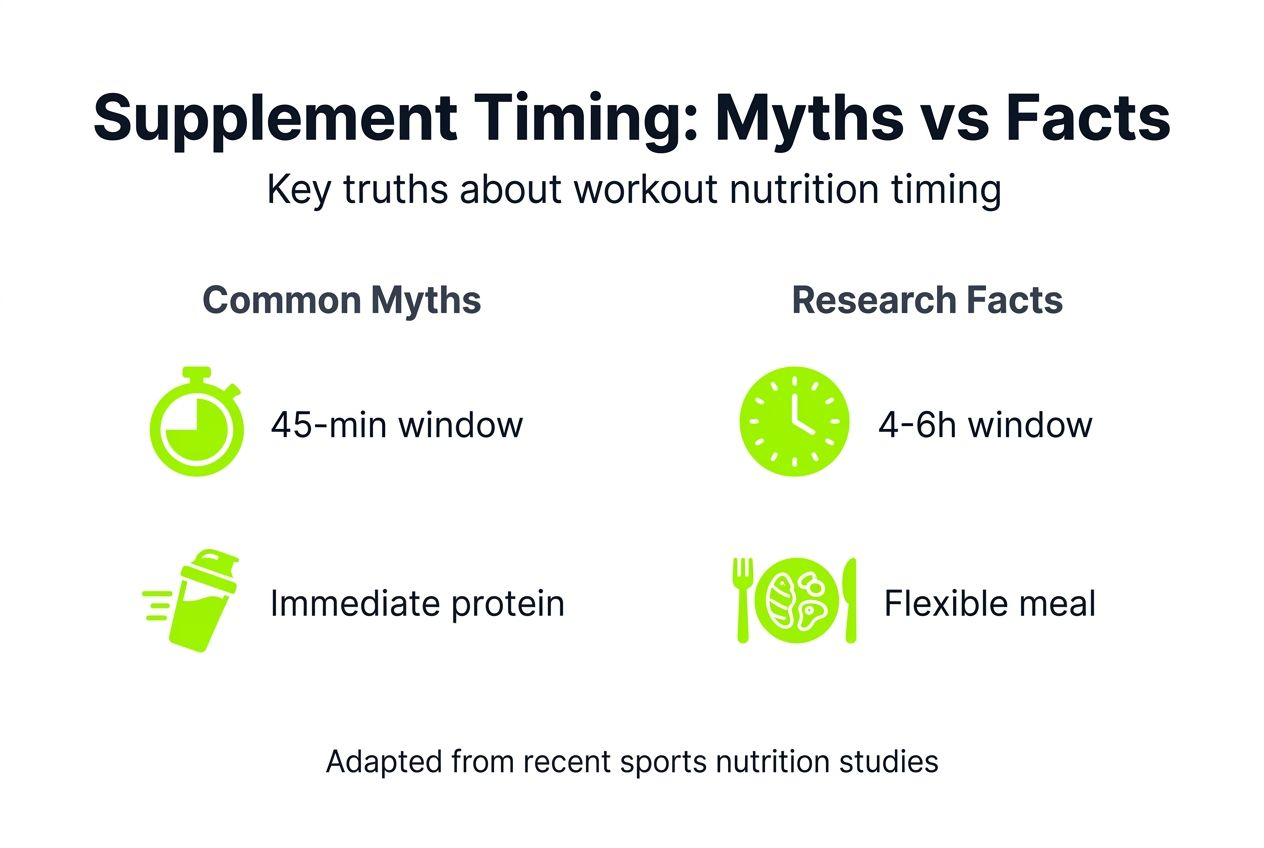
Your pre-exercise meal significantly impacts post workout nutrient requirements. If you consumed protein-rich food 2-3 hours before training, amino acids remain elevated in your bloodstream for hours afterwards. This means the post workout urgency diminishes when proper pre-training nutrition exists.
Consuming protein and carbohydrate supplements immediately post-exercise still accelerates muscle and glycogen recovery compared to delayed intake, but the window extends beyond traditional recommendations.
| Timing Strategy | Recovery Impact | Best Application |
|---|---|---|
| Immediate (0-30 minutes) | Optimal glycogen restoration | Fasted training or endurance athletes |
| Moderate (30-90 minutes) | Strong muscle protein synthesis | Standard resistance training |
| Delayed (2-4 hours) | Adequate recovery maintenance | Well-fed pre-training state |
| Extended (4-6 hours) | Minimal additional benefit | Low-intensity sessions |
Best practices for maximising supplement effectiveness:
- Pre workout timing: Consume supplements 30-45 minutes before training to allow ingredient absorption
- Intra-workout consideration: Add carbohydrates during sessions exceeding 90 minutes
- Post workout priority: Aim for protein and carbs within 2 hours when practical
- Daily protein distribution: Spread intake across 4-5 meals for continuous muscle protein synthesis
- Consistency over perfection: Regular adherence to adequate daily protein matters more than precise timing
Your workout intensity and fasted state influence timing importance. High-intensity fasted training benefits most from immediate post workout nutrition, whilst fed-state moderate training shows less urgency.
Explore the guide to post workout nutrition athletes for personalised timing protocols.
Safety considerations and cardiovascular impacts
Pre-workout supplements containing caffeine can increase blood pressure and QTc intervals but generally are safe for healthy individuals without cardiovascular disease. Understanding these effects helps you make informed decisions about supplement use.
Caffeine temporarily elevates blood pressure by 5-10 mmHg in both systolic and diastolic readings. This increase peaks 30-60 minutes after consumption and normalises within 3-4 hours. For healthy adults, this temporary elevation poses minimal risk.
The QTc interval measures electrical recovery time in your heart. Prolonged QTc increases arrhythmia risk, though research shows pre workout supplements cause only modest, clinically insignificant changes in individuals without pre-existing conditions.
Healthy individuals using pre workout supplements experience remarkably low rates of adverse events. Studies tracking thousands of users report no major cardiovascular incidents when products are consumed at recommended doses.
Caution becomes essential if you have:
- Diagnosed cardiovascular disease or arrhythmias
- Family history of sudden cardiac events
- Hypertension (blood pressure exceeding 140/90 mmHg)
- Sensitivity to stimulants or previous adverse reactions
- Concurrent medication use that interacts with caffeine
Monitor your individual response carefully. Start with lower caffeine doses (100-200 mg) and assess tolerance before increasing. Avoid consuming multiple caffeine sources simultaneously, as combined intake from coffee, energy drinks, and pre workouts can exceed safe limits (400 mg daily for most adults).
Discontinue use immediately if you experience chest pain, irregular heartbeat, severe headaches, or unusual shortness of breath. These symptoms warrant medical evaluation before resuming supplementation.
Common misconceptions about pre and post workout supplements
Many athletes believe multi-ingredient pre workouts always outperform simple carbohydrates, yet research shows surprisingly similar performance outcomes in many scenarios. The supplement industry benefits from perpetuating myths that drive unnecessary purchases.
The strict 45-minute anabolic window myth creates unwarranted stress around post workout timing. Whilst immediate nutrition offers advantages, the 4-6 hour recovery phase provides ample opportunity for effective supplementation without rushing or anxiety.
Expensive proprietary blends rarely justify their premium pricing compared to transparent formulations with disclosed ingredient amounts. Marketing emphasises exotic-sounding compounds whilst basic ingredients like caffeine, creatine, and whey protein deliver the majority of measurable benefits.
Excessive protein doses (exceeding 40 grams per serving) provide diminishing returns for muscle protein synthesis. Your body can only utilise approximately 20-30 grams of protein per meal for muscle building, with excess amounts oxidised for energy or converted to other compounds.
Key misconceptions to reject:
- Believing supplements replace proper training and nutrition fundamentals
- Assuming more ingredients equals better performance outcomes
- Expecting immediate visible results from supplement use alone
- Thinking expensive brands are inherently more effective than budget options
- Overlooking whole food alternatives that provide similar nutritional benefits
Moderate, well-timed supplement intake tailored to your specific needs produces optimal results. Focus on proven ingredients at effective doses rather than chasing trendy formulations with unsubstantiated claims.
Personalising your supplement strategy for optimal gains
Personalized supplementation strategies, considering age and training type, are more effective than generic protocols for enhancing performance. Your unique physiology, goals, and circumstances demand individualised approaches.
Assess your workout type first. Endurance athletes benefit from carbohydrate-focused strategies that maintain glycogen availability during prolonged efforts. Strength athletes prioritise protein and creatine for maximal force production and recovery. Mixed training modalities require balanced approaches.
Your specific goals dictate ingredient priorities:
- Muscle gain: Emphasise creatine monohydrate (5 grams daily), adequate protein (1.6-2.2 g/kg), and caloric surplus
- Fat loss: Maintain protein intake whilst reducing carbohydrates, potentially adding caffeine for energy maintenance
- Performance enhancement: Focus on caffeine (3-6 mg/kg), beta-alanine (3-6 grams daily), and nitric oxide boosters
- Recovery optimisation: Prioritise post workout protein and carbohydrates, consider anti-inflammatory supplements
- Endurance improvement: Emphasise intra-workout carbohydrates and electrolyte replacement strategies
Timing adjustments accommodate individual digestion rates and schedules. Some athletes experience gastric distress from pre workout supplements taken too close to training. Experiment with 30-90 minute windows to identify your optimal absorption period.
Safety considerations become paramount with pre-existing conditions. Consult healthcare professionals before supplementing if you take medications, have chronic diseases, or experience adverse reactions to stimulants.
Pro Tip: Track your supplement response systematically. Record performance metrics (repetitions, weight lifted, perceived exertion) alongside supplement timing and dosages. After 4-6 weeks, analyse patterns to identify what genuinely improves your outcomes versus placebo effects.
Regularly monitor outcomes through objective measurements like strength progression, body composition changes, and recovery quality. Adjust your protocol based on these results rather than subjective feelings or marketing claims.
For practical frameworks, explore how to optimize workout nutrition naturally and review the supplement schedule guide for structured protocols.
Conclusion and practical takeaways
Caffeine and nitric oxide boosters remain central to pre workout benefits, delivering measurable improvements in power output, endurance, and mental focus. These ingredients work through proven physiological mechanisms that enhance training intensity when used strategically.
Protein and carbohydrate intake post workout supports recovery by repairing muscle tissue and replenishing glycogen stores. The synergistic effect of these macronutrients accelerates adaptation to training stress and prepares your body for subsequent sessions.
Supplement timing operates within a flexible 4-6 hour window for effectiveness, not the restrictive 45-minute myth. Your pre-training nutrition status, workout intensity, and individual goals determine optimal timing strategies.
A personalised supplement plan aligned with your workout demands produces superior results compared to generic recommendations. Consider your training type, goals, health status, and individual response when selecting ingredients and timing protocols.
Consistent use matters more than perfect execution. Focus on establishing sustainable habits that support your training over months and years. Small improvements compound into significant performance gains and body composition changes when maintained consistently.
For comprehensive timing strategies, review fitness supplement timing protocols. Access detailed workflows through the pre workout supplement workflow maximum results guide.
Find the right supplements for your workout needs
MyGymSupplements.shop offers evidence-based supplements that support the personalised strategies outlined throughout this guide. Our range includes high-quality caffeine formulations, whey protein isolates, creatine monohydrate, and multi-ingredient pre workouts with transparent labelling.
Explore our carefully curated selection of proteins, amino acids, and performance enhancers designed for athletes pursuing muscle gain, fat loss, or endurance improvements. Each product page provides detailed ingredient information and dosing recommendations to help you make informed decisions.
Our supplement guides and product reviews offer practical insights for selecting formulations that match your training demands. Whether you’re new to supplementation or refining an established protocol, these resources clarify ingredient benefits and optimal usage strategies.
Consult product details and customer support for personalised recommendations based on your specific goals and circumstances. Our team understands the science behind supplementation and can guide you towards effective, safe choices.
Visit MyGymSupplements shop homepage to discover supplements that align with your fitness objectives and receive expert tips for maximising training outcomes.
FAQ
What are the best ingredients in pre workout supplements?
Caffeine, beta-alanine, and nitric oxide boosters (citrulline or arginine) deliver the most scientifically validated performance benefits. Caffeine enhances power output and reduces perceived effort at 3-6 mg per kilogram body weight. Beta-alanine buffers lactic acid to extend high-intensity work capacity, whilst citrulline improves blood flow and nutrient delivery to working muscles.
When is the optimal time to take post workout supplements?
The optimal window extends 4-6 hours post-exercise rather than the outdated 45-minute limit, though earlier consumption (within 2 hours) maximises glycogen restoration and muscle protein synthesis rates. Your pre-training nutrition status influences this timing; fasted workouts benefit most from immediate post-exercise supplementation. For detailed protocols, review the post workout nutrition timing guide.
Are pre workout supplements safe for everyone?
Pre workout supplements are generally safe for healthy adults when consumed at recommended doses, with minimal adverse events reported in research studies. However, individuals with cardiovascular disease, hypertension, arrhythmias, or caffeine sensitivity should exercise caution and consult healthcare professionals before use. Start with half doses to assess tolerance, and avoid exceeding 400 mg daily caffeine from all sources combined.
Recommended
- 7 Best Pre and Post Workout Supplements for UK Gym-Goers – MyGymSupplements
- 7 Best Pre and Post Workout Supplements for UK Gym-Goers – MyGymSupplements
- Pre-Workout Supplement Workflow for Maximum Results – MyGymSupplements
- Pre-Workout Supplement Workflow for Maximum Results – MyGymSupplements
- Robes for Athlete – Lotus Linen
- Step by step physiotherapy guide for full recovery 2026

0 comments