

TL;DR:
- Performance nutrition is personalized, periodized, and tailored to specific sports and training phases.
- Macronutrient needs vary by athlete type and should support energy, recovery, and adaptation.
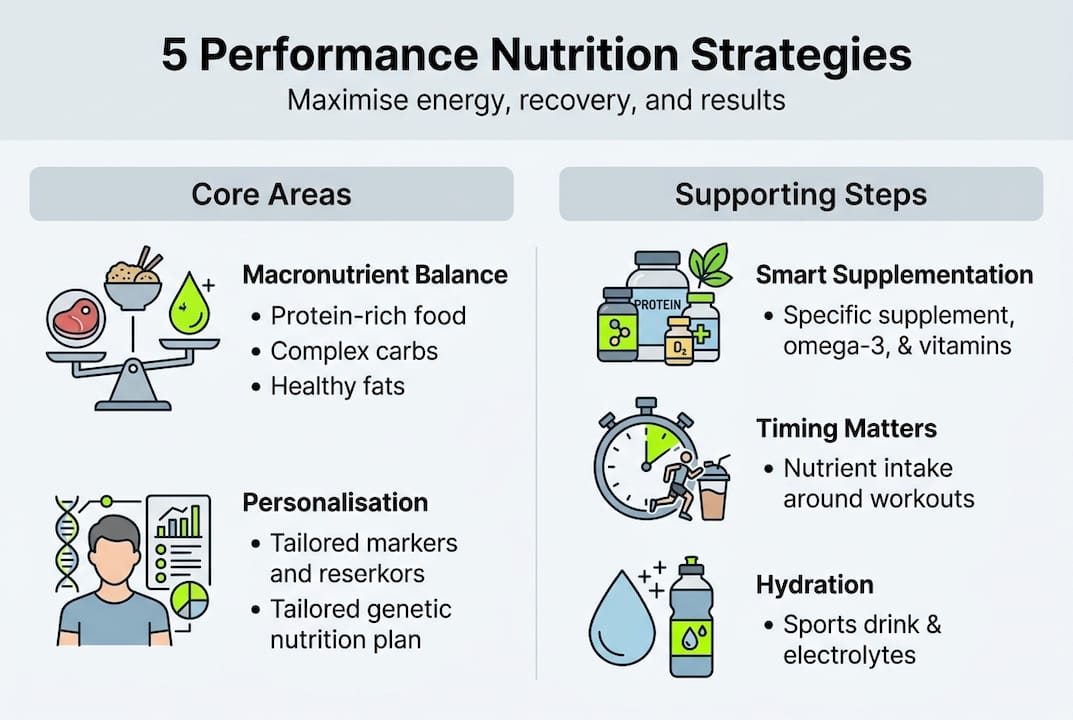
- Timing and evidence-based supplements can optimize athletic results and recovery.
Eating well and eating for performance are not the same thing. Many athletes assume that a balanced diet is enough to fuel serious training, but performance vs. basic nutrition is a genuine distinction that separates good athletes from great ones. Performance nutrition is a discipline built around optimising what you eat, when you eat it, and why, all in service of your specific sport, training phase, and physical makeup. This guide walks you through the frameworks, practical targets, and real-world applications that give athletes a genuine competitive edge.
Table of Contents
- Defining performance nutrition: More than just healthy eating
- Personalising nutrition: The 4Ps framework in action
- Macronutrients for performance: Getting the balance right
- Timing and supplementation: Optimising results and recovery
- A smarter path: Why personalisation trumps generic sports nutrition advice
- Take your performance to the next level
- Frequently asked questions
Key Takeaways
| Point | Details |
|---|---|
| Performance nutrition defined | It’s a targeted discipline that adapts diet strategies for specific athletic results, not just general wellbeing. |
| The 4Ps framework | Personalise, periodise, prefuel, and prepare are the four pillars for optimal nutrition strategy. |
| Macronutrient balance matters | Correct carbs, protein, and fat ratios fuel performance, with tailored targets for each sport. |
| Timing and supplements | When you eat and how you supplement affects performance and recovery more than most realise. |
| Personalisation is key | Listen to your body, adapt plans, and focus on continual learning for the best results. |
Defining performance nutrition: More than just healthy eating
Performance nutrition is not simply eating more vegetables or cutting out junk food. According to targeted dietary strategies, it involves personalised, periodised, and event-specific plans designed to produce optimal athletic results. That is a fundamentally different goal from general health eating, which aims to reduce disease risk and maintain a healthy weight.
The distinction matters enormously in practice. A recreational jogger and an elite marathon runner might both eat “healthily,” but only one of them is structuring their carbohydrate intake around training blocks, adjusting protein targets mid-season, and timing caffeine for race day. Understanding sports nutrition basics is the starting point, but performance nutrition takes it several steps further.
A useful way to organise these principles is the 4Ps framework:
- Personalise: Tailor nutrition to your genetics, sex, sweat rate, and sport type
- Periodise: Align macronutrient intake with your training cycle and competition calendar
- Prefuel: Set precise carbohydrate and hydration targets before exercise
- Prepare: Train your gut, time ergogenic aids, and rehearse race-day nutrition
Here is how performance nutrition compares to basic healthy eating:
| Factor | Basic healthy eating | Performance nutrition |
|---|---|---|
| Goal | General health and wellbeing | Athletic output and recovery |
| Timing | Flexible | Precisely structured |
| Macros | Broad guidelines | Sport and phase specific |
| Supplements | Rarely considered | Strategically integrated |
| Individualisation | Generic advice | Genetics, sport, and goals |
One of the biggest misconceptions is that a clean diet automatically translates to peak performance. It does not. Individual variability, including genetics, sweat composition, and gut tolerance, means that what works brilliantly for one athlete may actively hinder another. Generic meal plans simply cannot account for this.
Personalising nutrition: The 4Ps framework in action
Knowing the 4Ps in theory is one thing. Applying them to your actual training life is where the real gains appear. The 4Ps framework adapts to your genetics, goals, and training cycle, making it far more effective than any one-size-fits-all plan.
Here is a stepwise breakdown of how to put each pillar into practice:
- Personalise: Identify your sport demands, body composition goals, and biological factors. A female endurance athlete has different iron and calorie needs compared to a male powerlifter. Sweat rate testing, food sensitivity awareness, and even basic genetic insights can sharpen this step considerably.
- Periodise: Match your carbohydrate and calorie intake to your training load. During heavy training blocks, carbs go up. During taper or rest weeks, they come down. This macro cycling prevents unnecessary fat gain while ensuring muscles are never under-fuelled when it matters.
- Prefuel: Before any intense session, carbohydrate loading and hydration targets need to be set. For sessions under 60 minutes, a moderate pre-workout meal suffices. For longer efforts, strategic carb intake in the hours beforehand becomes critical. Learning to fuel athletic performance effectively is a skill that improves with practice.
- Prepare: This includes gut training (gradually introducing intra-exercise nutrition to avoid GI distress), timing caffeine intake for maximum effect, and rehearsing your competition-day nutrition protocol in training so there are no surprises.
Consider two contrasting athletes. A distance runner needs high carbohydrate availability, strong gut tolerance for gels, and careful hydration management. A power athlete, such as a sprinter or weightlifter, prioritises protein timing, creatine supplementation, and shorter but more intense fuelling windows. Their 4Ps look completely different, even though both are following the same framework. Exploring how to boost performance with nutrition can help you identify which levers matter most for your specific sport.
Pro Tip: Keep a simple nutrition log for four to six weeks when trialling any change. Note energy levels, training quality, and recovery. The data you collect on yourself is more valuable than any generic study.
Macronutrients for performance: Getting the balance right
Once you understand the framework, you need the numbers. Macronutrient benchmarks for athletes are well established: carbohydrates should make up 50 to 70% of daily calories or 4 to 10 grams per kilogram of bodyweight, protein should sit at 1.2 to 2.0 grams per kilogram, and fat should account for 20 to 30% of total intake.
These are not arbitrary numbers. Each macronutrient serves a distinct performance function:
- Carbohydrates are the primary fuel for high-intensity exercise. Muscle glycogen depletion is one of the leading causes of fatigue during prolonged effort.
- Protein drives muscle repair, adaptation, and immune function. Spreading intake across four to five meals is more effective than loading it all into one sitting.
- Fats support hormonal health, fat-soluble vitamin absorption, and sustained energy during lower-intensity efforts.
Here is a practical reference table by athlete type:
| Athlete type | Carbs (g/kg/day) | Protein (g/kg/day) | Fat (% of calories) |
|---|---|---|---|
| Endurance (e.g. marathon) | 6 to 10 | 1.4 to 1.7 | 20 to 25% |
| Power/strength | 4 to 6 | 1.6 to 2.0 | 25 to 30% |
| Team sport athlete | 5 to 8 | 1.4 to 1.8 | 20 to 30% |
| Recreational gym-goer | 3 to 5 | 1.2 to 1.6 | 25 to 35% |
“Protein is not a performance magic bullet. Without adequate training stimulus and overall caloric balance, excess protein simply becomes an expensive source of calories.”
This brings us to one of the most persistent myths in sport: that eating more protein automatically builds more muscle. It does not. Muscle protein synthesis requires both a training stimulus and sufficient total energy. Athletes chasing athletic nutrition guidelines sometimes over-prioritise protein at the expense of carbohydrates, inadvertently reducing their training capacity.

Gender and body composition nuances also matter. Female athletes face higher risks of Relative Energy Deficiency in Sport (RED-S), a condition where chronic under-fuelling disrupts hormonal function, bone health, and performance. Understanding your personal nutrition basics within the context of your body and sport is non-negotiable.
Timing and supplementation: Optimising results and recovery
You can eat all the right foods in the right amounts and still leave performance on the table if your timing is off. Nutrient timing before, during, and after exercise has a measurable impact on both performance and recovery.
Here is a practical timing framework:
- Pre-exercise (1 to 3 hours before): Consume 1 to 4 grams of carbohydrate per kilogram of bodyweight. Include moderate protein. Keep fat and fibre low to avoid GI discomfort.
- Intra-exercise (sessions over 60 minutes): Aim for 30 to 60 grams of carbohydrate per hour, increasing to 90 grams per hour for efforts exceeding 2.5 hours using a glucose and fructose blend.
- Post-exercise (within 30 to 60 minutes): Combine 1.0 to 1.2 grams of carbohydrate per kilogram with 0.3 grams of protein per kilogram to kickstart glycogen resynthesis and muscle repair. Solid post-workout nutrition habits compound over time into significant performance gains.
On the supplementation side, the evidence base is clearer than many athletes realise. Supplements with proven effects include caffeine (3 to 6 mg per kilogram, taken 30 to 60 minutes before exercise), creatine monohydrate (3 to 5 grams daily for power and strength athletes), and beta-alanine (3.2 to 6.4 grams daily for buffering muscle acidity in high-intensity efforts). Essential amino acids (EAAs) are worth considering if your dietary protein is consistently falling short. Reviewing key supplement examples and understanding supplements evidence and safety helps you make informed choices rather than following marketing claims.
Key evidence-backed supplements at a glance:
- Caffeine: Improves endurance, power output, and mental focus
- Creatine monohydrate: Enhances strength, sprint performance, and recovery
- Beta-alanine: Reduces muscle fatigue in efforts lasting 1 to 4 minutes
- Protein and EAAs: Support muscle repair when dietary intake is insufficient
Pro Tip: Always build your nutritional foundation with whole foods first. Supplements are adjuncts, not replacements. No powder or pill compensates for consistently poor eating habits.
A smarter path: Why personalisation trumps generic sports nutrition advice
Here is an uncomfortable truth that most nutrition content glosses over: the majority of athletes who struggle with performance are not lacking information. They are lacking personalisation. They follow generic plans, buy the supplements that are trending, and wonder why their results plateau.
The research is clear that genetics, sex, and sweat rate all alter nutrition needs significantly. Two athletes with identical training loads can require meaningfully different carbohydrate intakes based on metabolic efficiency alone. Yet most advice treats athletes as a single homogenous group.
Real breakthroughs come from treating your body as a system to be understood, not a template to be filled. That means tracking how you respond to nutrition changes, being curious about your own data, and adjusting continuously rather than locking into a rigid plan. It also means resisting the pull of over-supplementation before your dietary foundation is solid. Exploring sports-specific supplementation only makes sense once your core nutrition is dialled in. The athletes who make the most consistent progress are not the ones following the most complicated protocols. They are the ones who know themselves best.
Take your performance to the next level
Understanding performance nutrition is a genuine advantage, and putting it into practice is where the real transformation happens. Whether you are fine-tuning your macronutrient targets, experimenting with nutrient timing, or adding evidence-backed supplements to your routine, having the right products behind you makes the process far more straightforward.
At MyGymSupplements, you will find a carefully curated range of proteins, creatine, amino acids, pre-workouts, and recovery aids chosen to support athletes at every level. Browse by goal, whether that is muscle gain, endurance, or recovery, and find products that complement the strategies covered in this guide. Your next performance breakthrough starts with the right fuel.
Frequently asked questions
What is the 4Ps framework in performance nutrition?
The 4Ps stand for Personalise, Periodise, Prefuel, and Prepare, and together they form a structured approach to tailoring nutrition to your sport, body, and goals rather than following generic advice.
How important is nutrient timing for athletic performance?
Nutrient timing around training, particularly carbohydrates and protein before and after intense sessions, can meaningfully improve both performance output and recovery speed.
Which supplements have the best evidence for improving athletic results?
Caffeine, creatine, and beta-alanine have the strongest evidence base, while protein and EAAs are effective when your dietary intake consistently falls short of your needs.
Do all athletes need high protein intake for results?
No. Excess protein does not build muscle without the appropriate training stimulus and sufficient total calorie intake to support adaptation and recovery.
How does performance nutrition differ from basic healthy eating?
Performance nutrition structures timing, macronutrient ratios, and supplementation around specific sports and outcomes, going well beyond the general guidance of a balanced diet.

0 comments