

TL;DR:
- Supplements support training and nutrition but do not replace a balanced diet and rest.
- The core beginner supplements are protein, creatine, multivitamins, and omega-3s with strong evidence.
- Focus on consistency, start with one supplement, and avoid overhyped products for safe, effective results.
Walk into any gym shop or scroll through social media and you’ll quickly feel buried under an avalanche of tubs, powders, and bold promises. Should you really need all those bottles just to get fit? The honest answer is no, not all of them. Most beginners waste money on products they don’t need, skip the ones that actually work, and end up frustrated when results don’t match the hype. This guide cuts straight through the noise. You’ll learn which supplements have solid science behind them, how to use them safely, and how to build a simple routine that supports your training without emptying your wallet.
Table of Contents
- What to know before you start with supplements
- Essential supplements for beginners: The core four explained
- How to start and structure your supplement routine
- Common mistakes and supplement safety for beginners
- A real-world perspective: Why less is often more for beginners
- Find the right start with trusted supplements
- Frequently asked questions
Key Takeaways
| Point | Details |
|---|---|
| Start simple | Focus on protein, creatine, omega-3, and multivitamins if your diet lacks variety. |
| Avoid fads | Skip unproven or risky blends like BCAAs and test boosters. |
| Safety first | Choose certified products, start slowly, and check for allergies or interactions. |
| Track and adjust | Monitor results and side effects, adjusting your routine as you gain experience. |
What to know before you start with supplements
Before you spend a single penny, it’s worth getting one thing absolutely clear: supplements are exactly what the name suggests. They supplement a good diet, consistent training, and proper sleep. They do not replace any of those things. No powder or pill will undo poor nutrition or a skipped night’s rest. That’s the single most important principle for any beginner to absorb.
Our guide to beginner supplements covers this foundation in detail, but here are the most common mistakes new gym-goers make straight away:
- Buying five or six products at once without knowing what each does
- Chasing trendy items like testosterone boosters or exotic blends
- Ignoring ingredient lists and third-party certifications
- Expecting supplements to replace hard work in the gym
- Not drinking enough water, especially when using creatine
WebMD’s reporting on supplement safety is clear: prioritise whole foods first, and only add supplements where your diet genuinely falls short. Products like BCAAs, testosterone boosters, and peptides carry limited evidence for beginners and come with real risks. That’s not marketing caution; that’s the science speaking.
So who does actually benefit from supplements? Vegetarians and vegans often struggle to hit protein targets from food alone. Older adults may have reduced absorption of key nutrients like vitamin D and B12. People with busy schedules or dietary restrictions may have genuine gaps that a well-chosen supplement can fill. These are the cases where supplementation makes practical sense.
| Who benefits most | Likely gap | Suggested supplement |
|---|---|---|
| Vegetarians/vegans | Protein, omega-3, B12 | Plant protein, algae oil |
| Adults over 50 | Vitamin D, calcium | Multivitamin, D3 |
| Busy gym-goers | Overall protein intake | Whey or casein protein |
| Those with poor diet variety | Micronutrients | Multivitamin |
If you have any existing health conditions, including kidney issues, liver concerns, or are taking medication, speak to your GP before adding any supplement to your routine. That step is not optional.
Pro Tip: When choosing workout supplements, always look for products certified by USP or NSF International. These third-party bodies test for purity and accurate labelling, giving you genuine confidence in what you’re consuming.
Essential supplements for beginners: The core four explained
With principles established, let’s look at which supplements are actually worth your attention as a beginner. Rather than a long list, focus on four options with strong evidence and excellent safety records.
1. Protein powder Protein is the building block of muscle. If your daily food intake isn’t hitting roughly 1.6 to 2.2g of protein per kilogram of bodyweight, a quality whey, casein, or plant-based powder bridges that gap efficiently. Aim for 20 to 30g per serving, ideally within an hour after training.
2. Creatine monohydrate Creatine is arguably the most researched supplement in sports nutrition. Daily creatine supplementation of 3 to 5g enhances strength, power, and sprint performance during resistance training, with lean mass gains of roughly 2 to 3kg over a training period. It’s affordable, safe, and effective. Read more about creatine benefits before you start.
3. Multivitamin A basic multivitamin covers micronutrient gaps without requiring you to track every vegetable you eat. The impact is moderate compared to protein or creatine, but for beginners eating imperfectly, it provides a useful nutritional safety net.
4. Omega-3 fatty acids Fish oil is underrated in beginner circles. Omega-3 EPA/DHA supplementation reduces inflammation and muscle soreness, supports joint health, and is backed by the International Society of Sports Nutrition for use in active individuals. A dose of 1 to 2g daily with meals is the standard recommendation. Learn more about fish oil and recovery to understand why it earns its place.
| Supplement | Evidence strength | Beginner dose | Best timing |
|---|---|---|---|
| Protein powder | Very strong | 20-30g per serving | Post-workout |
| Creatine monohydrate | Very strong | 3-5g daily | Any time, consistently |
| Multivitamin | Moderate | 1 serving daily | With breakfast |
| Omega-3 (fish oil) | Strong | 1-2g daily | With a meal |
For a broader look at how these fit together, our article on supplements for strength and recovery walks through practical combinations for new lifters.
Key stat: Creatine monohydrate is one of the only supplements shown to consistently produce lean mass gains of 2 to 3kg in beginners during resistance training programmes, making it the single best value addition for new gym-goers.
How to start and structure your supplement routine
Now you know what to take. Here’s how to fit supplements smoothly and safely into your fitness routine without overwhelming yourself on day one.

Healthline’s training nutrition guidance is straightforward: start with protein post-workout at 20 to 30g to support daily targets of 1.6 to 2.2g per kilogram of bodyweight, add creatine at 5g per day, and consider a multivitamin or omega-3 only if your diet has clear gaps. Pair this with resistance training two to three times per week for best results.
Here’s a simple phased approach to follow:
- Week 1 to 2: Introduce protein powder only. Get used to hitting your daily protein target through a combination of food and one post-workout shake.
- Week 3 to 4: Add creatine monohydrate at 3 to 5g per day. Take it at the same time each day; consistency matters more than timing.
- Week 5 onwards: Assess your diet honestly. If you’re eating varied meals regularly, a multivitamin may be unnecessary. If joints feel sore or your diet lacks oily fish, add omega-3.
Timing tips to keep in mind:
- Protein: within one hour after training for muscle repair
- Creatine: any time of day, but always daily without gaps
- Omega-3: with a meal to improve absorption and avoid nausea
- Multivitamin: with breakfast to support consistent use
Pro Tip: Keep a simple notes app log for the first four weeks. Record energy levels, soreness, and any digestive changes. This makes it much easier to identify what’s working and what isn’t. Our guide on how to introduce supplements safely has a practical tracking template worth bookmarking.
For specific amounts suited to UK-based gym-goers, the UK supplement dosage guide is a reliable reference point as your routine develops.
Common mistakes and supplement safety for beginners
Even the best supplement plans can go awry if certain pitfalls aren’t avoided. Here’s what to watch out for as you get started.
The most frequent mistake is simply taking too much too soon. Beginners often buy a pre-workout, a fat burner, a BCAA powder, a protein shake, and a testosterone booster all at once. Not only is this expensive, but it makes it impossible to know what’s helping and what’s causing side effects. Start with one product and give it at least three to four weeks before adding anything else.
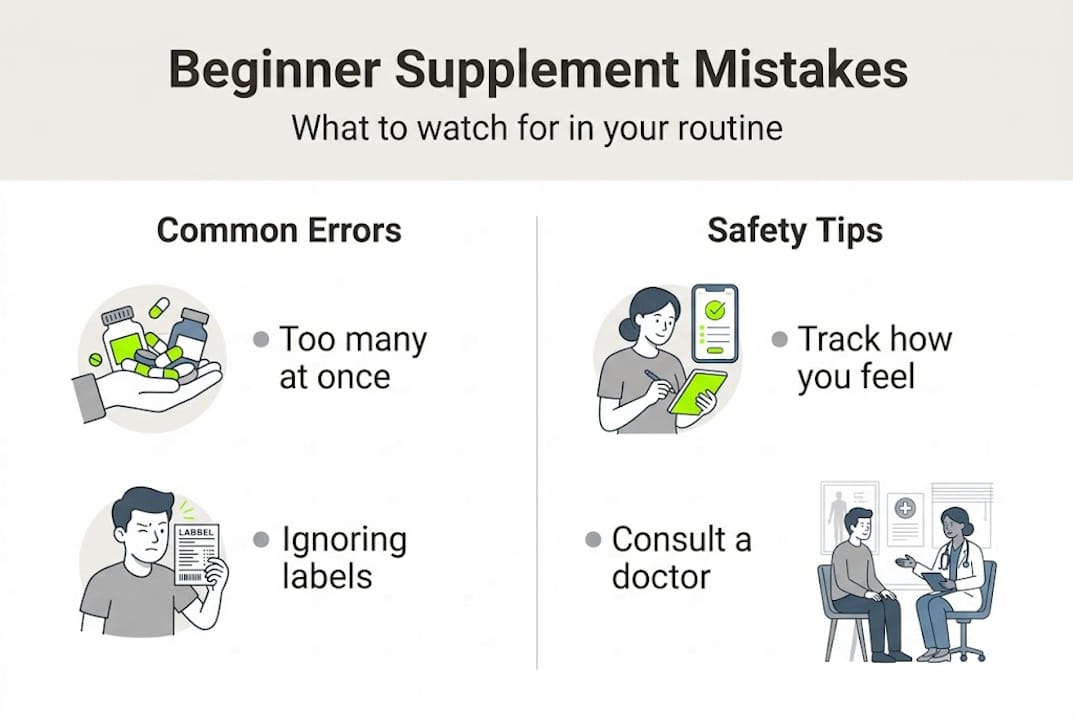
Falling for hyped products is the second big trap. Fat burners, testosterone boosters, and peptide blends are heavily marketed but carry limited evidence and notable risks for beginners. Stick to the core four until you have a solid training base.
Safety when purchasing matters enormously. Here’s a quick checklist:
- Look for USP or NSF International certification on the label
- Avoid products with proprietary blends that hide individual ingredient doses
- Buy from established retailers, not random online marketplaces
- Check for allergens, especially if you’re lactose intolerant (use isolate or plant-based protein)
- Read reviews from verified buyers, not just brand websites
Our supplement shopping tips article breaks down how to vet a product before you buy.
“No supplement replaces diet, training, or sleep. Choose USP or NSF certified products; creatine is safe long-term with adequate hydration; protein powders may cause digestive issues in those who are lactose intolerant, so opt for an isolate or plant-based alternative.”
If you experience persistent digestive discomfort, unusual fatigue, or any unexpected physical changes after starting a new supplement, stop taking it and speak to a healthcare professional. Warning signs are rare but real, and no fitness goal is worth compromising your health.
A real-world perspective: Why less is often more for beginners
The supplement industry has a vested interest in convincing you that more products equal better results. It’s a persuasive message, and it’s mostly wrong.
We’ve seen countless beginners spend hundreds of pounds in their first month, cycling through products that promise rapid transformation. Almost universally, those who stick to the basics, protein, creatine, and a sensible diet, outperform those chasing the latest trend within six months. The reason is simple: consistency beats complexity every time.
What the industry rarely tells you is that the marginal benefit of a fifth or sixth supplement is tiny compared to the gains you’ll see from simply training regularly and eating enough protein. Your body doesn’t need a cabinet full of tubs. It needs repetition, recovery, and patience.
Start small, track honestly, and only add something new when you have a clear reason to. That approach will serve you far better than any stack a YouTube advert recommends. For a broader view of what works across different training goals, our guide to key supplements for athletes offers a useful perspective as you progress.
Find the right start with trusted supplements
If you’re ready to take your first confident step, having a reliable source makes the whole process far simpler. At MyGymSupplements, you’ll find a carefully curated range of beginner-friendly products, from quality protein powders and creatine monohydrate to multivitamins and omega-3s, all from trusted brands. There’s no need to wade through hundreds of confusing options. The site is organised by goal and category, so whether you’re focused on muscle gain, recovery, or general health, finding the right product takes minutes rather than hours. Start with the basics, build from there, and let the results guide your next move.
Frequently asked questions
Are supplements necessary if I eat a balanced diet?
Most beginners do not need supplements if their diet covers all nutrients, but protein, creatine, or omega-3s can genuinely help if intake is insufficient. Think of them as a top-up, not a replacement.
Which supplements are safest for beginners?
Protein powder, creatine monohydrate, a basic multivitamin, and omega-3s are the safest starting points, with creatine and omega-3 particularly well-supported for both safety and effectiveness.
Can supplements cause side effects?
Mild side effects are possible; protein can cause digestive discomfort in those who are lactose intolerant, and creatine may cause minor bloating if you don’t hydrate adequately. Starting with a lower dose reduces the risk.
How quickly can I expect results from supplements?
Most people notice meaningful improvements after four to eight weeks of consistent training combined with proper supplementation. Patience and regularity matter far more than any single product.

0 comments