

Many fitness enthusiasts dismiss fish oil as just another supplement trend, viewing it as optional or even unnecessary. Scientific research reveals a different story: omega-3 polyunsaturated fatty acids EPA and DHA integrate into cell membranes, improving membrane fluidity and cell signalling especially in muscle tissues. This article explains what fish oil truly is, how it supports muscle recovery at the cellular level, and practical guidelines for effective use to enhance your training results.
Table of Contents
- What Is Fish Oil And Its Biochemical Composition?
- How Fish Oil Benefits Muscle Recovery And Overall Wellness
- Common Misconceptions About Fish Oil And Fatty Acids
- Scientific Evidence And Limitations Of Fish Oil For Muscle Recovery
- Practical Guidelines For Fish Oil Supplementation
- Enhance Your Muscle Recovery With MyGymSupplements
Key takeaways
| Point | Details |
|---|---|
| Fish oil provides omega-3 EPA and DHA | These fatty acids integrate into cell membranes, enhancing recovery and cellular function. |
| Anti-inflammatory effects reduce soreness | Fish oil lowers muscle inflammation 12 to 72 hours post-exercise, supporting joint health. |
| Recommended dose is 2000 to 3000 mg daily | This combined EPA and DHA dosage offers fitness benefits without excessive intake risks. |
| Benefits emerge over weeks, not instantly | Fish oil supports longer-term recovery and wellness rather than immediate muscle repair. |
| Plant omega-3s are less effective | ALA from plants converts poorly to EPA and DHA compared to direct fish oil sources. |
What is fish oil and its biochemical composition?
Fish oil is extracted from fatty fish such as salmon, mackerel, and sardines. The main active components are omega-3 fatty acids EPA (eicosapentaenoic acid) and DHA (docosahexaenoic acid). These molecules play essential roles in cellular health far beyond simple nutrition.
EPA and DHA integrate into cell membranes, especially in muscle and brain tissue. This incorporation improves membrane fluidity, making cells more responsive and efficient. Enhanced cellular function supports muscle performance during workouts and accelerates recovery afterward.
The biochemical actions of fish oil include:
- Improving cell membrane flexibility and signalling efficiency
- Supporting mitochondrial function for energy production
- Modulating inflammatory pathways within muscle cells
- Enhancing protein synthesis responsiveness in muscle tissue
Understanding these cellular mechanisms helps explain why fish oil delivers benefits for fitness and muscle recovery. The omega-3s work at the molecular level, creating conditions that favour muscle growth and repair. This foundational knowledge sets the stage for appreciating fish oil’s practical applications in training and recovery, much like how leucine supports muscle protein synthesis through distinct biochemical pathways.
How fish oil benefits muscle recovery and overall wellness
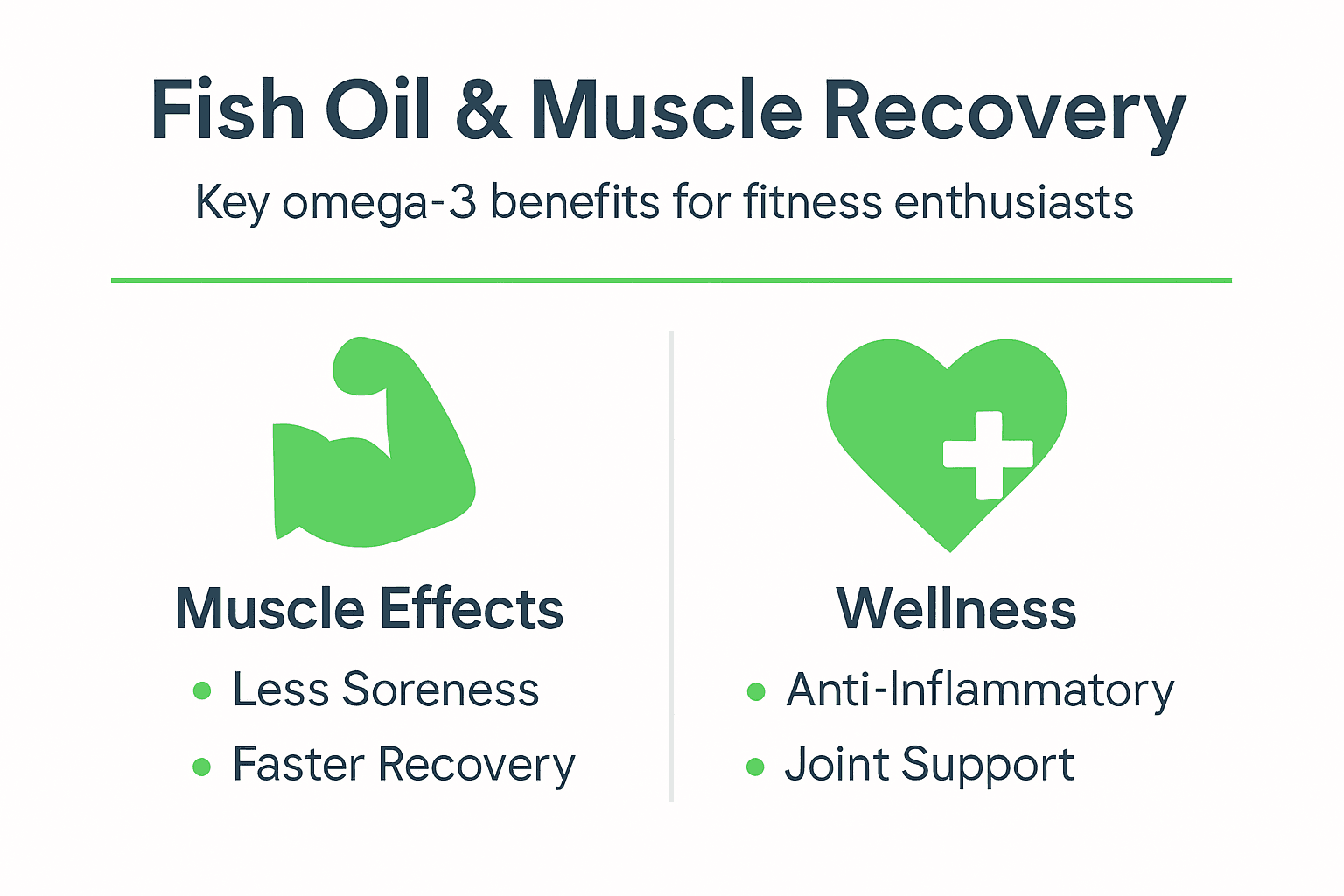
Fish oil supplementation provides anti-inflammatory effects that reduce delayed onset muscle soreness by mitigating muscle cell inflammation 12 to 72 hours post-exercise. This timing window is critical because it covers the peak period when muscle damage and soreness typically manifest. By lowering inflammation during this crucial phase, fish oil helps you recover faster between training sessions.

Omega-3 fish oil enhances muscle sensitivity to protein and resistance training, aiding maintenance and growth of muscle mass during calorie deficit and ageing. This improved responsiveness means your muscles make better use of dietary protein and training stimuli. The anti-inflammatory properties create an environment where muscle cells can focus on growth rather than fighting chronic inflammation.
Key wellness benefits include:
- Reducing muscle soreness and accelerating recovery between workouts
- Improving joint health by lowering inflammation in connective tissues
- Supporting heart health through dose-dependent triglyceride reduction
- Enhancing muscle protein synthesis efficiency during training phases
- Protecting muscle mass during cutting phases or as you age
Consistent intake is crucial to realise these advantages. Unlike pre-workout supplements that deliver immediate effects, fish oil works gradually by changing your cellular environment. You’ll notice improvements in joint comfort, reduced morning stiffness, and faster recovery over several weeks of regular use.
Pro Tip: Track your recovery metrics like soreness levels and training readiness over 6 to 8 weeks when starting fish oil. This timeframe allows sufficient cellular integration to observe meaningful changes in how quickly you bounce back from intense sessions.
Understanding proper fish oil supplement timing and exploring comprehensive benefits for fitness helps you maximise these recovery and wellness advantages.
Common misconceptions about fish oil and fatty acids
Many fitness enthusiasts hold inaccurate beliefs about fish oil that can lead to disappointment or improper use. Clarifying these misconceptions helps set realistic expectations and optimise your supplementation strategy.
Misconception 1: Fish oil instantly repairs muscle damage
Fish oil doesn’t universally speed acute muscle repair; it reduces inflammation but not immediate muscle damage markers. The benefits unfold over days through cumulative anti-inflammatory effects rather than rapid tissue repair. Think of fish oil as creating better recovery conditions rather than acting as an instant fix.
Misconception 2: All omega-3 sources work equally well
Plant-based ALA from flaxseed or chia converts very poorly to EPA and DHA in the human body. Most people convert less than 10% of ALA to the active forms your muscles need. Direct fish oil sources provide bioavailable EPA and DHA without relying on inefficient conversion pathways.
Misconception 3: Higher doses always mean better results
Exceeding 3000 mg of combined EPA and DHA offers limited additional benefit and may increase bleeding risk. More isn’t always better. Research shows diminishing returns above the recommended range, making moderate consistent doses the smartest approach.
The omega-6 to omega-3 imbalance matters significantly:
- Modern Western diets have omega-6 to omega-3 ratios as high as 20:1, promoting inflammation
- Ancestral diets maintained ratios closer to 1:1 or 2:1
- Fish oil supplementation helps restore healthier balance
- Improved ratio reduces inflammation and enhances recovery capacity
Understanding these realities helps you use fish oil effectively without unrealistic expectations. The supplement works best as part of a comprehensive recovery strategy, similar to how animal omega supplements support broader wellness goals through balanced fatty acid intake.
Scientific evidence and limitations of fish oil for muscle recovery
Research on fish oil presents a nuanced picture with both promising findings and important limitations. Understanding this balanced perspective helps you make informed supplementation decisions.
Fish oil supplementation at 5 grams per day for four weeks did not significantly alter acute muscle damage markers or repair after eccentric exercise in trained young males. This study reveals that fish oil may not deliver immediate muscle repair benefits in the hours following intense training. The anti-inflammatory effects are real but don’t translate to faster acute damage resolution.
Current research gaps include:
| Research area | Current limitation |
|---|---|
| Dose-response relationships | Optimal dosing for different training intensities unclear |
| Long-term supplementation | Few studies extend beyond 12 weeks in athletes |
| Population diversity | Limited data on women, older adults, various ethnicities |
| Timing protocols | Insufficient evidence on pre versus post-workout timing |
Benefits for recovery may become clearer over longer periods rather than immediate post-exercise windows. Many studies focus on acute markers measured within 72 hours, potentially missing cumulative benefits that emerge over weeks or months. Consistency and longer-term use appear crucial to observe meaningful improvements in training adaptation and recovery capacity.
Pro Tip: Don’t expect fish oil to eliminate next-day soreness from brutal leg sessions. Instead, monitor whether your baseline inflammation levels, joint comfort, and week-to-week recovery capacity improve over 8 to 12 weeks of consistent use.
The current evidence supports fish oil for general wellness and gradual recovery enhancement rather than acute performance gains. Exploring detailed fish oil benefits and research helps you understand where the science stands and what realistic outcomes to expect from supplementation.
Practical guidelines for fish oil supplementation
Applying research findings to your daily routine requires specific, actionable steps. These guidelines help you maximise fish oil’s recovery and wellness benefits.
Recommended dosing and timing:
- Aim for 2,000 to 3,000 mg per day of combined EPA and DHA for bodybuilding and fitness recovery benefits
- Take supplements with meals to enhance absorption and reduce potential fishy aftertaste
- Split the dose across two meals if taking higher amounts for better tolerance
- Maintain daily consistency rather than worrying about exact timing around workouts
- Allow 6 to 12 weeks to evaluate effects on recovery and joint health
No strict timing relative to training is needed because fish oil works through cumulative cellular effects. Unlike pre-workout stimulants that require precise timing, omega-3s need consistent daily intake to maintain optimal cell membrane composition. Taking your dose with breakfast and dinner works perfectly well.
Quality and selection criteria:
- Choose supplements certified for EPA and DHA content by third-party testing
- Look for products that specify exact milligrams of EPA and DHA, not just total fish oil
- Consider molecularly distilled options to minimise contaminants like mercury
- Check expiration dates and store in cool, dark places to prevent oxidation
Pro Tip: Calculate your actual EPA plus DHA intake, not just total fish oil weight. A 1000 mg fish oil capsule might contain only 300 mg of combined EPA and DHA, meaning you’d need multiple capsules to reach the effective 2,000 to 3,000 mg range.
Monitor these indicators over your first 8 to 12 weeks:
- Joint comfort during and after training sessions
- Recovery speed between high-intensity workouts
- Morning stiffness levels upon waking
- Overall training consistency and readiness
Understanding proper supplement timing advice and specific timing for fish oil supplements helps you integrate this foundational nutrient into your daily routine effectively.
Enhance your muscle recovery with MyGymSupplements
Applying the scientific principles covered in this article becomes easier when you have access to quality supplements tailored for fitness recovery. MyGymSupplements offers expert-curated fish oil and omega-3 products designed specifically for athletes and active individuals. Combine your fish oil intake with other proven supplements by following our comprehensive workout supplement routine guide to create a complete recovery strategy. Learn how to optimise timing across your entire supplement stack using our detailed fitness supplement timing workflow for maximum performance gains. Start your journey to better recovery, reduced inflammation, and improved overall wellness today with products backed by science and designed for serious training results.
What is fish oil?
What makes fish oil effective for muscle and wellness?
Fish oil contains omega-3 fatty acids EPA and DHA that integrate directly into cell membranes, improving cellular function in muscle and brain tissues. These active components reduce inflammation, enhance protein synthesis responsiveness, and support cardiovascular health. The bioavailable EPA and DHA forms distinguish fish oil from plant omega-3 sources that require inefficient conversion.
How does fish oil differ from flaxseed or plant omega-3 sources?
Plant sources provide ALA, which converts at less than 10% efficiency to EPA and DHA in most people. Fish oil delivers EPA and DHA directly without relying on conversion pathways. This superior bioavailability makes fish oil significantly more effective for muscle recovery and anti-inflammatory benefits compared to plant alternatives.
What is the best time to take fish oil for fitness recovery?
Take fish oil with meals, typically breakfast or dinner, for optimal absorption and reduced digestive discomfort. Unlike pre-workout supplements requiring precise timing, fish oil works through cumulative effects over weeks. Daily consistency matters far more than specific timing relative to training sessions. Explore comprehensive fish oil benefits to understand its role in your supplement strategy.
How does fish oil help with muscle recovery?
Fish oil reduces inflammation post-exercise, which lowers muscle soreness between 12 and 72 hours after training. It enhances muscle cells’ responsiveness to protein and resistance training stimuli, improving recovery capacity. These anti-inflammatory effects create better conditions for muscle repair and growth over time. Understanding complete muscle recovery processes helps you integrate fish oil effectively.
What is the best dose of fish oil for fitness?
A daily dose of 2,000 to 3,000 mg combined EPA and DHA is recommended for muscle recovery and fitness benefits. Taking fish oil with food improves absorption and minimises potential digestive issues. Exceeding 3,000 mg offers limited additional benefits and may increase bleeding risk. Learn more about proper fish oil dosage and timing for optimal results.
Can plant-based omega-3 supplements replace fish oil?
Plant omega-3 (ALA) converts very inefficiently to EPA and DHA in the human body, typically below 10%. Fish oil provides direct, bioavailable EPA and DHA that are far more effective for muscle recovery and anti-inflammatory benefits. While plant sources offer some health benefits, they cannot match fish oil’s efficacy for fitness applications. Compare different omega-3 sources for performance to make informed choices.
Recommended
- Benefits of Fish Oil for Fitness Enthusiasts – MyGymSupplements
- Best Vitamins for Muscle Recovery – Expert Comparison 2025 – MyGymSupplements
- Best Vitamins for Muscle Recovery – Expert Comparison 2025 – MyGymSupplements
- What Is Muscle Recovery? A Complete Overview – MyGymSupplements
- Witaminy i zioła wspierające rehabilitację po udarze | UdarRehab.pl

0 comments