

TL;DR:
- A structured supplement routine aligned with specific fitness goals enhances effectiveness and minimizes waste.
- Key supplements include protein, creatine, caffeine, BCAAs, omega-3, vitamin D, and magnesium, timed strategically.
- Consistency and simplicity are more effective long-term strategies than complex, trendy supplement stacks.
Supplement advice is everywhere, and most of it contradicts itself. One source tells you to load up on creatine at dawn, another insists timing is irrelevant, and a third pushes a stack of twelve products you’ve never heard of. The result? Most athletes end up with a cluttered shelf, a lighter wallet, and no measurable improvement. A structured, step-by-step routine cuts through the noise. When you know exactly what to take, when to take it, and why, every supplement you use works harder. This guide walks you through building that routine from scratch, so your effort in the gym is matched by equally smart choices outside of it.
Table of Contents
- Assessing your fitness goals and supplement needs
- Gathering your essentials: Supplement checklist and timing
- Step-by-step daily supplement routine
- Avoiding common pitfalls and troubleshooting your routine
- Our perspective: Why simplicity and consistency outmatch supplement ‘hacks’
- Get started with your personalised supplement journey
- Frequently asked questions
Key Takeaways
| Point | Details |
|---|---|
| Start with clear goals | A supplement routine works best when aligned with your exact fitness objectives. |
| Focus on essentials | Prioritise core supplements based on research and avoid unnecessary extras. |
| Timing impacts results | Consuming supplements around training sessions can improve absorption and benefits. |
| Consistency matters | Following your routine daily is more effective than searching for shortcuts or fads. |
Assessing your fitness goals and supplement needs
Before you buy anything, get clear on what you’re actually training for. This sounds obvious, but most people skip it. They see a product that promises “extreme gains” and reach for their card. Without a defined goal, you’re supplementing blindly.
Your primary objective shapes everything. If you’re focused on muscle gain, protein and creatine should anchor your plan. Chasing fat loss? Protein still matters for preserving muscle, but you may also look at caffeine-based pre-workouts or thermogenic support. Training for endurance performance shifts the focus towards electrolytes, carbohydrate timing, and BCAAs. Prioritising recovery, perhaps after injury or a heavy competition block, calls for collagen, magnesium, and sleep-quality aids like ZMA.
Here’s a quick-reference table to map goals to supplement categories:
| Fitness goal | Key supplement types |
|---|---|
| Muscle gain | Whey protein, creatine, BCAAs |
| Fat loss | Protein, caffeine, green tea extract |
| Endurance | Electrolytes, carbohydrates, BCAAs |
| Recovery | Collagen, magnesium, ZMA, protein |
| General health | Multivitamin, omega-3, vitamin D |
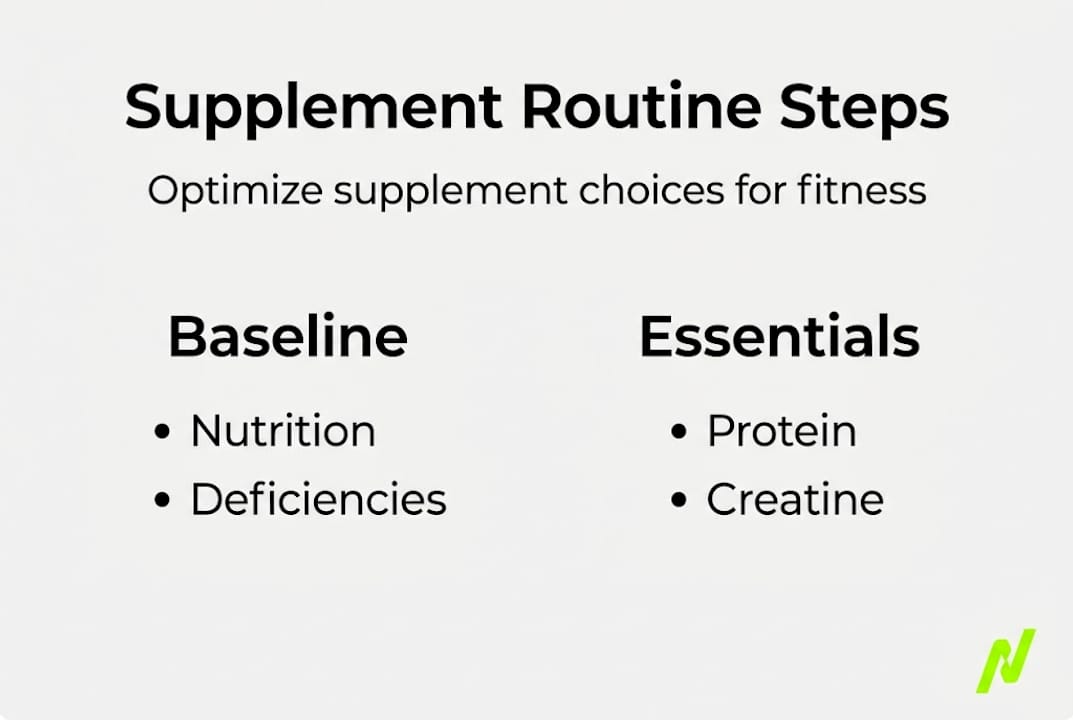
Before adding supplements, consider your baseline nutrition. If your diet is genuinely deficient in a key macronutrient, no supplement will fix that long-term. Supplements are designed to fill gaps and optimise timing. As noted by personalising your supplement plan, supplements should complement, not replace, a balanced training and nutrition plan.
If you have any medical conditions, allergies, or take prescription medication, speak to your GP or a registered dietitian before starting. Some supplements interact with medications or are contraindicated in certain conditions. This is not a formality. It’s a non-negotiable step.
Key things to identify before setting supplement goals:
- Primary goal: muscle gain, fat loss, endurance, or recovery
- Dietary gaps: are you getting enough protein, fats, and micronutrients from food?
- Budget: how much can you realistically spend each month?
- Lifestyle: do you train morning or evening? This affects timing significantly.
- Medical status: any conditions or medications to check against?
Pro Tip: Start with just two or three supplements, usually protein, creatine, and a multivitamin. Add more only if you’ve identified a specific gap or goal that basic nutrition cannot cover. Stacking too many products at once makes it impossible to know what’s working.
Gathering your essentials: Supplement checklist and timing
With your goals mapped, it’s time to build your actual supplement kit. Not every athlete needs the same products, but certain supplements have enough evidence behind them to suit nearly any routine.
Essential supplements for most gym routines:
- Whey protein (or plant-based alternative): supports muscle protein synthesis
- Creatine monohydrate: increases strength and power output over time
- Caffeine or pre-workout: boosts focus and workout intensity
- BCAAs: support muscle recovery, particularly useful when training fasted
- Omega-3 fatty acids: reduce inflammation and support joint health
- Vitamin D: critical for muscle function and immune support, especially in the UK
- Magnesium: supports sleep quality and muscle relaxation
Timing your supplements correctly can enhance absorption and effectiveness. This isn’t just theory. For example, creatine taken post-workout with carbohydrates shows improved uptake compared to other timings. Caffeine hits peak plasma concentration roughly 45 to 60 minutes after ingestion, making pre-workout timing genuinely important.
Here’s a comparison table for timing your key supplements:
| Time of day | Supplements to take |
|---|---|
| Morning | Multivitamin, omega-3, vitamin D, creatine |
| Pre-workout (30-60 min before) | Caffeine, pre-workout formula, BCAAs |
| Post-workout (within 30-60 min) | Whey protein, creatine (if not taken earlier) |
| Night-time | Casein protein, magnesium, ZMA |
A useful statistical note: research indicates that consuming protein within a two-hour window after training optimises supplement absorption and supports muscle repair most effectively. Missing this window repeatedly can blunt your progress over weeks.
Always check supplement labels before use. Look for allergen warnings, especially if you’re sensitive to gluten, dairy, or soy, as many protein powders contain these. Check for proprietary blends that hide individual ingredient doses, and be cautious with stimulant-heavy pre-workouts if you’re sensitive to caffeine or have cardiovascular concerns.
Step-by-step daily supplement routine
Having the right products means nothing if your routine is disorganised. Here’s a clear, practical daily framework you can adapt to your own schedule and training times.
Daily supplement routine: step by step
- Morning (on waking): Take your multivitamin and omega-3 with breakfast. If you train early, this is also a good time for creatine. Drink at least 300ml of water with morning supplements to aid absorption.
- Pre-workout (30 to 60 minutes before training): Take caffeine or your pre-workout formula. If training fasted or early, consider BCAAs to protect muscle. Avoid high-fat meals immediately before, as fat slows the absorption of many active ingredients.
- Intra-workout (optional): For sessions longer than 75 minutes, an electrolyte drink or BCAA formula during training supports hydration and reduces fatigue.
- Post-workout (within 30 to 60 minutes after training): This is your most critical window. Take whey protein, either as a shake or mixed into food. If you skipped creatine in the morning, take it now with a carbohydrate source.
- Evening meal: A balanced plate of whole foods. If your protein intake for the day is still low, add another shake here.
- Night-time (30 to 60 minutes before bed): Take magnesium and, if using it, a casein protein shake. Casein digests slowly, providing a steady release of amino acids during sleep, which is when muscle repair peaks.
As shown in pre and post-workout strategies, aligning supplement intake around workouts boosts performance and recovery meaningfully.
On rest days, skip the pre-workout formula and BCAAs. Keep your protein, creatine, and health-based supplements consistent. Consistency on rest days is often what separates average and elite progress. You can also explore optimising your supplement routine around different training blocks for periodised cycles.

Pro Tip: Each evening, lay out tomorrow’s supplements in a small pill organiser or labelled pots. It takes two minutes and removes the morning decision fatigue that causes people to skip doses.
Avoiding common pitfalls and troubleshooting your routine
Even a well-planned routine can go sideways. Here are the most common mistakes athletes make, and how to fix them.
Frequent mistakes to watch for:
- Overdosing on protein: More than your body can use in a given period simply gets excreted. Around 1.6 to 2.2g of protein per kilogram of bodyweight per day is the evidence-based range for muscle gain.
- Ignoring micronutrients: Athletes often focus on protein and creatine while neglecting vitamins and minerals. Deficiencies in iron, vitamin D, or magnesium can significantly blunt performance.
- Inconsistency: Missing supplements for days at a time is more damaging than occasional missed doses. Creatine, for example, requires consistent saturation to maintain its effect.
- Stacking too many products: Taking eight supplements at once makes it impossible to identify what’s helping, what’s causing issues, or what’s simply a waste of money.
- Not tracking progress: Without any record of performance, strength, or body composition, you can’t know whether your routine is working.
If you forget a dose, don’t double up. Just continue as normal with your next scheduled intake. Doubling doses, particularly with stimulants or fat-soluble vitamins, carries real risks.
“If a supplement is causing discomfort, disrupted sleep, elevated heart rate, or digestive issues, it’s worth pausing it entirely before experimenting with dose changes. Identify the culprit systematically, not by guessing.”
Knowing when to stop is as important as knowing when to start. Avoid excessive supplementation and rely on evidence-based practices, rather than marketing claims or anecdotal advice from training partners.
If you’re unsure how to adjust your routine tweaks after weeks of stagnant results, speaking to a certified sports nutritionist is often the fastest path forward. They can analyse your diet, training load, and supplement use together, rather than treating them as separate problems.
Our perspective: Why simplicity and consistency outmatch supplement ‘hacks’
The fitness supplement industry thrives on complexity. New products appear weekly, each promising a shortcut that the last one somehow missed. We’ve watched athletes spend hundreds every month on trending stacks, only to cycle back to basics when the novelty wears off and results plateau.
Here’s what we’ve found, consistently: the athletes who make the best long-term progress are rarely the ones with the most elaborate routines. They’re the ones who take protein every day, keep creatine topped up, sleep well, and train with structured progression. Evidence-based routines built around a few proven ingredients outperform trendy, expensive stacks almost every time.
There’s nothing wrong with curiosity or trying new things. But the foundation matters most. When your basics are locked in, you can experiment from a position of strength. When they’re not, no amount of exotic additions will compensate. Simplicity isn’t a compromise. In this context, it’s the most effective strategy available.
Get started with your personalised supplement journey
Building a supplement routine that actually works starts with understanding your goals, selecting the right products, and following through with consistency. At MyGymSupplements.shop, you’ll find everything you need to put this plan into action, from whey and plant-based proteins to creatine, pre-workouts, amino acids, and recovery aids. Browse by goal or category to find products matched to your objectives. Whether you’re just starting out or refining a routine you’ve used for years, our range covers every stage of the process. Take what you’ve learnt here and build something that genuinely works for you.
Frequently asked questions
Can I build muscle without using supplements?
Yes. Whole food nutrition and a structured training programme are the real drivers of muscle growth. Supplements are not a replacement for a solid diet and training programme; they’re tools to fill specific gaps.
Is it safe to take multiple supplements at once?
Most combinations are safe when dosed correctly. Always read all supplement labels and avoid doubling up on active ingredients, and consult a professional if you have health concerns.
How long does it take to notice results from a supplement routine?
It depends on the supplement and your baseline, but most users report observable effects after a consistent few weeks of use. Creatine, for instance, typically shows strength improvements within two to four weeks.
What should I do if I experience side effects from a supplement?
Stop taking it immediately and consult a healthcare professional. Seek professional assessment if negative effects occur, rather than waiting to see if they resolve on their own.

0 comments