

Most British bodybuilders never realise that tracking fitness metrics can boost progress by up to 30 percent. Whether you are aiming for rapid muscle gain or supporting faster recovery, understanding your baseline is critical. Optimising your supplement plan starts with honest self-assessment, clear objectives, and making informed product choices. This guide helps British athletes cut through confusion, set realistic goals, and personalise nutrition to maximise results safely.
Table of Contents
- Stage 1: Assess Your Current Fitness Level And Routine
- Stage 2: Identify Your Specific Supplementation Objectives
- Stage 3: Match Supplement Types To Your Fitness Goals
- Stage 4: Choose Quality Products Aligning With Your Goals
- Stage 5: Track Progress And Adjust Your Supplement Plan
Quick Summary
| Key Message | Explanation |
|---|---|
| 1. Assess your fitness level | Document your exercise routine and metrics to evaluate physical condition accurately. |
| 2. Set specific supplement goals | Align supplementation with your fitness objectives for optimal nutritional support. |
| 3. Choose quality products | Select supplements with transparent labels and third-party testing to ensure safety. |
| 4. Track progress continually | Monitor results regularly to adapt and optimise your supplementation plan effectively. |
| 5. Consult a professional | Consider working with a sports nutritionist to refine your dietary and supplement strategies. |
Stage 1: Assess your current fitness level and routine
Successfully setting fitness supplement goals begins with an honest, comprehensive evaluation of your current physical condition and training regimen. Tracking comprehensive fitness metrics allows athletes to develop targeted, personalised nutrition strategies.
To accurately assess your fitness level, start by documenting your current exercise routine, frequency, and intensity. Record the types of workouts you perform weekly - whether strength training, cardiovascular exercise, high-intensity interval training (HIIT), or specialised sports activities. Note the duration and frequency of each session, tracking key performance indicators like total workout time, weights lifted, repetitions completed, and recovery periods. Consider using fitness tracking apps or a simple training journal to maintain consistent records.
Beyond physical metrics, evaluate your body composition, energy levels, sleep quality, and overall wellness. Physical activity guidelines recommend monitoring both objective measurements like muscle mass percentage and subjective factors such as muscle soreness and daily energy fluctuations. This holistic approach ensures you understand not just your physical capabilities, but also your body’s response to current training demands.
Top tip: Create a baseline fitness assessment spreadsheet that you update weekly, tracking metrics like bodyweight, muscle measurements, workout performance, and subjective energy ratings to track your progress comprehensively.
Stage 2: Identify your specific supplementation objectives
Defining precise supplementation goals requires a strategic approach that aligns with your individual fitness aspirations and physiological needs. Building a targeted workout supplement routine will help you maximise your nutritional strategy and athletic performance.
Begin by categorising your primary fitness objectives. Are you aiming to build muscle mass, improve strength, enhance endurance, accelerate recovery, or support weight management? Each goal demands a unique nutritional approach. Muscle building typically requires protein supplements with higher amino acid content, while endurance athletes might prioritise electrolyte replenishment and energy metabolism support. Consider consulting with a sports nutritionist or fitness professional to refine your specific supplement requirements based on your body composition, training intensity, and metabolic profile.
Next, conduct a comprehensive review of your current nutritional intake and potential deficiencies. Analyse your diet, training schedule, and energy expenditure to identify gaps where targeted supplementation can provide optimal support. This might involve blood tests to check vitamin levels, mineral deficiencies, or hormone balance that could impact your athletic performance and overall wellness.

Top tip: Create a detailed supplement journal tracking your intake, performance improvements, and body’s response to help you continuously refine and personalise your nutritional strategy.
Stage 3: Match supplement types to your fitness goals
Precisely aligning your supplement choices with your specific fitness objectives requires a nuanced understanding of nutritional support. Sports nutrition basics provide essential insights into selecting the right nutritional supplements for your unique athletic journey.
Different fitness goals demand targeted supplement strategies. For muscle building, prioritise protein supplements with high biological value like whey isolate or casein, which support muscle protein synthesis and recovery. Strength athletes might benefit from creatine monohydrate to enhance power output and muscle volume. Endurance performers should focus on branched chain amino acids (BCAAs), electrolyte replacements, and supplements that support cardiovascular efficiency and reduce muscle fatigue. Weight management goals require protein supplements with controlled calorie content, metabolism boosters, and appetite regulators.
Here is a summary of common fitness goals and their associated supplement needs:
| Fitness Goal | Recommended Supplements | Primary Benefit |
|---|---|---|
| Muscle building | Whey protein, creatine | Increase muscle mass and recovery |
| Strength enhancement | Creatine, beta-alanine | Boost strength and power output |
| Endurance improvement | Electrolytes, BCAAs | Sustain energy and delay fatigue |
| Weight management | Protein with low calories, fibre | Support satiety and fat metabolism |
| Faster recovery | Casein, magnesium, omega-3 oils | Reduce soreness and improve healing |
Evaluate supplement effectiveness by tracking your body’s response meticulously. Consider factors like absorption rate, ingredient quality, potential interactions with existing medications, and individual metabolic differences. Some supplements work synergistically while others might compete for absorption. Understanding these nuanced interactions will help you design a more sophisticated and personalised nutritional approach that complements your specific training regimen.
Top tip: Rotate and cycle your supplements periodically to prevent metabolic adaptation and maintain their optimal effectiveness.
Stage 4: Choose quality products aligning with your goals
Selecting premium supplements requires a strategic approach that goes beyond marketing claims and price points. Supplement selection protocols emphasise the critical importance of rigorous product evaluation for athletes seeking genuine performance enhancement.
Prioritise supplements with transparent ingredient lists, clear dosage information, and third-party testing certifications. Look for products that have been independently verified by reputable organisations like Informed Sport, NSF International, or Informed Choice. These certifications guarantee that supplements have been tested for banned substances and meet stringent quality standards crucial for competitive athletes. Pay close attention to the source of ingredients, manufacturing processes, and scientific research supporting the supplement’s claims.
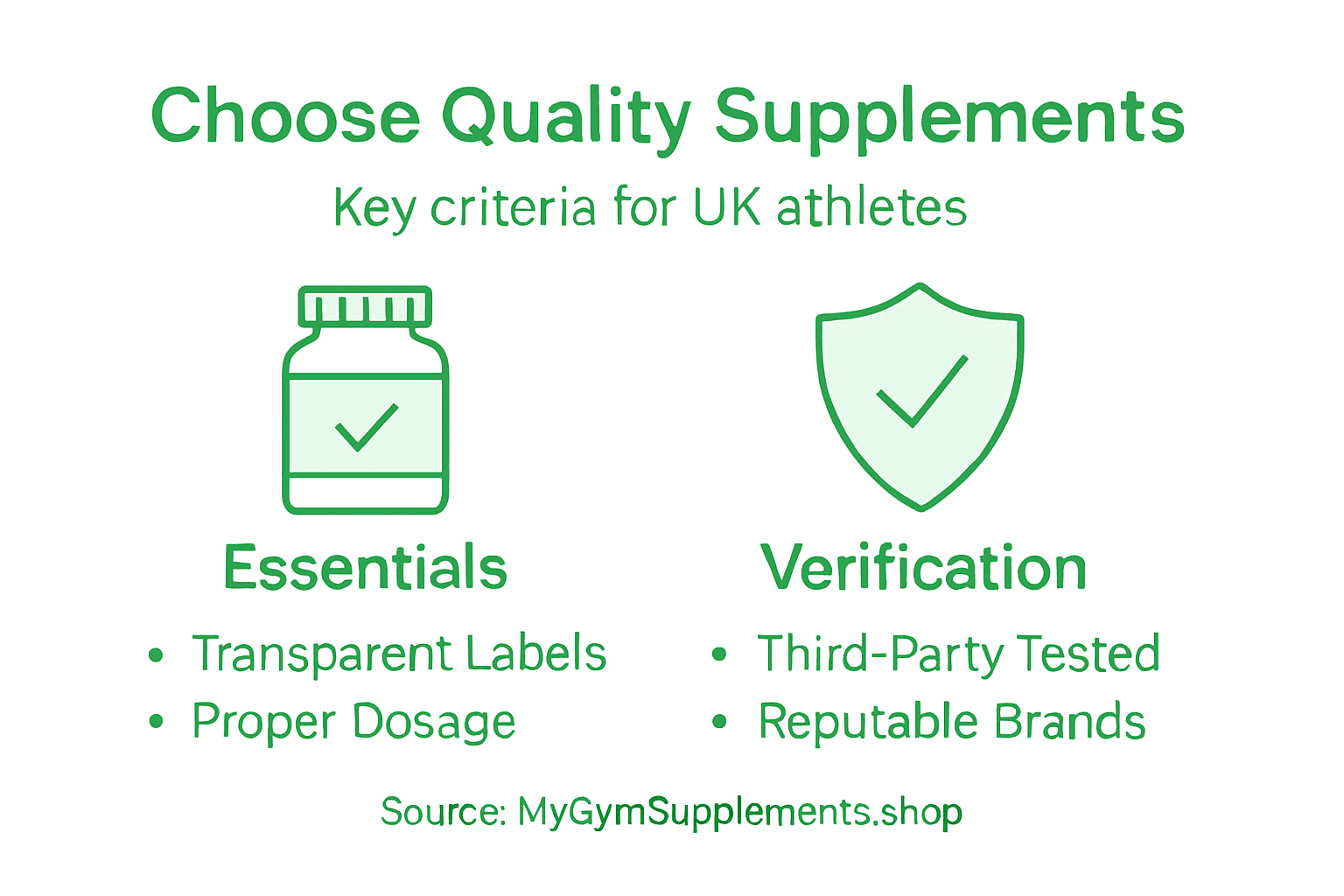
Develop a critical approach to supplement selection by researching ingredient effectiveness, potential interactions, and specific benefits aligned with your fitness objectives. Examine the bioavailability of key nutrients, consider the purity of ingredients, and verify that the supplement’s composition matches your individual nutritional requirements. Be wary of products with proprietary blends that obscure exact ingredient quantities or those making exaggerated performance claims without substantial scientific backing.
Below is a guide to choosing quality supplements, highlighting what to look for and why it matters:
| Quality Indicator | What It Means | Why It Matters |
|---|---|---|
| Third-party testing | Independently certified for safety | Ensures no banned substances |
| Transparent labelling | Clear listing of all ingredients and doses | Prevents hidden or unlisted substances |
| Scientific backing | Supported by reputable research | Validates effectiveness |
| Ingredient sourcing | Raw materials from trusted suppliers | Supports purity and reliability |
| No proprietary blends | Full disclosure of all component amounts | Facilitates informed decision |
Top tip: Always request and review independent laboratory testing results before investing in any new supplement to ensure maximum quality and safety.
Stage 5: Track progress and adjust your supplement plan
Successful fitness supplementation demands continuous monitoring and strategic adaptation. Active fitness tracking methods provide crucial insights into your nutritional and performance development.
Establish a comprehensive tracking system that captures both quantitative and qualitative data points. Measure objective metrics like body composition, strength gains, muscle mass, recovery time, and performance benchmarks. Simultaneously, record subjective indicators such as energy levels, workout intensity, muscle soreness, and overall wellbeing. Use fitness tracking apps, training journals, or spreadsheets to document these parameters consistently. Compare your current performance against baseline measurements to understand the precise impact of your supplement regimen.
Develop a flexible approach to supplement adjustment. If you are not seeing desired results within 8 to 12 weeks, consider modifying dosages, changing supplement combinations, or consulting a sports nutritionist. Look for subtle signs of metabolic adaptation or plateauing. Your body’s response to supplements can change with training intensity, lifestyle shifts, and physiological adaptations. Regular reassessment ensures your nutritional strategy remains dynamic and aligned with your evolving fitness objectives.
Top tip: Schedule quarterly comprehensive reviews of your supplement plan to ensure continuous optimization and prevent nutritional stagnation.
Achieve Your Fitness Supplement Goals with Confidence
Understanding how to set clear, personalised fitness supplement goals is crucial for any UK athlete seeking real results. This article highlights the challenge of accurately assessing your fitness level, identifying precise supplementation objectives, and choosing quality products that truly align with your performance aspirations. Whether you want to build muscle, enhance endurance, or speed up recovery, pinpointing the right supplements tailored to your unique needs ensures you avoid wasted effort and frustration.
Take control of your fitness journey today by exploring our extensive range of products designed to match your goals perfectly. From premium whey protein and creatine to essential vitamins and recovery aids, MyGymSupplements.shop offers everything you need in one place.
Discover targeted solutions that empower you to track progress and adjust your supplement plan with confidence.
Explore our complete collection now and start transforming your training with supplements backed by quality and transparency.
Find your perfect supplement strategy today. Visit MyGymSupplements.shop to shop by your fitness goals and embrace a smarter approach to athletic nutrition.
Frequently Asked Questions
How do I assess my current fitness level before setting supplement goals?
To assess your current fitness level, document your exercise routine, including the types of workouts, frequency, and intensity. Track metrics such as total workout time, weights lifted, and overall wellness indicators like energy levels and sleep quality.
What should I consider when identifying my supplementation objectives?
When identifying your supplementation objectives, consider your specific fitness goals, such as muscle building, strength enhancement, or endurance improvement. Evaluate your current nutritional intake to identify gaps where supplementation can help you achieve these goals.
How can I align my supplement choices with my fitness goals?
To align your supplement choices with your fitness goals, research the types of supplements that best support each objective. For example, if you aim for muscle building, prioritise high-quality protein supplements and track your body’s response to assess effectiveness.
What criteria should I use to choose quality supplements?
Choose quality supplements by looking for transparent ingredient lists, clear dosage information, and third-party testing certifications. Ensure the ingredients are sourced from reputable suppliers, avoiding proprietary blends that obscure exact ingredient amounts.
How often should I track my progress and adjust my supplement plan?
Track your progress weekly by measuring both objective and subjective fitness metrics. If you don’t see desired results within 8 to 12 weeks, consider adjusting your supplement dosages or combinations to better align with your evolving fitness needs.
What should be included in a fitness assessment spreadsheet?
Your fitness assessment spreadsheet should include metrics such as bodyweight, muscle measurements, workout performance, and subjective ratings of energy levels. Updating this spreadsheet weekly will provide a comprehensive view of your progress towards your supplement goals.
Recommended
- How to Set Fitness Goals for Maximum Results – MyGymSupplements
- Guide to Sports Nutrition Basics for Optimal Results – MyGymSupplements
- Building Workout Supplement Routine for Optimal Results – MyGymSupplements
- What Is Vitamin D and Why Athletes Need It – MyGymSupplements
- 10 WAYS TO STAY HEALTHY THIS WINTER - MK Marathon Weekend, Milton Keynes 3-4 May 2026

0 comments