

Most british bodybuilders see up to 25 percent faster muscle recovery when their supplement timing matches their training schedule. Getting the timing wrong can mean slower gains and longer soreness after workouts. If you want every training session to deliver stronger results, understanding how to coordinate supplements with your performance goals is key. This guide reveals how to assess your routine, pick the right products, and time intake for the best possible results in the gym.
Table of Contents
- Step 1: Assess Individual Training Schedule
- Step 2: Select Supplements To Match Workout Goals
- Step 3: Plan Intake Timings For Optimal Results
- Step 4: Implement Consistent Supplementation Routine
- Step 5: Monitor Performance And Adjust Timing
Quick Summary
| Key Message | Explanation |
|---|---|
| 1. Assess Your Training Schedule | Document your workout details to align supplementation with fitness goals for optimal performance and recovery. |
| 2. Select Supplements Wisely | Choose supplements that directly match your training goals, ensuring they support muscle growth and recovery. |
| 3. Time Supplement Intake Effectively | Align your supplement consumption with workout phases to maximise absorption and performance benefits. |
| 4. Maintain a Consistent Routine | Establish a reliable supplementation schedule that integrates seamlessly into your daily lifestyle for sustained results. |
| 5. Monitor and Adjust Regularly | Track performance indicators to refine your supplement strategy based on your body’s evolving needs and responses. |
Step 1: Assess individual training schedule
Understanding your personal training schedule is crucial for optimising supplement timing and achieving peak performance. By carefully evaluating your workout routine, fitness goals, and physiological needs, you can develop a precise supplementation strategy that supports muscle growth, recovery, and overall athletic performance.
To effectively assess your training schedule, start by documenting your current exercise regimen in detail. Track the type, intensity, and duration of your workouts across different training days. Consider your physical activity guidelines to ensure your supplementation aligns with recommended activity levels. Pay special attention to workout frequencies, rest periods, and specific fitness objectives such as muscle building, endurance training, or weight management.
Breakdown your assessment into key components: workout timing, training splits, recovery needs, and specific performance goals. This comprehensive approach will help you determine the most strategic moments to incorporate supplements for maximum effectiveness. Understanding how each supplement interacts with your unique training rhythm allows for personalised nutrition timing that supports your body’s energy systems and recovery processes.
Top Tip: Create a detailed training log that captures workout intensity, duration, and your body’s response to help refine your supplement timing with precision.
Step 2: Select supplements to match workout goals
Selecting the right supplements requires a strategic approach that aligns precisely with your specific fitness objectives. Your supplement choices should directly reflect the unique demands of your training programme, ensuring optimal nutritional support for muscle growth, recovery, and performance enhancement.
Begin by matching supplements to your primary fitness goals. For strength training, prioritise protein supplements that support muscle repair and growth. Endurance athletes might focus on protein intake recommendations that support prolonged energy and recovery. Consider factors such as workout intensity, training frequency, and specific performance targets. When selecting supplements, carefully evaluate each product’s potential contribution to your fitness journey, ensuring they complement rather than complicate your nutritional strategy.
Understand the nuanced role of different supplement categories. Protein powders assist muscle recovery, creatine supports power output, amino acids enhance muscle preservation, and pre workout formulations can boost energy levels. Critically assess supplement necessity by examining your dietary intake and training demands. Research each supplement thoroughly and consider consulting a sports nutritionist to develop a personalised supplementation approach that maximises your training potential while maintaining nutritional balance.
Here’s a concise comparison of common supplement types and their primary benefits:
| Supplement Type | Main Benefit | Optimal Timing |
|---|---|---|
| Whey Protein | Rapid muscle recovery | Within 30 mins post workout |
| Creatine | Increased power output | Any time, daily |
| Amino Acids (BCAAs) | Muscle preservation | Pre or intra workout |
| Casein Protein | Sustained protein supply | Before sleep |
| Pre workout Blend | Boosted workout energy | 30 mins pre workout |
Top Tip: Cross reference supplement ingredients with your specific training goals to ensure targeted nutritional support and avoid unnecessary or redundant products.
Step 3: Plan intake timings for optimal results
Timing your supplement intake is a critical strategy that can dramatically enhance your training performance and recovery. Understanding precisely when to consume specific supplements allows you to maximise nutritional absorption and support your body’s physiological responses during different stages of exercise and recovery.

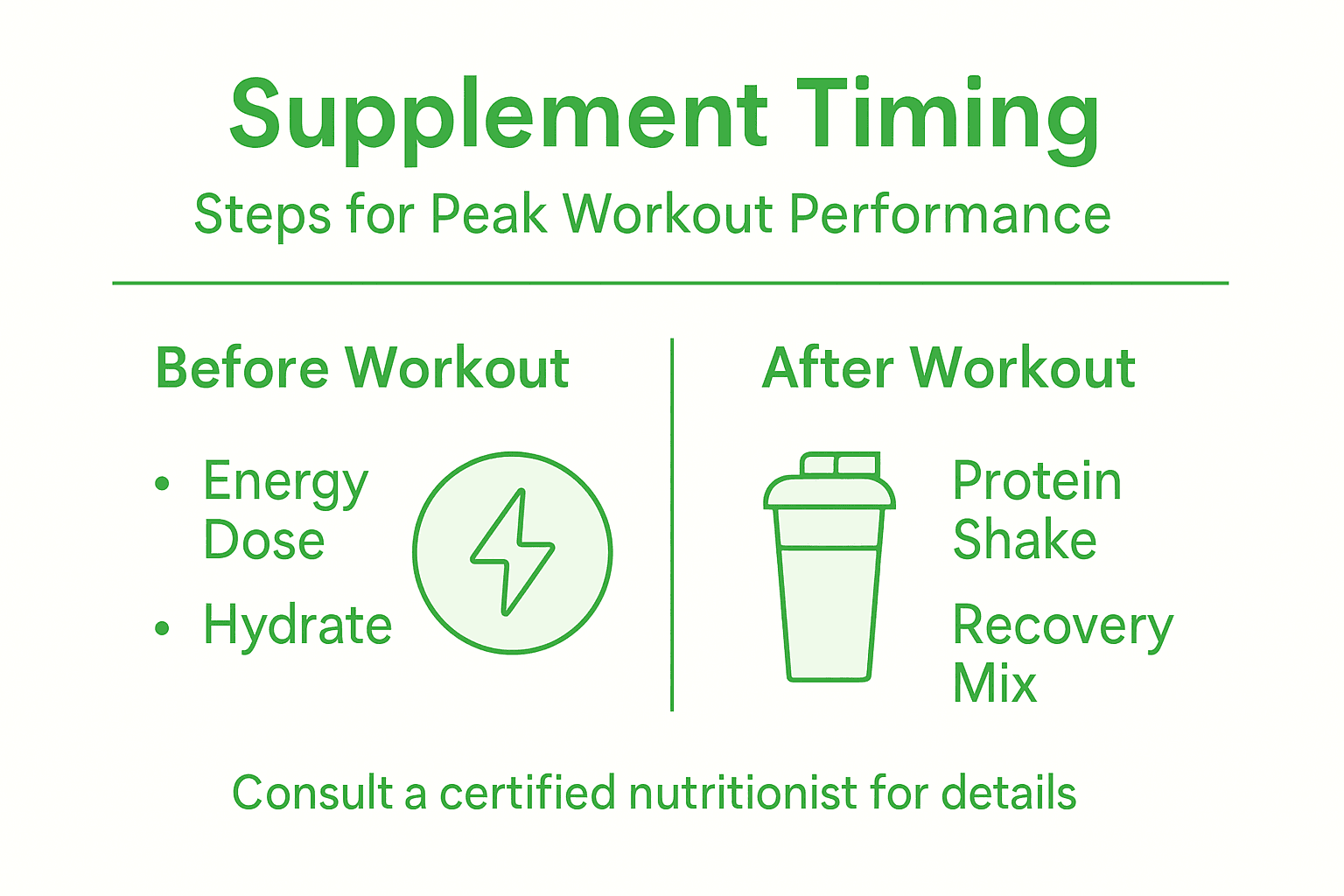
The key to effective supplement timing lies in aligning intake with your workout phases. Pre workout, focus on supplements that boost energy and prepare muscles for intense activity. During government dietary recommendations suggest consuming fast absorbing proteins and carbohydrates 30 to 45 minutes before training to provide immediate energy. Post workout, prioritise rapid protein absorption and muscle recovery supplements within a 30 minute window to support muscle protein synthesis and replenish glycogen stores.
Develop a structured supplement intake schedule that considers your specific training objectives. Different supplement types require varied timing strategies protein isolates work best immediately after training, while slow release proteins might be more beneficial before sleep. Creatine can be taken at various times but maintaining consistent daily intake is more important than precise timing. Consider your individual metabolism, workout intensity, and personal recovery needs when designing your supplement timing approach.
Top Tip: Invest in a supplement timing tracking app or journal to precisely monitor your intake and correlate it with your training performance and recovery results.
Step 4: Implement consistent supplementation routine
Establishing a reliable supplementation routine is fundamental to achieving sustainable fitness results and optimising your body’s nutritional potential. Consistency transforms supplement intake from a sporadic practice into a strategic performance enhancement mechanism that supports your long term fitness objectives.
Develop a structured approach to supplement consumption by integrating them seamlessly into your daily lifestyle. Physical activity guidelines emphasise the importance of creating predictable nutritional patterns that align with your training schedule. Set specific times for supplement intake such as pre workout, post workout, and between meals to ensure maximum absorption and effectiveness. Consider using pill organisers, smartphone reminders, or dedicated nutrition tracking apps to maintain accountability and precision in your supplementation strategy.
Prioritise creating a sustainable routine that fits naturally with your existing lifestyle and training commitments. Start by introducing supplements gradually, monitoring your body’s response, and adjusting dosages or timing as needed. Consistency does not mean rigidity concentrate on developing a flexible yet disciplined approach that adapts to your changing fitness goals and physiological requirements. Regular self assessment and periodic consultation with nutrition professionals can help refine your supplementation routine for optimal performance and health.
Top Tip: Keep a detailed supplement and training journal to track your progress and identify the most effective timing and combinations for your individual body.
Step 5: Monitor performance and adjust timing
Tracking and evaluating your supplementation strategy is a critical process that ensures your fitness approach remains dynamic and responsive to your body’s changing needs. Effective monitoring transforms your supplement routine from a static plan into an adaptive performance enhancement system.
Implement a comprehensive tracking methodology that captures multiple performance indicators. Monitoring protocols for performance recommend documenting objective metrics such as strength gains, recovery times, energy levels, and physiological responses. Utilise digital fitness trackers, body composition scales, and detailed training logs to quantify your progress. Pay close attention to subtle changes in muscle recovery, workout intensity, and overall physical performance that might signal the need for supplement timing adjustments.
Develop a systematic approach to performance evaluation by establishing baseline measurements and conducting regular reassessments. Look for trends in your training data that indicate whether your current supplement timing is optimising your performance. Be prepared to make incremental modifications to dosage, timing, or supplement combinations based on empirical evidence. Remember that individual physiological responses vary widely personal experimentation and consistent monitoring are key to discovering your optimal supplementation strategy.
To help you identify whether your supplement strategy needs adjustment, consider key performance signals:
| Signal to Monitor | What It Indicates | Recommended Action |
|---|---|---|
| Slower recovery times | Possible under-supplementation | Review protein intake |
| Plateaued strength gains | Inefficient nutrient support | Adjust supplement timing |
| Increased fatigue levels | Poor energy management | Optimise pre workout nutrition |
| Improved workout intensity | Effective supplement strategy | Maintain current routine |
Top Tip: Schedule quarterly performance reviews where you comprehensively analyse your fitness data and consult with a nutrition professional to refine your supplement approach.
Elevate Your Fitness Results with Perfect Supplement Timing
Struggling to maximise your workout gains due to inconsistent supplement timing? The key to unlocking peak performance is aligning your nutritional intake precisely with your training schedule. Our article outlines how assessing your routine, selecting goal-specific supplements, and planning intake timings can dramatically improve muscle recovery, energy levels, and overall results. At MyGymSupplements.shop, we understand these challenges and offer a comprehensive range of products tailored to support your unique training needs.
Take control of your supplement strategy today by exploring our focused categories for proteins for rapid recovery, potent pre workout blends to boost energy, and effective performance recovery aids designed to fit seamlessly into your customised routine. Visit MyGymSupplements.shop now and start experiencing the benefits of precise supplement timing to accelerate your fitness journey.
Frequently Asked Questions
How can I assess my individual training schedule for supplement timing?
To assess your training schedule, document your current workout routine, including the type, intensity, and duration of your sessions. Track these details over time to identify patterns and align your supplementation strategy with your specific fitness goals and physiological needs.
What supplements should I select based on my workout goals?
Choose supplements that match your primary fitness objectives, such as protein for muscle growth or amino acids for endurance. Review your dietary intake and training demands to ensure that each supplement supports your goals without complicating your nutritional strategy.
When is the best time to take supplements for optimal results?
The best time to take supplements is strategically aligned with your workout phases: take energy-boosting supplements pre workout, and focus on rapid protein absorption and recovery supplements post workout. For example, aim to consume protein within 30 minutes after exercising for maximum recovery benefits.
How do I create a consistent supplementation routine?
To create a consistent routine, integrate supplements into your daily lifestyle by setting specific intake times, such as before meals or post workout. Use tools like pill organisers or smartphone reminders to keep track and ensure you meet your nutritional needs regularly.
What performance indicators should I monitor to adjust my supplement timing?
Monitor factors such as recovery times, strength gains, and overall energy levels to determine the effectiveness of your supplement timing. If you notice slower recovery or plateaued strength, consider adjusting your intake schedule or the types of supplements you use for better results.
How often should I review my supplementation strategy?
Aim to review your supplementation strategy at least quarterly to assess its effectiveness based on your fitness data. Conduct self-assessments and be open to making changes based on your evolving training needs and performance indicators.
Recommended
- How to Optimize Workout Nutrition for Peak Results – MyGymSupplements
- How to Create Supplement Schedule for Peak Fitness Results – MyGymSupplements
- Step by Step Pre-Workout Routine for Optimal Results – MyGymSupplements
- Building Workout Supplement Routine for Optimal Results – MyGymSupplements
- Tactical Duffle Bag 45L Gym Bag Duffle Molle Design & Shoe Compartment, Travel W
- Role of Scheduling in Team Productivity Explained - WhenNOT Blog

0 comments