

British bodybuilders chasing the edge in muscle recovery and growth often turn to BCAAs for support, with over 60 percent of competitive athletes in the UK using amino acid supplements as part of their regimen. Navigating the science behind branched-chain amino acids is vital because these nutrients directly influence workout performance, muscle repair, and day-to-day recovery. Understanding how BCAAs work will help you make strategic choices that align with both your british training standards and specific physique goals.
Table of Contents
- What Are BCAAs And How They Work
- Types Of BCAAs And Their Functions
- BCAA Benefits For Muscle Growth And Repair
- Optimal Timing And Usage For Athletes
- Risks, Side Effects And Safe Dosing
Key Takeaways
| Point | Details |
|---|---|
| Role of BCAAs | Branched-chain amino acids (BCAAs) are vital for muscle metabolism, aiding in protein synthesis and recovery when consumed through diet or supplementation. |
| Optimal Ratios | A balanced BCAA ratio of 2:1:1 (leucine:isoleucine:valine) is recommended to maximise muscle recovery and performance potential. |
| Timing of Intake | Consuming BCAAs pre-, intra-, and post-workout can significantly enhance muscle repair and energy maintenance during exercise. |
| Safety Considerations | Adhere to recommended dosages (8.2 grams per day) and consult healthcare professionals to minimise risks associated with BCAA supplementation. |
What Are BCAAs And How They Work
Branched-chain amino acids (BCAAs) are essential nutrients comprising three specific amino acids: leucine, isoleucine, and valine. These unique protein building blocks play a critical role in muscle metabolism and cannot be naturally produced by the human body, meaning they must be consumed through diet or supplementation.
Unlike other amino acids that are metabolised in the liver, BCAAs are primarily processed directly in skeletal muscle tissue. Research from King’s College London highlights that while BCAAs are crucial for protein synthesis, they work most effectively when combined with a complete amino acid profile. Their distinctive metabolic pathway allows them to serve dual functions: acting as energy substrates and regulating protein synthesis through the mTOR (mechanistic Target of Rapamycin) signalling pathway.
The three specific BCAAs each contribute uniquely to muscle recovery and performance. Leucine triggers muscle protein synthesis, valine supports energy metabolism during exercise, and isoleucine helps improve glucose uptake and utilisation. Studies from IOSR Journals demonstrate that these amino acids are particularly important for athletes and bodybuilders seeking to maintain muscle mass and enhance exercise recovery.
Pro tip: Combine BCAA supplementation with a balanced protein intake to maximise muscle recovery and growth potential.
Types Of BCAAs And Their Functions
Branched-chain amino acids (BCAAs) represent a unique group of three essential amino acids with distinct metabolic roles: leucine, isoleucine, and valine. Contemporary scientific research explores the intricate metabolic pathways demonstrating how each amino acid contributes differently to muscle metabolism and overall physiological function.
Leucinе is widely recognised as the most powerful BCAA for muscle protein synthesis. Its primary function involves directly stimulating muscle growth through activation of the mTOR signalling pathway, making it crucial for bodybuilders and athletes seeking muscle development. Isoleucine plays a critical role in energy metabolism, particularly in supporting glucose uptake and providing muscular energy during intense physical activities. Valine complements these functions by supporting muscle tissue repair and helping manage metabolic stress during exercise.
Scientific studies from multiple research platforms indicate that while these amino acids share similar metabolic enzymatic pathways, their individual contributions are uniquely tailored. Leucine acts as a powerful muscle-building trigger, isoleucine regulates energy supply and blood sugar levels, and valine assists in comprehensive muscle metabolism and recovery processes. Understanding these nuanced differences allows athletes to strategically incorporate BCAA supplementation into their nutritional protocols.
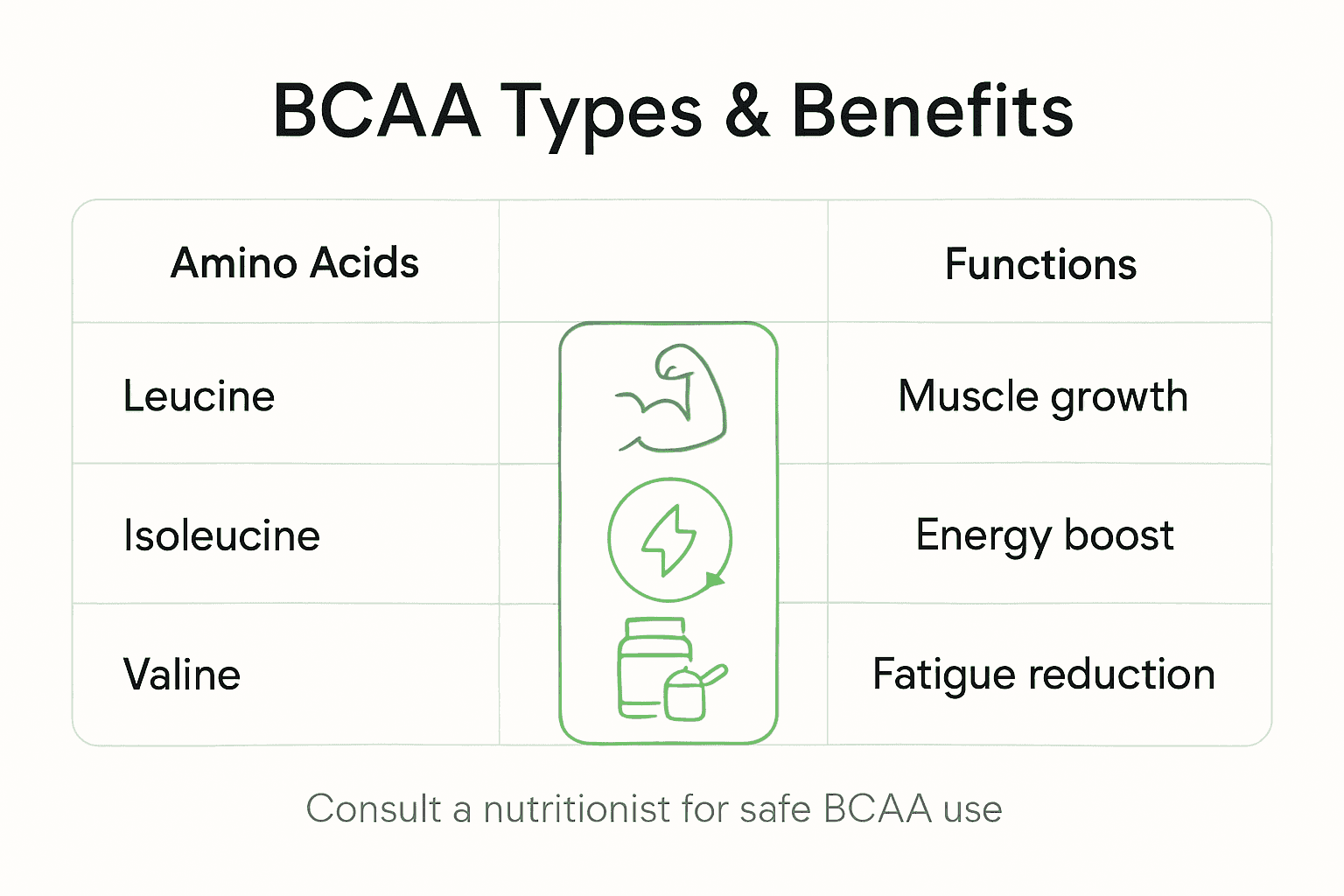
Pro tip: Consider consuming BCAAs in a balanced ratio of 2:1:1 (leucine:isoleucine:valine) to optimise muscle recovery and performance potential.
Here is a summary of the unique roles of each BCAA:
| Amino Acid | Primary Function | Exercise Benefit |
|---|---|---|
| Leucine | Initiates protein synthesis | Stimulates muscle growth |
| Isoleucine | Supports glucose uptake | Enhances energy supply |
| Valine | Aids tissue repair | Reduces metabolic stress |
BCAA Benefits For Muscle Growth And Repair
Branched-chain amino acids (BCAAs) play a critical role in muscle protein metabolism, offering significant advantages for bodybuilders and athletes seeking optimal muscle growth and recovery. Comprehensive research from Cambridge University reveals that BCAAs can activate molecular pathways responsible for muscle protein synthesis, particularly through the mTOR signalling mechanism.

The primary mechanism of BCAA action involves reducing muscle protein breakdown while temporarily increasing protein synthesis. Leucine emerges as the most potent amino acid in this process, directly stimulating muscle protein synthesis pathways. However, researchers emphasise that BCAAs work most effectively when combined with complete protein sources, rather than being used as an isolated supplement. This nuanced understanding suggests that BCAAs are most beneficial as part of a comprehensive nutritional strategy for muscle development and recovery.
Systematic review evidence indicates that BCAA supplementation provides measurable benefits in reducing muscle damage markers and alleviating delayed onset muscle soreness (DOMS). The most significant improvements are observed with consistent, higher daily intake and when BCAAs are integrated with resistance training programmes. These findings highlight the importance of strategic supplementation in supporting muscle repair and minimising post-exercise recovery time.
Pro tip: Combine BCAA supplementation with a balanced protein intake and consistent resistance training to maximise muscle recovery and growth potential.
Optimal Timing And Usage For Athletes
BCAA supplementation requires strategic timing to maximise muscle recovery and performance potential. Systematic research reviews demonstrate that athletes can benefit from carefully planned supplementation across different exercise phases, with recommended daily intake ranging between 10 to 20 grams distributed strategically throughout training sessions.
The optimal BCAA consumption strategy involves three critical periods: pre-workout, intra-workout, and post-workout. Pre-workout intake can help prime muscles and reduce potential fatigue, while intra-workout consumption supports energy maintenance during extended physical activities. Post-workout supplementation becomes crucial for accelerating muscle protein synthesis and initiating the recovery process. Evidence from nutritional research indicates that these strategic consumption windows can significantly enhance muscle repair and growth mechanisms.
Athlete-specific factors such as training intensity, body weight, and individual metabolic responses play important roles in determining precise BCAA supplementation protocols. Professional athletes typically personalise their approach by adjusting dosage and timing based on specific training objectives, workout duration, and individual physiological responses. This personalised strategy ensures that BCAA supplementation delivers targeted support for muscle metabolism and recovery processes.
Pro tip: Consult with a sports nutritionist to develop a personalised BCAA supplementation strategy tailored to your specific training goals and physiological requirements.
Risks, Side Effects And Safe Dosing
BCAA supplementation, while generally considered safe, requires careful consideration of potential risks and appropriate dosage guidelines. Scientific reviews highlight potential metabolic implications of excessive or indiscriminate usage, suggesting that individualised and measured approaches are crucial for maintaining optimal health.
Official safety guidance recommends adults limit total BCAA supplement intake to specific daily quantities. Detailed research from regulatory bodies indicates the ideal consumption levels as approximately 8.2 grams per day, with precise ratios recommended: leucine at 4 grams, isoleucine at 2.2 grams, and valine at 2 grams. Exceeding these recommended levels can potentially lead to undesirable physiological responses, including elevated blood ammonia levels and potential exacerbation of pre-existing metabolic conditions.
Certain populations require additional caution when considering BCAA supplementation. Pregnant women, children, individuals with kidney disorders, and those with compromised metabolic function should consult healthcare professionals before initiating any supplement regimen. The potential risks include disrupted insulin sensitivity, increased cardiovascular stress, and metabolic imbalances, particularly when supplements are consumed without professional guidance or in excessive quantities.
Pro tip: Always consult a healthcare professional and undergo periodic metabolic screenings when implementing long-term BCAA supplementation strategies.
Review this comparison of safe vs. risky BCAA supplementation practices:
| Practice | Safe Approach | Risky Approach |
|---|---|---|
| Dosage | 8.2g total BCAAs daily | Exceeding recommended daily amounts |
| Population Suitability | Adults with no metabolic issues | Children, pregnant women, those with kidney issues |
| Monitoring | Consult healthcare professional | No medical guidance |
| Metabolic Impact | Supports recovery and muscle health | Potential for metabolic imbalance |
Boost Your Muscle Recovery with Targeted BCAA Support
Struggling to fully recover after intense bodybuilding sessions? The article highlights the importance of the precise timing and balanced intake of branched-chain amino acids to reduce muscle soreness and accelerate muscle repair. If your goal is to enhance muscle growth while minimising fatigue, focusing on supplements that supply leucine, isoleucine, and valine in an optimal ratio is crucial. Avoid delays in recovery and muscle breakdown by giving your body exactly what it needs to rebuild stronger.

Explore the extensive selection of high-quality amino acid products and recovery aids at MyGymSupplements.shop. Whether you want to shop by muscle gain goals or browse our range of performance recovery supplements, you will find scientifically formulated options designed to amplify your results. Act now to support your muscle protein synthesis pathways effectively and feel the difference in your next workout cycle.
Frequently Asked Questions
What are BCAAs, and how do they benefit bodybuilding recovery?
BCAAs, or branched-chain amino acids, consist of leucine, isoleucine, and valine, which are essential for muscle metabolism. They aid in reducing muscle protein breakdown and promote protein synthesis, ultimately enhancing muscle recovery after workouts.
When is the best time to take BCAAs for optimal recovery?
The optimal timing for BCAA supplementation includes three key periods: pre-workout to prime muscles, intra-workout to maintain energy levels, and post-workout to speed up muscle protein synthesis and recovery processes.
Are there any risks associated with BCAA supplementation?
While BCAAs are generally safe, excessive intake can lead to potential health issues such as elevated blood ammonia levels and metabolic imbalances. It’s crucial to consult healthcare professionals for personalized dosage recommendations.
What is the recommended daily dosage for BCAA supplementation?
The ideal BCAA daily intake is approximately 8.2 grams, with a suggested ratio of leucine at 4 grams, isoleucine at 2.2 grams, and valine at 2 grams. It’s essential to adhere to these guidelines to avoid adverse effects.
Recommended
- 7 Key Benefits of BCAA Supplementation for Fitness Success – MyGymSupplements
- Branched Chain Amino Acids Explained: Benefits and Uses – MyGymSupplements
- How to Use BCAA Supplements for Optimal Muscle Recovery – MyGymSupplements
- 7 Best Amino Acids for Recovery Every Athlete Should Know – MyGymSupplements

0 comments