

Most advice about muscle supplements overlooks the science behind what truly works for British athletes. With more than 60 percent of fitness enthusiasts searching for ways to protect and grow lean muscle, understanding how Hydroxymethylbutyrate (HMB) operates can make a real difference. This guide breaks down the facts and benefits of HMB, giving British readers the practical knowledge they need to support muscle growth, speed up recovery, and make informed choices for athletic performance.
Table of Contents
- What Is HMB Supplement And How It Works
- Different Forms Of HMB Available
- Muscle Growth And Recovery Benefits
- Safety, Side Effects And UK Legal Status
- HMB Compared To BCAA And Creatine
Key Takeaways
| Point | Details |
|---|---|
| HMB’s Role in Muscle Health | HMB is a metabolite of leucine that enhances muscle protein synthesis and reduces breakdown, thus supporting muscle growth and recovery. |
| Supplement Forms | HMB is available as Calcium HMB and Free Acid HMB, with the latter offering faster absorption beneficial for quick recovery needs. |
| Safety and Dosage | HMB is generally safe at doses of 1.5 to 3 grams per day, with few side effects, making it a low-risk supplement for athletes. |
| Comparison with Other Supplements | Unlike BCAAs and creatine, HMB uniquely aids muscle recovery by protecting muscle tissue and reducing protein breakdown. |
What Is HMB Supplement And How It Works
Hydroxymethylbutyrate (HMB) is a powerful metabolite of the essential amino acid leucine that plays a crucial role in muscle protein metabolism. As a key supplement for athletes and fitness enthusiasts, HMB offers significant benefits in muscle growth, recovery, and performance enhancement. Research from academic studies, including those at the University of Nottingham, demonstrates that HMB activates muscle protein synthesis pathways with remarkable precision.
At its core, HMB functions by interacting with the body’s muscle protein synthesis mechanisms. When consumed, it triggers the mTORC1 pathway, which is responsible for stimulating muscle protein production and reducing muscle protein breakdown. This biochemical process helps athletes maintain and build lean muscle mass more effectively, especially during intense training periods or when experiencing muscular stress. The supplement works by providing a direct signal to muscle cells, encouraging growth and preventing unnecessary muscle degradation.
The practical benefits of HMB supplementation extend beyond mere muscle building. Athletes often experience enhanced recovery times, reduced muscle damage after strenuous workouts, and improved overall muscle resilience. By supporting muscle hypertrophy mechanisms, HMB helps individuals push through training plateaus and achieve more consistent muscle development. Typically recommended in dosages between 2-3 grams daily, HMB can be particularly beneficial for those engaged in high-intensity resistance training, endurance sports, or individuals looking to preserve muscle mass during calorie-restricted diets.
Different Forms Of HMB Available
Hydroxymethylbutyrate (HMB) supplements are primarily available in two distinct chemical formulations, each with unique characteristics and absorption profiles. Amino acid research reveals that these forms offer athletes and fitness enthusiasts nuanced options for muscle support.
The first form is Calcium HMB (Ca-HMB), a stable salt-based supplement that provides a consistent and reliable method of HMB delivery. Research from academic sources indicates that Ca-HMB has been extensively studied and demonstrates robust muscle protein synthesis capabilities. The calcium-bound structure allows for gradual release and sustained absorption, making it ideal for athletes seeking prolonged nutritional support.
The second variant is Free Acid HMB (HMB-FA), which presents a more rapidly absorbing alternative. According to research from the University of Nottingham, HMB in its free acid form demonstrates superior bioavailability, enabling faster plasma concentration increases compared to the calcium-bound variant. This means HMB-FA can potentially provide more immediate muscle protein metabolic support, making it particularly attractive for athletes requiring quick nutritional interventions during intense training cycles or recovery periods.
When selecting between Ca-HMB and HMB-FA, athletes should consider their specific training goals, absorption preferences, and individual physiological responses. Both forms offer significant muscle preservation and growth benefits, with the primary difference lying in their absorption rates and chemical structures. Consulting with nutrition professionals can help individuals determine which HMB supplement format best aligns with their unique fitness objectives and metabolic requirements.
Muscle Growth And Recovery Benefits
HMB supplements offer a remarkable approach to enhancing muscle performance and recovery, providing athletes with a sophisticated biochemical tool for optimising physical training outcomes. Muscle recovery research demonstrates the complex mechanisms through which HMB supports muscular adaptation and resilience.
Research from biomechanical studies reveals that HMB supplementation delivers significant physiological advantages. Metabolic studies indicate that HMB can increase muscle tetanic force, which translates to improved muscular strength and resistance against acute fatigue. The supplement enhances glycogen storage and ATP content within muscle tissues, providing athletes with greater energy reserves and more sustained performance during intense training sessions.

The recovery benefits of HMB extend beyond immediate performance metrics. By supporting protein synthesis and reducing muscle protein breakdown, HMB helps athletes maintain muscle mass during high-stress training periods. This is particularly valuable for individuals engaged in resistance training, endurance sports, or those experiencing calorie-restricted dietary regimens. The supplement acts as a biochemical guardian, protecting muscle tissue from catabolic processes and supporting rapid post-exercise recovery.
Athletes can strategically leverage HMB supplementation to optimise their training adaptations. By reducing muscle damage, accelerating recovery times, and supporting muscle protein synthesis, HMB provides a comprehensive approach to muscular development. The supplement’s ability to enhance muscle resilience makes it an invaluable tool for individuals seeking to push their physical boundaries while minimising the risk of overtraining and potential muscle degradation.
Safety, Side Effects And UK Legal Status
Understanding the safety profile and legal considerations of HMB supplementation is crucial for athletes and fitness enthusiasts seeking to optimise their nutritional strategy. Performance enhancement supplement guidelines provide valuable context for responsible supplementation.
Academic research from clinical studies suggests that HMB supplementation demonstrates an impressive safety profile. Studies indicate that doses ranging from 1.5 to 3 grams per day can be consumed without significant adverse effects, making it a relatively low-risk nutritional intervention. Importantly, research has consistently shown that HMB does not produce substantial negative physiological responses when used within recommended dosage parameters.
From a legal perspective, HMB is classified as a dietary supplement in the United Kingdom, which means it is regulated under food safety legislation rather than pharmaceutical guidelines. This classification allows for relatively unrestricted sale and personal use, provided the product meets standard nutritional supplement manufacturing requirements. Athletes should nonetheless exercise due diligence by selecting reputable brands that adhere to rigorous quality control standards and undergo independent testing.
While HMB is generally considered safe, potential users should be aware of potential mild side effects. Some individuals might experience minor gastrointestinal discomfort, particularly when first introducing the supplement. Healthcare professionals recommend starting with lower doses and gradually increasing intake, while simultaneously monitoring individual physiological responses. Individuals with pre-existing medical conditions or those taking prescription medications should always consult their healthcare provider before incorporating any new dietary supplement into their nutritional regimen.
HMB Compared To BCAA And Creatine
Understanding the nuanced differences between HMB, Branched Chain Amino Acids (BCAAs), and creatine requires a comprehensive examination of their unique biochemical properties and physiological impacts. Branched Chain Amino Acids research provides essential insights into comparative supplement strategies.
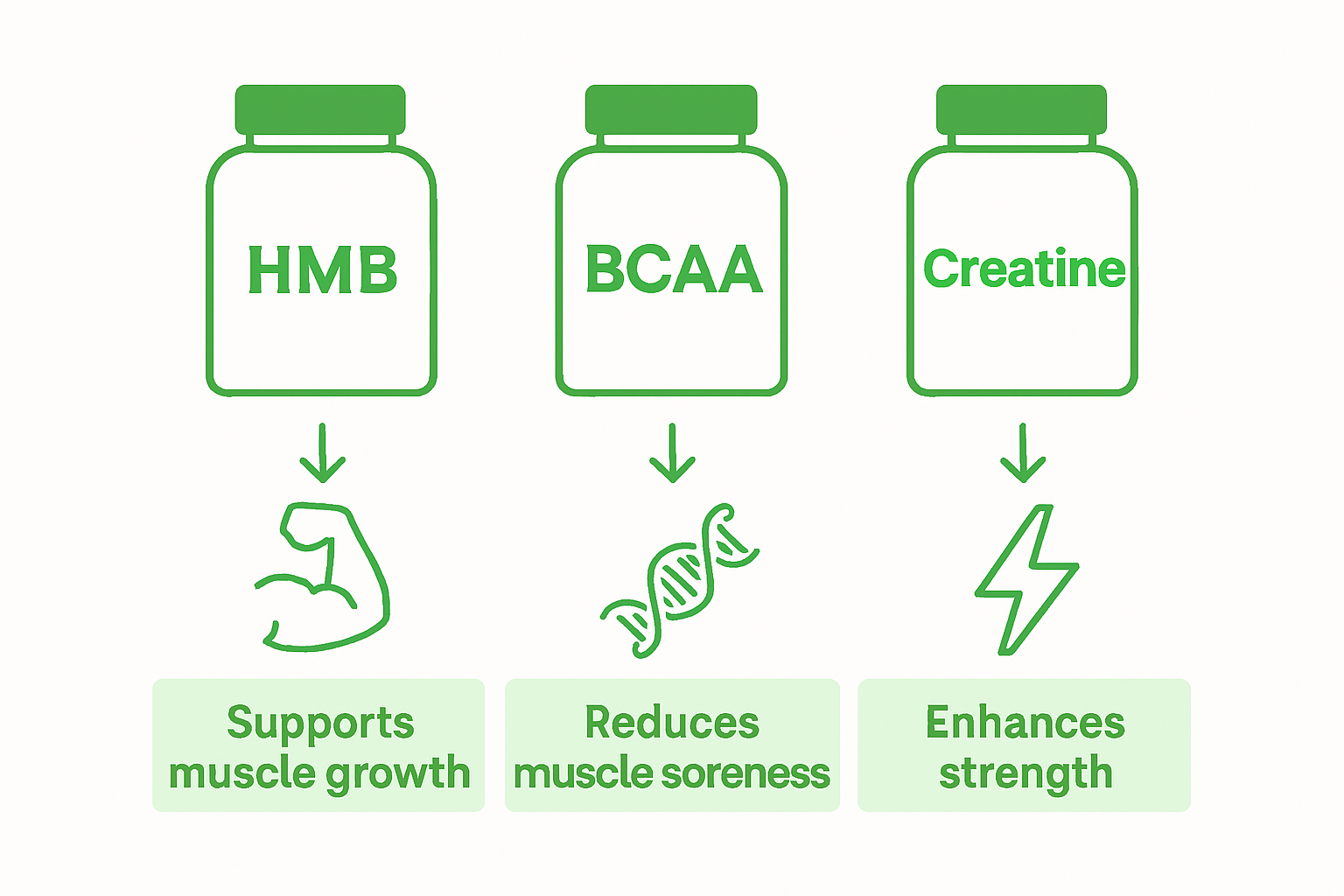
Systematic research reviews indicate that while creatine, BCAAs, and HMB can improve anaerobic performance and muscle strength, their mechanisms of action differ significantly. HMB, uniquely positioned as a leucine metabolite, offers distinctive muscle recovery and regeneration benefits. Scientific investigations demonstrate that HMB stimulates satellite cell proliferation and survival, making it particularly effective for muscle tissue regeneration.
Branched Chain Amino Acids primarily function as direct protein building blocks, providing immediate amino acid resources for muscle protein synthesis. Creatine, conversely, focuses on enhancing phosphocreatine energy systems, improving high-intensity performance and power output. HMB distinguishes itself by acting as a muscle protective and regenerative agent, supporting cellular repair mechanisms and reducing muscle protein breakdown more comprehensively than traditional amino acid supplements.
Ultimately, these supplements are not mutually exclusive but can be strategically combined to maximise athletic performance. Athletes seeking comprehensive muscle development might consider integrating HMB with BCAAs and creatine, leveraging their complementary biochemical actions. Each supplement offers unique benefits, with HMB providing exceptional muscle recovery and protective properties that set it apart from traditional amino acid and energy metabolism supplements.
Unlock Your Full Muscle Growth Potential with HMB Support
Struggling with muscle recovery, managing training fatigue or pushing through plateaus is a common challenge for dedicated athletes and fitness enthusiasts. This article highlights how HMB supplements activate muscle protein synthesis and protect against muscle breakdown, ensuring faster recovery and sustained muscle gains during intense workouts or calorie-restricted diets. By understanding the benefits of both Calcium HMB and Free Acid HMB forms, you can tailor your supplement choice to maximise absorption and see real muscle growth results.
Explore the best supplements for muscle building and recovery at MyGymSupplements.shop where you can find scientifically backed products designed to support your goals. Whether you want to enhance performance with amino acids, stabilise recovery with creatine, or experience the muscle-preserving benefits of HMB, our wide selection caters to every training need.
Take control of your muscle health today by visiting MyGymSupplements.shop and discover targeted solutions that help you rebuild stronger muscles faster and stay ahead in your fitness journey. Shop now to experience safe, effective supplementation tailored for peak athletic performance.
Frequently Asked Questions
What is HMB supplement and how does it work?
HMB (Hydroxymethylbutyrate) is a metabolite of the amino acid leucine that enhances muscle protein synthesis and reduces muscle breakdown. It activates the mTORC1 pathway, promoting muscle growth and aiding recovery, particularly during intense training.
What are the different forms of HMB available?
HMB supplements come in two main forms: Calcium HMB (Ca-HMB), which provides a gradual release and sustained absorption, and Free Acid HMB (HMB-FA), which is rapidly absorbed and offers immediate support for muscle metabolism. Each form has unique benefits depending on an individual’s needs.
What benefits does HMB provide for muscle growth and recovery?
HMB supplementation supports significant muscle gains and recovery by increasing muscle strength, reducing muscle damage, enhancing glycogen storage, and promoting rapid recovery after exercise. It is especially beneficial for those engaged in high-intensity training or calorie-restricted diets.
Is HMB safe and are there any side effects?
Research indicates that HMB is safe for consumption at doses ranging from 1.5 to 3 grams per day, with minimal side effects. Some individuals may experience minor gastrointestinal discomfort when first taking the supplement, so starting with lower doses is advisable.
Recommended
- Unleash Your Gains: Unlock Massive Muscle Growth with USN Hyperbolic Mass – MyGymSupplements
- 7 Key Benefits of BCAA Supplementation for Fitness Success – MyGymSupplements
- What is Muscle Hypertrophy? Understanding Its Importance – MyGymSupplements
- 7 Key Nutrients for Muscle Growth Every Athlete Needs – MyGymSupplements
- Intra-Workout Supplements: Everything You Need to Know – Interval

0 comments