

Every serious lifter in the United Kingdom knows the pursuit of better recovery and greater vascularity never stops. Nitric oxide has captured the attention of British athletes aiming to maximise each session, yet confusion around its role and safety still lingers. By understanding how nitric oxide functions as a critical signalling molecule—not just a trend—you can make smarter supplement choices that truly support performance, recovery, and visible muscle definition.
Table of Contents
- Nitric Oxide Defined and Common Myths
- How Nitric Oxide Works in the Body
- Natural Sources and Supplement Options
- Performance Benefits for UK Athletes
- Potential Risks and Safe Supplementation
Key Takeaways
| Point | Details |
|---|---|
| Understanding Nitric Oxide’s Role | Nitric oxide is vital for blood flow, muscle endurance, and cognitive function, produced naturally by the body. |
| Common Myths Debunked | Nitric oxide is not toxic, and its levels are self-regulated; supplementation supports natural functions rather than maximising gains. |
| Effective Supplementation | Timing supplements 30-60 minutes before training optimises nitric oxide availability, enhancing workout performance. |
| Natural Sources | Foods like beetroot and leafy greens can boost nitric oxide levels, but supplementation is often necessary for performance gains during intense training. |
Nitric Oxide Defined and Common Myths
Nitric oxide is far more than the hype suggests. It’s a free radical molecule composed of a single nitrogen atom bonded with a single oxygen atom, operating as a critical signalling molecule throughout your body. Your cells produce it naturally, and it plays starring roles in blood pressure regulation, brain signalling, and immune defence.
Your body manufactures nitric oxide through the enzyme nitric oxide synthase (NOS). This isn’t random or chaotic. Cornell researchers discovered a molecular “gate” that regulates NO production, meaning your body maintains balanced nitric oxide levels through sophisticated calcium-sensing mechanisms.
What Nitric Oxide Actually Does
Nitric oxide triggers vasodilation, which widdens your blood vessels. Wider vessels mean better blood flow, more oxygen delivery to muscles, and that sought-after pump. It also acts as a neurotransmitter, supporting brain function and nerve signalling.
Here’s what happens during workouts:
- Blood vessels relax and expand
- Oxygen and nutrient delivery improves significantly
- Muscle endurance and performance increase
- Recovery processes speed up naturally
- Strength gains become more achievable
Your body doesn’t produce an unlimited supply of nitric oxide—it’s tightly regulated through enzymatic control, not a free-for-all process.
Common Myths About Nitric Oxide
Myth number one: nitric oxide is toxic. Wrong. NO is a critical biological mediator, not just a harmful gas. Your body uses it for essential physiological processes, and supplementing actually supports natural function.
Myth number two: more nitric oxide equals more gains. Your body self-regulates NO levels through enzymatic switching mechanisms. You can’t simply stack extra NO indefinitely—your cells control production to maintain balance.
Myth number three: nitric oxide boosters work instantly. They don’t. Your body needs time to utilise precursors like L-arginine and beetroot extract. Expect results over days and weeks, not hours.
Myth number four: nitric oxide only affects pumps. False. It influences blood pressure, endothelial function, recovery speed, and even cognitive performance during intense training.
Why This Matters for Your Training
When you’re chasing performance gains, understanding how nitric oxide works changes your approach. You’ll choose supplements that genuinely support NO production rather than falling for marketing nonsense.
The science backs this up: proper nitric oxide function enhances oxygen utilisation, which directly translates to better workout performance, faster recovery, and improved vascularity—the visible benefits UK bodybuilders actively pursue.
Pro tip: Space your nitric oxide boosters consistently rather than timing them haphazardly; your body responds better to steady supplementation that supports sustained NO production rather than sporadic dosing.
How Nitric Oxide Works in the Body
Nitric oxide operates as a chemical messenger, not a passive bystander. Your cells produce it continuously through the nitric oxide synthase (NOS) enzyme, which acts like a sophisticated control centre. This enzyme uses calcium sensing to regulate production, switching NO generation on and off based on your body’s immediate needs.
When you start exercising, calcium levels spike in your endothelial cells—the cells lining your blood vessels. This triggers NOS to increase NO production. Your body doesn’t flood your system with unlimited nitric oxide; instead, it maintains precise balance through electron flow control within the enzyme itself.

The Cascade Effect During Training
Here’s what happens when NO is released into your bloodstream:
- Smooth muscle cells in blood vessels receive the signal
- Vessels relax and widen (vasodilation)
- Blood pressure drops slightly and locally
- Oxygen-rich blood floods to working muscles
- Nutrient delivery accelerates dramatically
- Waste product clearance improves
This cascade happens within seconds. Your muscles receive more oxygen precisely when demand peaks, enhancing endurance and delaying fatigue.
Nitric Oxide and Metabolic Performance
NO influences multiple metabolic pathways including glycolysis, fatty acid breakdown, and the TCA cycle. At moderate levels, nitric oxide boosts mitochondrial efficiency—essentially improving how your cells convert fuel into usable energy.
Your mitochondria are your cellular power plants. When NO is present in the right amounts, these organelles work harder and smarter. You get better energy production without working proportionally harder, which translates to improved training capacity.
Elevated NO levels can actually inhibit certain metabolic pathways, highlighting why balance matters more than maximisation.
Why Supplementation Supports This Process
Your body creates nitric oxide from precursor molecules like L-arginine and L-citrulline. Modern nitric oxide boosters provide these precursors, removing the bottleneck. Your NOS enzyme then converts them into NO, supporting the natural cascade.
Beetroot extract, for instance, works differently—it provides nitrates that convert to nitric oxide through bacterial action in your mouth and stomach. Both approaches enhance NO availability within your physiological boundaries.
Understanding nitric oxide’s benefits for strength athletes reveals how this molecule directly supports your training goals through improved blood flow and cellular energy production.
Pro tip: Time your nitric oxide boosters 30-60 minutes before training; this window allows precursors to convert to active NO right when your muscles demand maximum blood flow and oxygen delivery.
Natural Sources and Supplement Options
Your body produces nitric oxide from L-arginine, an amino acid your cells synthesise naturally. The challenge is that dietary intake alone often doesn’t provide enough substrate for peak performance during intense training. This is where strategic supplementation becomes practical, not just optional.
Your body synthesises NO enzymatically from L-arginine, but cofactors like NADPH must be present for the process to work efficiently. When you supplement wisely, you’re removing bottlenecks in this natural pathway, not overriding it.
Natural Food Sources
You can increase nitric oxide availability through diet alone, though it requires consistency. Here are reliable sources:
- Beetroot and beetroot juice (highest natural nitrate content)
- Leafy greens like spinach and kale
- Rocket and other cruciferous vegetables
- Watermelon (contains citrulline, a NO precursor)
- Dark chocolate and cocoa
- Garlic and onions
The problem with food sources is volume. You’d need substantial quantities daily to match supplemental benefits, making consistency difficult during heavy training blocks.
Natural nitrate sources like beetroot work differently—bacteria in your mouth convert dietary nitrates into nitric oxide through a well-documented biochemical pathway.
Supplement Options for Performance
Modern nitric oxide boosters use several proven approaches:
L-arginine and L-citrulline supplements directly supply the substrate your NOS enzyme needs. Citrulline is particularly effective because it converts to arginine in your kidneys, providing sustained NO production.
Beetroot extract supplies concentrated nitrates, bypassing the need for fresh produce volume. This option suits athletes managing strict meal plans.
Nitrate salts (sodium nitrate, potassium nitrate) offer direct NO precursors for rapid absorption. These work within 30-90 minutes, perfect for pre-workout timing.
Here is a summary comparing major nitric oxide booster supplement types and their unique features:
| Supplement Type | How It Increases NO | Typical Onset Time | Best Suited For |
|---|---|---|---|
| L-arginine Supplement | Direct substrate to NOS | 60-90 minutes | Daily users seeking baseline NO |
| L-citrulline Supplement | Converts to arginine in kidneys | 45-60 minutes | Sustained NO levels for endurance |
| Beetroot Extract | Nitrate-nitrite-NO pathway | 30-90 minutes | Acute performance, plant-based |
| Nitrate Salts | Rapidly absorbed nitrates | 30-60 minutes | Quick boost before exercise |
Choosing Quality Supplements
When selecting nitric oxide boosters, prioritise tested products from reputable suppliers. MyGymSupplements stocks verified brands with transparent ingredient lists and third-party testing. This matters because quality directly impacts bioavailability and results.
When introducing supplements for beginners safely, start with single-ingredient products to assess tolerance, then layer in complementary options once you understand your response.
Check dosages carefully. L-arginine typically requires 3-6 grams daily for measurable effects. Beetroot extract varies by concentration, so follow product-specific guidance.
Pro tip: Combine a nitrate source (beetroot) with L-citrulline for synergistic effects—beetroot handles acute vasodilation whilst citrulline supports sustained NO production throughout your workout.
Performance Benefits for UK Athletes
Nitric oxide doesn’t just improve aesthetics—it directly enhances how your body performs under load. For UK athletes pushing serious training volumes, the performance gains are measurable and consistent across multiple physiological domains.
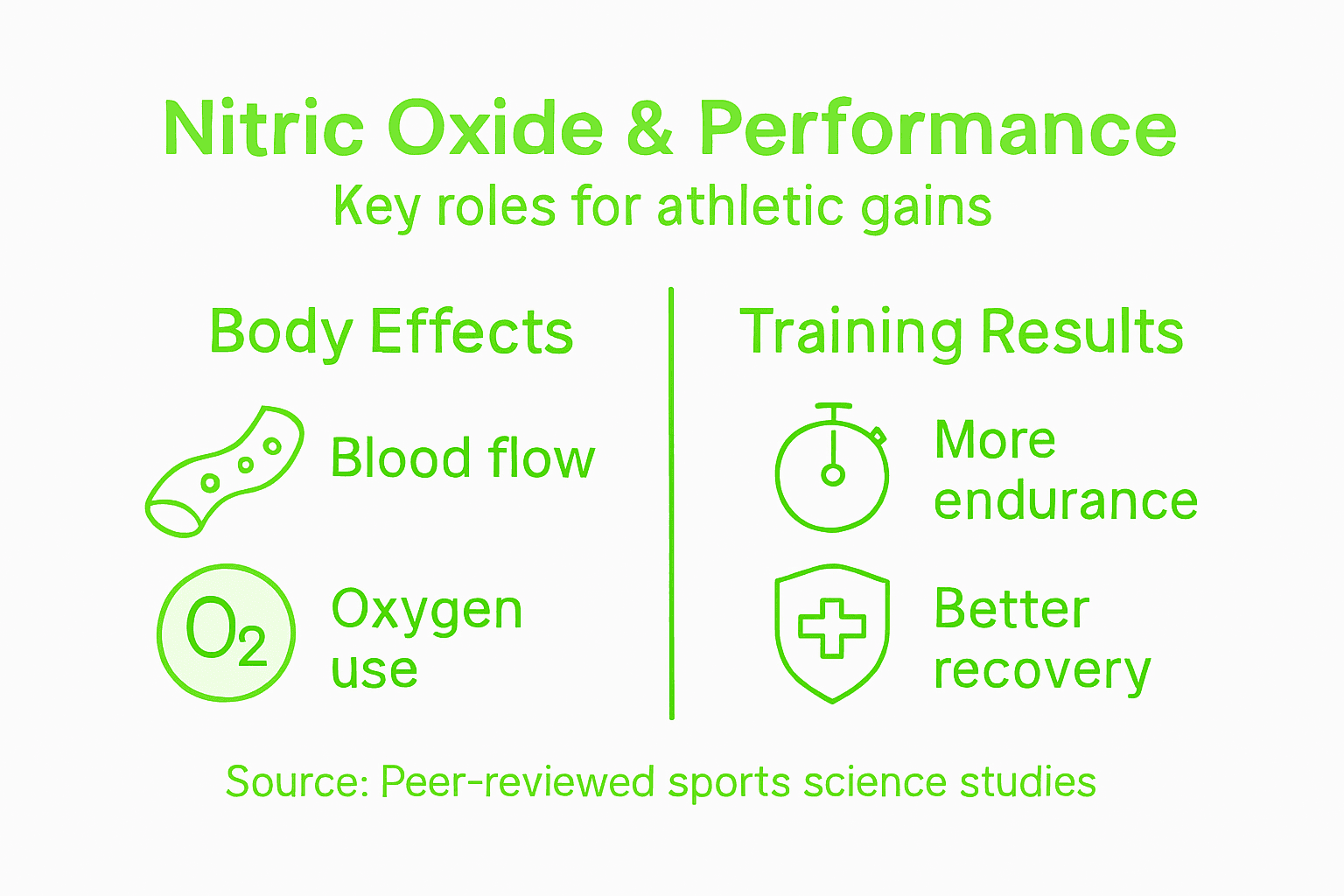
When you boost nitric oxide availability, your muscles receive oxygen faster and more efficiently. Beetroot juice enhances oxygen uptake kinetics, accelerating how quickly your muscles utilise available oxygen during intense efforts. This translates to more reps completed, heavier loads managed, and better tolerance during brutal training sessions.
Direct Performance Improvements
Here’s what nitric oxide supplementation delivers for UK-based lifters:
- Increased muscular endurance during high-rep sets
- Faster oxygen delivery to working muscles
- Improved exercise tolerance and work capacity
- Reduced perceived effort at given intensities
- Better pump and vascularity mid-workout
- Enhanced recovery between sets
These aren’t theoretical benefits. Athletes using nitric oxide boosters consistently report managing higher training volumes with better form and less fatigue accumulation.
Energy Production and Metabolic Efficiency
NO regulates cellular metabolism affecting glycolysis and mitochondrial efficiency. When nitric oxide levels are optimised, your cells match energy production to actual demands more precisely.
Your mitochondria work smarter, not just harder. This means sustained power output, fewer energy crashes mid-workout, and better nutrient utilisation from your food and supplements.
Moderate nitric oxide elevation enhances oxygen utilisation during exercise, directly supporting sustained athletic performance and improved training outcomes.
Real-World Training Applications
During heavy strength blocks, improved oxygen delivery means better rep quality and reduced fatigue during compound movements. Hypertrophy phases benefit from enhanced pump and nutrient delivery to muscle tissue. Conditioning work becomes sustainable at higher intensities because oxygen utilisation improves significantly.
UK athletes competing in strength sports, bodybuilding, and CrossFit-style training all experience tangible benefits. The improved blood flow reduces recovery time between sessions, allowing more frequent training without performance degradation.
Combining Nitric Oxide with Training Strategy
Nitric oxide boosters amplify the benefits of pre-workout energy drinks when stacked properly. Caffeine increases focus and power output whilst nitric oxide optimises oxygen delivery—they work in different pathways, creating synergy.
Timing matters. Take your nitric oxide supplement 30-60 minutes before training to allow conversion and absorption. Your cardiovascular system will be primed exactly when training intensity peaks.
Pro tip: Track your lift numbers and rep counts before and after starting nitric oxide supplementation—most UK athletes see 1-3 additional reps per set within 2-3 weeks, clear evidence the supplement is working.
Potential Risks and Safe Supplementation
Nitric oxide supplementation is safe when done properly, but confusion exists because people conflate dietary nitric oxide boosters with nitrous oxide (laughing gas). These are completely different compounds with different risk profiles. Understanding this distinction is critical before you start supplementing.
Nitrous oxide—the recreational drug and medical anaesthetic—carries real neurological risks. Excessive nitrous oxide use can cause B12 deficiency and peripheral neuropathy. However, this is not what fitness supplements contain. You’re not taking laughing gas when you supplement with beetroot extract or L-citrulline.
The following table highlights differences between nitric oxide boosters and nitrous oxide to clarify common confusion:
| Factor | Nitric Oxide Boosters | Nitrous Oxide (N2O) |
|---|---|---|
| Main Use | Sports supplementation | Medical anaesthesia, drug use |
| Physiological Action | Vasodilation, cell signalling | Recreational euphoria, sedation |
| Safety at Correct Dose | Safe when used as directed | Neurological risks if abused |
| Form | L-arginine, beetroot, citrulline | Gas (inhaled) |
What Safe Nitric Oxide Supplementation Actually Means
Dietary nitric oxide boosters work through entirely different mechanisms:
- L-arginine and L-citrulline are amino acids your body uses naturally
- Beetroot extract provides dietary nitrates (food-grade compounds)
- These convert to NO through normal physiological pathways
- Dosages remain within safe ranges when following product guidelines
- Third-party testing confirms ingredient purity and concentration
The research supporting nitric oxide supplementation for athletic performance is robust. The risks emerge only from misuse—excessive dosing or recreational abuse of nitrous oxide specifically.
Real Risks vs. Marketing Scaremongering
Legitimate concerns exist around supplement quality and ingredient verification. Not all products undergo rigorous testing. This is why sourcing from reputable suppliers matters significantly.
MyGymSupplements stocks only tested products with transparent labelling. When you read supplement labels properly, you control what enters your body.
Safe medical use and supplementation require controlled dosing, ingredient transparency, and awareness that nitric oxide boosters differ fundamentally from nitrous oxide.
Dosage Guidelines and Side Effects
L-arginine typically causes minimal side effects at 3-6 grams daily. Some users report mild gastrointestinal discomfort or headaches initially, which usually resolve quickly. L-citrulline is even better tolerated, with side effects rare at standard doses.
Beetroot extract side effects are minimal. You might notice temporary red urine or stools—completely harmless. Allergic reactions are rare but possible, as with any supplement.
When introducing supplements for beginners safely, start with lower doses to assess individual tolerance. Your body will tell you if something disagrees with you.
Who Should Consult Healthcare Professionals
If you take blood pressure medications or have cardiovascular concerns, discuss nitric oxide supplementation with your GP first. Pregnant or breastfeeding athletes should avoid supplementation without medical clearance. Those with allergies to specific ingredients need to verify product composition thoroughly.
Healthy athletes following standard dosages face minimal risk. The key is informed, cautious supplementation rather than reckless megadosing.
Pro tip: Start with single-ingredient nitric oxide products at manufacturer-recommended doses, monitor how you feel for 2-3 weeks, then adjust or stack only if you tolerate the supplement well.
Unlock Your Full Potential with Targeted Nitric Oxide Support
Understanding the role of nitric oxide in boosting blood flow, enhancing oxygen delivery, and improving muscular endurance reveals the core challenge many athletes face: how to safely and effectively elevate nitric oxide levels for maximum performance gains. If you struggle with fatigue, limited pump, or slow recovery, you are not alone. Achieving the right balance through scientifically validated precursors like L-arginine, L-citrulline, and beetroot extract is essential to support your body’s natural nitric oxide production and reach new training heights.
At MyGymSupplements.shop, we offer a curated selection of high-quality nitric oxide boosters and complementary products designed to optimise your vascularity, endurance, and recovery. Explore our range of performance recovery aids that work synergistically with nitric oxide pathways to keep you training harder and longer. Don’t settle for guesswork or low-quality supplements when your gains depend on real, proven science.
Transform your workouts today—visit MyGymSupplements.shop now to find the supplements that align perfectly with your goals and experience the confidence and energy that comes from supporting your body at the cellular level.
Frequently Asked Questions
What role does nitric oxide play in exercise performance?
Nitric oxide enhances blood flow and oxygen delivery to muscles during exercise, improving endurance, strength gains, and recovery processes.
How can I support my body’s natural production of nitric oxide?
You can support nitric oxide production by consuming foods rich in nitrates such as beetroot, leafy greens, and by supplementing with amino acids like L-arginine and L-citrulline.
When should I take nitric oxide supplements for best results?
For optimal effects, take nitric oxide supplements 30-60 minutes before training to allow time for the body to convert precursors into active nitric oxide.
Are there any risks associated with nitric oxide supplementation?
Nitric oxide supplementation is generally safe for healthy individuals when taken at recommended doses. However, those with cardiovascular concerns should consult a healthcare professional before starting supplementation.

0 comments