

Finding the right supplements can feel overwhelming, especially for British beginners aiming for safe muscle gain or quicker recovery. With so many products and conflicting advice, it is easy to lose confidence before even starting. Research shows that over 40 percent of first-time fitness supplement users in the United Kingdom feel unsure about what to buy and how to use them safely. This guide breaks down the essential steps so you can select supplements confidently and build a routine that supports your personal goals.
Table of Contents
- Stage 1: Assess Your Fitness Goals And Dietary Needs
- Stage 2: Research Suitable Supplement Options
- Stage 3: Consult A Qualified Healthcare Professional
- Stage 4: Start With Recommended Starter Supplements
- Stage 5: Monitor Your Progress And Adjust Responsibly
Quick Summary
| Key Insight | Explanation |
|---|---|
| 1. Assess fitness goals first | Understand your current fitness level and objectives to tailor your supplement approach. |
| 2. Research supplements carefully | Explore supplement types based on your specific health needs and fitness goals. |
| 3. Consult a healthcare professional | Professional advice is crucial for safe supplement use, especially considering health conditions. |
| 4. Start with basic supplements | Begin with essential vitamins and minerals to address common dietary gaps. |
| 5. Monitor and adjust regularly | Track your supplement usage and health response to ensure ongoing effectiveness and safety. |
Stage 1: Assess Your Fitness Goals and Dietary Needs
Understanding your fitness goals and nutritional requirements is the critical first step in introducing supplements safely and effectively. This process involves evaluating your current physical condition, desired outcomes, and dietary habits to create a personalised supplement strategy that supports your health and performance objectives.
Begin by conducting a comprehensive self assessment that examines your fitness baseline. Review your current exercise patterns and identify specific goals such as muscle building, weight management, endurance improvement, or overall wellness. The NHS recommends adults engage in a balanced combination of strength and cardiovascular exercises tailored to individual fitness levels. Consider factors like your current activity intensity, frequency of workouts, and any existing dietary restrictions or health conditions that might influence supplement selection.
Next, analyse your nutritional intake using guidelines from the Eatwell Guide to understand potential nutrient gaps. Evaluate your current diet’s macronutrient balance proteins, carbohydrates, and healthy fats and micronutrient content to determine where supplements might provide targeted support. This strategic approach ensures you choose supplements that complement your dietary needs rather than replacing whole food nutrition.
Top tip: Keep a detailed food and exercise journal for two weeks before selecting supplements to gain precise insights into your nutritional and fitness landscape.
Stage 2: Research Suitable Supplement Options
Navigating the world of nutritional supplements requires a strategic and informed approach to ensure you select products that genuinely support your fitness and health objectives. This stage is about understanding the landscape of supplement options while prioritising your individual nutritional needs.
Start by exploring vitamin and mineral requirements recommended by healthcare professionals. The NHS provides comprehensive guidance on different nutrients essential for optimal health, helping you identify potential gaps in your current diet. Pay close attention to recommended daily amounts and understand that supplements should complement rather than replace whole food nutrition. Consider factors such as your age, gender, activity level, and specific health goals when evaluating potential supplement choices.
Carefully research supplement types that align with your fitness objectives and dietary needs. Look for high quality products with transparent ingredient lists and third party testing. Consulting with a healthcare professional can provide personalised insights into which supplements might be most beneficial for your specific situation. Examine scientific evidence supporting supplement claims and be wary of products making exaggerated performance promises.
Top tip: Always cross reference supplement recommendations with credible medical sources and prioritise products with clear nutritional information and verified quality standards.
Here’s a quick overview of supplement types and their typical fitness applications:
| Supplement Type | Primary Benefit | Common Users |
|---|---|---|
| Multivitamins | General nutrient coverage | All fitness levels |
| Protein Powders | Muscle growth and repair | Strength athletes |
| Vitamin D | Bone health, immunity | Indoor exercisers |
| Omega-3 Fatty Acids | Joint support, heart health | Endurance athletes |
| Magnesium | Muscle recovery, sleep | Active individuals |
Stage 3: Consult a Qualified Healthcare Professional
Engaging with a qualified healthcare professional is a critical step in safely introducing supplements to your fitness and nutrition regime. This consultation serves as a crucial safeguard to ensure your supplement strategy aligns with your individual health profile and specific wellness objectives.

Schedule an appointment with a healthcare provider who can offer personalised guidance based on your medical history and current health status. Supplement safety guidance emphasises the importance of professional consultation particularly if you are pregnant, breastfeeding, managing existing health conditions, or taking prescription medications. During your consultation, be prepared to discuss your current diet, fitness goals, existing health conditions, and any medications you are currently taking.
During the consultation, your healthcare professional will assess potential interactions between supplements and existing medications, evaluate your nutritional needs, and provide tailored recommendations. They can help identify specific supplements that might benefit your health and warn you about potential risks or unnecessary purchases. Be open about your fitness goals and current lifestyle to ensure you receive the most accurate and personalised advice possible.
Top tip: Prepare a comprehensive list of your current medications, health conditions, and fitness objectives before your healthcare consultation to facilitate a more thorough and efficient discussion.
Stage 4: Start with Recommended Starter Supplements
Introducing supplements to your fitness and nutrition regime requires a thoughtful and measured approach. This stage focuses on selecting foundational supplements that provide essential nutritional support while minimising potential risks for beginners.
Begin with fundamental supplement recommendations that support general health and wellness. The Food Standards Agency suggests starting with low-dose vitamins such as vitamin D and vitamin C particularly during winter months when nutritional intake might be compromised. These starter supplements offer a gentle introduction to supplementation and can address common nutritional gaps in your diet. Consider basic multivitamins that provide a broad spectrum of essential nutrients or targeted supplements that align with your specific health and fitness objectives.
When selecting your initial supplements, prioritise quality and simplicity. Look for reputable brands with transparent ingredient lists and third party testing. Start with single ingredient or low complexity supplements to understand how your body responds. Monitor your reaction carefully and maintain open communication with your healthcare provider about any changes in your supplement regime. Remember that supplements are intended to complement a balanced diet not replace whole food nutrition.
Top tip: Begin with one supplement at a time and track your body’s response meticulously to understand its individual impact on your health and fitness journey.
Stage 5: Monitor Your Progress and Adjust Responsibly
Tracking your supplement journey requires careful attention and a systematic approach to understanding how nutritional interventions impact your overall health and fitness objectives. This stage is crucial for ensuring your supplement strategy remains safe, effective, and aligned with your evolving wellness goals.
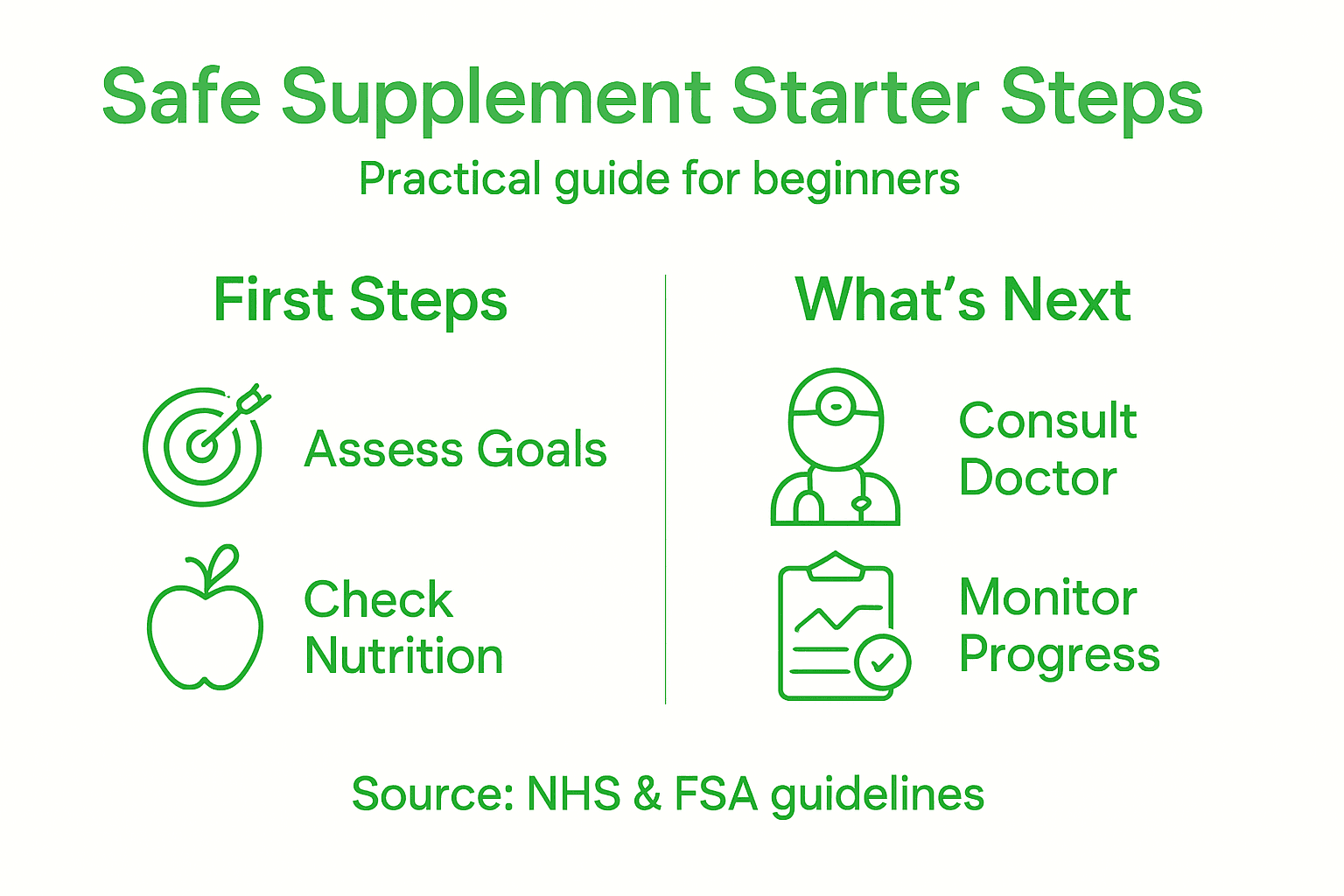
Carefully observe and document your body’s response to supplements through precise monitoring guidelines. Pay attention to both positive and potential adverse effects such as changes in energy levels, workout performance, recovery times, and any unexpected physical reactions. Keep a detailed journal recording supplement intake, dosage, timing, and corresponding physical and performance metrics. This systematic tracking will help you and your healthcare provider make informed decisions about continuing, adjusting, or discontinuing specific supplements.
Regular professional consultation remains essential throughout your supplement journey. Schedule periodic check-ups to reassess your nutritional status, review supplement effectiveness, and discuss any emerging health considerations. Be prepared to adjust your supplement regime responsibly based on professional advice, changing fitness goals, or shifts in your overall health profile. Always prioritise your body’s signals and maintain open communication with healthcare professionals who can provide personalised guidance.
Top tip: Create a digital or physical tracking system with clear columns for supplement details, dosage, timing, and daily observations to maintain comprehensive and actionable health insights.
Compare how monitoring supplements can support your health goals:
| Monitoring Method | Key Benefits | What to Track |
|---|---|---|
| Food & Exercise Log | Identifies nutrient gaps | Meals, workouts, symptoms |
| Supplement Journal | Evaluates supplement effects | Intake, dosage, reactions |
| Periodic Check-ups | Ensures safe usage | Health status, progress |
Start Your Safe Supplement Journey with Confidence
Introducing supplements safely as a beginner can feel overwhelming with so many options and crucial factors to consider such as personalised goals, quality, and dosage. This article highlights the importance of assessing your fitness objectives, consulting healthcare professionals, and monitoring your progress carefully. If you are ready to take the next step, finding trusted nutritional products that match your unique needs is essential to support your health and performance effectively.
Explore a wide range of carefully selected supplements at MyGymSupplements.shop, where you can easily browse by categories like proteins, vitamins, and recovery aids to find starter supplements perfect for beginners.
Take control of your fitness journey today with confidence by choosing quality supplements tailored to your goals. Visit MyGymSupplements.shop now to discover trusted products and start building the foundation for your safe supplement routine. Remember that beginning with the right supplements helps you progress smarter and healthier.
Frequently Asked Questions
How do I assess my fitness goals before introducing supplements?
To assess your fitness goals, begin by evaluating your current exercise patterns and identifying specific objectives, such as muscle building or weight management. Keep a food and exercise journal for two weeks to gain precise insights into your nutritional and fitness landscape.
What nutritional needs should I consider when selecting supplements?
Consider your macronutrient and micronutrient balances, such as proteins, carbohydrates, and essential vitamins. Use a reliable dietary guide to pinpoint any gaps and choose supplements that support your specific health objectives without replacing whole foods.
Why is it important to consult a healthcare professional before starting supplements?
Consulting a healthcare professional is crucial as they can assess your individual health profile and medication interactions, ensuring that your supplement strategy is safe and beneficial. Schedule a comprehensive appointment to discuss your current diet, fitness goals, and health conditions for tailored guidance.
What are some starter supplements recommended for beginners?
Beginners are often advised to start with low-dose vitamins like Vitamin D and C, which can address common nutrient gaps. Focus on high-quality, basic multivitamins or single-ingredient supplements to monitor your body’s response effectively.
How can I effectively monitor the impact of my supplements?
To monitor the impact of your supplements, maintain a detailed journal that records your intake, dosage, and any changes in your energy levels or workout performance. Review your progress every 30 days to make informed decisions about continuing or adjusting your supplement routine.
How often should I reassess my supplement needs?
Reassess your supplement needs regularly, ideally every few months or after a significant change in your health or fitness goals. Keep in touch with your healthcare provider to ensure that your supplement strategy remains aligned with your overall wellness objectives.
Recommended
- Building Workout Supplement Routine for Optimal Results – MyGymSupplements
- How to Read Supplement Labels for Optimal Health – MyGymSupplements
- How to Create Supplement Schedule for Peak Fitness Results – MyGymSupplements
- 7 Essential Tips for Using Performance Enhancement Supplements – MyGymSupplements
- New to running? No problem! Our MK Ambassador, Ania Gabb has got you covered - MK Marathon Weekend, Milton Keynes 3-4 May 2026

0 comments