

Finding the right approach to nitric oxide supplements can be confusing for UK-based bodybuilders and strength athletes. With complex science behind muscle growth, blood flow, and endurance, many overlook how nitric oxide acts as a sophisticated cellular messenger rather than just a quick fix. This overview equips you to cut through misconceptions, make informed choices about dosage, and select quality products for genuine performance and recovery benefits, all grounded in the latest research.
Table of Contents
- Defining Nitric Oxide And Common Misconceptions
- How Nitric Oxide Enhances Performance
- Forms And Sources Of Nitric Oxide Supplements
- Science Behind Muscle Growth And Blood Flow
- Risks, Side Effects, And Uk Safety Guidance
- Practical Tips On Dosing And Product Choices
Key Takeaways
| Point | Details |
|---|---|
| Understanding Nitric Oxide | Recognise nitric oxide as a complex signalling molecule essential for various physiological processes, not just a performance supplement. |
| Performance Enhancements | Leverage nitric oxide’s role in enhancing muscle oxygen delivery, blood flow, and metabolic waste removal to optimise workout performance. |
| Supplementation Sources | Consider multiple nitric oxide supplementation sources like L-Arginine, L-Citrulline, and dietary nitrates for effective performance enhancement. |
| Safety Considerations | Consult health professionals for personalised supplement strategies and monitor for potential side effects, particularly with pre-existing health conditions. |
Defining Nitric Oxide and Common Misconceptions
Nitric oxide (NO) represents a fascinating signalling molecule with profound implications for strength athletes and human physiology. As a tiny gas molecule with outsized biological impact, NO plays critical roles far beyond what many fitness enthusiasts understand.
Nitric oxide is fundamentally a free radical gas molecule produced naturally within human body systems. Complex physiological signalling functions reveal NO’s intricate involvement in numerous metabolic processes. Its primary mechanisms include:
- Facilitating blood vessel dilation
- Regulating cellular communication
- Supporting mitochondrial energy production
- Modulating immune system responses
- Enhancing neurotransmitter interactions
Contrary to popular misconceptions, nitric oxide is not a simple supplement but a sophisticated biochemical messenger. Cellular production occurs through specific enzymatic pathways involving nitric oxide synthase (NOS) enzymes, which convert amino acids into this critical signalling molecule.
Many strength athletes mistakenly view NO as merely a performance enhancer, overlooking its nuanced biological roles. Molecular complexity of nitric oxide extends far beyond rudimentary performance metrics, representing a sophisticated regulatory system within human physiology.
Pro tip: Understand nitric oxide as a complex signalling molecule, not just a workout supplement, to appreciate its true physiological potential.
How Nitric Oxide Enhances Performance
Strength athletes can leverage nitric oxide as a powerful physiological performance enhancer, with significant implications for muscular function and exercise capacity. Nitric oxide’s role in muscle performance extends far beyond simple blood flow improvement, representing a sophisticated biochemical mechanism for athletic optimisation.
The primary performance benefits of nitric oxide include:
- Enhanced muscle oxygen delivery
- Improved blood flow dynamics
- Increased mitochondrial efficiency
- Better metabolic waste removal
- Extended exercise endurance
- Accelerated muscle recovery processes
Vascular adaptation plays a crucial role in NO’s performance-enhancing capabilities. Endothelial function enhancement demonstrates how NO relaxes vascular smooth muscle, dramatically improving blood circulation and nutrient transportation to working muscle groups.
Mechanistically, nitric oxide supports strength training outcomes by modulating cellular energy production and reducing oxidative stress. This molecular signalling enables athletes to push beyond traditional performance limitations, potentially increasing repetitions, reducing fatigue, and supporting more intensive training protocols.
Athletes can strategically boost NO levels through targeted nutrition, including nitrate-rich foods like beetroot, supplementation with L-arginine or L-citrulline, and specific training methodologies that stimulate endogenous nitric oxide production.
Pro tip: Combine strategic NO-boosting nutrition with consistent resistance training to maximise your physiological performance potential.
Forms and Sources of Nitric Oxide Supplements
Strength athletes have multiple strategies for accessing nitric oxide supplements, with each approach offering unique benefits for performance enhancement. Nitric oxide precursor supplements provide targeted mechanisms for improving physiological NO production and bioavailability.
The primary sources of nitric oxide supplements include:
- L-Arginine: Direct amino acid for NO synthesis
- L-Citrulline: Precursor that efficiently converts to L-Arginine
- Dietary Nitrates: Extracted from beetroot and green vegetables
- Nitric Oxide Boosters: Complex formulations combining multiple ingredients
- Beetroot Juice: Natural, whole-food NO enhancement
- Creatine-NO Combinations: Synergistic performance supplements
Amino acid supplementation represents a sophisticated approach to NO production. Dietary nitrate sources demonstrate significant potential for enhancing nitric oxide synthesis, with individual responses varying based on metabolic factors and training status.

Comprehensive NO supplements often integrate multiple ingredients to maximise absorption and effectiveness. These formulations typically combine amino acids like L-arginine and L-citrulline with supportive minerals, antioxidants, and complementary compounds that enhance overall bioavailability and utilisation.
Athletes should consider individual metabolic differences when selecting NO supplements, recognising that personalised approaches yield more consistent performance outcomes. Factors such as training intensity, dietary habits, and genetic predispositions can significantly influence supplement efficacy.
Pro tip: Consult with a sports nutritionist to develop a personalised nitric oxide supplementation strategy tailored to your specific physiological requirements.
Here is a comparison of major nitric oxide supplement sources and their typical characteristics:
| Supplement Source | Main Mechanism | Typical Use Case | Notable Considerations |
|---|---|---|---|
| L-Arginine | Direct NO synthesis | Quick NO increase pre-training | Less effective if gut absorption is poor |
| L-Citrulline | Converts to L-Arginine | Sustained NO support | Often better tolerated than arginine |
| Beetroot/Nitrate-Rich | Dietary nitrate pathway | Whole-food based NO boost | Colour can affect urine |
| Combination Supplements | Multiple mechanisms | Enhanced NO and recovery effects | May include additional actives |
Science Behind Muscle Growth and Blood Flow
Muscle growth involves complex physiological mechanisms where nitric oxide plays a critical role in supporting metabolic and vascular adaptations. Nitric oxide’s signalling pathway demonstrates remarkable potential for enhancing skeletal muscle function and cardiovascular performance.
Key physiological processes influenced by nitric oxide include:
- Enhanced blood vessel dilation
- Improved nutrient delivery to muscle tissues
- Increased mitochondrial efficiency
- Accelerated metabolic waste removal
- Optimised oxygen utilisation
- Reduced inflammatory responses
Metabolic signalling represents a sophisticated mechanism through which nitric oxide supports muscle development. Dietary nitrate’s metabolic impact reveals intricate connections between NO production, mitochondrial biogenesis, and muscle energy metabolism.
At a cellular level, nitric oxide acts as a crucial messenger molecule, facilitating complex interactions between vascular systems and muscle tissue. This molecular communication enables more efficient nutrient transportation, improved oxygen delivery, and enhanced metabolic adaptations during resistance training.
Strength athletes can strategically leverage these physiological mechanisms by understanding how NO influences muscle growth, recognising that improved blood flow directly correlates with enhanced performance, recovery, and hypertrophic potential.
Pro tip: Integrate targeted NO-boosting nutrition and strategic training protocols to maximise your muscle’s physiological adaptation potential.
Risks, Side Effects, and UK Safety Guidance
Nitric oxide supplements present potential health considerations that strength athletes must carefully evaluate before incorporation into their nutritional regimen. Potential health risks of supplements highlight the importance of understanding individual physiological responses and potential contraindications.
Common side effects and risks associated with nitric oxide supplementation include:
- Gastrointestinal discomfort
- Potential stomach pain
- Intermittent heartburn
- Mild dizziness
- Blood pressure fluctuations
- Potential interaction with cardiovascular medications
Dosage management represents a critical factor in minimising adverse reactions. Medical safety considerations emphasise the necessity of professional medical consultation, particularly for individuals with pre-existing health conditions or those taking multiple medications.
UK regulatory guidance recommends comprehensive medical screening before implementing NO supplementation, especially for athletes with cardiovascular histories, metabolic disorders, or ongoing pharmaceutical treatments. This proactive approach ensures individual safety and mitigates potential physiological complications.
Strength athletes should adopt a measured approach, starting with lower dosages, monitoring personal responses, and maintaining transparent communication with healthcare professionals about supplement interactions and potential side effects.
Pro tip: Consult a sports medicine professional before initiating nitric oxide supplementation to develop a personalised, safe nutritional strategy.
The table below summarises key safety considerations for nitric oxide supplementation in the UK context:
| Safety Factor | Recommendation | Rationale |
|---|---|---|
| Pre-existing Conditions | Obtain professional screening | Prevent interactions or complications |
| Dosage Management | Start with lowest effective dose | Minimise potential adverse effects |
| Product Quality | Choose third-party tested brands | Ensure purity and accurate ingredient labelling |
| Monitoring | Track blood pressure and symptoms regularly | Detect side effects early for timely intervention |
Practical Tips on Dosing and Product Choices
Nitric oxide supplementation requires a strategic approach to ensure optimal performance and safety for strength athletes. Effective dosage recommendations provide crucial guidance for selecting and implementing appropriate supplementation protocols.
Recommended dosage ranges for key nitric oxide precursors include:
- L-Citrulline: 3-6 grams daily
- L-Arginine: 1500-3000 milligrams
- Dietary Nitrates: 300-600 milligrams
- Beetroot Extract: 500-1000 milligrams
- Combination Supplements: Follow manufacturer’s specific guidelines
- Timing: Typically 30-60 minutes before training
Product selection demands careful consideration of multiple factors. Nitric oxide supplement quality involves examining third-party testing, ingredient standardisation, and brand reputation in the UK market.
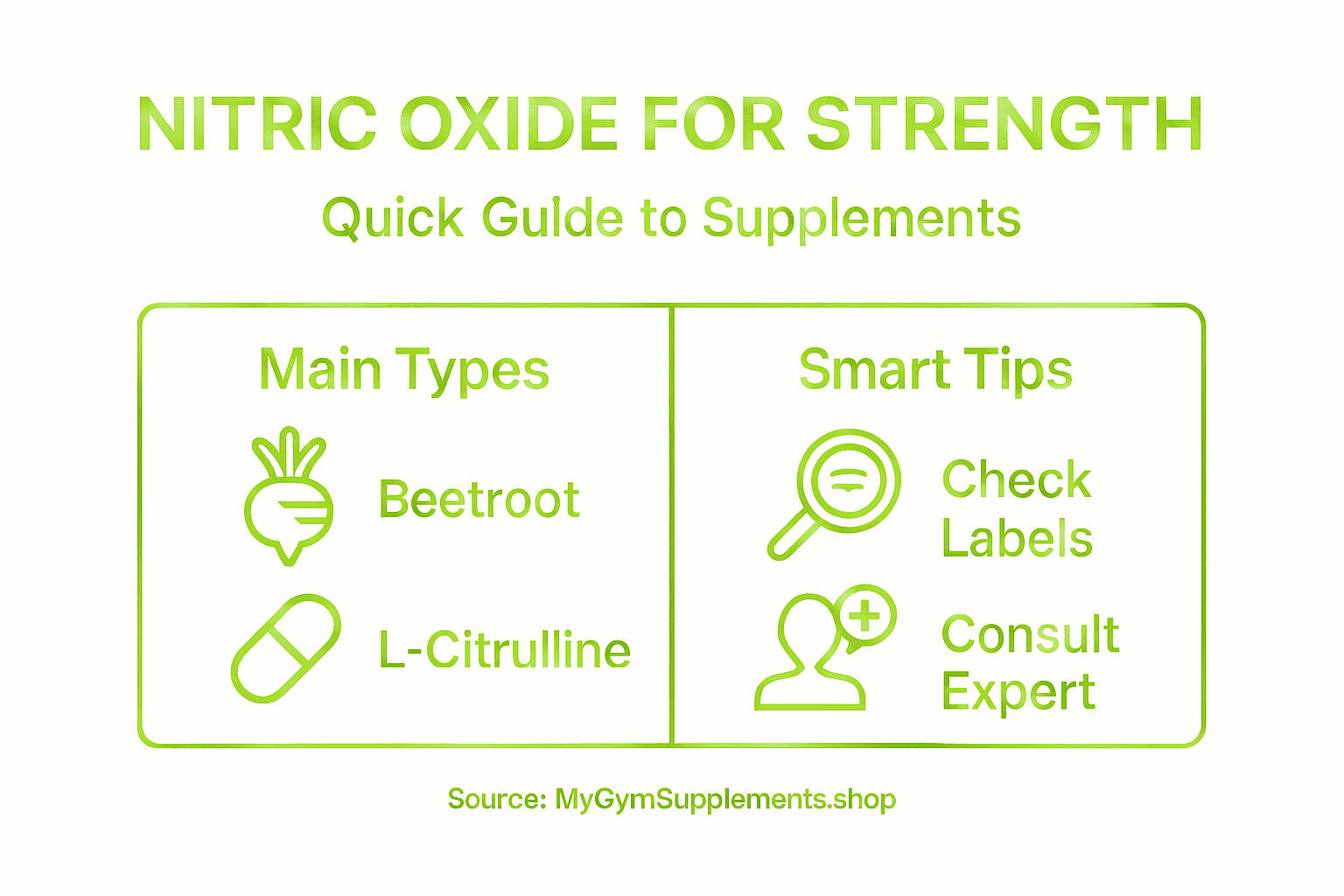
Strength athletes should prioritise supplements with transparent labelling, minimal artificial additives, and scientifically validated ingredient profiles. Natural sources like organic beetroot capsules offer an alternative to synthetic supplements, providing a more holistic approach to nitric oxide enhancement.
Individual physiological responses vary, making personalised consultation with sports nutrition professionals critical for developing an optimised supplementation strategy that aligns with specific training goals and health considerations.
Pro tip: Start with lower supplement doses and gradually increase while monitoring your body’s unique response and performance metrics.
Elevate Your Strength Training with Targeted Nitric Oxide Support
Understanding the complex role of nitric oxide in muscle growth and blood flow reveals why optimising NO levels can transform your training results. If you are striving to enhance muscle oxygen delivery, boost recovery, or push through fatigue, addressing your nitric oxide production is essential. Benefits such as improved vascular function and mitochondrial efficiency highlighted in the article are within reach when supported by strategic supplementation.
Discover a carefully curated range of nitric oxide boosters, amino acids like L-arginine and L-citrulline, and nitrate-rich natural options at MyGymSupplements.shop. Whether you seek pre-workout enhancers or comprehensive performance aids, our collection is designed to help you unlock greater endurance and faster recovery today. Don’t wait to maximise your physiological potential—explore our selection and start building a personalised NO supplementation regimen now at MyGymSupplements.shop.
Ready to enhance your muscle gains and training performance? Visit MyGymSupplements.shop to shop the latest and most effective nitric oxide supplements tailored to your goals.
Frequently Asked Questions
What is the role of nitric oxide in strength training?
Nitric oxide (NO) serves as a signalling molecule that enhances blood flow, nutrient delivery, and oxygen utilisation during strength training, which can significantly improve athletic performance and recovery.
How can I boost my nitric oxide levels naturally?
You can increase nitric oxide levels through dietary sources such as nitrate-rich foods like beetroot and green vegetables, as well as through amino acid supplementation with L-arginine or L-citrulline.
What are the potential side effects of nitric oxide supplements?
Common side effects may include gastrointestinal discomfort, stomach pain, heartburn, dizziness, and fluctuations in blood pressure. It’s essential to consult a healthcare professional before starting supplementation, especially if you have pre-existing health conditions.
How should I dose nitric oxide supplements for optimal results?
A typical dosage for L-citrulline is 3-6 grams daily, while L-arginine ranges from 1500-3000 milligrams. It is advisable to take these supplements 30-60 minutes before training, starting with lower doses and adjusting based on your body’s response.

0 comments