

Most british bodybuilders know the frustration of workouts grinding to a halt, yet fewer realise that over 60 percent of athletic performance gains are linked to optimised blood flow. Nitric oxide supplements have grabbed attention for their unique power to support both muscle pump and faster recovery, two critical factors for breaking strength and size plateaus. This guide breaks down the science and gives you a clear view of how these supplements could help british athletes unlock new levels in the gym.
Table of Contents
- Nitric Oxide Explained For UK Athletes
- Popular Supplement Types And How They Work
- How Nitric Oxide Boosts Workout Performance
- Impact On Blood Flow, Pump And Recovery
- Potential Risks And Safety Considerations
Key Takeaways
| Point | Details |
|---|---|
| Nitric Oxide’s Role | Nitric oxide enhances muscle contractility, vascular function, and metabolic efficiency, benefiting both strength and endurance athletes. |
| Supplement Types | L-arginine, L-citrulline, and nitrate-based products are key supplements that boost nitric oxide production and athletic performance. |
| Dosage and Monitoring | Athletes should begin with lower doses of nitric oxide supplements and monitor their body’s response to ensure safe use. |
| Consultation Importance | It is crucial for athletes to consult healthcare professionals before incorporating nitric oxide supplements, especially if they have existing health conditions. |
Nitric oxide explained for UK athletes
Nitric oxide (NO) represents a critical signalling molecule with profound implications for athletic performance and physiological function. As a key biochemical messenger, NO plays an essential role in modulating muscle contractility, vascular dynamics, and metabolic efficiency for athletes across strength and endurance disciplines.
The scientific understanding of nitric oxide reveals its significance as a powerful physiological regulator. Crucial skeletal muscle signalling pathways demonstrate how NO influences mitochondrial function, muscle contractility, and overall exercise performance. For UK athletes, this means potential improvements in muscular endurance, strength output, and recovery mechanisms.
Beyond performance enhancement, nitric oxide serves critical respiratory and cardiovascular functions. Research from UK institutions highlights NO’s role as a biomarker, particularly in managing exercise-induced respiratory responses. Athletes can leverage supplementation and training strategies to optimise NO production, potentially improving oxygen utilisation and reducing inflammation.
Pro Tip: Incorporate beetroot juice or l-arginine supplements strategically before training to naturally boost nitric oxide levels and potentially enhance muscular performance and recovery.
Popular supplement types and how they work
Nitric oxide supplements have become increasingly popular among athletes seeking performance enhancement, with several key precursor types dominating the market. Nitric oxide precursor supplements primarily include three major categories: L-arginine, L-citrulline, and nitrate-based products, each offering unique mechanisms for boosting NO production and improving athletic performance.
L-citrulline emerges as a particularly effective supplement, demonstrating superior conversion efficiency compared to direct L-arginine supplementation. This amino acid converts more readily in the body, promoting enhanced nitric oxide synthesis and supporting critical physiological processes such as vasodilation, improved blood flow, and increased muscle performance. Athletes can expect potential benefits in muscle hypertrophy, strength development, and overall exercise capacity.
Nitrate-based supplements, typically derived from sources like beetroot juice, provide an alternative pathway for NO production. Comprehensive supplement research reveals these supplements can enhance vascular function through both enzymatic and non-enzymatic mechanisms. By increasing nitric oxide availability, these supplements potentially improve oxygen utilisation, reduce exercise-induced inflammation, and support faster recovery processes for strength and endurance athletes.
Pro Tip: Experiment with different nitric oxide supplement types, starting with lower doses and monitoring your body’s specific response to determine the most effective strategy for your individual athletic goals.
Here’s a quick comparison of common nitric oxide supplement options for UK athletes:
| Supplement Type | Main Mechanism | Typical Sources | Notable Benefits |
|---|---|---|---|
| L-arginine | Enzymatic conversion to NO | Protein-rich foods | Supports blood flow, pump |
| L-citrulline | Efficient precursor to arginine | Watermelon, supplements | Enhances endurance, faster recovery |
| Nitrate-based | Non-enzymatic NO production | Beetroot juice, leafy greens | Improves oxygen use, reduces fatigue |
How nitric oxide boosts workout performance
Nitric oxide plays a transformative role in athletic performance, functioning as a critical biochemical messenger that enhances muscular efficiency and physiological responses during exercise. Exercise performance mechanisms demonstrate how NO significantly improves muscle contractile function, metabolism, and oxygen delivery, ultimately supporting athletes in achieving higher intensity and longer-duration workouts.
At the cellular level, nitric oxide acts as a powerful mediator that enhances muscle performance through multiple sophisticated pathways. By stimulating improved blood flow and vascular dilation, NO increases nutrient and oxygen transport to working muscles, directly contributing to improved strength and endurance. The molecule’s ability to boost muscle shortening velocity and peak power output means athletes can potentially increase their repetitions, reduce fatigue, and maintain higher performance levels during intense training sessions.
Furthermore, Nitric oxide’s physiological impacts extend beyond immediate performance improvements. The molecule stimulates mitochondrial biogenesis, enhances respiratory efficiency, and optimises the body’s redox balance. This means athletes can experience not just short-term performance gains, but also long-term adaptations that support improved recovery, reduced inflammation, and more efficient energy production during both resistance and endurance-based exercises.
Pro Tip: Combine nitric oxide supplements with strategic pre-workout nutrition and hydration to maximise absorption and enhance overall workout performance.
The table below summarises nitric oxide’s core benefits for athletic performance:
| Benefit Area | Primary Effect | Athlete Impact |
|---|---|---|
| Muscle function | Boosts contractility | Increased strength output |
| Vascular health | Supports vasodilation | Enhanced nutrient delivery |
| Metabolic efficiency | Optimises mitochondrial activity | Improved endurance and recovery |
Impact on blood flow, pump and recovery
Nitric oxide plays a pivotal role in optimising athletic performance through its profound impact on vascular function and muscle physiology. Nitric oxide boosters enhance vascular health by promoting critical physiological processes that directly influence muscle performance, blood flow, and recovery mechanisms.

At the cellular level, nitric oxide triggers vasodilation, dramatically improving blood circulation and nutrient delivery to muscle tissues. This mechanism creates the sought-after muscle pump effect, where blood vessels expand, allowing increased oxygen and nutrient transportation. Athletes experience enhanced muscle fullness, improved muscular endurance, and more efficient waste product removal, which translates to reduced fatigue and faster recovery between intense training sets.
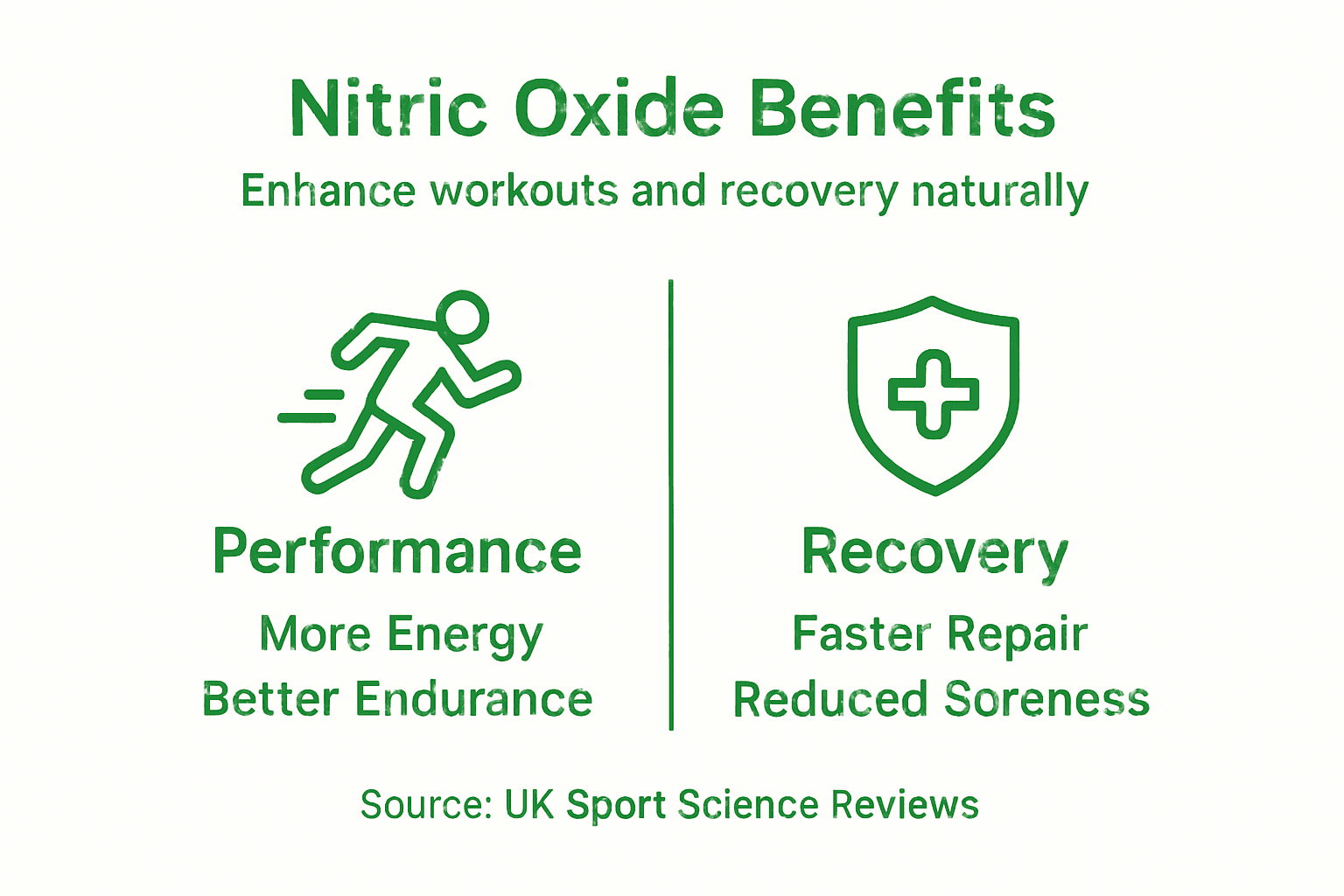
Vascular signalling mechanisms underscore nitric oxide’s comprehensive role in maintaining cardiovascular homeostasis. Beyond immediate performance benefits, NO helps regulate blood pressure, prevents thrombosis, and modulates inflammatory responses. These systemic effects mean athletes can expect not just improved workout performance, but also long-term cardiovascular health benefits that support sustained athletic development and reduced recovery times.
Pro Tip: Incorporate beetroot juice or L-citrulline supplements 30-45 minutes before training to maximise nitric oxide production and enhance muscle pump and recovery potential.
Potential risks and safety considerations
Nitric oxide supplements require careful consideration, with potential benefits balanced against possible health implications. Supplement safety profiles reveal complex interactions that demand informed and cautious approach, especially for individuals with pre-existing medical conditions.
The primary nitric oxide precursors, L-arginine and L-citrulline, can produce side effects ranging from mild gastrointestinal discomfort to more significant cardiovascular interactions. Athletes must be aware of potential risks such as blood pressure fluctuations, particularly for those managing hypertension or taking cardiovascular medications. Individuals with kidney disorders or underlying heart conditions should exercise additional caution, as supplement interactions could potentially exacerbate existing health challenges.
While clinical research continues to explore long-term impacts, current evidence suggests a nuanced approach to supplementation. Potential risks include headaches, electrolyte imbalances, and interactions with medications for diabetes, blood pressure, and erectile dysfunction. Professional athletes and fitness enthusiasts should prioritise consultation with healthcare providers, undergo comprehensive health assessments, and consider individual physiological responses before integrating nitric oxide supplements into their nutritional regimen.
Pro Tip: Always start with lower supplement doses, monitor your body’s response carefully, and maintain regular health check-ups to ensure safe and effective nitric oxide supplementation.
Unlock Your Full Potential with Nitric Oxide Supplements
If you are looking to enhance workout performance, improve your muscle pump, or accelerate recovery times, understanding how nitric oxide works is the first step. This powerful molecule supports blood flow, nutrient delivery, and endurance—key challenges for athletes aiming for consistent gains and peak performance. Whether you want to boost muscle contractility or optimise oxygen use during exercise, choosing the right supplements can make all the difference.
Discover a comprehensive range of nitric oxide boosters and performance aids crafted for your fitness goals at MyGymSupplements.shop. From L-citrulline to nitrate-based supplements, our selection targets improved vascular health and metabolic efficiency so you can train harder and recover faster. Explore our best-selling pre-workouts designed to naturally elevate nitric oxide levels and take your sessions to the next level. Start your journey today and feel the difference with every workout.
Frequently Asked Questions
What is nitric oxide and how does it benefit athletic performance?
Nitric oxide (NO) is a critical signalling molecule that enhances muscle contractility, blood flow, and metabolic efficiency, ultimately improving muscular endurance, strength, and recovery for athletes.
What types of nitric oxide supplements are available and how do they work?
Common nitric oxide supplements include L-arginine, L-citrulline, and nitrate-based products. L-citrulline is particularly effective for boosting nitric oxide levels, while nitrate-based supplements, like beetroot juice, work through alternative pathways to enhance oxygen utilisation and reduce fatigue.
How can I maximise the benefits of nitric oxide supplements for my workouts?
To maximise nitric oxide benefits, take supplements like L-citrulline or beetroot juice 30-45 minutes before training, and combine them with proper hydration and strategic nutrition to optimise absorption and enhance performance.
Are there any risks associated with nitric oxide supplementation?
Yes, potential risks include gastrointestinal discomfort, blood pressure fluctuations, and interactions with medications. It is advisable to consult with a healthcare provider before starting supplementation, especially for those with pre-existing health conditions.
Recommended
- What Is Nitric Oxide Booster – Performance and Energy – MyGymSupplements
- Unlock Peak Performance with Pump Nation Pre Workout – MyGymSupplements
- Unlock Unmatched Energy with BSN N.O.-XPLODE Formula – MyGymSupplements
- 7 Essential Types of Performance Enhancers Explained – MyGymSupplements
- Performance Optimalisatie: Alles Over De Kritische Rol | BYTE24

0 comments