

Finding the best way to recover after an intense training session can be the difference between progress and frustration. For many British bodybuilders and fitness enthusiasts, understanding the impact of leucine supplementation has become essential for improving muscle repair and performance. As this key amino acid cannot be made by the body and must come from diet or supplements, exploring the science and options behind leucine helps take the guesswork out of choosing what works best for muscle growth and nutrition goals.
Table of Contents
- What Is Leucine And Its Role
- Sources Of Leucine In Diet
- Leucine Supplement Options Explained
- How Leucine Supports Recovery And Growth
- Recommended Intakes And Safety Advice
Key Takeaways
| Point | Details |
|---|---|
| Leucine is Essential for Muscle Growth | Leucine plays a vital role in muscle protein synthesis and recovery, making it crucial for athletes and those wanting to maintain muscle mass. |
| Dietary Sources Matter | Animal-based protein sources provide higher leucine concentrations compared to plant-based options, essential for effective intake. |
| Supplementation Timing is Key | Consuming leucine-rich foods or supplements around workout times enhances muscle recovery and growth potential. |
| Consult Professionals for Safety | Before starting leucine supplementation, seek advice from healthcare professionals to ensure safe and personalised intake. |
What Is Leucine And Its Role
Leucine is a powerful essential amino acid crucial for muscle growth and recovery processes. This branched-chain amino acid plays a pivotal role in protein metabolism and serves as a critical building block for muscle development.
Understanding leucine requires exploring its unique biochemical characteristics. Essential branched-chain amino acids like leucine cannot be produced by the human body and must be obtained through diet or supplementation. Chemically, leucine features a distinctive branched molecular structure that enables unique metabolic interactions.
Key characteristics of leucine include:
- Stimulates muscle protein synthesis
- Supports muscle tissue repair
- Helps regulate blood sugar levels
- Cannot be synthesised internally
- Found in complete protein sources like meat, fish, and dairy
Research indicates that leucine stimulates muscle protein synthesis and may potentially prevent age-related muscle deterioration. Its supplementation is particularly popular among strength training athletes and older individuals seeking to maintain muscle mass.
Pro tip: Aim to consume leucine-rich foods or supplements strategically around your workout to maximise muscle recovery and growth potential.
Sources Of Leucine In Diet
Dietary leucine is predominantly found in protein-rich foods, with animal-based sources offering the most concentrated and bioavailable forms. Complete protein sources are crucial for obtaining this essential amino acid effectively.
Primary animal protein sources of leucine include:
- Chicken breast
- Beef and lean meats
- Fish and seafood
- Eggs
- Milk and dairy products
- Whey protein
Plant-based protein sources, while containing leucine, typically provide lower concentrations. These include:
- Beans
- Legumes
- Nuts
- Seeds
- Soy products
Bodybuilders and athletes require approximately 2-3 grams of leucine per meal to optimise muscle protein synthesis.
High-quality protein foods are essential for ensuring adequate leucine intake. For individuals following vegetarian or vegan diets, combining multiple plant proteins can help achieve a more complete amino acid profile.

Nutritional strategies for maximising leucine intake involve consuming varied protein sources and potentially using targeted supplementation to meet daily requirements.
Here’s a quick reference comparing animal and plant-based leucine sources and their suitability for different dietary needs:
| Protein Source Type | Typical Leucine Content | Bioavailability | Suitable For |
|---|---|---|---|
| Animal-based (e.g., chicken, beef, dairy) | High (2-3g per serving) | Excellent absorption | Omnivores, athletes |
| Plant-based (e.g., beans, soy, nuts) | Lower (0.5-1.5g per serving) | Moderate absorption | Vegetarians, vegans |
| Supplement (isolated leucine/BCAA powder) | Precise dose (2-5g per serving) | Maximum absorption | Targeted muscle support |
Pro tip: Consider consuming a protein source containing leucine within 30 minutes post-workout to support muscle recovery and growth.
Leucine Supplement Options Explained
Leucine supplements come in multiple formulations designed to support muscle recovery and protein synthesis. Amino acid supplements offer athletes and fitness enthusiasts flexible options for targeted nutritional support.
Available leucine supplement types include:
- Standalone leucine powders
- Branched-chain amino acid (BCAA) blends
- Essential amino acid (EAA) complex supplements
- Tablet and capsule formulations
- Liquid amino acid concentrates
Recommended dosage typically ranges between 2-5 grams per serving for optimal muscle protein synthesis.
Dietary supplementation strategies suggest combining leucine with other branched-chain amino acids like valine and isoleucine to maximise absorption and prevent potential metabolic imbalances.
Key considerations when selecting leucine supplements involve examining protein concentration, additional amino acid profiles, and potential interaction with existing dietary intake. Quality supplements should provide transparent ingredient information and third-party testing verification.
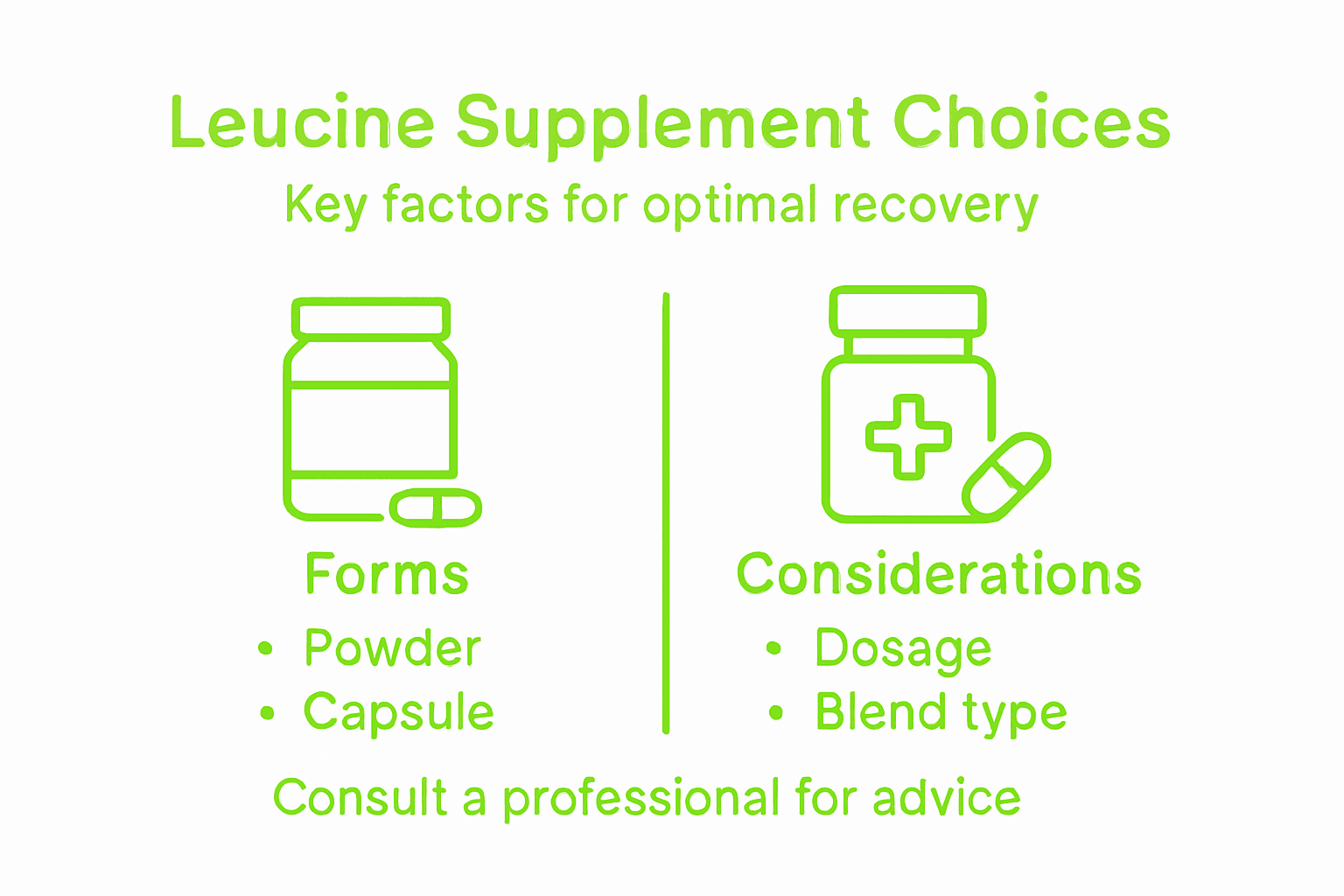
Pro tip: Consult a nutritionist or healthcare professional to determine the most appropriate leucine supplementation strategy tailored to your specific fitness goals and physiological needs.
How Leucine Supports Recovery And Growth
Muscle recovery represents a complex physiological process where leucine plays a pivotal role in supporting tissue repair and growth. Amino acids for muscle recovery are crucial for athletes seeking optimal performance and minimal downtime between training sessions.
Key mechanisms of leucine in muscle recovery include:
- Stimulating muscle protein synthesis
- Activating mTOR cellular signalling pathways
- Reducing muscle protein breakdown
- Supporting tissue repair processes
- Enhancing growth hormone production
Leucine acts as a critical trigger for muscle protein synthesis, helping athletes recover faster and more efficiently.
Muscle protein synthesis pathways demonstrate that leucine directly influences cellular mechanisms responsible for muscle growth and repair. By activating specific protein synthesis signals, leucine helps muscles rebuild and strengthen after intense physical activity.
The recovery process involves complex interactions between nutrition, cellular signalling, and metabolic processes. Leucine’s unique ability to stimulate protein synthesis makes it an essential component for athletes looking to maximise muscle adaptation and minimise recovery time.
Pro tip: Consume leucine-rich protein sources within 30 minutes post-workout to optimise muscle recovery and growth potential.
Recommended Intakes And Safety Advice
Leucine supplementation requires careful consideration of dosage and individual physiological factors. Supplement intake guidelines recommend a strategic approach to amino acid consumption.
General leucine intake recommendations include:
- Minimum intake: 55 mg per kilogram of body weight daily
- Maximum safe dose: Up to 1250 mg per kilogram without significant health risks
- Ideal timing: Around workout periods
- Balanced approach: Combine with other branched-chain amino acids
Excessive leucine consumption can lead to potential metabolic disruptions and should be approached with professional guidance.
Safe supplementation strategies emphasise the importance of understanding individual metabolic needs. Specific populations require additional caution, including pregnant women, individuals with metabolic disorders, and those with pre-existing health conditions.
Risk groups that should exercise particular care include:
- Pregnant and breastfeeding women
- Individuals with metabolic disorders
- People with kidney or liver complications
- Those on specific medication regimens
Consistent monitoring and professional medical advice remain crucial when implementing leucine supplementation into your nutritional strategy.
For clarity, here’s a summary of recommended intake and safety considerations for leucine supplementation:
| Guidance Area | Recommendation | Notes |
|---|---|---|
| Daily minimum | 55 mg/kg body weight | Adjust for activity level |
| Maximum safe dose | 1250 mg/kg body weight | Monitor for metabolic issues |
| Best timing | Around workout periods | Enhances recovery and growth |
| Risk populations | Pregnant, metabolic disorders | Seek medical advice first |
Pro tip: Always consult a healthcare professional before starting any new supplementation regimen to ensure personalised and safe nutritional support.
Unlock Your Muscle Recovery Potential with Targeted Leucine Support
Struggling with prolonged muscle soreness or slow recovery after workouts? This article highlights how leucine acts as a key trigger for muscle protein synthesis and efficient tissue repair. If you want to maximise your muscle growth and reduce downtime, understanding the right amino acid support is essential. Tailored supplementation can help meet your leucine needs precisely while complementing your broader nutritional strategy.
Explore a wide range of amino acid supplements including focused leucine and BCAA blends designed to accelerate recovery and promote muscle strength. Don’t wait to fuel your progress with scientifically supported ingredients and quality products available now at MyGymSupplements.shop. Take control of your muscle recovery today by visiting the site and choosing the perfect supplements to amplify your fitness journey.
Frequently Asked Questions
What is leucine and why is it important for muscle recovery?
Leucine is an essential branched-chain amino acid that plays a crucial role in muscle protein synthesis, promoting muscle growth and recovery after exercise.
How can I increase my dietary leucine intake?
You can increase your dietary leucine intake by consuming protein-rich foods such as meat, fish, dairy products, eggs, and legumes. Additionally, targeted supplementation with leucine or branched-chain amino acids can help meet your needs.
What is the recommended dosage of leucine for optimal muscle recovery?
The recommended dosage of leucine typically ranges from 2 to 5 grams per serving, and consuming it around workout periods can enhance recovery and muscle growth.
Are there any safety concerns with leucine supplementation?
While leucine is generally safe when taken within recommended limits, excessive consumption may lead to metabolic disruptions. It’s important to consult with a healthcare professional, especially for specific populations such as pregnant women or those with metabolic disorders.
Recommended
- 7 Best Amino Acids for Recovery Every Athlete Should Know – MyGymSupplements
- How to Use BCAA Supplements for Optimal Muscle Recovery – MyGymSupplements
- What Is Muscle Recovery? A Complete Overview – MyGymSupplements
- 7 Best Amino Acids for Recovery Every Athlete Should Know
- Biostarks | Sport Performance

0 comments