

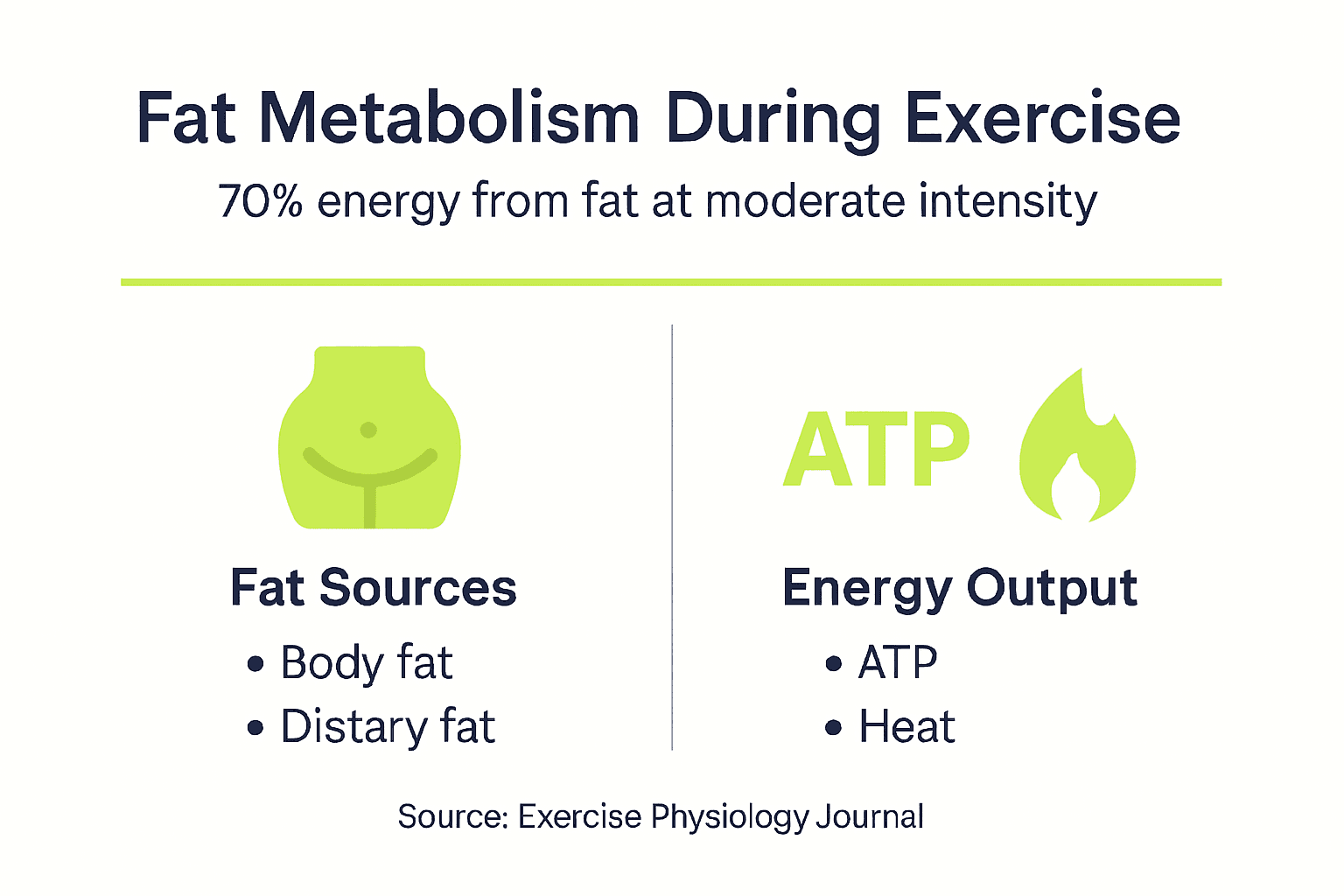
Most fitness enthusiasts believe cutting carbs or fasting is the only way to tap into fat metabolism. That’s wrong. During moderate-intensity exercise, your body can derive up to 70% of its energy from fat while maintaining adequate carbohydrate intake. Understanding how fat metabolism works unlocks smarter training, nutrition, and supplementation strategies that optimize performance without extreme dietary restrictions.
Table of Contents
- Introduction To Fat Metabolism
- Biochemical Processes Of Fat Metabolism
- Hormonal And Physiological Regulation Of Fat Metabolism
- Impact Of Exercise Intensity And Duration On Fat Utilization
- Role Of Supplements In Enhancing Fat Metabolism
- Common Misconceptions About Fat Metabolism
- Practical Applications For Fitness And Performance
- Optimize Your Fat Metabolism With Expert Supplements
Key Takeaways
| Point | Details |
|---|---|
| Fat metabolism breaks down triglycerides into fatty acids for energy | This process powers most low to moderate intensity activities through beta-oxidation and the Krebs cycle |
| Exercise intensity and duration strongly influence fat oxidation rates | Moderate intensity maximizes fat use at 60-70% of energy needs while high intensity shifts toward carbohydrates |
| Certain supplements like MCTs and green tea catechins can modestly enhance fat metabolism | Evidence shows 10-15% increases in fat oxidation with MCTs and 7-12% with catechins during exercise |
| Common myths about fat metabolism can misguide training and nutrition choices | Fasting is not required for fat oxidation, and increased fat burning does not guarantee immediate fat loss |
| Practical strategies align training, diet, and supplementation for optimal fat utilization | Timing workouts, choosing evidence-based supplements, and balancing nutrition improve metabolic flexibility |
Introduction to Fat Metabolism
Fat metabolism refers to the biochemical breakdown of triglycerides into glycerol and free fatty acids, which are then oxidized to produce energy in mitochondria through beta-oxidation and the Krebs cycle. This process provides a major fuel source for your body, especially during prolonged activities. Understanding this mechanism helps you leverage your body’s natural ability to use stored fat efficiently.
Fatty acids serve as the main substrates for energy during rest and sustained exercise. When you engage in moderate intensity activities, these molecules enter a series of metabolic pathways that convert them into adenosine triphosphate, the energy currency your cells need. The primary pathways include lipolysis, where fat stores break down, beta-oxidation, where fatty acids are cleaved into smaller units, and the Krebs cycle, where these units generate ATP.
The significance of fat metabolism cannot be overstated. Research indicates that fat oxidation can provide up to 60-70% of energy during prolonged moderate intensity exercise. This means your body is already primed to use fat as a primary fuel source without drastic dietary interventions. Recognizing this capacity sets the stage for understanding how training adaptations, hormonal regulation, and targeted supplementation can further optimize your metabolic efficiency.
Key aspects of fat metabolism include:
- Lipolysis releases fatty acids from adipose tissue into the bloodstream
- Beta-oxidation occurs in mitochondria, breaking fatty acids into acetyl-CoA units
- The Krebs cycle and electron transport chain convert acetyl-CoA into ATP
- Hormonal signals regulate the rate and extent of fat mobilization and oxidation
Biochemical Processes of Fat Metabolism
The journey from stored triglycerides to usable energy involves several coordinated steps. First, triglycerides stored in adipose tissue undergo lipolysis, separating into glycerol and three free fatty acids. Hormones like epinephrine stimulate this breakdown, particularly during exercise or fasting states. Once released, fatty acids bind to albumin, a transport protein in your blood, and travel to tissues that need energy.
Upon reaching muscle cells or other tissues, fatty acids must enter mitochondria, the cellular powerhouses where oxidation occurs. This entry requires carnitine, a molecule that shuttles long chain fatty acids across the mitochondrial membrane. Without sufficient carnitine, fatty acids cannot access the beta-oxidation machinery inside mitochondria. Once inside, beta-oxidation systematically cleaves two carbon units from the fatty acid chain, producing acetyl-CoA molecules that feed into the Krebs cycle.

The Krebs cycle further processes acetyl-CoA, generating electron carriers that drive ATP production through oxidative phosphorylation. This multi-step pathway is remarkably efficient, yielding significantly more ATP per gram than carbohydrate metabolism. Fat metabolism primarily involves the breakdown of triglycerides into glycerol and free fatty acids, which are then oxidized to produce energy in mitochondria through beta-oxidation and the Krebs cycle.
During prolonged fasting or very low carbohydrate availability, fat metabolism shifts to increased ketone body production, providing alternative fuel for muscle and brain. The liver converts excess acetyl-CoA into ketone bodies like beta-hydroxybutyrate and acetoacetate. These molecules circulate in the blood and serve as energy substrates when glucose is scarce. This metabolic flexibility demonstrates your body’s sophisticated ability to adapt fuel usage based on substrate availability.
The sequential steps of fat metabolism:
- Lipolysis breaks down triglycerides in adipose tissue into glycerol and free fatty acids
- Free fatty acids bind to albumin and travel through the bloodstream to target tissues
- Carnitine transports long chain fatty acids across the mitochondrial membrane
- Beta-oxidation cleaves fatty acids into acetyl-CoA units inside mitochondria
- The Krebs cycle and electron transport chain convert acetyl-CoA into ATP
- During fasting, excess acetyl-CoA forms ketone bodies as alternate fuel
| Step | Process | Key Molecules |
|---|---|---|
| Lipolysis | Triglyceride breakdown | Glycerol, free fatty acids |
| Transport | Bloodstream delivery | Albumin-bound fatty acids |
| Mitochondrial Entry | Carnitine shuttle | Carnitine, acyl-carnitine |
| Beta-Oxidation | Two-carbon cleavage | Acetyl-CoA |
| Krebs Cycle | ATP generation | NADH, FADH2, ATP |
| Ketogenesis | Alternative fuel production | Beta-hydroxybutyrate, acetoacetate |
Hormonal and Physiological Regulation of Fat Metabolism
Your hormonal environment dictates when and how efficiently your body mobilizes and oxidizes fat. Insulin, released after eating carbohydrates, suppresses lipolysis by signaling adipose tissue to store rather than release fatty acids. Conversely, catecholamines like epinephrine and norepinephrine, which surge during exercise or stress, stimulate lipolysis and enhance fat mobilization. Insulin inhibits lipolysis while epinephrine and other catecholamines promote fat mobilization; exercise induces shifts in these hormones enhancing fat oxidation.
Exercise intensity profoundly alters this hormonal milieu. Moderate intensity efforts elevate catecholamines enough to promote fat breakdown without triggering excessive insulin or cortisol responses. High intensity exercise, while beneficial for performance, shifts fuel preference toward carbohydrates due to rapid ATP demand that fat oxidation cannot meet quickly enough. Understanding this balance allows you to structure workouts that favor fat metabolism when that is your goal.
With consistent training, your body undergoes hormonal adaptations that improve fat usage efficiency. Endurance athletes often develop enhanced sensitivity to lipolytic signals and reduced insulin responses during exercise. This metabolic flexibility means your muscles become better at switching between carbohydrate and fat fuels based on availability and demand. Such adaptations underscore why training history matters as much as acute dietary choices.
Metabolic flexibility depends on dynamic hormonal regulation that responds to nutrient status, exercise intensity, and training adaptations. Pro tip: Timing your meals and workouts strategically can optimize the hormonal environment for fat oxidation. Exercising in a moderate postprandial state, several hours after a balanced meal, often provides the best hormonal profile for sustained fat burning without the drawbacks of fasted training.
Key hormonal influences include:
- Insulin suppresses fat breakdown and promotes storage
- Epinephrine and norepinephrine stimulate lipolysis and mobilize fatty acids
- Cortisol modulates energy availability during prolonged stress or exercise
- Growth hormone supports fat mobilization and protein synthesis during recovery
Impact of Exercise Intensity and Duration on Fat Utilization
Exercise intensity dramatically influences which fuel your body prefers. During low to moderate intensity activities, roughly 50-65% of maximal heart rate, fat oxidation can provide up to 60-70% of energy during prolonged moderate intensity exercise. This intensity zone allows oxygen delivery to keep pace with mitochondrial oxidation rates, making fat metabolism highly efficient. Activities like steady jogging, cycling, or swimming at conversational pace exemplify this ideal fat burning zone.
As intensity increases beyond moderate levels, your body shifts fuel preference toward carbohydrates. High intensity efforts require rapid ATP production that glycolysis and carbohydrate metabolism can deliver faster than fat oxidation. While this shift is necessary for performance, it reduces immediate fat use. However, high intensity training still benefits fat metabolism indirectly by improving mitochondrial capacity and metabolic flexibility over time.
Duration matters as much as intensity. Short bouts of exercise, even at moderate intensity, rely more on carbohydrate stores initially. As activity extends beyond 30 to 60 minutes, fat oxidation rates increase progressively. Endurance training enhances this adaptation significantly. Endurance training increases mitochondrial density by 20-50%, enhancing fat oxidation capacity. More mitochondria mean greater ability to process fatty acids, improving your body’s fat burning efficiency during prolonged efforts.
| Intensity Level | Fat Oxidation Rate | Primary Fuel Source | Ideal Duration |
|---|---|---|---|
| Low (40-50% max HR) | 50-60% of energy | Fat dominant | 60+ minutes |
| Moderate (50-65% max HR) | 60-70% of energy | Fat with carbs | 30-90 minutes |
| High (70-85% max HR) | 30-40% of energy | Carb dominant | 15-45 minutes |
| Very High (85%+ max HR) | 10-20% of energy | Almost all carbs | 5-20 minutes |
Pro tip: Use steady-state, moderate effort workouts lasting 45 to 90 minutes to enhance fat metabolism capacity. These sessions train your mitochondria to become more efficient at oxidizing fat while building endurance. Complement them with higher intensity intervals to maximize overall metabolic adaptations and performance gains. Linking improved energy metabolism to exercise strategy helps you design effective training plans.
Considerations for optimizing fat use:
- Moderate intensity exercise maximizes fat oxidation percentage
- Longer duration activities progressively increase fat contribution
- High intensity training builds mitochondrial capacity for future fat metabolism
- Fasted cardio may increase acute fat oxidation but is not necessary for long-term adaptations
Role of Supplements in Enhancing Fat Metabolism
Several supplements show promise for modestly enhancing fat metabolism, though effects vary among individuals. Medium chain triglycerides are fats with shorter carbon chains that your body absorbs and oxidizes more rapidly than long chain fatty acids. MCT supplementation elevated fat oxidation by approximately 10-15% during exercise trials lasting 60 minutes or more. MCTs bypass some digestive steps and go directly to the liver, where they convert quickly into energy, making them a practical choice for athletes seeking immediate fuel.
Green tea catechins, particularly epigallocatechin gallate, interact with the sympathetic nervous system to enhance lipolysis. Green tea catechins increase fat oxidation modestly by enhancing norepinephrine-induced lipolysis, with approximately 7-12% gains. These compounds inhibit an enzyme that breaks down norepinephrine, prolonging its fat mobilizing effects. While not a magic solution, green tea extract can complement a solid training and nutrition program.
Carnitine plays a crucial role in transporting long chain fatty acids into mitochondria, theoretically supporting fat metabolism. However, carnitine may aid fatty acid transport into mitochondria but shows mixed results for performance benefits. Most people produce enough carnitine endogenously, and supplementation benefits appear limited unless you have a deficiency. Still, some athletes report subjective improvements in recovery and fat utilization with carnitine supplementation.
| Supplement | Mechanism | Fat Oxidation Increase | Best Use Case |
|---|---|---|---|
| MCTs | Rapid absorption and oxidation | 10-15% | Pre-workout energy for endurance activities |
| Green Tea Catechins | Enhanced norepinephrine activity | 7-12% | Daily supplementation for modest metabolic boost |
| Carnitine | Fatty acid mitochondrial transport | Mixed evidence | Consider if deficient or for recovery support |
Pro tip: Select supplements with solid scientific backing and moderate expectations. No supplement replaces consistent training and balanced nutrition. Focus on products that align with your specific goals and have transparent ingredient profiles. Exploring safe weight loss supplements helps you make informed choices that support rather than replace foundational habits.
Practical supplement considerations:
- MCTs work best when taken 30 to 60 minutes before moderate intensity exercise
- Green tea extract provides cumulative benefits with daily use, not just acute effects
- Carnitine supplementation may benefit vegans or those with low dietary intake
- Always assess individual response and adjust based on performance outcomes
Common Misconceptions About Fat Metabolism
Many fitness enthusiasts believe fasting or severe carbohydrate restriction is necessary to stimulate fat metabolism. This is false. Moderate carbohydrate availability still allows significant fat oxidation during exercise; fasting is not mandatory for fat metabolism activation. Your body uses fat efficiently during moderate exercise even with adequate carbohydrate intake. Extreme dietary restrictions often backfire by reducing training quality and recovery capacity.
Another common myth equates increased fat oxidation during exercise with immediate fat loss. While fat oxidation describes the rate at which your body burns fatty acids for energy, fat loss depends on sustained caloric deficit over time. Fat oxidation can increase acutely without immediate reductions in body fat due to the complexity of energy balance and metabolic regulation. You might burn more fat during a workout yet gain body fat if total daily energy intake exceeds expenditure.
Fat oxidation can increase by 20-30% during a single exercise session without producing measurable changes in body fat percentage. Energy balance over days and weeks determines actual fat loss, not acute metabolic rates during individual workouts.
Supplement marketing often exaggerates fat metabolism benefits beyond what science supports. Claims of doubling fat burning or achieving rapid fat loss through pills alone lack credible evidence. Effects of validated supplements remain modest, typically in the 7-15% range for fat oxidation enhancement. Individual responses vary widely based on genetics, training status, diet, and other factors.
Debunking key myths:
- You do not need to fast or eliminate carbs to activate fat metabolism during exercise
- Higher fat oxidation during workouts does not guarantee proportional body fat reduction
- No supplement can replace consistent training, nutrition, and recovery practices
- Spot reduction through targeted fat metabolism is physiologically impossible
- Fat metabolism adaptations require weeks to months of consistent training, not quick fixes
Practical Applications for Fitness and Performance
Translating fat metabolism science into actionable strategies starts with structuring your training intelligently. Schedule regular moderate intensity workouts lasting 45 to 90 minutes to maximize fat oxidation windows and build mitochondrial capacity. These sessions should feel comfortably challenging, allowing you to maintain conversation while sustaining effort. Complement them with higher intensity intervals once or twice weekly to enhance overall metabolic flexibility and performance.
Choose supplements like MCTs or green tea catechins based on your individual goals and the strength of scientific evidence. MCTs suit athletes needing quick energy for endurance events, while green tea extract offers modest daily metabolic support. Avoid overrelying on supplements as primary fat metabolism drivers. They work best as small enhancements to solid training and nutrition foundations.
Balance your nutrition with your energy demands rather than pursuing extreme fasting or carbohydrate elimination. Moderate carbohydrate intake supports training intensity and recovery while still permitting substantial fat oxidation during appropriate exercise intensities. Timing meals to provide energy when needed and create gentle deficits when appropriate optimizes both performance and body composition over time. Understanding how to fuel athletic performance naturally supports sustainable progress.
Steps to integrate training, supplements, and diet:
- Establish a base of moderate intensity endurance training three to four times weekly
- Add one to two high intensity sessions to build metabolic flexibility and performance
- Time meals to fuel workouts adequately without excessive pre-exercise fullness
- Consider evidence-based supplements like MCTs or green tea if goals align with their benefits
- Track progress through performance metrics, not just scale weight or acute fat oxidation rates
- Adjust strategies based on individual responses, recovery capacity, and long-term sustainability
Additional practical points:
- Consistent endurance training produces greater long-term fat metabolism improvements than acute dietary manipulations
- Meal timing matters, but extreme fasting is optional and may hinder training quality
- Digital coaching tools can enhance motivation and help track metabolic adaptations
- Recovery quality affects hormonal regulation and metabolic flexibility as much as training itself
Optimize Your Fat Metabolism with Expert Supplements
Ready to take your fat metabolism and performance to the next level? Discover scientifically backed supplements designed to support your training goals at MyGymSupplements.shop. Our curated selection includes evidence-based products that enhance energy metabolism, support endurance adaptations, and complement your nutrition strategy. Learn how to build a workout supplement routine that aligns with your fat metabolism objectives and training demands. Master supplement timing to maximize benefits around workouts. Explore our safest weight loss supplements to support your goals with products backed by research and transparent ingredient profiles.
What Is Fat Metabolism? Frequently Asked Questions
What exactly is fat metabolism and how does it work?
Fat metabolism is the process where your body breaks down stored triglycerides into glycerol and fatty acids, then oxidizes those fatty acids in mitochondria to produce ATP energy. This involves lipolysis, beta-oxidation, and the Krebs cycle working together to convert fat into usable fuel for your cells.
Does fasting improve fat metabolism more than eating carbohydrates?
No, fasting is not required to activate fat metabolism. Your body can derive 60-70% of energy from fat during moderate exercise even with adequate carbohydrate intake. Moderate carb availability supports training quality while still allowing substantial fat oxidation.
Can supplements significantly boost my fat metabolism?
Certain supplements like MCTs and green tea catechins can modestly enhance fat oxidation by 10-15% and 7-12% respectively during exercise. However, these are small boosts that complement, not replace, consistent training and proper nutrition.
Why am I not losing body fat even though I am burning fat during workouts?
Fat oxidation during exercise describes how much fat you burn for immediate energy, but fat loss depends on sustained caloric deficit over time. You can increase fat burning acutely without reducing body fat if your total daily energy intake exceeds expenditure.
What exercise intensity maximizes fat metabolism?
Moderate intensity exercise at 50-65% of maximum heart rate maximizes fat oxidation, providing 60-70% of energy from fat. This intensity allows oxygen delivery to match mitochondrial oxidation rates, making fat metabolism highly efficient during sustained efforts.
How long does it take to improve fat metabolism through training?
Meaningful adaptations in mitochondrial density and fat oxidation capacity typically require 4 to 12 weeks of consistent endurance training. Improvements continue progressively over months, with trained athletes showing 20-50% higher mitochondrial density compared to untrained individuals.
Recommended
- Energy Metabolism Explained: Impact on Athletic Performance – MyGymSupplements
- Fasted Cardio: Impact on Fat Loss for UK Athletes – MyGymSupplements
- Fasted Cardio: Impact on Fat Loss for UK Athletes – MyGymSupplements
- Fat Burning Explained: Science, Supplements, and Results – MyGymSupplements
- How to Reduce Fatigue at Work: Boost Your Energy Levels – WorkWearComfort
- Schwimmen beim Abnehmen – Warum es Kindern hilft

0 comments