

Choosing the best pre workout powder shouldn’t feel like navigating a chemistry lab. Many fitness enthusiasts believe that more ingredients or higher stimulant doses automatically mean better results, yet research reveals that effectiveness depends far more on precise ingredient combinations and personalised dosing strategies. This guide cuts through the confusion by explaining exactly which ingredients work, why they matter, and how to select a pre workout powder that genuinely enhances your training energy, focus, and performance based on current scientific evidence.
Table of Contents
- What Pre Workout Powders Do And Why They Matter
- Core Ingredients Of Top Pre Workout Powders And Their Benefits
- Choosing The Best Pre Workout Powder For Your Needs
- Personalising Your Pre Workout Use For Optimal Performance And Safety
- Explore The Best Pre Workout Powders Tailored For You
- Frequently Asked Questions
Key takeaways
| Point | Details |
|---|---|
| Pre workout powders boost performance | They enhance energy, focus, and exercise capacity through scientifically validated ingredients. |
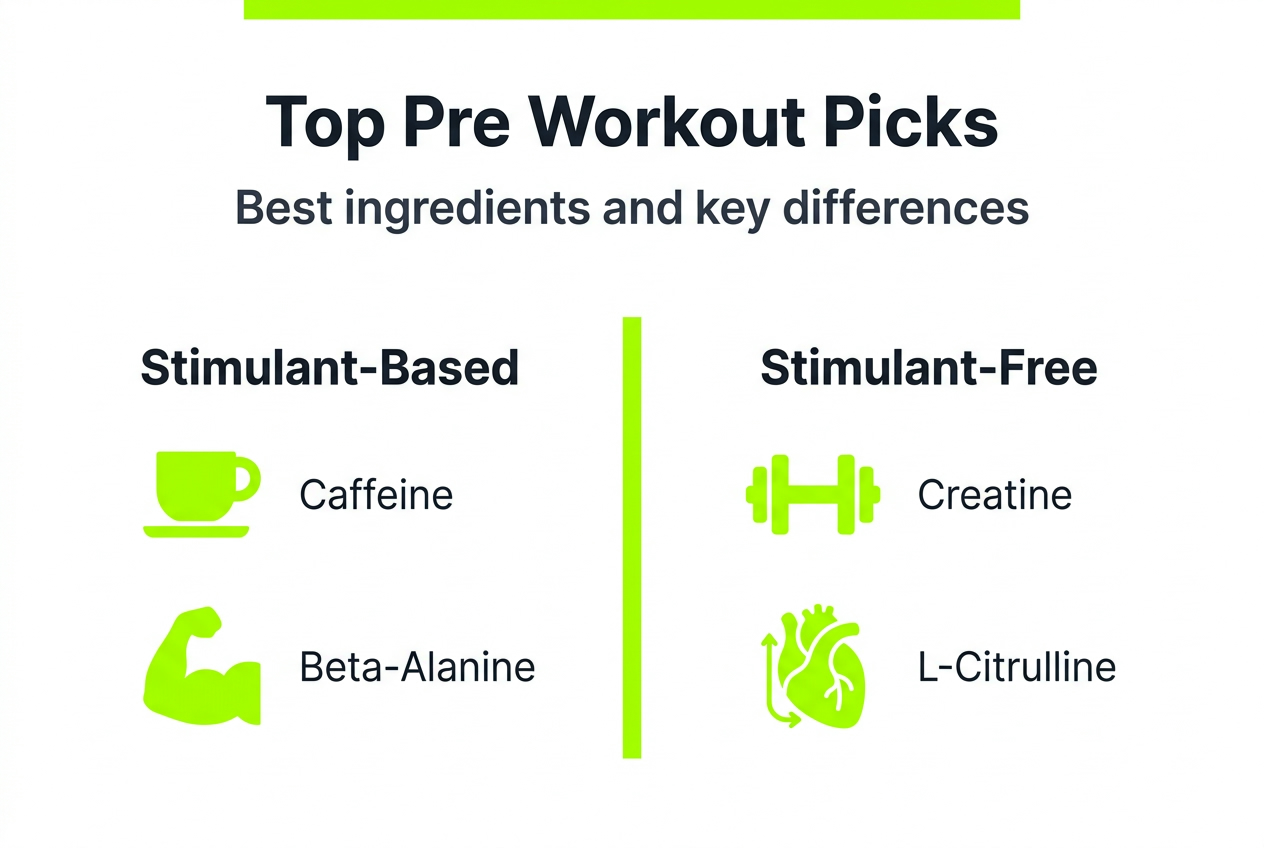
| Core ingredients have specific roles | Caffeine, L-citrulline, beta-alanine, and creatine each target different performance pathways with researched doses. |
| Personalisation beats generic protocols | Individual responses to caffeine and other ingredients vary significantly, requiring tailored supplementation strategies. |
| Smart selection reduces risks | Evaluating caffeine content, third-party testing, and avoiding excessive stimulant stacking ensures safety and efficacy. |
| Timing and cycling optimise results | Strategic intake timing and periodic cycling prevent tolerance whilst maximising performance benefits. |
What pre workout powders do and why they matter
Pre-workout supplements are designed to enhance performance during training sessions by preparing your body and mind for the physical demands ahead. They achieve this through carefully formulated combinations of stimulants, amino acids, and performance enhancers that work synergistically.
Pre-workout supplements prepare body and mind by optimising energy production, blood flow and mental focus, creating an ideal physiological state for training. The primary mechanisms include:
- Increased energy availability through enhanced metabolic pathways and reduced perception of fatigue
- Improved blood circulation that delivers more oxygen and nutrients to working muscles
- Sharpened mental clarity and focus that helps maintain proper form and training intensity
- Delayed onset of muscular fatigue through buffering metabolic byproducts
These effects translate into tangible training benefits. You can push harder during sets, maintain intensity for longer periods, and recover more quickly between exercises. The improved nutrient delivery means your muscles receive fuel precisely when they need it most, whilst enhanced mental focus prevents the motivation drops that often plague challenging workouts.
Quality matters enormously here. A well-formulated pre workout powder delivers these benefits consistently, session after session, without the crashes or jitters associated with inferior products. The difference between an effective supplement and a mediocre one often comes down to ingredient selection, dosing precision, and manufacturing quality rather than marketing claims or fancy packaging.
Core ingredients of top pre workout powders and their benefits
Understanding the science behind key ingredients helps you evaluate whether a pre workout powder will actually deliver results or simply empty your wallet.
Caffeine serves as the primary stimulant in most formulations. Caffeine blocks adenosine receptors, reducing fatigue whilst enhancing alertness and reaction time; doses 150–350 mg prove effective for most athletes. The optimal dose varies with body weight, typically ranging from 3 to 6 mg per kilogramme. A 75 kg athlete might benefit from 225 to 450 mg, though starting at the lower end prevents overstimulation.
L-Citrulline dramatically improves blood flow and endurance. L-Citrulline boosts nitric oxide via the arginine pathway, widening blood vessels — 4 to 8g effective dose. This increased vasodilation means more oxygen and nutrients reach working muscles, delaying fatigue and improving exercise capacity. The pumped feeling many athletes experience comes from this enhanced blood flow.

Beta-Alanine helps you push through those final, gruelling reps. Beta-Alanine buffers lactic acid to extend high-intensity effort duration. By raising muscle carnosine levels, it combats the acidic buildup that causes that burning sensation during intense sets. Research supports doses of 2 to 5 grammes daily. The harmless tingling sensation some people experience is called paraesthesia and indicates the ingredient is working. Learn more about beta alanine benefits and how it enhances performance.
Creatine remains the most researched performance supplement available. Creatine supports ATP regeneration to improve power in short maximal effort bursts. Short-term creatine supplementation enhances strength and recovery in resistance athletes, making it invaluable for lifting and explosive movements. Standard dosing involves 3 to 5 grammes daily, though some protocols include a loading phase.
| Ingredient | Primary Benefit | Effective Dose | Onset Time |
|---|---|---|---|
| Caffeine | Energy and focus | 150-350 mg | 30-45 min |
| L-Citrulline | Blood flow | 4-8 g | 30-60 min |
| Beta-Alanine | Fatigue buffering | 2-5 g | Cumulative |
| Creatine | Power output | 3-5 g | Cumulative |
Pro Tip: Start with half the recommended caffeine dose to assess your personal tolerance. Some athletes thrive on 200 mg whilst others perform best around 400 mg. Finding your sweet spot prevents unnecessary jitters and sleep disruption whilst maximising performance gains.
Choosing the best pre workout powder for your needs
Navigating the crowded pre workout market requires evaluating several critical factors beyond flashy marketing claims.
Caffeine content deserves your first consideration. Factors to consider when choosing include caffeine levels, flavour, third-party testing and value. Endurance athletes might prefer moderate caffeine doses around 150 to 200 mg to avoid cardiovascular overstimulation during prolonged efforts. Powerlifters and sprinters often benefit from higher doses approaching 300 to 400 mg for maximal intensity during brief, explosive sessions.
Ingredient transparency separates reputable brands from questionable products. Look for supplements that clearly list every ingredient and its precise dose on the label. Proprietary blends hide ingredient amounts, making it impossible to verify whether you’re getting effective doses or just paying for filler. Dosing consistency remains the Achilles’ heel in pre-workout category, so detailed labelling matters enormously.
Third-party testing provides independent verification that what’s on the label matches what’s in the tub. Organisations like Informed Sport and NSF Certified for Sport test products for banned substances and ingredient accuracy. This becomes crucial if you compete in tested sports or simply want assurance you’re consuming safe, effective supplements.
Value assessment extends beyond price per tub. Calculate cost per serving whilst considering ingredient quality and doses. A £40 pre workout with clinically effective doses of all key ingredients offers better value than a £25 product with underdosed or missing components. Factor in flavour preferences too, since a supplement you actually enjoy taking ensures consistent use.
Stimulant stacking creates unnecessary risks. Stacking multiple stimulants or exceeding recommendations amplifies risks without proportional performance benefits. Avoid products combining excessive caffeine with additional stimulants like synephrine or yohimbine unless you have specific experience with these compounds.
Goal alignment ensures you choose a formula suited to your training style:
- Strength and power athletes benefit most from formulas emphasising creatine and beta-alanine alongside moderate caffeine
- Endurance athletes should prioritise L-citrulline and moderate stimulants to support sustained output without cardiac stress
- Physique athletes often prefer pump-focused formulas with higher citrulline and lower stimulants for better muscle fullness during training
- General fitness enthusiasts typically do well with balanced formulas containing moderate doses of all key ingredients
| Pre Workout Type | Key Ingredients Focus | Caffeine Range | Best For |
|---|---|---|---|
| High-stim | Caffeine, beta-alanine | 300-400 mg | Strength, power |
| Pump-focused | L-citrulline, nitrates | 100-200 mg | Bodybuilding, physique |
| Endurance | L-citrulline, electrolytes | 150-250 mg | Running, cycling |
| Balanced | All-around blend | 200-300 mg | General training |
Explore practical guidance on choosing pre workout tips and discover how to match supplements to selecting pre workout based on your specific fitness objectives.
Pro Tip: Read actual user reviews focusing on consistent effects rather than one-off experiences. Look for patterns in feedback about energy levels, focus quality, crash absence, and flavour accuracy to gauge real-world performance beyond marketing promises.
Personalising your pre workout use for optimal performance and safety
Even the best pre workout powder requires intelligent application to deliver consistent results whilst minimising potential downsides.
Meaningful individual variability necessitates personalised caffeine supplementation strategies. What works brilliantly for your training partner might leave you jittery or underwhelmed. Dietary supplement efficacy varies by athlete characteristics and sport demands, reinforcing the importance of tailored approaches.
Personalised dosing protocol:
- Begin with 50% of the recommended serving size during a light training session to assess tolerance and response
- Monitor energy levels, focus quality, heart rate, and any digestive effects for at least three sessions at this dose
- Gradually increase by 25% increments every week until you find the dose that maximises benefits without unwanted side effects
- Document your responses in a training log to identify patterns and optimal dosing for different workout types
- Adjust based on training intensity, time of day, and recent caffeine consumption from other sources like coffee or tea
Timing optimisation significantly impacts effectiveness. Consume your pre workout 30 to 45 minutes before training to allow ingredients to reach peak blood concentrations as you begin warming up. If your supplement contains creatine and beta-alanine, consistent daily timing matters less since these ingredients work through cumulative tissue saturation rather than acute spikes.
Strategic cycling prevents tolerance buildup that diminishes effectiveness over time. Consider using pre workout during your most demanding training blocks, such as:
- Six to eight weeks leading up to competitions or testing periods
- Phases emphasising high volume or intensity that benefit most from supplementation
- Two to four week breaks afterwards to resensitise receptors and restore natural energy systems
- Maintenance of creatine supplementation even during stimulant breaks, since it doesn’t create tolerance
Evidence-based, personalised supplementation strategies that account for individual responses, training demands, and proper cycling deliver far superior results compared to generic, year-round protocols that ignore biological individuality and adaptation.
Avoid the common mistake of combining your pre workout with additional caffeine sources immediately before training. That morning coffee counts towards your total caffeine intake, potentially pushing you past optimal doses into uncomfortable territory. Similarly, respect the timing window before evening training to prevent sleep disruption. Caffeine’s half-life of five to six hours means a 6pm dose still has significant levels circulating at midnight.
Consider your menstrual cycle if applicable, as hormonal fluctuations affect caffeine metabolism and tolerance. Some female athletes find they respond differently to pre workout during different cycle phases, requiring minor dose adjustments for consistent effects.
Discover comprehensive strategies to maximise workout performance through intelligent supplementation timing and combinations.
Pro Tip: Keep a detailed supplement journal recording the product, dose, timing, training session type, perceived energy and focus levels, performance metrics, and any side effects. After eight to twelve weeks, patterns emerge that reveal your optimal personalised protocol far more accurately than generic recommendations.
Explore the best pre workout powders tailored for you
Now that you understand which ingredients matter, how they work, and how to personalise your supplementation strategy, the next step involves finding quality products that deliver on these principles.
Browse our curated selection of pre-workout powders shop featuring transparent ingredient profiles, effective clinical doses, and third-party testing verification. Each product undergoes rigorous evaluation to ensure it meets the standards outlined in this guide, providing you with confidence in your supplement choices.
Whether you’re seeking high-stimulant formulas for intense strength sessions, pump-focused blends for physique training, or balanced options for general fitness, you’ll find supplements matched to your specific goals. Our detailed pre workout ingredients guide breaks down exactly what to look for, whilst expert pre workout tips help you maximise results safely and effectively.
Applying the knowledge from this article transforms supplement shopping from guesswork into an informed decision that genuinely enhances your training performance.
Frequently asked questions
What ingredients should I look for in a pre-workout powder?
Prioritise caffeine for energy and focus, L-citrulline for blood flow and endurance, beta-alanine for fatigue buffering, and creatine for power output. Effective products clearly list these ingredients with clinically researched doses rather than hiding amounts in proprietary blends.
How much caffeine is safe and effective in pre-workout supplements?
Most athletes benefit from 150 to 350 mg per serving, equivalent to 3 to 6 mg per kilogramme of body weight. Start at the lower end to assess tolerance, as individual responses vary significantly based on genetics, habitual caffeine consumption, and sensitivity. Never exceed 400 mg in a single dose.
Can I take pre-workout every day?
Daily use leads to stimulant tolerance, reducing effectiveness over time. Cycle your pre workout by using it for six to eight weeks during demanding training blocks, then taking two to four weeks off to restore sensitivity. You can maintain creatine supplementation continuously since it doesn’t create tolerance.
What are the risks of stacking multiple stimulants?
Combining excessive caffeine with additional stimulants like synephrine or yohimbine increases cardiovascular stress, anxiety, sleep disruption, and potential adverse effects without proportional performance benefits. Stick to single-stimulant formulas with appropriate caffeine doses unless you have extensive experience with advanced supplements.
Do pre-workout supplements work without caffeine?
Yes, stimulant-free pre workouts containing L-citrulline, beta-alanine, and creatine still enhance blood flow, buffer fatigue, and improve power output. They suit evening training sessions, caffeine-sensitive individuals, or athletes cycling off stimulants whilst maintaining performance benefits from other active ingredients.
When should I take my pre-workout powder for best results?
Consume your pre workout 30 to 45 minutes before training to allow ingredients to reach peak blood concentrations as you begin your warm-up. Avoid taking it too close to bedtime, as caffeine remains active for five to six hours and can significantly disrupt sleep quality and recovery.

0 comments