

Many people believe clean eating means completely cutting out fats and carbs to reach fitness goals. This widespread misconception leads to restrictive diets that ultimately fail, leaving you frustrated and nutritionally deficient. Clean eating is actually about choosing whole, minimally processed foods that fuel your workouts, reduce inflammation, and support long term wellness. This guide breaks down what clean eating truly means, backed by science, so you can make informed choices that deliver real results.
Table of Contents
- Definition And Core Principles Of Clean Eating
- How Clean Eating Improves Fitness And Wellbeing
- Common Myths And Factual Corrections About Clean Eating
- Comparison With Popular Related Diets
Key Takeaways
| Point | Details |
|---|---|
| Core principle | Clean eating emphasizes whole, minimally processed foods to reduce inflammation and enhance fitness performance. |
| Metabolic benefits | Supports insulin sensitivity, sustained energy, and faster recovery after exercise. |
| Common myths debunked | Does not require organic-only foods or eliminating entire macronutrient groups like carbs or fats. |
| Flexibility advantage | More adaptable than paleo or whole30, making it sustainable for long term adherence. |
| Gradual adoption | Incremental changes improve compliance and optimize muscle gain with reduced recovery time. |
Definition and Core Principles of Clean Eating
Clean eating prioritizes whole foods in their natural or minimally altered state. Think fresh vegetables, fruits, whole grains, lean proteins like chicken and fish, and healthy fats from nuts, seeds, and avocados. These foods deliver maximum nutrients without unnecessary additives or processing.
The approach centers on avoiding ultra-processed foods loaded with artificial additives, excess refined sugars, and unhealthy trans fats. These ingredients trigger inflammation and disrupt metabolic function, undermining your fitness goals. However, clean eating is not synonymous with organic-only foods, as non-organic whole foods provide comparable nutrients effectively.
You don’t need to eliminate any macronutrient group entirely. Clean eating focuses on food quality, not rigid exclusions. Carbs from sweet potatoes and oats fuel intense workouts. Healthy fats from olive oil and salmon support hormone production. Protein from eggs and legumes builds and repairs muscle tissue.
Key characteristics of clean eating include:
- Choosing foods with minimal ingredient lists you can recognize and pronounce
- Prioritizing fiber-rich vegetables and fruits for gut health and satiety
- Selecting lean proteins to support muscle maintenance and recovery
- Incorporating healthy fats for sustained energy and nutrient absorption
- Limiting added sugars and sodium found in packaged convenience foods
Pro Tip: Focus first on reducing ultra-processed foods before worrying about organic status to keep changes sustainable. Swapping chips for fresh fruit or soda for water delivers immediate benefits without the financial burden of buying exclusively organic produce.
This flexible framework supports clean bulking strategies that build muscle without excessive fat gain. The emphasis remains on nutrient density rather than calorie restriction, creating an environment where your body performs optimally.
How Clean Eating Improves Fitness and Wellbeing
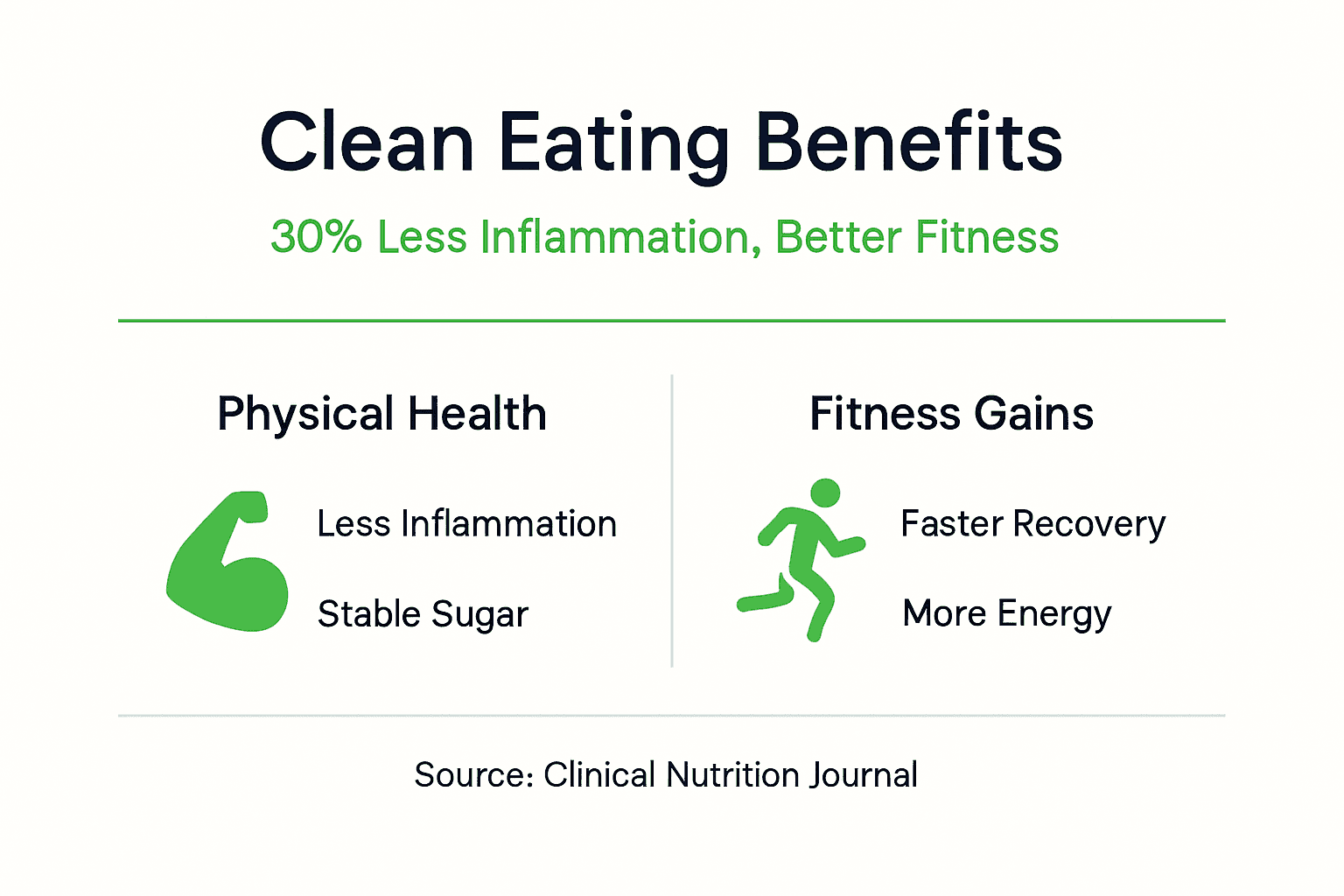
Clean eating delivers measurable physiological benefits that translate directly to better workouts and faster recovery. When you fuel your body with whole foods, you reduce chronic low-grade inflammation that otherwise slows healing and impairs performance. Research shows inflammation marker reduction by up to 30% after 12 weeks on a whole foods diet with limited processed items.

Improved metabolic health represents another major advantage. Clean eating enhances insulin sensitivity, meaning your muscles utilize glucose more efficiently during training. This metabolic upgrade supports both fat loss and muscle fuel availability. Better glucose management prevents the energy crashes that derail afternoon gym sessions.
Your gut microbiome diversity improves significantly on a clean eating plan rich in fiber and fermented foods. A healthier gut influences immune function, reducing illness that interrupts training consistency. It also optimizes nutrient extraction from foods, ensuring you get maximum value from every meal.
Stable blood sugar levels become your new normal. Unlike the spikes and crashes from processed foods high in refined sugars, whole food meals provide sustained energy throughout the day. You maintain focus during work and power through demanding workouts without bonking.
Statistical insight: Athletes adopting clean eating showed 42% improved energy and 28% decreased inflammation markers after just 6 weeks. These improvements correlate directly with enhanced training capacity and competitive performance.
Additional fitness benefits include:
- Faster post-workout recovery due to reduced systemic inflammation
- Enhanced endurance from stable energy availability during prolonged exercise
- Better body composition changes through improved metabolic efficiency
- Reduced joint pain and muscle soreness between training sessions
- Improved sleep quality supporting growth hormone release and tissue repair
Pro Tip: Track subjective energy and recovery metrics alongside dietary changes for personalized insights. Note how quickly soreness fades, how focused you feel during workouts, and whether you need extra rest days. These observations help you fine-tune your approach.
Understanding food sensitivity and athletic performance connections becomes easier when inflammation decreases. You identify which foods support versus hinder your goals, allowing strategic nutritional adjustments.
Common Myths and Factual Corrections About Clean Eating
Misconceptions about clean eating create unnecessary barriers that prevent people from adopting this beneficial approach. Let’s address the most persistent myths with factual corrections.
Myth: Clean eating requires cutting out fats and carbs completely.
Fact: Balanced intake of healthy fats and complex carbs is essential for energy production and post-workout recovery. Your brain needs fats for cognitive function. Your muscles need carbs to replenish glycogen stores after training. Eliminating either macronutrient category sabotages performance.
Myth: You must only eat organic foods to eat clean.
Fact: Non-organic whole foods provide similar nutrients without the premium price tag. While organic options reduce pesticide exposure, conventionally grown vegetables and fruits still deliver fiber, vitamins, and minerals effectively. Budget should never prevent you from eating more whole foods.
Myth: Clean eating is a rigid, highly restrictive diet.
Fact: It emphasizes flexibility, focusing on food quality and sustainable habits rather than strict rules. You can enjoy social meals, accommodate travel, and include occasional treats while maintaining the core principle of prioritizing whole foods most of the time.
Myth: All processed foods must be eliminated entirely.
Fact: Minimizing ultra-processed foods is important, but minimally processed foods that retain nutrients are allowed. Greek yogurt, canned beans, frozen vegetables, and nut butters undergo processing yet remain nutritious choices. The distinction lies in how much the food has been altered from its natural state.
Myth: Clean eating guarantees immediate weight loss.
Fact: While many people lose excess fat on clean eating plans, the primary goal is improved health and performance. Weight changes depend on calorie balance, activity level, and individual metabolism. Some people maintain weight while gaining muscle and losing fat simultaneously.
Education on these myths helps you avoid common pitfalls that lead to nutrient deficiencies or diet abandonment. Many people quit restrictive interpretations of clean eating within weeks, mistakenly believing the approach itself failed rather than recognizing their overly rigid implementation caused the problem.
Understanding these corrections allows you to adopt clean eating confidently, knowing you can maintain social connections, manage your budget, and enjoy food while pursuing fitness goals. The approach becomes sustainable rather than another failed diet attempt.
Comparison with Popular Related Diets
Clean eating shares some principles with other popular diet approaches but offers distinct advantages in flexibility and sustainability. Understanding these differences helps you choose the right strategy for your lifestyle and goals.
| Aspect | Clean Eating | Paleo Diet | Whole30 |
|---|---|---|---|
| Food focus | Whole, minimally processed foods | Ancestral foods from hunter-gatherer era | Elimination and reintroduction protocol |
| Grains allowed | Yes, whole grains encouraged | No, all grains excluded | No, grains eliminated for 30 days |
| Legumes allowed | Yes, beans and lentils included | No, legumes excluded | No, legumes eliminated |
| Dairy allowed | Yes, especially fermented options | No, dairy excluded | No, dairy eliminated |
| Duration | Ongoing lifestyle approach | Ongoing lifestyle approach | Strict 30-day reset program |
| Flexibility | High flexibility within guidelines | Moderate, some social challenges | Very low, no exceptions allowed |
| Primary goal | Nutrient density and food quality | Mimic ancestral eating patterns | Identify food sensitivities |
Clean eating prioritizes food quality and nutrient density while allowing personal customization based on individual needs and responses. You can include whole grains if they support your energy needs and don’t cause digestive issues. Legumes provide affordable plant protein without dogmatic exclusion.
Paleo diets exclude entire food categories based on the premise that humans are not adapted to consume grains, legumes, and dairy. While some people thrive on paleo, the restrictions make social eating challenging and potentially limit nutrient diversity. Athletes often struggle to maintain adequate carbohydrate intake for high-intensity training.
Whole30 serves as a short-term elimination diet designed to reset eating habits and identify problematic foods through systematic reintroduction. Its strict 30-day rules leave no room for flexibility, making it impractical as a long-term approach. However, it can help identify food sensitivities before transitioning to a more sustainable plan.
Clean eating’s flexibility supports better adherence over time. You can attend social events, travel internationally, and adapt to changing circumstances without feeling you’ve

0 comments