

Choosing fitness supplements often means scanning endless ingredient lists hoping to avoid unwanted surprises. For athletes in the UK, the search for clean label options is more than a passing trend—it’s about protecting performance and wellbeing with absolute honesty. With strict UK regulations focusing on transparency and honest ingredient disclosure, this guide explains how clean label supplements set a new standard, helping you train and recover without hidden risks.
Table of Contents
- Defining Clean Label in Supplement Nutrition
- Types and Key Traits of Clean Label Products
- Transparency, Certification, and UK Regulations
- Why Athletes Choose Clean Label Supplements
- Risks, Drawbacks, and Avoiding Misleading Claims
Key Takeaways
| Point | Details |
|---|---|
| Transparency is Essential | Clean label supplements disclose every ingredient and avoid misleading claims, ensuring consumers know what they are consuming. |
| Regulatory Compliance | In the UK, strict food labelling regulations protect consumers from false health claims and enforce accurate ingredient listings. |
| Athlete Safety | Competitive athletes prefer clean label supplements to eliminate contamination risks and ensure compliance with doping regulations. |
| Read Labels Carefully | Always check the ingredient list for transparency and verify claims against trusted sources to avoid misleading products. |
Defining Clean Label in Supplement Nutrition
Clean label supplements are nutritional products built on transparency and honest ingredient disclosure. Unlike vague marketing claims, clean label means what’s on the tin is exactly what you’re getting—nothing hidden, nothing misleading, nothing unnecessary.
In the UK, this definition goes beyond marketing buzz. Supplements must comply with strict food labelling regulations that prevent false health claims and demand accurate ingredient lists. The UK Food Standards Agency enforces these rules rigorously.
Key characteristics of clean label supplements:
- All ingredients listed clearly with quantities
- No artificial colours, flavours, or preservatives
- No misleading health or disease claims
- Transparent sourcing and manufacturing details
- No hidden additives or cheap fillers
- Clear dosage instructions and warnings
The European Union defines clean label supplements as concentrated sources of nutrients intended for nutritional or physiological effects. This means they’re not meals or medicine—they’re precise nutritional tools.
Why does this matter for you? Many supplements hide behind confusing ingredient lists packed with binders, bulking agents, and additives that do nothing but inflate the tablet size. Clean label means you know exactly what you’re putting in your body and why.
What clean label is NOT:
- A marketing trend or buzzword
- A guarantee of higher potency
- An unregulated free-for-all
- Marketing fluff with no legal backing
In the UK and EU, clean label supplements carry recommended daily doses, warnings, and statements clarifying that supplements cannot substitute a balanced diet. This regulatory framework protects you from misleading claims.
The fitness community in the UK has increasingly demanded clean label options because they want to optimise performance without compromising health. You’re not just buying a supplement—you’re buying accountability.
Clean label supplements mean transparency in every ingredient listed, every claim made, and every dosage recommended—nothing less.
Pro tip: Check the ingredient list before the marketing claims; the fewer ingredients listed, the cleaner the label, provided they’re all serving a genuine nutritional purpose.
Types and Key Traits of Clean Label Products
Clean label supplements come in diverse forms, each designed to meet specific nutritional needs. The most common types include vitamins, minerals, amino acids, botanicals, and fatty acids—all with minimal processing and maximum transparency.
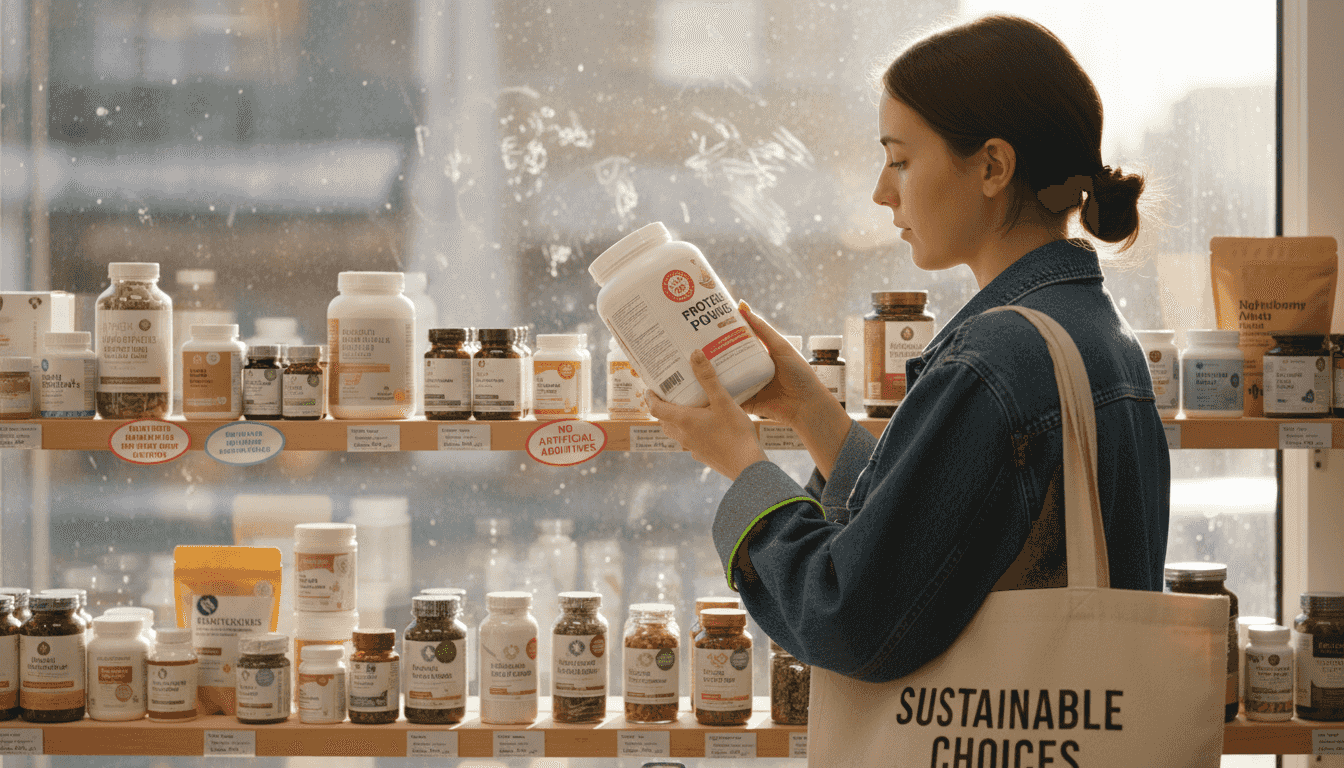
When you’re browsing supplements, you’ll notice certain traits separating clean label products from the rest. Fewer, recognizable ingredients with no artificial colours or preservatives form the foundation of quality clean label products. You should be able to pronounce and identify every ingredient listed.
Common clean label supplement types:
- Vitamins and minerals (iron, magnesium, vitamin D, B-complex)
- Amino acids (BCAAs, creatine, glutamine for muscle support)
- Botanical extracts (turmeric, ashwagandha, green tea for natural benefits)
- Fatty acids (omega-3, omega-6 from fish or plant sources)
- Protein powders (whey isolate, plant-based alternatives)
Beyond the basic categories, clean label supplements often feature non-GMO certification, gluten-free formulations, and allergen-conscious labelling. Many brands now prioritise vegan options and ethical sourcing practices that matter to conscious consumers.
Ingredient approvals and safety regulations shape which products can legally exist in the UK market. This regulatory framework isn’t bureaucratic nonsense—it’s your protection.
What separates clean label from standard supplements? Standard products often contain binders, fillers, and flow agents that add bulk without nutritional value. Clean label strips away the unnecessary padding.
Key traits you’ll spot in genuinely clean label products:
- Clear sourcing information on labels
- Environmentally conscious packaging
- No mysterious “proprietary blends” hiding ingredient quantities
- Third-party testing certifications visible
- Transparent manufacturing processes
Clean label supplements reflect consumer demand for sustainability and transparency—products built on trust, not marketing tricks.
You might notice clean label products cost slightly more. That’s because ethical sourcing, quality testing, and responsible manufacturing carry real expenses. You’re paying for integrity.
Here is a summary comparing clean label supplements to standard supplements for quick reference:
| Aspect | Clean Label Supplements | Standard Supplements |
|---|---|---|
| Ingredient Clarity | Clear, transparent listing | May include vague or incomplete labels |
| Use of Additives | Avoids unnecessary fillers and binders | Frequently contains fillers or bulking agents |
| Certification | Often third-party tested | Rarely independently verified |
| Marketing Claims | Legal, substantiated claims only | Potential for misleading promises |
| Pricing | Usually higher due to quality | Often cheaper with lower quality focus |
Pro tip: Scan supplement labels for certifications like NSF Certified for Sport or Informed Choice; these third-party validations prove cleaner, safer products beyond marketing claims.
Transparency, Certification, and UK Regulations
Transparency isn’t optional in the UK supplement market—it’s mandated by law. Every clean label product you buy must follow strict rules that protect you from false claims and hidden ingredients.
The Food Standards Agency oversees compliance across the entire UK supplement industry. Mandatory labelling includes the product name, ingredient list, recommended dose, and warnings that manufacturers must display clearly on packaging. This isn’t marketing polish; it’s legal requirement.
What must appear on every supplement label:
- Product name and supplement category
- Complete ingredient list with exact quantities
- Recommended daily dose clearly stated
- Storage instructions and shelf life
- Allergen warnings prominently displayed
- Manufacturer or distributor details
- Legally approved health claims only
Labels must disclose ingredients, allergens, origin, and relevant certifications to meet UK packaging and labelling regulations. Businesses cannot hide information or use misleading descriptions—every claim requires legal approval.
Certifications matter more than marketing slogans. Third-party testing validates that products contain what they claim and nothing harmful. Look for NSF Certified for Sport, Informed Choice, or Informed Sport badges on reputable clean label supplements.
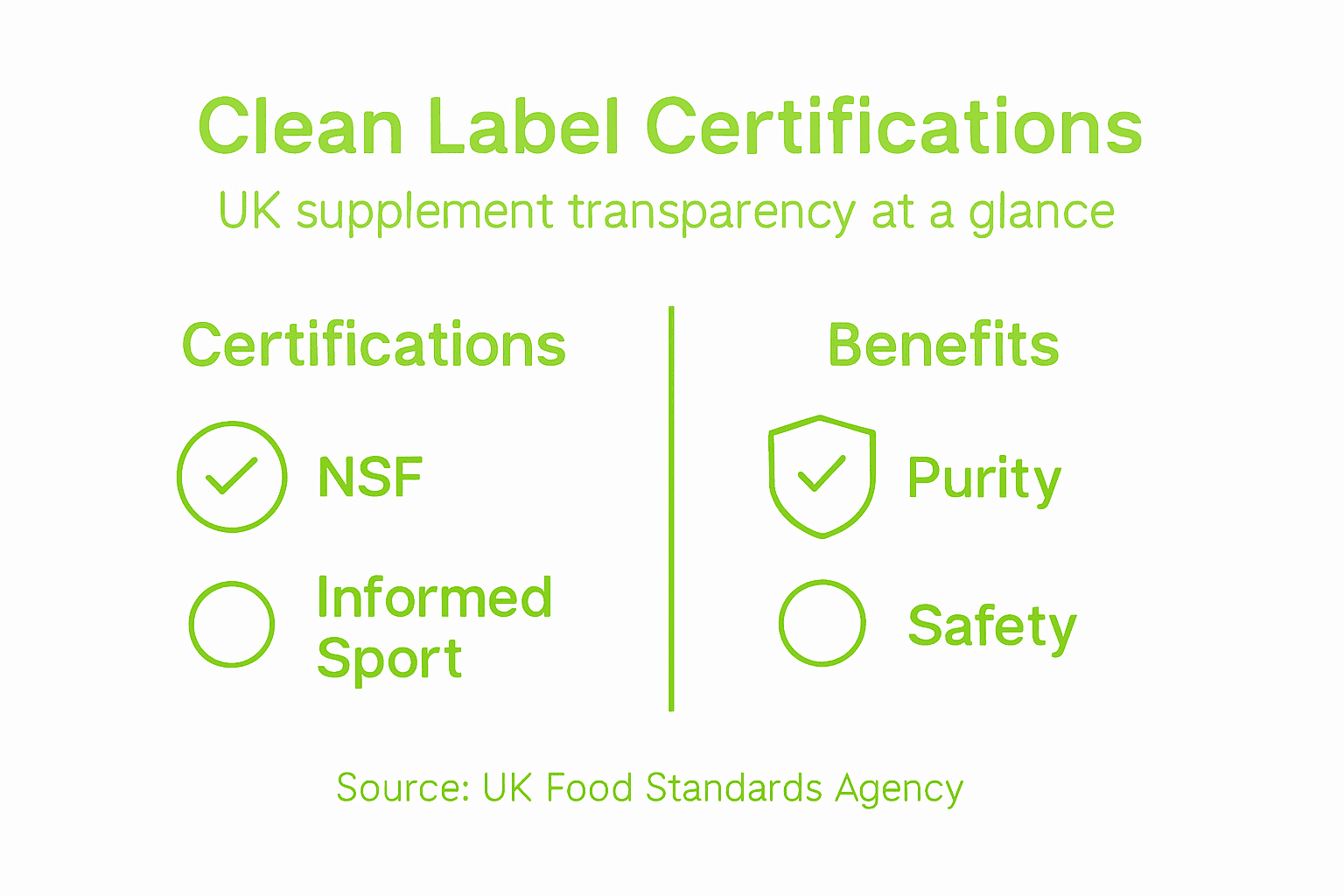
Why does this regulation matter to you? Dodgy manufacturers sometimes list inaccurate ingredient quantities or make disease prevention claims that UK law explicitly forbids. Regulation stops them.
Red flags indicating poor transparency:
- Vague “proprietary blend” listings without ingredient quantities
- Health claims like “treats” or “cures” disease
- Missing allergen information
- No manufacturer contact details
- Illegible or incomplete ingredient lists
Clean label supplements go beyond legal minimum requirements. They provide transparent sourcing information, third-party testing results, and honest marketing that respects consumer intelligence.
UK regulations demand transparency; clean label supplements embrace it as a competitive advantage built on consumer trust.
You can verify claims by checking the Food Standards Agency website or product certification bodies. Most reputable brands publish their testing results online or upon request—if they refuse, walk away.
The following table highlights key UK regulatory requirements for supplement labelling:
| Labelling Requirement | Description | Consumer Benefit |
|---|---|---|
| Full Ingredient List | Every component and its quantity disclosed | Informs safe usage and allergies |
| Recommended Daily Dose | Stated clearly on packaging | Prevents overconsumption risks |
| Allergen Declaration | Prominently displayed with warnings | Reduces risk of allergic reaction |
| Manufacturer Details | Company contact and address provided | Ensures accountability |
| Valid Health Claims Only | No unapproved disease or treatment claims | Protects against misinformation |
Pro tip: Cross-reference supplement claims against the Food Standards Agency database before purchasing; if a claim isn’t listed as legally approved, it’s almost certainly misleading.
Why Athletes Choose Clean Label Supplements
Athletes face unique pressures that make clean label supplements non-negotiable. Unlike casual supplement users, competitive athletes risk career-ending consequences from contaminated products—even unknowingly.
Contamination with banned substances is a serious concern that UK Anti-Doping explicitly warns athletes about. A single tainted supplement could result in failed doping tests, disqualifications, and permanent damage to your athletic reputation. Clean label products eliminate this devastating risk.
Why does contamination happen? Supplements manufactured in facilities lacking proper quality controls sometimes cross-contaminate with banned ingredients. Non-clean label products often source ingredients cheaply without verification, cutting corners at your expense.
Key reasons athletes demand clean label supplements:
- Third-party testing certifies zero banned substance contamination
- Transparent ingredient sourcing eliminates hidden additives
- Doping compliance guarantees protect athletic careers
- Performance optimisation without regulatory risk
- Trust in product integrity during competition season
Clean label supplements carry third-party certifications like Informed Sport or NSF Certified for Sport. These badges mean independent laboratories have tested every batch. The product you buy today matches yesterday’s test results.
You’re not just buying nutrients; you’re buying peace of mind. When competing at any level—amateur leagues, university sport, or professional ranks—one contaminated supplement destroys everything you’ve worked for.
Athletes prioritise clean label because:
- Career protection from accidental doping violations
- Confidence in accurate ingredient labelling
- Performance gains without legal liability
- Compliance with sporting body regulations
- Recovery support backed by science, not hype
Clean label supplements represent the only responsible choice for athletes where doping risk could eliminate your entire career.
Many athletes have learned this lesson through bitter experience. One trusted supplement turned out to contain a banned stimulant. Career ended. That tragedy repeats across sports unless athletes demand clean labels.
When selecting performance supplements, prioritise certifications over brand marketing. A lesser-known supplement with third-party testing beats premium brands lacking verification. Your career depends on this distinction.
Pro tip: Before purchasing any supplement, verify its third-party certification status through the Informed Sport or NSF Certified for Sport databases; if certification isn’t listed, assume contamination risk exists.
Risks, Drawbacks, and Avoiding Misleading Claims
Clean label supplements sound perfect, but risks exist if you’re not vigilant. Understanding these pitfalls helps you avoid costly mistakes and protect your health.
Misleading health and nutrition claims on supplement labels pose real risks to consumer trust and safety. Some manufacturers exploit regulatory grey areas, making subtle disease-prevention claims that sound medical without being legally approved. You might interpret “supports joint health” as treating arthritis when the evidence doesn’t support that claim.
Consumers often misread supplement claims as medical promises. A label claiming “promotes immune function” doesn’t mean the product prevents colds or flu. This confusion costs money and delays proper medical treatment when needed.
Common misleading claims to watch for:
- “Cures” or “treats” any disease or condition
- “Prevents” serious health conditions
- Vague promises like “detoxifies” or “cleanses”
- Unsubstantiated performance claims
- Comparisons to prescription medications
Another risk involves non-harmonised standards across suppliers. Safety and transparency challenges emerge when clean label standards lack regulatory consistency. One manufacturer’s definition of “clean label” differs from another’s. You assume consistency that simply doesn’t exist.
Contaminants still pose risks even in supposedly clean products. Third-party testing catches most issues, but no testing catches everything. Rare contamination events happen despite rigorous quality control.
Red flags indicating dodgy supplements:
- Extraordinary before-and-after photos
- Claims without scientific citations
- Pressure to buy multiple bottles immediately
- Testimonials replacing actual research
- Prices dramatically below market rates
Price matters too. Genuinely clean supplements cost more because quality testing, ethical sourcing, and transparent manufacturing aren’t cheap. Suspiciously cheap supplements usually cut corners somewhere.
Misleading claims thrive on consumer confusion; read labels with scepticism and verify every significant claim independently.
Always cross-reference claims against scientific literature or official health bodies. If a supplement promises something medicine can’t deliver, it’s almost certainly misleading. Your scepticism protects your wallet and health.
Pro tip: Search supplement claims on PubMed or Google Scholar before purchasing; if peer-reviewed research doesn’t support the claim, it’s marketing fiction masquerading as fact.
Choose Clean Label Supplements That Match Your Fitness Goals
Navigating the complex world of supplements can be overwhelming, especially when transparency and purity matter the most. This article highlights key challenges like misleading ingredient lists, hidden additives, and unverified health claims that compromise your safety and performance. If you want to avoid costly mistakes and ensure you get exactly what you need, prioritising clean label supplements with clear sourcing and third-party certification is essential.
At MyGymSupplements.shop, we understand that trust and integrity are non-negotiable. Our selection includes vitamins, minerals, amino acids, proteins, and performance aids carefully curated to meet strict transparency standards. You can shop confidently, knowing every product listing provides full ingredient details and reputable certifications. Explore our range designed for muscle gain, recovery, and overall wellbeing so that you never have to compromise on quality or safety.
Ready to make the switch to supplements that align with your values and ambitions? Visit MyGymSupplements.shop today to discover clean label options tailored for athletes and health-conscious users. Take control of your nutrition with products built on honesty, not hype.
Frequently Asked Questions
What does ‘clean label’ mean in supplements?
Clean label supplements refer to products that feature transparent ingredient lists, with no hidden additives, artificial colours, or misleading health claims. They focus on clear sourcing and include only essential components for nutritional purposes.
How do clean label supplements differ from standard supplements?
Clean label supplements have clear, transparent ingredient lists and avoid unnecessary fillers or additives. In contrast, standard supplements may contain vague labels and additives that serve no nutritional purpose, making it difficult for consumers to know what they’re ingesting.
Are clean label supplements more expensive?
Yes, clean label supplements typically cost more than their standard counterparts because they involve higher quality testing, ethical sourcing, and transparency in manufacturing and ingredient sourcing.
How can I verify the claims made by clean label supplements?
You can verify claims by checking for third-party certifications on the label, such as NSF Certified for Sport or Informed Choice. Additionally, consult the Food Standards Agency or scientific literature to ensure that the claims have legal backing and are substantiated by evidence.
Recommended
- Clean Label Supplements Guide for Transparent Nutrition Decoded – MyGymSupplements
- Proprietary Blend in Supplements – What it Means for UK Athletes – MyGymSupplements
- Proprietary Blend in Supplements – What it Means for UK Athletes – MyGymSupplements
- New Supplement Brands: Quality Innovation for UK Athletes Unleashed – MyGymSupplements

0 comments