

A promising training plan can stall when relentless bloating or unexpected fatigue creeps in—often, the culprit is food sensitivity, not just a heavy session. For athletes in the UK, recognising the subtle signs of unique biochemical interactions with everyday foods is vital to maintaining your edge. This guide addresses common myths, highlights the performance impact, and shares practical steps for deciphering your symptoms and choosing safe supplements, so you can train and recover at your best.
Table of Contents
- Defining Food Sensitivity And Common Misconceptions
- Types Of Food Sensitivities And Their Causes
- Recognising Symptoms In Active Individuals
- Diagnosing And Managing Food Sensitivity
- Choosing Supplements That Align With Sensitivities
Key Takeaways
| Point | Details |
|---|---|
| Understanding Food Sensitivity | Food sensitivity involves delayed reactions and varies per individual, unlike immediate allergies. |
| Impact on Athletic Performance | Undiagnosed sensitivities can lead to poor recovery and compromised gains for athletes. |
| Elimination Diets as Diagnosis | Elimination diets are the most effective method for identifying specific food triggers. |
| Careful Supplement Selection | Choose hypoallergenic supplements to avoid hidden allergens and manage sensitivities effectively. |
Defining Food Sensitivity And Common Misconceptions
Food sensitivity is fundamentally different from the allergies most people think they understand. It describes a physiological response to certain foods that doesn’t trigger an immediate, severe immune reaction like a classical allergy does.
Here’s the critical distinction: food hypersensitivity encompasses both allergies and intolerances, yet many athletes assume all adverse food reactions work the same way. They don’t.
What Actually Happens With Food Sensitivity
When you have a food sensitivity, your body produces a delayed reaction. You might notice symptoms hours or even days after eating the offending food. This timing makes it genuinely difficult to identify the culprit.
Common symptoms include:
- Bloating and digestive discomfort
- Mild to moderate inflammation
- Brain fog or reduced mental clarity
- Joint stiffness or soreness
- Skin reactions or inflammation
- Fatigue without obvious cause
Unlike food allergies, which affect only 1-2% of the UK population and trigger immediate immune responses, food sensitivities involve unique biochemical interactions specific to your metabolism. Your body’s reaction depends entirely on how your individual system processes that particular food.
Food sensitivities are delayed and often subtle—symptoms appear hours or days later, making them far harder to spot than allergic reactions.
Myths That Hold Athletes Back
Misconceptions about food sensitivity cost athletes real performance gains. Let’s bust the biggest ones.
Myth 1: All bad reactions are allergies. Many people label any adverse food response as an allergy. In reality, true allergies represent a smaller subset. Most people with food-related symptoms actually have sensitivities or intolerances.
Myth 2: Symptoms are psychological. This one frustrates athletes most. Your bloating, brain fog, and joint inflammation are absolutely real—they’re triggered by genuine biochemical processes in your digestive system and beyond.
Myth 3: Everyone reacts the same way. Your mate might tolerate dairy perfectly whilst you experience inflammation within hours. Two athletes can eat identical meals and have completely different outcomes because food sensitivities involve personal metabolic processes.
Myth 4: You either have it or you don’t. Food sensitivities exist on a spectrum. You might tolerate small amounts of a food but experience symptoms when you consume larger portions. Context matters: stress, training intensity, and other foods consumed simultaneously all influence your reaction.
Why This Matters for Your Athletic Performance
When undiagnosed food sensitivities trigger inflammation, your body prioritises managing that response over building muscle or delivering peak power. Your recovery suffers. Your energy crashes mid-workout. Your gains plateau despite proper training.

Pro tip: Start a detailed food and symptoms diary for two weeks—record not just what you eat but timing, portion sizes, training intensity, and any physical changes. This personal data beats generic food sensitivity tests because it reflects YOUR unique metabolism.
Types Of Food Sensitivities And Their Causes
Food sensitivity isn’t one condition—it’s actually several different physiological problems wearing the same label. Understanding which type you’re dealing with changes how you manage it and what you can do about it.
There are three primary categories that behave completely differently. Each has distinct causes, timelines, and management strategies.
Food Allergies: The Immediate Threat
Food allergies trigger rapid immune responses to specific proteins in food. Your body recognises the protein as a threat and attacks it immediately—within minutes to two hours.
These are the dangerous ones. Symptoms can escalate quickly:
- Swelling of lips, tongue, or throat
- Severe itching or hives
- Anaphylaxis (life-threatening)
- Immediate digestive distress
True food allergies affect your athletic performance through forced avoidance. If you’re allergic to peanuts or shellfish, you simply cannot consume them—there’s no tolerance threshold.
Food Intolerances: The Digestive Problem
Food intolerances happen when your digestive system struggles to process specific food components. There’s no immune response involved—your body simply lacks the right enzymes or has difficulty breaking down certain compounds.
Common examples include:
- Lactose intolerance (lacking lactase enzyme)
- Hereditary fructose intolerance and non-coeliac gluten sensitivity
- FODMAP intolerance (difficulty fermenting certain carbohydrates)
- Histamine intolerance (sensitivity to naturally occurring amines)
These develop over hours or days. You might tolerate small amounts but experience severe symptoms with larger portions. For athletes, intolerances are frustrating because they’re dose-dependent and context-dependent.
The difference matters: allergies require complete avoidance; intolerances often allow small amounts depending on your individual threshold.
Autoimmune Reactions: The Chronic Inflammation
Autoimmune food reactions represent the third category. Your immune system attacks your body’s own tissues after exposure to certain food components. This triggers chronic inflammation rather than immediate symptoms.
Coeliac disease and non-coeliac gluten sensitivity fall here. Your body mounts an inflammatory response that damages the gut lining over time. This ongoing damage affects nutrient absorption, energy availability, and recovery capacity.
These reactions are particularly problematic for athletes because the damage accumulates silently. You might not notice symptoms for weeks or months.
Here’s a concise comparison of the three main types of food sensitivity and their implications for athletes:
| Sensitivity Type | Reaction Time | Key Example | Athlete Management Approach |
|---|---|---|---|
| Allergy | Minutes to 2 hrs | Peanut allergy | Complete avoidance, medical alert |
| Intolerance | Hours to days | Lactose intolerance | Portion control, track thresholds |
| Autoimmune Reaction | Weeks to months | Coeliac disease | Long-term dietary overhaul |
Understanding Your Specific Cause
Why does this matter? Because understanding food sensitivity categories is essential for accurate diagnosis and proper management.
If you think you have a food sensitivity, identification requires different approaches depending on which type it is. Allergies need medical testing. Intolerances benefit from elimination diets and personal tracking. Autoimmune reactions often require professional investigation.
Pro tip: When tracking potential sensitivities, note the timeline of symptoms—immediate reactions suggest allergies, delayed reactions point to intolerances, and gradually worsening energy or recovery issues might indicate autoimmune responses. This pattern helps guide your next diagnostic step.
Use this reference to identify which professional support is most effective for each sensitivity type:
| Sensitivity Category | Most Effective Diagnostic Method | Best Professional Support |
|---|---|---|
| Allergy | Skin prick or blood tests | GP or allergist |
| Intolerance | Elimination diet, symptoms diary | Dietitian or nutritionist |
| Autoimmune Reaction | Antibody blood test, biopsy | Gastroenterologist, dietitian |
Recognising Symptoms In Active Individuals
Food sensitivity symptoms in athletes often masquerade as training issues, poor recovery, or simple fatigue. The tricky part is that symptoms develop slowly and don’t always point directly back to food.
Active individuals with undiagnosed food sensitivities experience a frustrating pattern: persistent bloating, unexplained inflammation, and steadily declining performance despite solid training. These signs are real physiological responses—not weakness or inadequate effort.
The Digestive Warning Signs
Gastrointestinal symptoms are the most obvious red flags. These include:
- Persistent bloating after meals
- Cramping or stomach discomfort
- Diarrhoea or constipation (sometimes alternating)
- Excessive gas or flatulence
- Nausea during or after training
- Vomiting after consuming trigger foods
These happen because your digestive system is struggling to process food properly. Unlike a one-off bad meal, food sensitivity symptoms return consistently after eating the problematic food.
For athletes, digestive distress means your gut is diverting energy away from muscle recovery and athletic output.
Systemic Inflammation Markers
Food sensitivities don’t stop at your digestive system—they trigger systemic inflammation affecting overall wellbeing and athletic output. You might notice:
- Joint stiffness or persistent soreness
- Brain fog or reduced focus during training
- Unusual muscle soreness lasting beyond normal recovery
- Skin reactions like eczema, hives, or unexplained rashes
- Headaches or migraines
- Chronic fatigue despite adequate sleep
These symptoms are subtle but compound over time. Your body’s immune system is busy managing inflammation instead of rebuilding muscle tissue.
Delayed symptoms develop over hours or days, making the food-to-symptom connection hard to spot without careful tracking.
Timing Matters Critically
Immediate reactions occur within minutes to two hours. These are usually allergic responses—swelling, hives, or severe digestive distress.
Delayed reactions develop over hours or days. These are typically intolerances or autoimmune responses and are far more common in athletes. You might feel fine after eating, then notice bloating the next morning or brain fog during an afternoon training session.
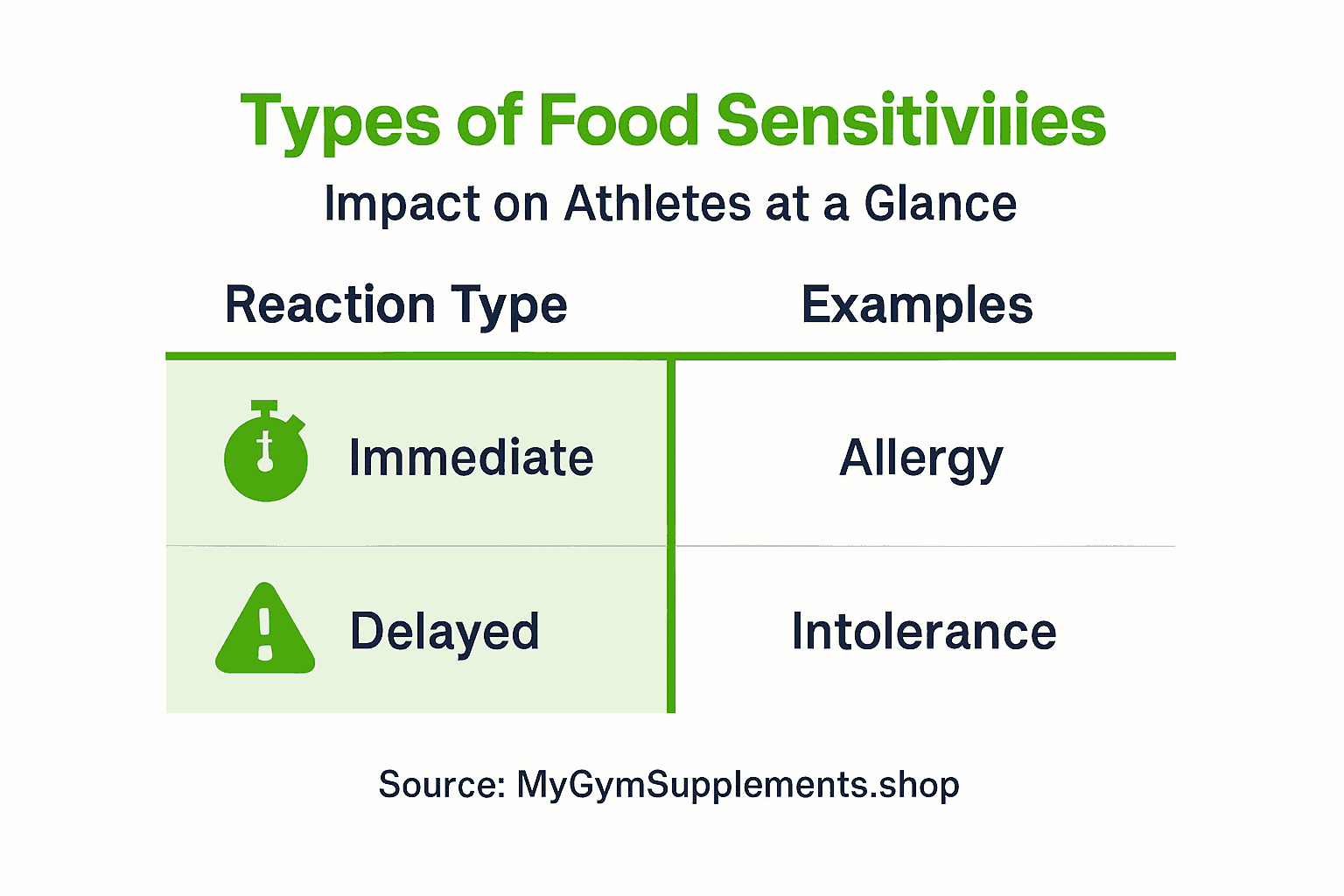
This delayed timeline is why so many athletes miss the connection between food and performance decline.
The Performance Impact Pattern
Watch for these performance-related signs:
- Unexplained energy crashes mid-workout
- Difficulty reaching previous strength or power levels
- Slower recovery between sessions
- Increased susceptibility to minor illnesses
- Persistent muscle soreness despite proper nutrition
Comprehensive clinical assessment distinguishes between food allergies and intolerances, which is essential because management differs significantly. If you’re noticing multiple symptoms from different categories, professional investigation is worth pursuing.
Pro tip: Photograph or screenshot your training data, energy levels, and symptoms daily for four weeks using your phone’s notes app—patterns emerge when you see data visually rather than relying on memory. You’ll spot which foods genuinely correlate with performance dips.
Diagnosing And Managing Food Sensitivity
Diagnosis isn’t straightforward with food sensitivity. Unlike allergies with clear medical tests, identifying your specific triggers requires systematic investigation and patience. The good news: you can do much of this yourself with proper guidance.
The key is avoiding worthless commercial tests whilst using proven methods that actually work. Many athletes waste money on unvalidated intolerance kits that deliver meaningless results.
Elimination Diets: The Gold Standard
Elimination diets remain the most reliable diagnostic tool. This approach systematically removes suspected trigger foods, then reintroduces them one at a time to identify exact culprits.
The process works like this:
- Remove suspected foods for 2-4 weeks
- Track all symptoms in a detailed diary
- Reintroduce one food every 3-5 days
- Monitor symptoms carefully after each addition
- Identify which foods genuinely trigger responses
Identifying food triggers through elimination diets and symptom diaries avoids reliance on unvalidated commercial tests. This method requires discipline but delivers personal, actionable data rather than generic results.
For athletes, elimination provides another benefit: you understand exactly which foods affect your performance. You’re not guessing—you’ve tested it.
Medical Testing: When Professional Help Matters
Skin prick tests and supervised food challenges remain the gold standard for allergies. Your GP can arrange these if you suspect true allergies rather than intolerances.
For intolerances, medical testing is less useful. Blood tests claiming to identify intolerances often lack scientific validation. Your money’s better spent on a structured elimination approach with proper tracking.
Seek professional assessment if you suspect autoimmune reactions like coeliac disease. These require specific medical testing and professional diagnosis.
Skip expensive commercial intolerance tests—elimination diets combined with symptom tracking consistently outperform unvalidated testing methods.
Practical Management Strategies
Once you’ve identified triggers, management becomes straightforward:
- Complete avoidance for confirmed allergies
- Dose management for intolerances (small amounts may be tolerated)
- Timing adjustments for foods that affect evening performance
- Food substitutions that maintain nutritional balance
- Meal planning that removes triggers whilst preserving macros
Maintaining balanced nutrition whilst avoiding triggers is crucial. Eliminating common allergens without replacing nutrients leads to deficiencies that harm performance more than the original sensitivity.
Ongoing Adjustment And Monitoring
Continuous monitoring and collaboration with healthcare professionals adjust management plans according to changes in sensitivity and lifestyle. Food sensitivities can change over time, especially as your training load or stress levels shift.
Revisit your diary every 3-4 months. You might notice seasonal patterns or changes linked to training intensity. Sensitivities sometimes improve with gut healing protocols or stress management improvements.
Consider working with a sports nutritionist if you’re eliminating multiple foods. Professional guidance prevents nutritional gaps whilst optimising your diet for performance.
Pro tip: Use a simple spreadsheet with columns for date, food eaten, portion size, time, training details, and symptoms—colour-code symptoms by severity and filter by food to reveal patterns quickly without wading through diary notes.
Choosing Supplements That Align With Sensitivities
Supplements can fill nutritional gaps created by food avoidance, but they can also trigger reactions if you’re not careful. Many athletes with food sensitivities accidentally sabotage their progress by choosing products that contain their trigger ingredients.
The challenge: supplement labels aren’t always transparent about every ingredient, and hidden allergens lurk in fillers, binders, and processing aids. You need a systematic approach to identify safe products.
Reading Labels With Sensitivity In Mind
Ingredient lists matter more than marketing claims. Skip products claiming “natural” or “pure” without transparent labelling. Look for specific information about potential allergens and processing methods.
Key information to verify:
- Complete ingredient list (not just active compounds)
- Allergen declarations and cross-contamination warnings
- Manufacturing processes that separate allergen-containing products
- Third-party testing certifications
- Absence of common fillers and binders
How to read supplement labels for optimal health requires checking for hidden ingredients you might miss on first glance. Magnesium stearate, cellulose, and silicon dioxide are common additives that technically don’t trigger sensitivities but can cause digestive discomfort in sensitive individuals.
Manufacturers sometimes use vague terms like “natural flavourings” that hide specific allergens. Contact the company directly if you can’t identify all ingredients.
Identifying Hypoallergenic Options
Hypoallergenic supplements are formulated specifically to avoid common triggers. These products typically exclude:
- Dairy and lactose
- Gluten and wheat
- Soy and legumes
- Tree nuts and peanuts
- Artificial additives and preservatives
- Common fillers and binders
Selecting hypoallergenic or specially formulated supplements free from common triggers is crucial when managing sensitivities. Brands targeting athletes with dietary restrictions invest in cleaner formulations because their customers demand it.
Look for “certified allergen-free” or “free from” statements on packaging. These indicate intentional formulation rather than accidental safety.
Missing one ingredient creates an unnecessary inflammatory response—supplements should support performance, not undermine it.
Strategic Supplement Selection For Your Situation
Not every athlete needs every supplement. Prioritise based on actual nutritional gaps created by your restrictions.
If you’re avoiding dairy, prioritise:
- Plant-based or vegan protein options
- Fortified calcium and vitamin D sources
- Electrolyte supplements without dairy fillers
If you’re avoiding gluten or wheat, check:
- Protein powders for hidden gluten
- Multivitamins for maltodextrin (wheat-derived)
- Pre-workout supplements for suspicious additives
Consult healthcare professionals when selecting supplements to ensure they complement your dietary restrictions without introducing new problems.
Timing And Testing New Supplements
Introduce supplements slowly, one at a time. New supplements during heavy training weeks make it impossible to identify reactions. Start during lighter training or off-season periods.
Take the new supplement for 3-5 days before adding another. This approach reveals which product genuinely causes problems if reactions occur.
Pro tip: Request free samples from supplement brands before committing to full containers—reputable companies offer this because they’re confident their formulations work for sensitive athletes, and you’ll avoid wasting money on products your body rejects.
Support Your Athletic Performance by Managing Food Sensitivities Effectively
Struggling with unexplained fatigue, delayed recovery, or persistent inflammation after training could be linked to food sensitivities as described in this article. Understanding the difference between allergies, intolerances, and autoimmune reactions is essential to regain control over your performance and wellbeing. With the right nutritional support, you can reduce inflammation, improve energy levels, and enhance recovery despite dietary restrictions.
Explore our wide range of carefully selected supplements at MyGymSupplements.shop designed to complement sensitive diets. Whether you need hypoallergenic protein powders, targeted vitamins and minerals for immune support, or effective performance recovery aids, our products help you maintain peak fitness without compromising your unique metabolic needs. Start your personalised nutrition journey today with trusted supplements tailored to your goals and sensitivities at MyGymSupplements.shop. Take action now to optimise your health and unlock your true athletic potential.
Frequently Asked Questions
What is food sensitivity and how does it differ from food allergies?
Food sensitivity is a physiological response to certain foods that produces delayed reactions, unlike food allergies, which trigger immediate immune responses. Food sensitivities often show symptoms hours or days after consuming the offending food.
How can I identify if I have a food sensitivity affecting my athletic performance?
To identify food sensitivities, it is recommended to keep a detailed food and symptoms diary for at least two weeks, noting what you eat, portion sizes, timing, and any physical changes. An elimination diet can also help pinpoint specific triggers.
What are the most common symptoms of food sensitivity in athletes?
Common symptoms of food sensitivity in athletes include bloating, digestive discomfort, joint stiffness, fatigue, cognitive issues like brain fog, and skin reactions. Since symptoms can be subtle and delayed, they may often be mistaken for normal training fatigue.
How should I manage food sensitivities to optimise my athletic performance?
Management of food sensitivities often involves complete avoidance of confirmed allergens, portion control for intolerances, and maintaining balanced nutrition. Regularly revisiting your diet and consulting with healthcare professionals are essential for optimal management.

0 comments