

Most British bodybuilders will encounter the challenge of transforming muscle mass and fat levels through bulking and cutting cycles. This approach matters because strategic nutrition and training are key to unlocking real physique changes—not just temporary gains. With bulking and cutting methods dating back to the 1960s, those aiming for competitive success need to understand how these phases work. You will gain clear insight into how disciplined planning helps build up to 15 percent more muscle while keeping unwanted fat in check.
Table of Contents
- Bulking vs Cutting Explained for Bodybuilders
- Key Differences and Expected Results
- Nutrition and Training Strategies Compared
- Choosing the Right Phase for Your Goals
- Common Mistakes and How to Avoid Them
Key Takeaways
| Point | Details |
|---|---|
| Bulking Phase Focus | The primary goal is to increase muscle mass through calorie surplus and high-protein intake. |
| Cutting Phase Essentials | A calorie deficit is utilised to reduce body fat while preserving muscle mass with adequate protein intake. |
| Body Composition Monitoring | Regular assessment of body fat percentage is crucial for determining the appropriate phase and optimising results. |
| Avoiding Common Pitfalls | Strategic nutrition is vital to avoid excessive fat gain during bulking and to maintain a balanced approach during cutting. |
Bulking vs Cutting Explained for Bodybuilders
Bodybuilders employ strategic nutritional approaches to transform their physiques through bulking and cutting cycles. This systematic method originated in the 1960s and has since become a fundamental strategy for muscle development and body composition modification. Bulking and cutting involves precise dietary manipulation to alternately build muscle mass and reduce body fat.
During the bulking phase, athletes intentionally consume a calorie surplus to promote muscle growth. Typically lasting 4-6 weeks, this stage involves consuming more calories than expended, combined with resistance training to stimulate muscle hypertrophy. The goal is not just weight gain, but targeted muscle development. Nutritional intake focuses on high-protein foods, complex carbohydrates, and healthy fats to support muscle protein synthesis and provide energy for intense workouts.
The cutting phase represents the complementary approach, where bodybuilders create a calorie deficit to shed excess body fat while preserving hard-earned muscle mass. This phase enhances muscle definition and overall physique conditioning, typically spanning 6-8 weeks. Athletes reduce caloric intake, increase cardiovascular exercise, and maintain strength training to signal muscle preservation. Precise macronutrient tracking and strategic meal planning become crucial during this stage to ensure metabolic efficiency and minimal muscle loss.
Pro tip: Design your bulking and cutting cycles with gradual transitions, allowing your metabolism to adapt smoothly and minimise potential muscle degradation.
Key Differences and Expected Results
The nuanced approaches of bulking and cutting fundamentally differ in their metabolic and physiological objectives. Bulking and cutting represent divergent strategies for body composition modification, each targeting specific fitness outcomes through precise nutritional manipulation. Where bulking aims to increase muscle mass with potential fat gain, cutting focuses on reducing body fat to reveal muscular definition.
Caloric Intake Dynamics are central to understanding these phases. During bulking, athletes consume a deliberate calorie surplus to support muscle protein synthesis and growth. This approach typically involves consuming 300-500 calories above maintenance levels, with macronutrient ratios emphasising protein and complex carbohydrates. Conversely, the cutting phase requires a calorie deficit, strategically reducing intake to create an energy shortfall that prompts fat metabolism while preserving lean muscle mass.

Body fat percentage plays a critical role in determining the effectiveness of each phase, influencing metabolic health and muscle development potential. Athletes must carefully monitor their body composition, recognising that excessive fat accumulation during bulking can compromise future cutting efforts. Ideal bulking should maintain body fat levels between 10-15%, allowing for efficient muscle growth while minimising unnecessary adipose tissue accumulation.
Pro tip: Track your body composition metrics consistently, using methods like caliper measurements or bioelectrical impedance to ensure you’re maintaining the optimal balance between muscle gain and fat management during each phase.
Here is a concise comparison of the bulking and cutting phases for bodybuilders:
| Aspect | Bulking Phase | Cutting Phase |
|---|---|---|
| Primary Goal | Increase muscle mass | Reduce body fat |
| Typical Duration | 4-6 weeks | 6-8 weeks |
| Calorie Approach | Surplus (300-500 above maintenance) | Deficit (10-20% below maintenance) |
| Macronutrient Focus | High protein, complex carbs | High protein, lower carbs |
| Training Style | High-volume resistance | Intense resistance, more cardio |
| Body Fat Target Range | 10-15% | Reduce if above 15% |
Nutrition and Training Strategies Compared
Nutrition strategies for bulking and cutting represent distinctly different approaches to body composition management, each requiring precise dietary and training interventions. The fundamental distinction lies in the metabolic goals: muscle accumulation during bulking versus fat reduction during cutting. Athletes must strategically adjust both nutritional intake and exercise protocols to maximise results in each phase.
Clean Bulking Strategies demand a meticulous approach to nutrition, focusing on nutrient-dense whole foods consumed in a controlled calorie surplus. This method prioritises muscle protein synthesis through high-quality proteins, complex carbohydrates, and healthy fats. Training during this phase emphasises high-volume resistance exercises with progressive overload, targeting hypertrophy and strength development. Typical macronutrient ratios might include 30-35% protein, 45-55% carbohydrates, and 20-25% healthy fats to support muscle growth while minimising unnecessary fat accumulation.
Cutting Nutrition requires a more nuanced approach, balancing calorie deficits with muscle preservation techniques. This phase involves reducing caloric intake while maintaining a high protein consumption to prevent muscle catabolism. Training shifts towards higher-intensity resistance work with reduced volume, incorporating more cardiovascular exercise to enhance fat metabolism. The goal becomes maintaining muscle mass while creating a consistent energy deficit that prompts fat loss, typically achieved through a 10-20% reduction in total daily energy expenditure.
Pro tip: Implement a periodised nutrition and training approach, allowing gradual transitions between bulking and cutting phases to minimise metabolic adaptation and preserve hard-earned muscle mass.
Choosing the Right Phase for Your Goals
Selecting the appropriate fitness phase requires careful consideration of your current body composition and metabolic objectives. Individual physiological markers and fitness goals dictate whether bulking or cutting will deliver optimal results. The decision involves assessing current body fat percentage, muscle mass, strength levels, and long-term performance aspirations.
Body Fat Percentage Assessment serves as a critical determinant in phase selection. Athletes with body fat levels above 15% are typically recommended to initiate a cutting phase to improve metabolic health and hormone profiles. Ideal bulking requires a precise balance of body composition parameters to maximise muscle gain while minimising unnecessary fat accumulation. Individuals with lower body fat percentages (10-12%) can more effectively transition into a bulking phase, leveraging their metabolic efficiency to support muscle protein synthesis and hypertrophy.
The strategic approach involves evaluating multiple physiological indicators beyond simple weight measurements. Factors such as insulin sensitivity, testosterone levels, recovery capacity, and previous training history all contribute to determining the most appropriate phase. Male athletes typically require different strategies compared to female athletes, with hormonal profiles and muscle-building potential presenting unique considerations. Experienced lifters might implement more nuanced approaches, potentially incorporating shorter, alternating micro-cycles to maintain metabolic flexibility and prevent adaptation plateaus.
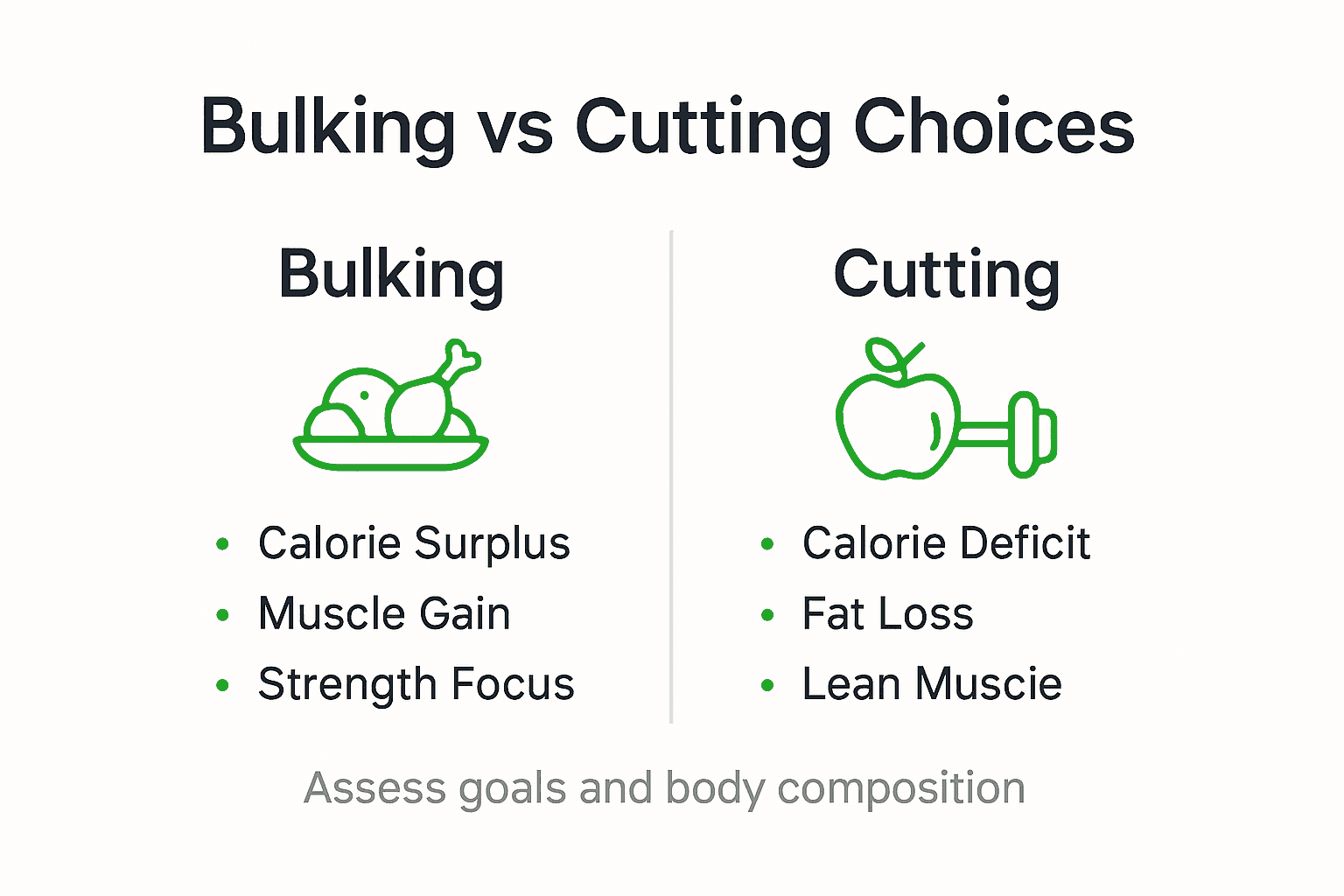
Pro tip: Conduct a comprehensive body composition assessment using multiple measurement techniques, including DEXA scans, calliper measurements, and bioelectrical impedance, to make a scientifically informed decision about your bulking or cutting phase.
The following table summarises body composition assessment tools and their unique advantages for phase selection:
| Assessment Method | What it Measures | Benefits |
|---|---|---|
| Caliper Measurements | Skinfold thickness | Affordable, quick |
| DEXA Scan | Body fat, bone, and lean mass | Highly accurate, detailed |
| Bioelectrical Impedance | Total body water, lean mass | Easy, non-invasive |
| Progress Photos | Visual changes over time | Tracks definition and shape |
Common Mistakes and How to Avoid Them
Navigating the complexities of bulking and cutting requires understanding the most prevalent pitfalls that can derail fitness progress. Many athletes inadvertently compromise their physique transformation by adopting ineffective or extreme approaches that create long-term metabolic challenges. Recognising and preempting these common errors is crucial for sustainable muscle development and body composition management.
Dirty Bulking Misconceptions represent one of the most significant nutritional errors in muscle-building strategies. This approach involves consuming excessive calories without regard to food quality, leading to unnecessary fat accumulation and potential metabolic dysfunction. Strategic bulking demands a precise balance between calorie surplus and nutritional integrity. Athletes must prioritise nutrient-dense whole foods, maintaining a modest calorie surplus of 300-500 calories above maintenance levels, rather than indiscriminately consuming processed or high-sugar foods that compromise physiological efficiency.
Psychological pitfalls often accompany physical training challenges. Obsessive calorie tracking, extreme dietary restrictions, and unrealistic expectations can lead to disordered eating patterns and diminished training performance. Experienced athletes understand that sustainable progress requires flexible approaches, incorporating periodic diet breaks, listening to bodily signals, and avoiding rigid, all-or-nothing mentalities. Monitoring body composition through multiple assessment methods, including progress photos, measurements, and performance metrics, provides a more holistic view of fitness progression than solely relying on scale weight.
Pro tip: Implement a structured, periodic nutrition review process, tracking not just calories and macronutrients, but also subjective markers like energy levels, recovery quality, and overall well-being to ensure your bulking and cutting strategies remain adaptive and health-focused.
Enhance Your Bulking and Cutting Cycles with Targeted Supplements
Successfully navigating the challenges of bulking and cutting requires more than just diet and training adjustments. The article highlights common pain points such as maintaining metabolic efficiency, preserving muscle mass during calorie deficits, and achieving an optimal balance between muscle gain and fat loss. With concepts like clean bulking, controlled calorie surplus, and strategic macronutrient intake, supplement support becomes essential to fuel your workouts, enhance recovery, and keep your metabolism humming.
Explore high-quality proteins, pre-workouts, and recovery aids designed to maximise muscle growth during bulking and promote fat loss during cutting.

Take control of your body transformation today by choosing supplements tailored to your specific phase. Visit MyGymSupplements.shop for a comprehensive selection that supports every step of your fitness journey. Don’t wait to optimise your muscle gain and fat loss experience with effective nutrition solutions that match your goals.
Frequently Asked Questions
What is the difference between bulking and cutting?
Bulking is a phase aimed at increasing muscle mass by consuming a calorie surplus, while cutting focuses on reducing body fat while preserving muscle mass through a calorie deficit.
How long do bulking and cutting phases typically last?
Bulking phases generally last 4-6 weeks, whereas cutting phases usually span 6-8 weeks, depending on individual goals and body composition.
What should my caloric intake be during bulking and cutting?
During bulking, you should consume 300-500 calories above maintenance levels, while in cutting, aim for a 10-20% calorie deficit below maintenance to effectively promote fat loss.
How do I maintain muscle mass during a cutting phase?
To preserve muscle mass while cutting, ensure high protein intake, incorporate strength training, and adopt a well-planned caloric deficit to encourage fat loss without sacrificing lean muscle.

0 comments