

Most British aspiring bodybuilders face confusion when it comes to bulking and muscle gain. While nearly 60 percent of beginners believe bulking is just eating more food, the reality is much more complex. Getting this phase right can mean the difference between lean muscle and unwanted fat. This guide breaks down common misconceptions and offers practical advice for British lifters who want proven strategies, clear nutrition tips, and the most effective supplements to fuel real growth.
Table of Contents
- Bulking Defined And Common Misconceptions
- Types Of Bulking: Clean Vs Dirty Approaches
- Nutrition, Training, And Supplement Essentials
- Bulking Cycles: Duration And Monitoring Progress
- Risks, Side Effects, And What To Avoid
- Comparing Bulking To Cutting Phases
Key Takeaways
| Point | Details |
|---|---|
| Effective Bulking Requires Precision | Bulking should focus on creating a controlled calorie surplus through monitored nutrition and resistance training, rather than unrestricted eating. |
| Choose Clean Bulking for Long-term Success | Opt for a clean bulking approach, emphasising nutrient-dense foods to minimise fat gain while promoting lean muscle growth. |
| Monitor Progress During Bulking Cycles | Regularly track key performance metrics and adjust nutrition and training strategies as necessary to prevent plateaus and ensure continued progress. |
| Understand Bulking and Cutting Differences | Recognise the distinct physiological goals of bulking for muscle gain and cutting for fat loss, and adapt strategies accordingly for optimal results. |
Bulking Defined and Common Misconceptions
Bulking represents a strategic nutritional and training approach designed to systematically increase muscle mass and body weight. Unlike popular misconceptions, effective bulking requires precise calorie management and targeted resistance training, not simply consuming excessive food. The core objective is creating a calculated calorie surplus that supports muscle growth while minimising unnecessary fat accumulation.
Many fitness enthusiasts misunderstand bulking as a free pass to consume unlimited calories, which leads to uncontrolled weight gain and potential health risks. In reality, successful bulking demands a nuanced approach that balances nutrition, protein intake, and structured strength training. Fitness experts recommend tracking macronutrient ratios to ensure the surplus calories primarily support muscle development rather than excessive fat storage.
Common bulking misconceptions include believing that weight gain automatically translates to muscle gain, or that consuming massive quantities of unhealthy foods will produce optimal results. Professional bodybuilders and sports nutritionists emphasise the importance of nutrient-dense calories from lean proteins, complex carbohydrates, and healthy fats. Quality matters significantly more than quantity when pursuing muscle hypertrophy.
Pro Tip: Precision Tracking: Invest in a digital food scale and nutrition tracking app to meticulously monitor your daily calorie and macronutrient intake, ensuring your bulking strategy remains scientifically targeted and effective.
Types of Bulking: Clean vs Dirty Approaches
In the realm of muscle growth, two primary bulking strategies emerge: clean bulking and dirty bulking. These approaches differ fundamentally in their nutritional philosophy and long-term health implications. Nutrition experts highlight the critical differences between these methods for athletes seeking optimal muscle development.
Clean bulking represents a disciplined approach characterised by controlled calorie increases and strategic nutrient selection. Practitioners focus on consuming high-quality, nutrient-dense foods like lean proteins, complex carbohydrates, and healthy fats. The goal is to minimise fat gain while maximising muscle growth, requiring meticulous meal planning and precise macro tracking. This method demands greater discipline but offers more sustainable results, supporting gradual, lean muscle development without significant metabolic stress.
Dirty bulking, conversely, adopts a more relaxed nutritional strategy where calorie intake is less regulated. Individuals following this approach consume larger quantities of food without strict regard for nutritional quality, often incorporating high-calorie processed foods. While this method can lead to faster weight gain, it typically results in substantial fat accumulation alongside muscle growth. Professional bodybuilders and sports nutritionists generally caution against dirty bulking due to potential long-term health complications and the additional challenge of subsequent fat loss phases.

Pro Tip: Strategic Nutrition Planning: Develop a weekly meal preparation routine that prioritises whole foods, pre-calculates your macro requirements, and ensures a consistent, controlled approach to muscle gain while minimising unnecessary fat storage.
Here is a concise comparison of clean bulking and dirty bulking strategies:
| Aspect | Clean Bulking | Dirty Bulking |
|---|---|---|
| Calorie Approach | Slight surplus, closely monitored | Large surplus, loosely monitored |
| Food Quality | Emphasises whole, nutrient-rich foods | Allows processed, calorie-dense foods |
| Fat Gain | Minimised through careful tracking | Often substantial and rapid |
| Long-term Health | Supports sustained well-being | Increases risk of complications |
Nutrition, Training, and Supplement Essentials
Muscle growth demands a meticulously coordinated approach integrating nutrition, strategic training, and targeted supplementation. Comprehensive fitness guidelines emphasise the interconnected nature of these essential components, highlighting that successful bulking requires more than simply consuming extra calories.
Nutritional foundations for effective muscle development centre on precise macronutrient management. Protein intake remains paramount, with recommendations typically ranging between 1.6-2.2 grams per kilogram of body weight daily. Carbohydrates provide crucial energy for intensive resistance training, while healthy fats support hormonal function and recovery. Whole food sources like lean meats, fish, eggs, whole grains, and nutrient-dense vegetables form the cornerstone of an effective bulking diet, ensuring optimal micronutrient absorption and sustained muscle protein synthesis.
Resistance training represents the mechanical stimulus driving muscle hypertrophy. Effective programmes incorporate progressive overload, systematically increasing weight, repetitions, or training volume to continually challenge muscle groups. Compound exercises like squats, deadlifts, bench presses, and overhead presses recruit multiple muscle groups simultaneously, maximising growth potential. Supplements can complement this approach, with protein powders, creatine, and branched-chain amino acids offering targeted nutritional support, though they should never replace whole food nutrition.
Pro Tip: Systematic Tracking: Maintain a detailed training and nutrition log, documenting workout performance, calorie intake, and body composition changes to enable data-driven adjustments to your bulking strategy.
Bulking Cycles: Duration and Monitoring Progress
Successful muscle-building strategies require structured bulking cycles that balance systematic nutrition, targeted training, and comprehensive progress monitoring. Clinical guidelines emphasise the importance of methodical tracking during muscle development interventions, recommending carefully planned approaches that prevent potential health risks.
Typical bulking cycles range between 12 to 16 weeks, allowing sufficient time for meaningful muscle adaptation and growth. During this period, athletes must consistently track key performance metrics including body weight, muscle measurements, strength progression, and body fat percentage. Advanced tracking methods involve regular body composition assessments using techniques like skinfold measurements, bioelectrical impedance analysis, or DEXA scans, providing precise insights into muscle mass and fat distribution changes.
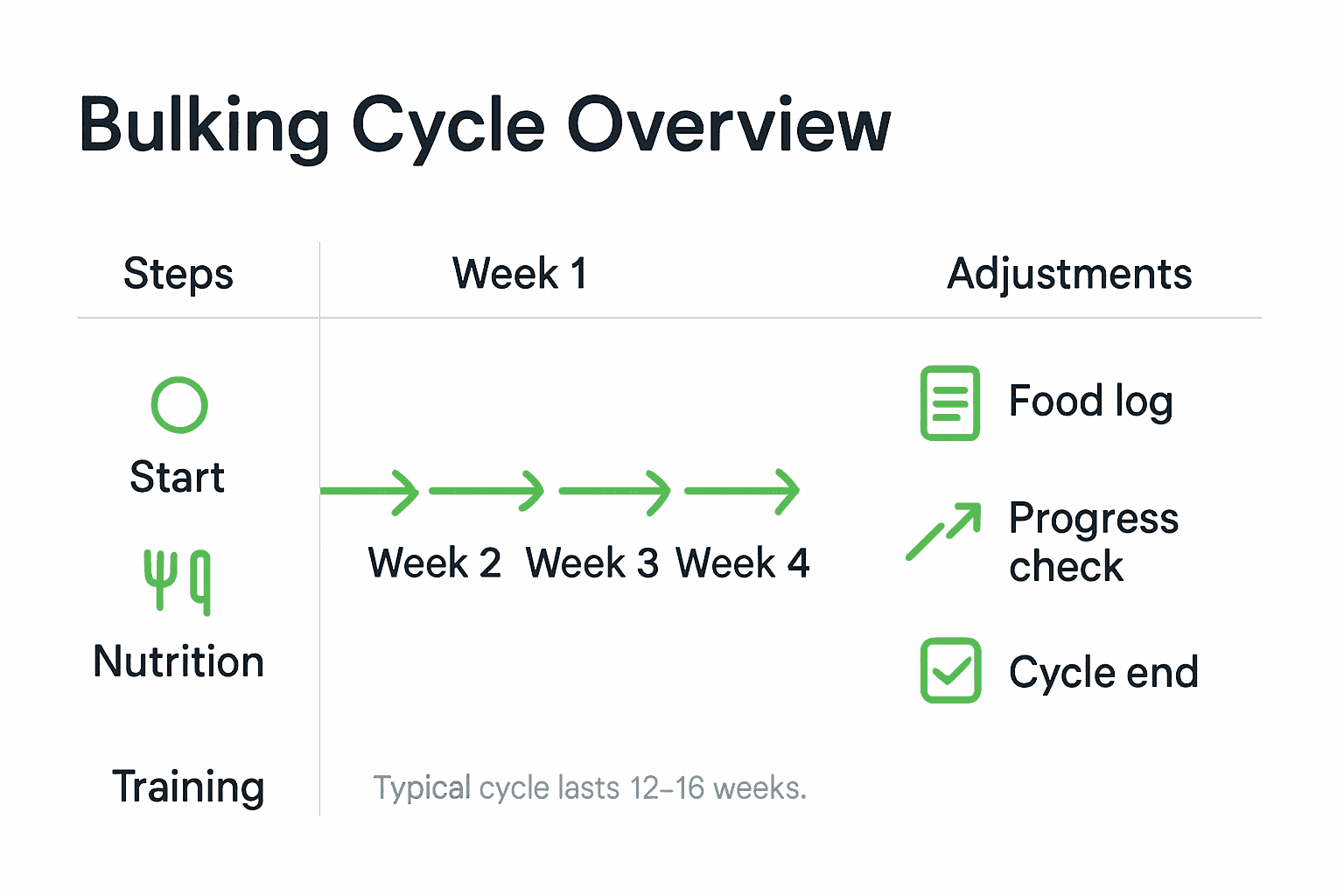
Progressively adjusting nutritional and training variables becomes crucial as the bulking cycle advances. Plateaus are common, necessitating strategic modifications in calorie intake, macronutrient ratios, and workout intensity. Experienced athletes often implement periodic diet breaks or refeed days to manage metabolic adaptations, prevent hormone downregulation, and maintain physiological responsiveness. Blood marker monitoring can offer additional insights, helping identify potential overtraining or nutritional deficiencies that might impede muscle growth.
Pro Tip: Adaptive Tracking: Invest in a comprehensive fitness tracking app or journal that allows detailed logging of weight, measurements, workout performance, and nutritional intake, enabling data-driven adjustments to your muscle-building strategy.
Risks, Side Effects, and What to Avoid
Muscle-building strategies demand careful consideration of potential health risks and physiological limitations. National health guidelines warn against unregulated approaches that might compromise long-term wellbeing, emphasising the critical importance of informed, measured muscle development techniques.
Unhealthy bulking practices can lead to significant metabolic and musculoskeletal complications. Excessive calorie consumption without strategic nutrition often results in disproportionate fat gain, insulin resistance, and potential cardiovascular strain. Athletes must be particularly vigilant about avoiding performance-enhancing substances, which can trigger severe hormonal disruptions, liver damage, and long-term physiological imbalances. Common risks include uncontrolled weight gain, reduced insulin sensitivity, increased cholesterol levels, and potential psychological dependencies associated with extreme body transformation goals.
Overtraining represents another substantial risk during bulking cycles, potentially leading to chronic injuries, persistent muscle soreness, and compromised immune function. Musculoskeletal health experts highlight the critical balance between exercise intensity and adequate recovery periods, warning that aggressive training without proper rest can precipitate joint stress, tendon inflammation, and extended rehabilitation periods. Sustainable muscle development requires intelligent programming that respects individual physiological limitations, incorporates sufficient rest intervals, and maintains a holistic approach to physical conditioning.
Pro Tip: Injury Prevention: Regularly consult with sports medicine professionals, implement comprehensive warm-up and cool-down routines, and listen to your body’s signals to prevent overtraining and minimise potential long-term physical damage.
Comparing Bulking to Cutting Phases
Bodybuilding and fitness development rely on strategic nutritional phasing between bulking and cutting cycles, each serving distinct physiological objectives. Recent research demonstrates the nuanced approach required for optimal body composition management, highlighting the critical interplay between muscle growth and fat reduction strategies.
Bulking phases prioritise muscle hypertrophy through calculated calorie surplus, typically involving increased protein intake and progressive resistance training. Conversely, cutting phases focus on reducing body fat while preserving hard-earned muscle mass through a controlled calorie deficit. The transition between these phases requires meticulous planning, with protein intake remaining consistently high to mitigate muscle protein breakdown. Successful athletes often implement gradual, incremental changes in nutritional intake rather than abrupt, extreme shifts that might compromise metabolic adaptation and muscle preservation.
The physiological mechanisms underlying bulking and cutting differ significantly. During bulking, the body is primed for anabolism, encouraging muscle protein synthesis through surplus energy and intense resistance training. Cutting phases activate different metabolic pathways, prioritising fat oxidation while maintaining muscle protein synthesis through strategic nutrient timing, high-protein nutrition, and continued strength training. Experienced athletes recognise that these phases are not binary states but nuanced, interconnected approaches requiring continuous metabolic fine-tuning and individualised strategies.
Pro Tip: Metabolic Flexibility: Design your nutritional strategy with periodic, controlled transitions between bulking and cutting phases, allowing your metabolism to adapt smoothly while minimising muscle loss and maximising overall body composition improvements.
This table summarises key differences between bulking and cutting phases:
| Criteria | Bulking Phase | Cutting Phase |
|---|---|---|
| Main Objective | Muscle and weight gain | Fat reduction, muscle retention |
| Energy Balance | Calorie surplus, high protein | Calorie deficit, high protein |
| Training Focus | Progressive overload, volume increase | Strength maintenance, reduced volume |
| Typical Duration | 12-16 weeks per cycle | 8-12 weeks per cycle |
Unlock Your Muscle Growth Potential with Targeted Nutrition
Bulking effectively demands more than just eating more calories it requires precise nutrition and quality supplements to fuel your muscle gain while minimising fat accumulation as highlighted in the article. If you want to embrace clean bulking and optimise your calorie surplus with nutrient-dense proteins, creatine, and amino acids then exploring the right supplements can make all the difference in achieving sustainable muscle growth and faster recovery.

Take control of your bulking journey today by visiting MyGymSupplements.shop where you can browse a wide selection of premium proteins, pre-workouts, and recovery aids designed specifically for muscle hypertrophy. Don’t wait until you hit a plateau or risk unhealthy weight gain discover scientifically backed nutrition tailored to your bodybuilding goals now and transform your training results with every scoop you take.
Frequently Asked Questions
What is bulking and how does it help in building muscle mass?
Bulking is a strategic nutritional and training approach aimed at increasing muscle mass and body weight through a calculated calorie surplus while minimising fat gain. It combines precise calorie management with targeted resistance training to foster muscle growth.
What are the key differences between clean bulking and dirty bulking?
Clean bulking focuses on a controlled calorie surplus with nutrient-dense foods, aiming to minimise fat gain. In contrast, dirty bulking involves larger, less regulated calorie intake often including unhealthy foods, which can lead to significant fat accumulation alongside muscle gain.
How important is protein intake during a bulking phase?
Protein intake is crucial during a bulking phase, with recommendations typically ranging from 1.6 to 2.2 grams per kilogram of body weight daily. Adequate protein supports muscle protein synthesis and recovery, essential for maximising muscle growth.
How can I track my progress effectively during a bulking cycle?
Effective progress tracking during a bulking cycle involves monitoring body weight, muscle measurements, strength gains, and body fat percentage. Advanced methods include using skinfold measurements and bioelectrical impedance analysis to gain insights into muscle and fat distribution.

0 comments