

Your toughest training sessions can leave you feeling wiped, cramping, or struggling to recover fully—even when your nutrition and hydration seem on point. For active athletes across the United Kingdom, mastering your electrolyte balance is the secret weapon that keeps muscles firing, nerves sharp, and hydration locked in. Understanding the science behind these electrically charged minerals empowers you to perform at your best, avoid setbacks, and maximise the benefits of every workout.
Table of Contents
- Electrolytes Explained: Core Role In The Body
- Essential Types Of Electrolytes In Sports
- How Electrolytes Support Hydration And Muscles
- Signs And Risks Of Electrolyte Imbalance
- Proper Electrolyte Supplementation For Athletes
Key Takeaways
| Point | Details |
|---|---|
| Electrolytes are essential for performance | Maintaining electrolyte balance is crucial for optimal muscle function and hydration during intense exercise. |
| Sodium and potassium are critical | Sodium regulates fluid balance, while potassium supports muscle contraction and nervous system function. |
| Proper timing of electrolyte intake matters | Consume electrolytes during exercise and post-workout to enhance performance and recovery. |
| Recognise signs of electrolyte imbalance | Early symptoms like muscle cramps and fatigue should be addressed promptly to prevent severe imbalances. |
Electrolytes Explained: Core Role in the Body
Electrolytes are electrically charged minerals found in your blood, sweat, and cells that control everything from muscle contractions to nerve signals. When you exercise, sweat, or dehydrate, your electrolyte balance shifts. This isn’t just uncomfortable—it directly impacts your performance and recovery.
Your body relies on three key players: sodium, potassium, and calcium. Sodium and chloride manage fluid volume outside your cells, whilst potassium controls the fluid inside them. This balance sounds simple, but electrolytes regulate cellular activity at a level that determines whether your muscles contract properly or cramp under load. Calcium works alongside these minerals to fire nerve impulses that tell your muscles when to engage and release.
Here’s what happens during intense training. Your muscles demand constant electrical signals to work. Without proper electrolyte balance, nerve impulse transmission slows down. Your legs feel heavy. Your grip weakens. You hit a wall far sooner than your fitness level should allow. Additionally, electrolytes maintain cell membrane integrity and support nutrient absorption—meaning they directly affect how well your body uses the protein and carbohydrates you consume.
Your kidneys work constantly to keep electrolytes balanced through hormonal regulation and intestinal absorption. But when you lose fluids through sweat, this system gets stretched thin. Plain water alone won’t restore what you’ve lost. Water dilutes your blood further without replacing the minerals your muscles need to function optimally. This is why understanding what electrolyte drinks actually contain matters for serious athletes.
The takeaway: electrolytes aren’t a luxury supplement. They’re a fundamental requirement for peak performance, especially during high-intensity training or endurance events lasting over 60 minutes.
Pro tip: Monitor your sweat rate during training—weigh yourself before and after a session—then consume electrolytes at roughly 500 to 1,000 mg sodium per hour of intense exercise to maintain performance and prevent cramping.
Essential Types of Electrolytes in Sports
Not all electrolytes do the same job. Each mineral plays a distinct role in keeping your body functioning during intense exercise. Understanding which electrolytes matter most helps you choose the right supplementation strategy for your training demands.
Sodium is your performance workhorse. It regulates fluid balance outside your cells and maintains blood volume during exercise. When you sweat, sodium leaves your body faster than other minerals, which is why it’s the primary electrolyte in most sports drinks. Athletes who neglect sodium replacement often experience reduced endurance, earlier fatigue onset, and increased cramping risk.
Potassium works inside your cells, controlling muscle contractions and nerve signalling. It works in partnership with sodium to create the electrical gradients your muscles need to fire properly. During prolonged training, potassium depletion can cause weakness and irregular heartbeat. Many athletes overlook potassium in favour of sodium alone, but both are critical for optimal function.
Calcium and magnesium complete the core team. Calcium supports muscle contraction and bone health, whilst magnesium regulates muscle relaxation and energy production. Athletes lose calcium and magnesium through sweat during intense exercise, particularly in hot environments. A deficit in either mineral accelerates fatigue and impairs recovery.
Here’s what matters most: during high-intensity or prolonged exercise, especially in heat, electrolyte replacement prevents dehydration and muscle cramps. A balanced electrolyte formula contains all four minerals in appropriate ratios. Simple water won’t cut it if you’re training hard for over 60 minutes. You need electrolyte powder benefits that deliver sodium, potassium, calcium, and magnesium together.
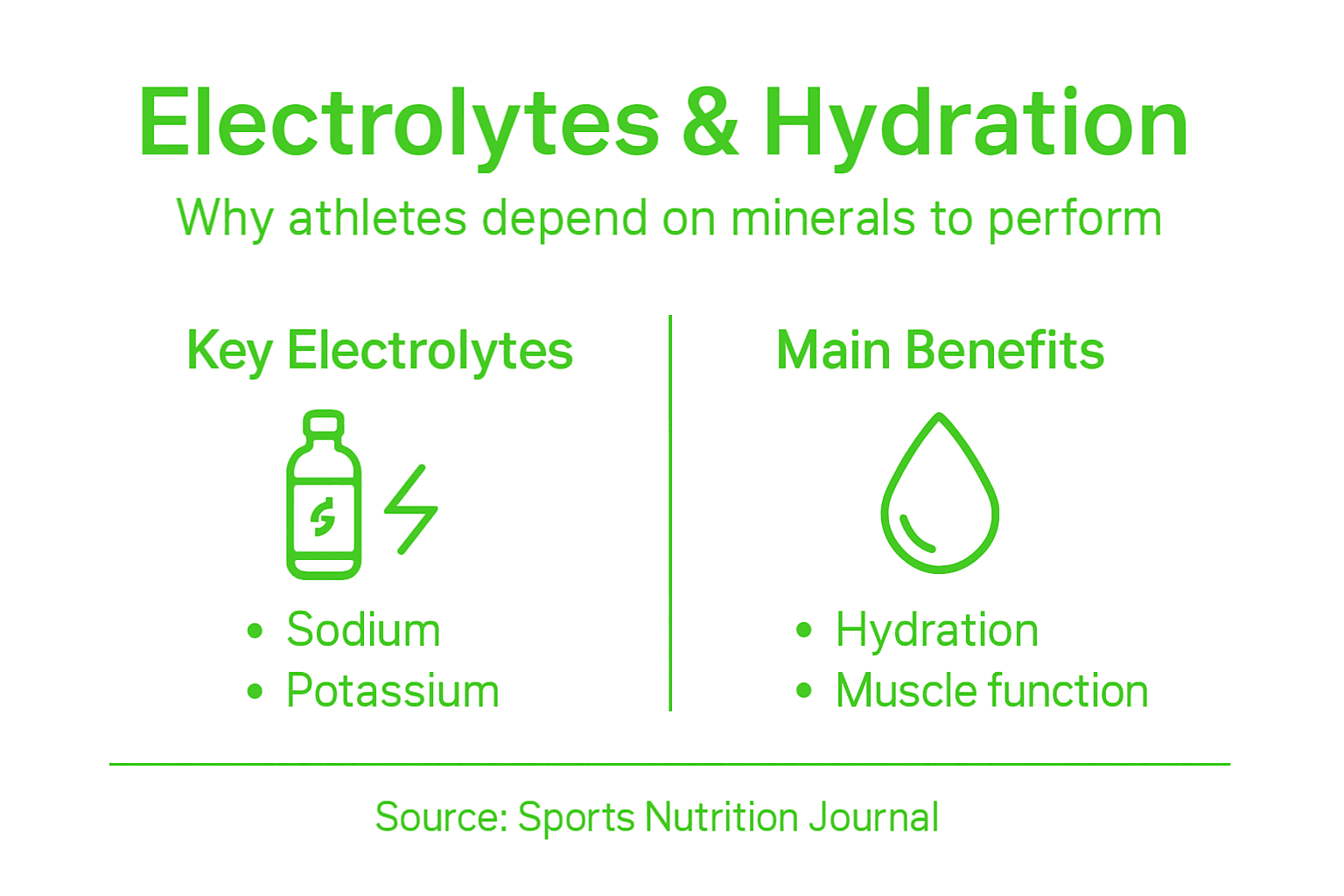
Here’s a concise summary of the primary electrolytes and their specific roles in athletic performance:
| Electrolyte | Main Function | Impact on Training | Deficiency Effects |
|---|---|---|---|
| Sodium | Fluid balance, nerve signals | Maintains endurance and hydration | Cramping, early fatigue |
| Potassium | Muscle contraction, cell function | Prevents weakness, regulates heartbeat | Muscle weakness, irregular heartbeat |
| Calcium | Muscle contraction, nerve impulse | Supports muscle power, bone health | Poor muscle function, slow recovery |
| Magnesium | Muscle relaxation, energy production | Reduces fatigue, supports recovery | Muscle spasms, low energy |
Pro tip: Consume electrolytes that contain at least 300 to 500 mg sodium per serving during training, with a 3:1 sodium to potassium ratio for optimal absorption and performance maintenance.
How Electrolytes Support Hydration and Muscles
Hydration isn’t just about drinking water. Your cells need electrolytes to actually absorb and retain that water. Without them, fluid passes straight through you, leaving your muscles dehydrated even when you’re drinking constantly. This is the critical difference between feeling thirsty and being properly hydrated.

Water moves into cells through osmosis, but electrolytes control the direction and speed of this movement. Sodium and potassium create an electrical gradient that pulls water into muscle cells where it’s needed most. When you lose electrolytes through sweat, your body struggles to hold onto water, which is why plain H2O alone won’t keep you hydrated during intense training. Your muscles simply can’t retain it.
Muscle function depends entirely on electrolyte balance. Sodium triggers muscle contraction by allowing calcium to enter muscle cells. Potassium enables the muscle to relax afterwards. This contract and release cycle happens thousands of times during a single workout. Skip electrolyte replacement and your muscles fatigue faster because they can’t complete this electrical exchange efficiently. Performance drops. Cramping increases.
The hydration and muscle connection runs deeper. When electrolytes are depleted, blood volume decreases, which means less oxygen reaches your working muscles. Your heart works harder to compensate. Core temperature rises. You hit the wall earlier than your fitness deserves. Conversely, proper hydration and muscle power come from maintaining electrolyte balance throughout your session.
During recovery, electrolytes matter just as much. Your muscles use sodium and potassium to repair damaged fibres and rebuild glycogen stores. Without adequate electrolyte replacement post-workout, your recovery slows dramatically. You feel sore longer. Adaptation to training stalls.
The bottom line: treat electrolytes as part of your hydration strategy, not separate from it. Water carries the electrolytes. Electrolytes hold the water where it counts.
Pro tip: Consume electrolytes with meals or carbohydrates during recovery to enhance water retention and accelerate muscle protein synthesis, maximising the benefits of your training stimulus.
Signs and Risks of Electrolyte Imbalance
Electrolyte imbalances sneak up on you. The early warning signs feel subtle—a bit of fatigue here, some muscle twitching there—but they escalate quickly if ignored. Your body’s electrical system doesn’t forgive neglect.
Muscle cramps are often the first red flag. They hit without warning during or after training, particularly in your legs or feet. Alongside cramps, you might notice unusual fatigue that doesn’t match your training intensity. Your legs feel heavier than normal. Your coordination drops. These aren’t signs of poor fitness; they’re your body telling you electrolytes are depleted.
Dizziness and headaches follow closely. You stand up after training and the room spins. Concentration becomes difficult. Your thinking feels foggy. Even small electrolyte imbalances cause symptoms like dizziness and confusion, especially when combined with dehydration and intense exertion. Don’t dismiss these as normal post-workout effects—they’re warning signals.
More serious imbalances produce alarming symptoms. Irregular heartbeat, tingling in your extremities, numbness, nausea, and vomiting indicate significant depletion. Severe imbalances may cause irregular heartbeat and require medical attention. If you experience chest pain, extreme confusion, or loss of consciousness, seek emergency care immediately. These represent life-threatening electrolyte disorders.
Athletes face particular risk. Prolonged sweating in hot conditions, rapid weight loss during competition, or excessive training without proper electrolyte replacement creates dangerous deficits. Vomiting or diarrhoea accelerates imbalance dramatically. Even certain medications or underlying health conditions amplify risk significantly.
The key is recognising early symptoms before they escalate. Cramping and fatigue are your opportunity to intervene with electrolyte supplementation. Waiting until dizziness or heart palpitations occur means you’ve already created a serious problem.
Pro tip: If you experience persistent muscle cramps, dizziness, or irregular heartbeat during or after training, consume an electrolyte drink immediately and consult your GP if symptoms persist beyond a few hours.
Proper Electrolyte Supplementation for Athletes
Getting electrolyte supplementation right transforms your performance. But there’s a difference between random consumption and a strategic approach. Timing, dosage, and formula composition all matter when you’re serious about results.
Start with dosage guidelines. For training sessions under 60 minutes, water alone generally suffices. But beyond 60 minutes of intense activity, you need electrolytes. Aim for 500 to 1,000 milligrams of sodium per hour of exercise. This range prevents both depletion and overconsumption. Pair sodium with a 3:1 sodium to potassium ratio for optimal absorption and cellular function. Isotonic drinks maintain this balance perfectly, making them ideal during sustained training.
Timing is everything. Consume electrolytes during exercise, not just before or after. Your body loses minerals continuously through sweat, so replacement needs to happen in real time. Sipping electrolyte drinks every 15 to 20 minutes keeps your sodium and potassium stable throughout your session. This strategy prevents the dramatic crashes that cause cramping and fatigue.
Post-workout recovery demands attention too. Within 30 minutes of finishing, consume electrolytes alongside carbohydrates and protein. This combination accelerates glycogen replenishment and muscle repair. Your muscles are primed to absorb nutrients during this window, so capitalise on it. Neglecting post-workout electrolytes wastes the training stimulus you’ve just created.
Choose your supplement format wisely. Drinks offer convenience and hydration simultaneously. Powders provide flexibility and often better value for money. Tablets work well for athletes who dislike liquid supplementation. The best option is whichever you’ll actually use consistently during training.
Compare the key supplementation formats to determine what suits your routine best:
| Format | Advantages | Limitations |
|---|---|---|
| Drinks | Convenient, immediate hydration | Bulky for transport |
| Powders | Customisable dosage, cost-effective | Requires mixing on-site |
| Tablets | Portable, discreet | May hydrate less rapidly |
Environmental conditions demand flexibility. Hot and humid weather increases sweat loss dramatically. You need more electrolytes in summer than winter, and more in tropical climates than temperate ones. Adjust your supplementation strategy based on conditions rather than following a rigid formula.
Pro tip: Calculate your individual sweat rate by weighing yourself before and after a 60 minute training session, then adjust electrolyte intake based on your unique losses rather than following generic recommendations.
Optimise Your Hydration and Performance with the Right Electrolytes
Experiencing frequent muscle cramps, early fatigue or heavy legs during intense workouts signals an electrolyte imbalance that can seriously limit your peak performance. The article emphasises how essential electrolytes like sodium, potassium, calcium and magnesium are not just for hydration but for muscle power, nerve signalling and recovery. Without replenishing these key minerals during and after exercise, even the most dedicated training efforts can stall, leaving you frustrated and underperforming.
Take control of your hydration strategy today by exploring our targeted electrolyte supplements designed specifically for athletes and fitness enthusiasts. At MyGymSupplements.shop, you can find carefully balanced formulas in the form of powders, tablets and drinks that replace lost minerals and support continuous muscle function, endurance and faster recovery. Don’t settle for water alone when you can fuel your body with the essential electrolyte blend proven to enhance your training outcomes. Visit MyGymSupplements.shop now to browse our full selection and start winning every workout with smarter hydration.
Frequently Asked Questions
What are electrolytes and why are they important for hydration?
Electrolytes are electrically charged minerals that control fluid balance in the body. They are essential for hydration, as they help your cells absorb and retain water, ensuring optimal muscle function and performance during exercise.
How do electrolytes affect athletic performance?
Electrolytes play a crucial role in muscle contraction and nerve signalling. Proper electrolyte balance helps maintain endurance, reduces fatigue, and prevents cramping, particularly during intense or prolonged exercise.
When should I consume electrolytes during my training?
It’s best to consume electrolytes during exercise, especially if your session exceeds 60 minutes. Aim to sip on an electrolyte drink every 15 to 20 minutes to maintain stable sodium and potassium levels throughout your workout.
What is the recommended dosage of electrolytes for athletes?
For sessions longer than 60 minutes, aim for 500 to 1,000 mg of sodium per hour of exercise, ideally combined with a 3:1 sodium to potassium ratio for optimal absorption and performance maintenance.
Recommended
- What Is Electrolyte Drink? Complete Guide UK – MyGymSupplements
- Complete Guide to Electrolyte Powder Benefits – MyGymSupplements
- Understanding the Importance of Hydration for Athletes – MyGymSupplements
- 7 Essential Hydration Tips for Athletes to Boost Performance – MyGymSupplements
- Understanding Hydration and Weight Loss: The Connection - LeanAndFit

0 comments