

Many British athletes underestimate how vital vitamin D is for muscle growth and rapid recovery. Around 20 percent of adults may be deficient without even knowing it, especially during colder months when sunlight is scarce. If you focus on training in indoor gyms, dark mornings, or wear layers for outdoor sessions, your vitamin D levels might be at risk. This article clears up common misconceptions and shows how smart supplementation can benefit every fitness enthusiast striving for peak health in the UK.
Table of Contents
- Vitamin D Explained and Common Myths
- Types of Vitamin D and Their Sources
- Role of Vitamin D in Fitness and Health
- Recognising Deficiency and Risk Factors
- UK Recommendations and Safe Supplementation
Key Takeaways
| Point | Details |
|---|---|
| Vitamin D’s Importance | Vitamin D is essential for athletic performance and overall health, influencing muscle strength, recovery, and immune function. |
| Deficiency Risks | Athletes, particularly those with darker skin or limited sunlight exposure, should be aware of their increased risk for Vitamin D deficiency. |
| Supplementation Recommendations | The UK guidelines recommend 10 micrograms daily, with higher doses potentially needed in certain high-risk groups or during low sunlight periods. |
| Forms of Vitamin D | Vitamin D3 is the preferred supplement form due to its superior absorption and bioactivity compared to Vitamin D2. |
Vitamin D Explained and Common Myths
Vitamin D is a critical nutrient that acts more like a hormone than a traditional vitamin. Despite its name, it’s not just another supplement - it’s a fundamental component of athletic performance and overall health. Vitamin D helps regulate calcium and phosphate levels, which are essential for maintaining strong bones, muscles, and supporting metabolic functions.
Understanding Vitamin D requires dispelling several common myths. Many athletes mistakenly believe they get sufficient Vitamin D through casual sun exposure. However, in the UK’s climate, especially during autumn and winter months, natural synthesis becomes challenging. Darker skin tones, indoor training environments, and clothing that covers most skin can significantly reduce Vitamin D production. The body typically synthesises this crucial nutrient through direct sunlight exposure, but modern lifestyles often limit this natural process.
Athletes need to recognise that Vitamin D deficiency isn’t just about bone health. It plays a crucial role in muscle strength, recovery, and immune system function. Studies have shown that low Vitamin D levels can negatively impact muscle performance, increase injury risk, and slow recovery times. Interestingly, many professional athletes undergo regular testing to monitor their Vitamin D levels, understanding its profound impact on training outcomes.
Pro tip: Consider getting your Vitamin D levels professionally tested every six months, particularly if you train indoors or live in regions with limited sunlight exposure.
Types of Vitamin D and Their Sources
Vitamin D is not a single compound but encompasses two primary forms: vitamin D2 and vitamin D3. Vitamin D3 (colecalciferol) is the preferred form for supplementation, naturally produced in human skin through direct sunlight exposure. This form is considered more effective and biologically active compared to its counterpart, vitamin D2.
Natural sources of vitamin D are diverse and include both dietary and environmental origins. Athletes can obtain vitamin D through multiple channels: sunlight exposure, food consumption, and targeted supplementation. Dietary sources rich in vitamin D include oily fish like salmon and mackerel, red meat, liver, egg yolks, and fortified food products such as cereals and margarine. In the UK, sunlight exposure during the months of April through September provides an excellent natural synthesis opportunity for vitamin D production.
The body’s ability to produce vitamin D varies significantly based on several factors. Skin pigmentation, geographical location, time spent outdoors, and clothing choices all impact vitamin D synthesis. Dark-skinned individuals, indoor athletes, and those living in regions with limited sunlight may require more strategic approaches to maintaining adequate vitamin D levels. Interestingly, vitamin D is fat-soluble, meaning it can be stored in liver and fat tissues, providing a reserve during periods of limited exposure.
Here is a comparison between vitamin D2 and D3 to help clarify their differences:
| Characteristic | Vitamin D2 | Vitamin D3 |
|---|---|---|
| Natural sources | Fungi, some plants | Animal products, sunlight |
| Effectiveness | Less bioactive in humans | Highly bioactive and preferred |
| Supplement form | Used in some supplements | Commonly used for supplementation |
| Absorption | Lower compared to D3 | Superior absorption and storage |
Pro tip: Consider consuming vitamin D3 supplements with a fatty meal to enhance absorption and maximise your body’s ability to utilise this crucial nutrient effectively.
Role of Vitamin D in Fitness and Health
Vitamin D plays a critical role in athletic performance and overall physical health, extending far beyond simple bone maintenance. Athletes require optimal vitamin D levels to support muscle function, strength, and injury prevention. This essential nutrient acts as a hormonal regulator that influences muscle protein synthesis, inflammatory responses, and cellular energy production, making it fundamental to peak athletic performance.

The physiological impact of vitamin D on fitness is multifaceted. It supports muscle strength by enhancing neuromuscular junction function, which improves muscle contraction efficiency and reduces the risk of muscle injuries. Research indicates that athletes with sufficient vitamin D levels experience faster recovery times, enhanced muscle repair mechanisms, and improved overall muscular performance. Low vitamin D concentrations can lead to decreased muscle power, increased inflammation, and prolonged recovery periods, potentially compromising an athlete’s training progression.
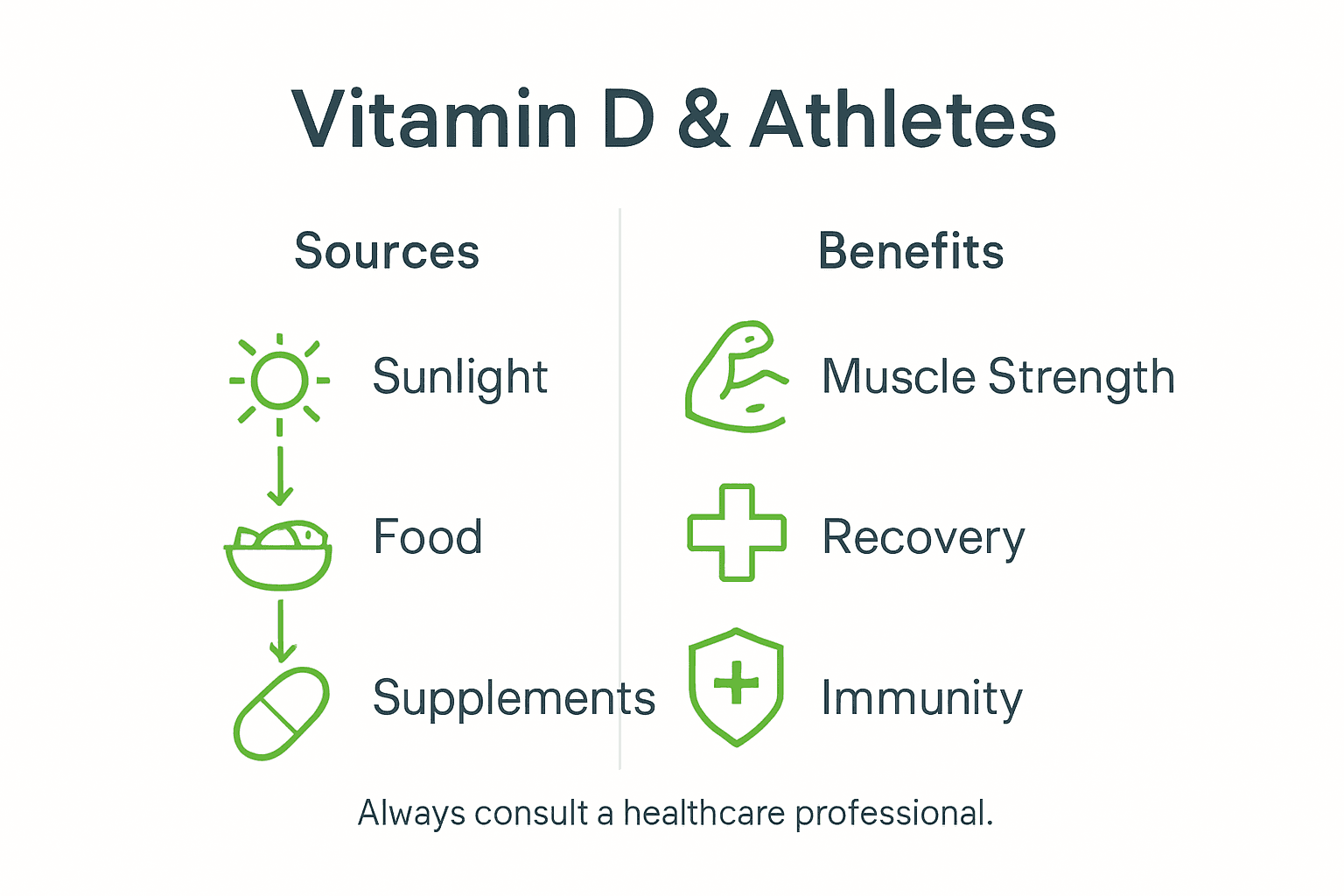
Beyond muscular performance, vitamin D significantly contributes to broader health parameters critical for athletes. It plays a pivotal role in immune system regulation, helping athletes maintain robust defence mechanisms against infections and supporting consistent training routines. The nutrient also influences bone mineral density, reducing fracture risks and supporting long-term skeletal integrity. Endocrine functions, including testosterone production and metabolic efficiency, are also positively modulated by adequate vitamin D levels, making it a comprehensive performance-enhancing nutrient.
Pro tip: Combine vitamin D supplementation with resistance training and calcium-rich foods to maximise muscle strength and bone density adaptations.
Recognising Deficiency and Risk Factors
Vitamin D deficiency is a widespread concern with complex diagnostic challenges, particularly among athletes and fitness enthusiasts. Understanding the risk factors and potential symptoms is crucial for maintaining optimal physical performance. Approximately 20% of adults may have low vitamin D status, with many remaining undiagnosed due to subtle or non-specific symptoms that can easily be overlooked in active individuals.
Athletes face unique risk factors that increase their likelihood of vitamin D deficiency. Dark-skinned individuals, those training predominantly indoors, and athletes living in regions with limited sunlight are particularly vulnerable. Additional risk factors include obesity, malabsorption conditions, and specific medications that interfere with vitamin D metabolism. Symptoms can manifest as persistent musculoskeletal pain, unexpected muscle weakness, reduced recovery capacity, and increased susceptibility to stress fractures - all of which can significantly impair athletic performance and training consistency.
Recognising the nuanced signs of vitamin D deficiency requires a comprehensive approach. While routine testing is not universally recommended, athletes with persistent fatigue, recurrent injuries, or unexplained muscle weakness should consider professional assessment. Specific indicators include prolonged recovery times, increased inflammation, compromised immune function, and unexplained decreases in muscle strength or power output. Diagnostic approaches may involve blood tests measuring serum 25-hydroxyvitamin D levels, comprehensive health assessments, and detailed discussions about lifestyle, training environment, and dietary habits.
This quick reference summarises key risk factors and signs of vitamin D deficiency in athletes:
| Risk Factor | Typical Sign | Potential Impact |
|---|---|---|
| Indoor training | Persistent fatigue | Weakened muscle performance |
| Darker skin pigmentation | Muscle soreness or weakness | Increased recovery time |
| Limited sun exposure | Recurrent injuries | Higher stress fracture risk |
| Malabsorption conditions | Reduced immune response | Illness affecting training time |
Pro tip: Consult a sports nutritionist or healthcare professional for a personalised vitamin D assessment if you experience recurring muscle weakness or unexplained performance plateaus.
UK Recommendations and Safe Supplementation
Public Health England provides specific guidelines for vitamin D supplementation that are crucial for athletes and fitness enthusiasts navigating nutritional requirements. The standard recommendation is 10 micrograms (400 IU) daily for most adults, with particular emphasis on supplementation during autumn and winter months when natural sunlight exposure is limited. These guidelines take into account the unique challenges of vitamin D synthesis in the UK’s northern latitude and variable climate conditions.
Safe supplementation requires a nuanced understanding of individual risk factors and potential interactions. High-risk groups, including pregnant women, older adults, individuals with darker skin tones, and those with minimal outdoor exposure, may require more targeted supplementation strategies. Athletes should consider professional consultation to determine personalised dosage, as over-supplementation can lead to potential health risks. Quality and source of supplementation matter significantly, with preference given to vitamin D3 (cholecalciferol) over D2, due to its superior absorption and metabolic effectiveness.
Professional athletes and fitness enthusiasts must approach vitamin D supplementation with strategic precision. Recommended dosages typically range between 800-2000 IU daily, depending on individual assessment and lifestyle factors. Blood testing can provide precise insights into current vitamin D status, though routine screening is not universally recommended. Factors such as body composition, training intensity, geographical location, and seasonal variations all play critical roles in determining optimal supplementation protocols.
Pro tip: Combine vitamin D supplements with vitamin K2 to enhance absorption and support calcium metabolism, maximising the nutrient’s effectiveness for athletic performance.
Elevate Your Performance with Essential Vitamin D Support
Athletes often face unique challenges in maintaining optimal vitamin D levels due to limited sun exposure, indoor training, and specific dietary needs highlighted in the article. Low vitamin D can impair muscle strength, recovery, and immune function — crucial elements for consistent performance and injury prevention. Address these challenges head on by exploring targeted supplements that replenish this vital nutrient and support your fitness goals.

Discover a wide range of high-quality supplements designed for muscle gain, recovery, and overall wellbeing at MyGymSupplements.shop. Whether you need potent vitamin D3 options or synergistic products like calcium and vitamin K2, our selection helps you unlock your body’s full potential. Don’t let deficiency slow you down. Take action today by visiting our store to find trusted supplements crafted for athletes who demand more from their health and performance.
Frequently Asked Questions
What is the role of vitamin D in athletic performance?
Vitamin D is essential for muscle function, strength, and injury prevention. It influences muscle protein synthesis, enhances muscle contraction efficiency, and supports overall physical health, making it crucial for peak athletic performance.
How can athletes obtain sufficient vitamin D?
Athletes can obtain vitamin D through sunlight exposure, dietary sources (like oily fish, egg yolks, and fortified foods), and targeted supplementation, particularly during months with limited sunlight.
What are the signs of vitamin D deficiency in athletes?
Signs of vitamin D deficiency include persistent musculoskeletal pain, muscle weakness, increased susceptibility to injuries, prolonged recovery times, and reduced immune function, all of which can negatively impact athletic performance.
How much vitamin D should athletes consider supplementing?
Athletes typically consider supplementing between 800-2000 IU of vitamin D daily, depending on individual assessments and lifestyle factors. It is advisable to consult a healthcare professional for personalised dosage recommendations.
Recommended
- Unlock the Power of Bone and Heart Health with Our Top-Notch Vitamin D3 + K2 Supplements 🍵 – MyGymSupplements
- 7 Top Vitamins for Bodybuilders to Boost Performance – MyGymSupplements
- Understanding the Importance of Hydration for Athletes – MyGymSupplements
- 7 Key Nutrients for Muscle Growth Every Athlete Needs – MyGymSupplements
- Video for Business: 5 Sports Trends to Watch - Kicker Video

0 comments