

Many British athletes and fitness enthusiasts overlook a silent threat to their workout results. Up to one in four British adults may be affected by micronutrient deficiencies without realizing it. These gaps in nutrition can hold you back, leaving you feeling drained or struggling to recover after intense sessions. By understanding where these deficiencies sneak in, you can make smarter choices about both your diet and supplement regime to support better muscle growth and sustained performance.
Table of Contents
- What Is Micronutrient Deficiency?
- Types and Key Roles of Micronutrients
- How Deficiencies Impact Performance and Health
- Signs, Risks, and Common Misconceptions
- Prevention: Diet, Supplements, and Uk Advice
Key Takeaways
| Point | Details |
|---|---|
| Micronutrient Deficiency Impact | Micronutrient deficiencies can significantly undermine athletic performance and overall health, leading to fatigue and impaired recovery. |
| At-Risk Populations | Athletes, vegetarians, and individuals on restricted diets are particularly vulnerable to micronutrient deficiencies. |
| Prevention Strategies | A balanced diet rich in diverse, nutrient-dense foods is essential for preventing deficiencies, with targeted supplements advised only when necessary. |
| Monitoring Health | Regular blood tests and consultations with nutritionists can help identify and address potential micronutrient deficiencies effectively. |
What Is Micronutrient Deficiency?
Micronutrient deficiency represents a nutritional challenge where the body experiences insufficient intake or absorption of critical vitamins and minerals essential for optimal health and performance. Unlike macronutrient deficiencies that impact overall calorie consumption, micronutrient shortages create a more nuanced problem of ‘hidden hunger’.
In the fitness world, micronutrient deficiencies can significantly undermine athletic performance and muscle development. These nutritional gaps occur when dietary intake fails to provide adequate quantities of essential vitamins and minerals required for metabolic processes, immune function, and cellular repair. Common deficiencies include iron, zinc, vitamin D, and B-complex vitamins, which play crucial roles in energy production, muscle recovery, and overall physiological functioning.
Particularly vulnerable populations include athletes on restricted diets, vegetarians, individuals with high metabolic demands, and those consuming processed foods with limited nutritional value. Understanding nutritional requirements becomes paramount for maintaining peak physical condition. Deficiencies can manifest through symptoms like persistent fatigue, reduced muscle strength, impaired recovery, compromised immune response, and decreased workout performance.
Quick Tip: Consider getting a comprehensive blood panel test annually to identify potential micronutrient deficiencies before they significantly impact your fitness goals.
Types and Key Roles of Micronutrients
Micronutrients represent a complex family of essential vitamins and minerals that play critical roles in maintaining optimal physiological functioning, particularly for athletes and fitness enthusiasts. Specific micronutrients support diverse bodily functions ranging from immune system regulation to energy metabolism and cellular repair.
The primary categories of micronutrients include fat-soluble vitamins (A, D, E, K), water-soluble vitamins (B-complex and C), and critical minerals such as calcium, magnesium, zinc, and iron. Each micronutrient serves unique purposes: vitamin D supports bone health and muscle function, B-complex vitamins facilitate energy production, iron enables oxygen transportation, and zinc contributes to immune response and protein synthesis. Athletes require higher quantities of these nutrients to support intense physical training and rapid cellular recovery.

Micronutrient research demonstrates significant variations in nutritional requirements based on individual metabolic demands, training intensity, and dietary patterns. Populations with elevated nutritional needs include endurance athletes, strength trainers, vegetarians, and individuals following restrictive dietary regimens. Understanding individual micronutrient profiles becomes crucial for optimising performance, preventing deficiencies, and maintaining robust physiological systems.
Pro Tip: Consider consulting a sports nutritionist to develop a personalised micronutrient assessment that matches your specific fitness goals and metabolic profile.
How Deficiencies Impact Performance and Health
Micronutrient deficiencies represent a significant challenge for athletes and fitness enthusiasts, creating profound disruptions in physiological performance and overall health. Nutritional inadequacies contribute to multiple health complications, ranging from compromised immune function to reduced metabolic efficiency and diminished physical capabilities.
The most critical performance impacts emerge through systematic disruptions in energy metabolism, muscle recovery, and cellular regeneration. Iron deficiencies, for instance, directly impair oxygen transportation, leading to increased fatigue and reduced endurance. Vitamin D shortages can compromise muscle strength and bone density, while zinc insufficiencies interrupt protein synthesis and immune system responsiveness. These micronutrient gaps create cascading effects that progressively undermine an athlete’s capacity to train effectively and recover efficiently.
Common nutrient deficiencies demonstrate complex health implications, extending beyond immediate performance metrics. Prolonged micronutrient insufficiencies can trigger chronic conditions including anaemia, compromised immune responses, delayed wound healing, and altered cognitive function. For fitness enthusiasts, these challenges translate into reduced training intensity, slower recovery periods, increased susceptibility to injuries, and diminished overall athletic potential.
Here is a summary of how common micronutrient deficiencies affect athletic performance and overall health:
| Micronutrient | Typical Deficiency Effects | Impact on Physical Activity | Long-Term Health Risks |
|---|---|---|---|
| Iron | Reduced oxygen transport | Fatigue, poor endurance | Anaemia, immune issues |
| Vitamin D | Weakened bone structure | Muscle weakness, injuries | Osteoporosis, chronic pain |
| Zinc | Impaired protein synthesis | Slow healing, frequent illness | Immune dysfunction, hormonal imbalance |
| B-complex | Disrupted energy metabolism | Lethargy, slow recovery | Nerve damage, cognitive changes |
Pro Tip: Implement quarterly blood tests to comprehensively monitor your micronutrient levels and proactively address potential nutritional deficiencies before they significantly impact your fitness performance.
Signs, Risks, and Common Misconceptions
Micronutrient deficiency manifests through a complex array of subtle and potentially misleading symptoms that frequently go unrecognised by fitness enthusiasts and athletes. Diagnostic challenges surrounding nutrient deficiencies mean many individuals continue training without understanding their underlying nutritional gaps, risking long-term performance degradation and health complications.
The most prevalent signs include persistent fatigue, unexplained muscle weakness, slow recovery periods, increased susceptibility to infections, and cognitive challenges such as reduced concentration and mental clarity. Specific risk groups encompass vegetarian and vegan athletes, individuals following restrictive dietary regimens, those with high-intensity training schedules, and people experiencing chronic stress. Physiological indicators like brittle nails, hair loss, pale skin, and delayed wound healing can signal deeper micronutrient insufficiencies that compromise overall athletic performance.
Common misconceptions about nutrient deficiencies perpetuate potential health risks by creating false narratives about nutritional adequacy. Many athletes mistakenly believe that consuming sufficient calories automatically ensures complete nutritional intake, overlooking the nuanced requirements of micronutrients. These misconceptions can lead to prolonged deficiencies, potentially causing serious metabolic disruptions, compromised immune function, and reduced physical resilience. Understanding the difference between caloric intake and genuine nutritional quality becomes paramount for maintaining optimal health and performance.
Pro Tip: Consult a sports nutritionist for a comprehensive metabolic screening that can reveal hidden micronutrient deficiencies before they significantly impact your fitness journey.
Prevention: Diet, Supplements, and UK Advice
Dietary prevention represents the cornerstone of addressing micronutrient deficiencies for fitness enthusiasts across the United Kingdom. UK nutritional guidelines emphasise balanced dietary approaches that prioritise obtaining essential nutrients through whole food sources before considering supplementation, with targeted recommendations for specific population groups.
A comprehensive prevention strategy involves consuming a diverse range of nutrient-dense foods including leafy green vegetables, lean proteins, whole grains, nuts, seeds, and seasonal produce. Athletes should focus on incorporating foods rich in key micronutrients such as iron (found in lean meats and legumes), vitamin D (fatty fish, eggs), zinc (seafood, pumpkin seeds), and B-complex vitamins (wholegrains, nutritional yeast). Strategic meal planning that includes varied food groups can significantly reduce the risk of developing micronutrient deficiencies.
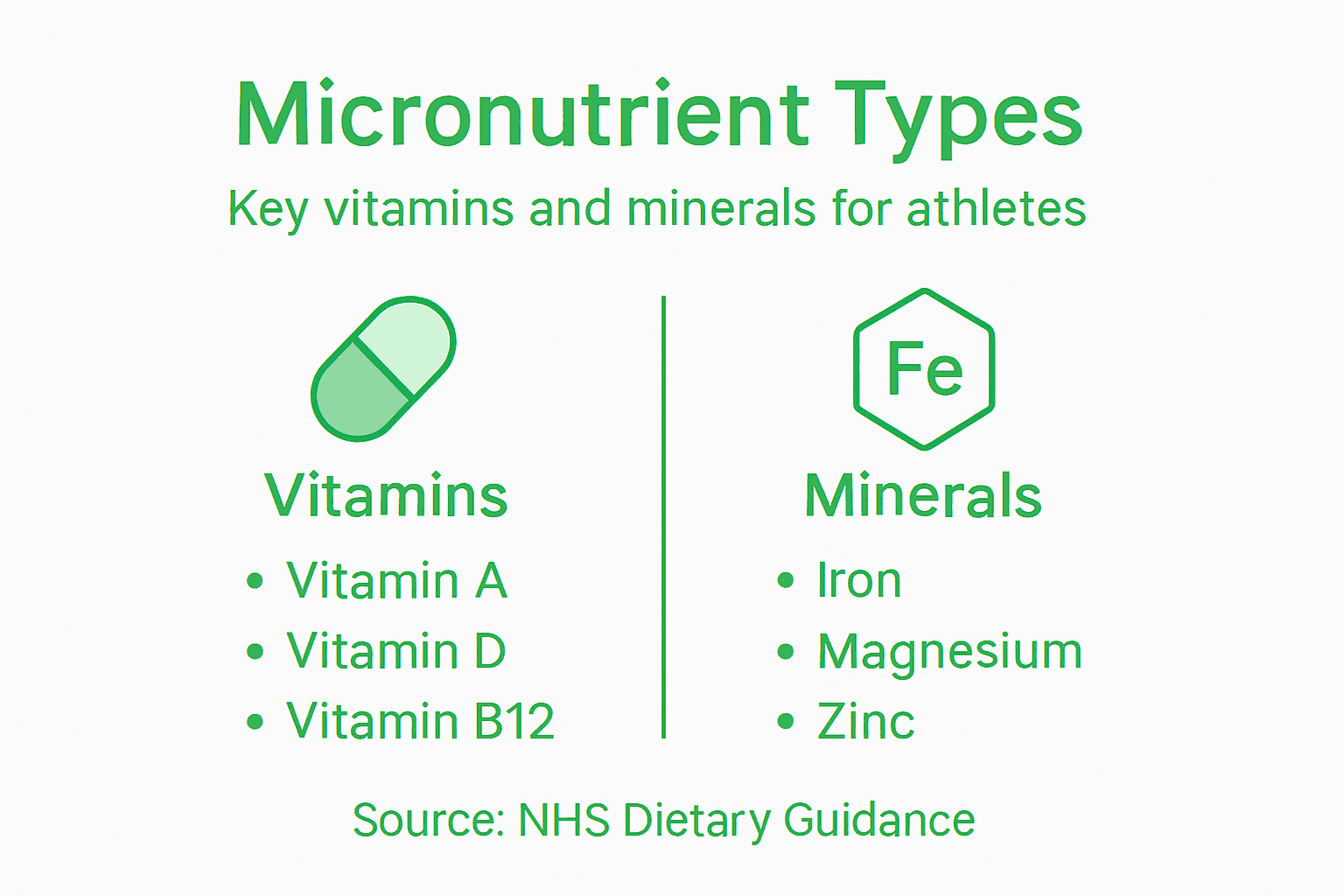
NHS guidance recommends evidence-based supplement use specifically tailored to individual nutritional requirements rather than blanket supplementation. Supplements should be considered when dietary intake proves insufficient, particularly for athletes with increased metabolic demands, individuals following restrictive diets, or those with diagnosed deficiencies. Professional consultation with registered nutritionists or sports dietitians can help develop personalised supplementation strategies that complement individual fitness goals and nutritional needs.
For those seeking to prevent micronutrient deficiencies, this table highlights practical dietary and supplement considerations relevant to UK recommendations:
| Strategy | Key Dietary Sources | Supplement Use Advice | Suggested Professional Support |
|---|---|---|---|
| Balanced meals | Leafy greens, seafood | Only if diet is insufficient | Periodic nutrition review |
| Targeted nutrition | Legumes, eggs, seeds | Match individual needs | Registered dietitian consultation |
| Monitoring intake | Diverse food groups | NHS evidence-based approach | Maintain food diary |
Pro Tip: Maintain a detailed food and supplement diary to track your micronutrient intake and identify potential nutritional gaps before they significantly impact your athletic performance.
Boost Your Fitness by Tackling Micronutrient Deficiency Today
Micronutrient deficiency can silently undermine your energy, muscle recovery, and overall athletic performance. If you experience fatigue, slow recovery, or frequent illness despite your intense training, it might be time to prioritise essential vitamins and minerals like iron, vitamin D, zinc, and B-complex vitamins. Addressing these gaps is key to unlocking your full potential and achieving sustained progress.
Discover how precise supplementation can complement a balanced diet and support your unique metabolic needs. At MyGymSupplements.shop, you will find a wide range of high-quality health and wellbeing products designed specifically for fitness enthusiasts striving to overcome hidden nutritional hurdles.
Health & wellbeing supplements provide targeted nutrients to optimise immune function, energy production, and muscle repair so you can train harder and recover faster.

Take control of your micronutrient intake today and transform your fitness journey. Visit MyGymSupplements.shop now to explore tailored supplements that meet your individual needs. Don’t let nutritional gaps hold you back from reaching peak performance.
Frequently Asked Questions
What are the common signs of micronutrient deficiency?
Common signs include persistent fatigue, muscle weakness, slow recovery, increased infections, and cognitive issues like reduced concentration and clarity.
How do micronutrient deficiencies affect athletic performance?
Micronutrient deficiencies can impair energy metabolism, muscle recovery, and oxygen transport, leading to decreased endurance, increased fatigue, and reduced physical capabilities.
What dietary strategies can help prevent micronutrient deficiencies?
To prevent deficiencies, consume a diverse range of nutrient-dense foods like leafy green vegetables, lean proteins, whole grains, nuts, and seeds. Focusing on foods high in iron, vitamin D, zinc, and B-complex vitamins is essential.
Should athletes consider supplements for micronutrient deficiencies?
Supplements can be beneficial when dietary intake is insufficient. Athletes should consult with a registered nutritionist or sports dietitian to tailor supplementation to their specific needs.
0 comments