

Nearly one in three British adults lack key micronutrients needed for optimal fitness, affecting everything from energy levels to muscle recovery. For many British bodybuilders and fitness enthusiasts, nutritional gaps are more common than expected, even with high-protein diets. Understanding how these tiny vitamins and minerals fuel your athletic progress can help transform your results, revealing practical ways to upgrade your recovery and overall performance.
Table of Contents
- Micronutrient Basics And Common Misconceptions
- Types Of Micronutrients: Vitamins And Minerals
- How Micronutrients Support Muscle Recovery
- Food Versus Supplements: Practical Intake Advice
- Risks Of Deficiency And UK Regulations
Key Takeaways
| Point | Details |
|---|---|
| Understanding Micronutrient Importance | Micronutrients are vital for optimal fitness performance, yet many UK athletes underestimate their significance, leading to potential deficiencies and health impacts. |
| Food Quality Over Quantity | It’s essential to focus on dietary diversity and quality, as deficiencies are not solely linked to calorie intake but rather to the nutritional value of consumed foods. |
| Consult Professionals | Athletes should consider testing for micronutrient levels and consulting with nutritionists to create tailored dietary strategies for their fitness goals. |
| Whole Foods Preferred | A balanced diet should be the primary source of micronutrients, with supplements used judiciously to address specific deficiencies rather than as replacements. |
Micronutrient basics and common misconceptions
Micronutrients are tiny nutritional powerhouses that play a critical role in maintaining optimal fitness performance, yet many UK athletes misunderstand their fundamental importance. Despite living in a developed nation, many British adults experience significant micronutrient deficiencies that can dramatically impact physical performance and overall health. Research from leading nutritional studies reveals that insufficient micronutrient intake remains surprisingly common, particularly among young adults and women.
Contrary to popular belief, micronutrient deficiencies aren’t just about total calorie consumption - they’re about food quality and dietary diversity. Vitamins and minerals like magnesium, iron, and selenium are essential for muscle recovery, energy production, and immune function. These microscopic nutrients act as critical catalysts in metabolic processes, helping convert food into usable energy, supporting protein synthesis, and facilitating cellular repair mechanisms that are fundamental to athletic performance.
Common misconceptions about micronutrients plague fitness enthusiasts. Many believe that a balanced diet automatically provides all necessary nutrients, or that supplements are unnecessary. However, modern agricultural practices, processed food consumption, and individual metabolic differences mean that even seemingly healthy diets can leave significant nutritional gaps. Factors like stress, intense training, and individual genetic variations can increase micronutrient requirements beyond standard recommended daily allowances.
Pro tip: Consider getting a comprehensive blood panel that tests your micronutrient levels to identify potential deficiencies and personalise your nutritional strategy effectively.
Types of micronutrients: vitamins and minerals
Micronutrients represent a complex and essential category of nutrients that are critical for human health and athletic performance. UK nutritional research highlights the intricate relationship between different micronutrient types and their sources, revealing a nuanced landscape of nutritional intake that goes far beyond simple dietary recommendations.

Vitamins are organic compounds divided into two primary categories: water-soluble and fat-soluble. Water-soluble vitamins like Vitamin B complex and Vitamin C are not stored in the body and require consistent daily intake. Fat-soluble vitamins (A, D, E, and K) can be stored in fatty tissues and the liver, allowing for more gradual absorption. For fitness enthusiasts, these vitamins play crucial roles in energy metabolism, immune function, and cellular repair processes that directly impact athletic performance and recovery.
Minerals are inorganic elements divided into macrominerals and trace minerals. Macrominerals like calcium, magnesium, and potassium are required in larger quantities and are fundamental for muscle function, bone health, and electrolyte balance. Trace minerals such as zinc, iron, and selenium are needed in smaller amounts but are equally critical, supporting oxygen transport, immune responses, and antioxidant protection. Athletes have heightened mineral requirements due to increased metabolic stress and sweat loss during intense training.
Pro tip: Consider consulting a sports nutritionist to develop a personalised micronutrient strategy that matches your specific fitness goals and individual metabolic needs.
How micronutrients support muscle recovery
Recent scientific investigations demonstrate the critical role micronutrients play in muscle recovery and athletic performance. While protein remains the cornerstone of muscle repair, micronutrients act as essential cofactors that facilitate complex physiological processes involved in tissue regeneration, inflammation reduction, and cellular restoration.
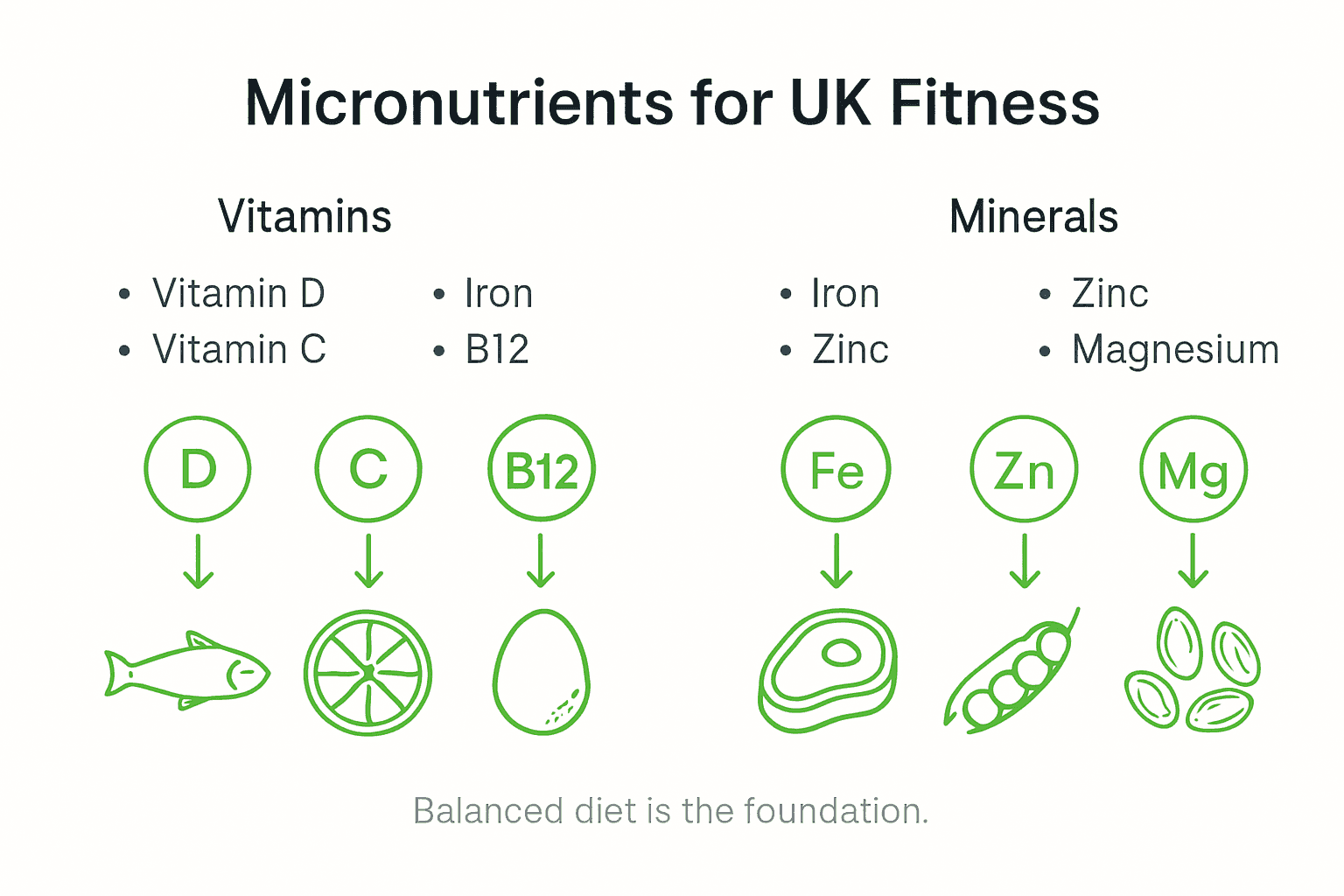
Specific micronutrients like iron, vitamin D, and vitamin C are instrumental in muscle recovery mechanisms. Iron supports oxygen transportation and energy metabolism, enabling muscles to efficiently repair and rebuild after intense training. Vitamin D plays a crucial role in muscle protein synthesis and reducing inflammation, while vitamin C acts as a powerful antioxidant that combats exercise-induced oxidative stress and supports collagen production necessary for muscle and connective tissue repair.
Trace minerals such as zinc and magnesium are equally important in the muscle recovery process. Nutritional research indicates these micronutrients contribute significantly to enzyme activity, immune response, and cellular protection. Zinc supports protein synthesis and immune function, while magnesium aids in muscle contraction, energy production, and helps prevent muscle cramps and soreness. These micronutrients work synergistically to enhance the body’s natural recovery mechanisms, reducing downtime between training sessions and supporting overall athletic performance.
Here’s how key micronutrients compare in fitness benefits and food sources:
| Micronutrient | Main Function in Fitness | Typical Deficiency Impact | Common UK Food Sources |
|---|---|---|---|
| Iron | Oxygen delivery, energy | Fatigue, poor performance | Red meat, lentils, spinach |
| Magnesium | Muscle contraction, energy | Cramping, weakness | Nuts, whole grains, leafy veg |
| Vitamin D | Bone, muscle function | Weakened bones, slow recovery | Fortified milk, eggs, sunlight |
| Zinc | Immune repair, recovery | Lower immunity, slow healing | Shellfish, pumpkin seeds |
| Vitamin C | Antioxidant, tissue repair | Slow recovery, soreness | Citrus fruit, peppers |
Pro tip: Consume a diverse range of nutrient-dense foods and consider targeted supplementation to ensure comprehensive micronutrient support for optimal muscle recovery.
Food versus supplements: practical intake advice
UK nutritional research consistently emphasises that a balanced diet should be the primary source of micronutrients. Whole foods provide a complex matrix of nutrients, including essential vitamins, minerals, and additional compounds that work synergistically in ways supplements cannot fully replicate. While supplements can play a supportive role, they should never be considered a complete replacement for a nutrient-rich diet.
Fortified foods represent an important intermediate strategy for micronutrient intake. Products like fortified milk, cereals, and bread can help bridge nutritional gaps without resorting to isolated supplement forms. These foods offer a more natural nutrient delivery system, with added benefits of other essential macronutrients and fibre. However, athletes and fitness enthusiasts should be strategic about their approach, recognising that individual needs can vary based on training intensity, dietary restrictions, and personal health conditions.
Public health guidelines recommend a judicious approach to supplementation, emphasising that supplements should only be used to address specific deficiencies or support particular nutritional requirements. Some key scenarios where targeted supplementation might be appropriate include restricted diets, intense training periods, documented nutrient deficiencies, or specific health conditions that impair nutrient absorption. Blood tests and professional nutritional advice can help identify genuine needs rather than relying on generic supplementation strategies.
Below is a comparison of food versus supplement strategies for micronutrient intake:
| Approach | Strengths | Limitations | Best For |
|---|---|---|---|
| Whole Foods | Natural, full nutrient profile | May lack specific nutrients if diet limited | General health |
| Fortified Foods | Convenient, bridges some dietary gaps | May contain additives, limited variety | Mild deficiencies |
| Supplements | Precise dosing, targets confirmed deficiencies | Risk of excess, lacks synergy of real foods | Documented deficiencies |
Pro tip: Consult a registered nutritionist to conduct a comprehensive nutritional assessment and develop a personalised micronutrient strategy tailored to your specific fitness goals and metabolic profile.
Risks of deficiency and UK regulations
Micronutrient deficiencies, often referred to as ‘hidden hunger’, pose significant health risks across various population groups in the United Kingdom. Vulnerable populations including children, older adults, pregnant women, and individuals following restrictive diets are particularly susceptible to nutritional gaps that can lead to serious health consequences. These deficiencies are not merely theoretical concerns but represent real physiological challenges that can impair growth, compromise immune function, and potentially impact cognitive development.
The most prevalent micronutrient deficiencies in the UK involve critical nutrients like iron, zinc, vitamin D, and magnesium. Iron deficiency can lead to anaemia, reducing oxygen transportation and athletic performance. Zinc plays a crucial role in immune function and protein synthesis, while vitamin D deficiency can compromise bone health and muscle function. These nutritional gaps often stem from dietary limitations, reduced sunlight exposure, and increasingly processed food consumption patterns.
UK and European regulatory frameworks have implemented comprehensive strategies to address micronutrient risks, including mandatory food fortification, strict supplement labelling requirements, and public health guidance. These regulations aim to establish safe upper limits for nutrient intake, prevent both deficiency and potential toxicity, and provide clear nutritional information to consumers. Specific interventions like mandatory folic acid fortification and vitamin D recommendations demonstrate a proactive approach to population-wide nutritional health.
Pro tip: Consult your healthcare provider for a comprehensive blood panel to identify potential micronutrient deficiencies and develop a targeted nutritional strategy specific to your individual health needs.
Unlock Your Peak Performance with Targeted Micronutrient Support
Understanding the critical role of micronutrients like iron, magnesium, and vitamin D in muscle recovery and energy metabolism is vital for every UK athlete striving for excellence. If you are facing challenges such as fatigue, slow recovery, or muscle cramps despite a balanced diet, it may be time to enhance your nutritional strategy. With modern dietary gaps and increased demands from intense training, relying solely on food might not meet your personalised micronutrient needs.

Explore our extensive selection of health & wellbeing supplements at MyGymSupplements.shop to fill these nutritional gaps effectively. From essential vitamins and minerals supporting immune repair to performance recovery aids designed to reduce downtime, every product is tailored for fitness enthusiasts seeking optimal results. Take control today and visit MyGymSupplements.shop to develop a micronutrient-focused approach that transforms your recovery and performance. Don’t wait for deficiencies to hold you back - empower your fitness journey now.
Frequently Asked Questions
What are micronutrients and why are they important for fitness?
Micronutrients are essential vitamins and minerals that play critical roles in physical performance, muscle recovery, and overall health. They support metabolic processes, energy production, and immune function, which are vital for athletes.
How can I tell if I’m deficient in micronutrients?
You can assess potential micronutrient deficiencies by consulting a healthcare provider for a comprehensive blood panel. Symptoms like fatigue, poor recovery, and frequent illness may also indicate deficiencies.
Are supplements necessary if I eat a balanced diet?
While a balanced diet should provide most of the necessary micronutrients, due to factors such as soil depletion, food processing, and individual needs, some people may still require targeted supplementation to address specific deficiencies.
What foods are rich in micronutrients?
Foods rich in micronutrients include leafy greens, nuts, seeds, whole grains, dairy products, and lean meats. Consuming a diverse range of these foods can help ensure adequate intake of essential vitamins and minerals.
Recommended
- 7 Key Advantages of Multivitamins for Fitness Success – MyGymSupplements
- Complete Guide to Functional Foods for Fitness – MyGymSupplements
- Superfoods Explained: Benefits, Types, and Myths – MyGymSupplements
- 7 Top Vitamins for Bodybuilders to Boost Performance – MyGymSupplements
- Midlife Nutrition Essentials: Complete Guide for Canadians – Real Healthy Haven

0 comments