

Finding reliable advice on creatine supplementation can be tough when you want real results without risking your health. For many UK bodybuilding fans, the process feels complex, with different product options and safety considerations to weigh up. This guide supports your journey by breaking down the essentials of choosing, scheduling, and monitoring creatine use for greater muscle gain and performance, all backed by trusted scientific guidance.
Table of Contents
- Step 1: Assess Your Suitability For Creatine Use
- Step 2: Select The Optimal Creatine Product
- Step 3: Plan Your Supplementation Schedule
- Step 4: Implement Your Creatine Intake Routine
- Step 5: Monitor Progress And Adjust Accordingly
Quick Summary
| Key Insight | Explanation |
|---|---|
| 1. Consult a healthcare professional | Prior to starting creatine, ensure to evaluate your health with a professional for potential risks and benefits. |
| 2. Choose high-quality creatine | Select a creatine supplement with minimal additives and verify its purity and formulation for maximum effectiveness. |
| 3. Follow a structured schedule | Create a proper supplementation plan, including loading and maintenance phases to optimise performance gains. |
| 4. Implement carefully and consistently | Ensure accurate mixing, hydration, and timing of creatine intake to maximise absorption and benefits. |
| 5. Monitor and adjust your progress | Regularly track your performance, body composition, and any side effects to make necessary adjustments in supplementation. |
Step 1: Assess your suitability for creatine use
Before diving into creatine supplementation, you need a comprehensive personal health assessment to determine if it’s right for you. This step involves understanding your unique physiological profile and potential risks or benefits.
Start by evaluating key health factors that impact creatine compatibility. Government health recommendations emphasise the importance of professional medical consultation before beginning any supplement regimen. Consider these critical assessment points:
- Current health status: Check for pre-existing kidney conditions, diabetes, or metabolic disorders
- Age and fitness level: Creatine impacts different age groups and fitness stages uniquely
- Training goals: Determine whether muscle performance enhancement aligns with your objectives
- Potential interactions: Review any current medications that might conflict with creatine
The University of Essex research highlights that individual responses to creatine vary significantly. Some athletes experience substantial performance improvements, while others might see minimal benefits. Research on individual creatine variability suggests consulting healthcare professionals for personalised guidance.
Professional medical advice is crucial before starting any new supplement routine.
Expert advice: Always obtain a comprehensive health screening and discuss your specific fitness goals with a qualified healthcare professional before beginning creatine supplementation.
Step 2: Select the optimal creatine product
Choosing the right creatine supplement is crucial for maximising your muscle gain potential and ensuring safe, effective nutrition. Your selection depends on multiple factors beyond just price or marketing claims.

Creatine product varieties range widely, with different formulations catering to specific dietary needs and fitness goals. The University of Bristol’s Chemistry department highlights that creatine monohydrate remains the gold standard due to its proven efficacy and extensive research backing.
Consider these key selection criteria:
- Purity levels: Look for products with minimal additives
- Molecular form: Prioritise micronised or monohydrate variants
- Dietary compatibility: Check for vegan or vegetarian options
- Third-party testing: Seek supplements with independent quality certifications
Molecular properties of creatine suggest that absorption and bioavailability vary across different supplement types. Micronised creatine monohydrate typically offers superior mixability and faster absorption compared to standard formulations.
Here’s a summary of common creatine supplement types and their distinguishing features:
| Supplement Type | Key Benefits | Typical Users | Considerations |
|---|---|---|---|
| Creatine Monohydrate | Most researched, effective | Athletes, gym-goers | May cause mild bloating |
| Micronised Monohydrate | Easy mixing, faster uptake | All fitness levels | Slightly higher cost |
| Creatine Ethyl Ester | Enhanced absorption claimed | Advanced users | Less proven effectiveness |
| Vegan Creatine | Plant-based, ethical choice | Vegetarians, vegans | Ensure purity and quality certification |
Not all creatine supplements are created equal - research and quality matter.
Expert tip: Always verify the ingredient list and opt for reputable brands with transparent manufacturing processes and independent laboratory testing.
Step 3: Plan your supplementation schedule
Creating a strategic creatine supplementation schedule is crucial for maximising muscle gain and ensuring consistent nutrient absorption. Your approach will determine how effectively your body utilises this powerful performance enhancer.
Nutritional supplement timing plays a critical role in optimising muscle synthesis and energy availability. Professional athletes typically follow two primary supplementation strategies:
- Loading phase: High-intensity intake for 5-7 days (typically 20g daily)
- Maintenance phase: Reduced daily intake of 3-5g after initial loading
- Workout timing: Consume creatine close to exercise sessions
- Consistency: Maintain regular daily intake, even on rest days
The recommended daily intake varies based on body weight, with most experts suggesting approximately 0.1g per kilogram of body mass. Some athletes prefer split dosing - dividing their daily intake into smaller portions throughout the day to improve absorption and reduce potential digestive discomfort.
Precision in supplement scheduling can significantly enhance your muscle development outcomes.
Expert tip: Consider tracking your progress and adjusting your creatine intake based on your body’s response and specific fitness goals.
Step 4: Implement your creatine intake routine
Transitioning from planning to actual creatine supplementation requires careful, systematic implementation. Your success depends on precise execution and understanding of absorption dynamics.
Creatine supplementation strategies demand a structured approach to maximise muscle development and performance enhancement. Implementing your routine involves several critical steps:
- Mixing technique: Dissolve powder completely in water or protein shake
- Hydration: Drink minimum 250-500ml water with each dose
- Absorption window: Take creatine within 30 minutes of preparation
- Consistency: Stick to your predetermined daily intake schedule
Government supplement guidelines recommend monitoring your body’s response during the initial weeks. Start with smaller doses if you experience any digestive discomfort, and gradually increase to your target intake.
Precise implementation is key to unlocking creatine’s full potential.
Expert tip: Keep a detailed supplement journal to track your progress, noting any changes in muscle performance, energy levels, and potential side effects.
Step 5: Monitor progress and adjust accordingly
Carefully tracking your body’s response to creatine supplementation is crucial for optimising muscle gain and maintaining overall health. This stage requires attentive observation and willingness to adapt your approach.
Kidney health monitoring represents a critical aspect of long-term creatine supplementation. Pay close attention to your physiological responses through these key evaluation methods:
- Performance tracking: Record strength gains, workout intensity
- Body composition: Measure muscle mass and body fat percentage
- Physical symptoms: Note any unexpected changes or side effects
- Recovery rate: Assess muscle recovery and energy levels
Supplementation progress evaluation involves systematic assessment of both physical and cognitive responses. Consider consulting a healthcare professional if you experience persistent unusual symptoms or fail to see expected improvements.
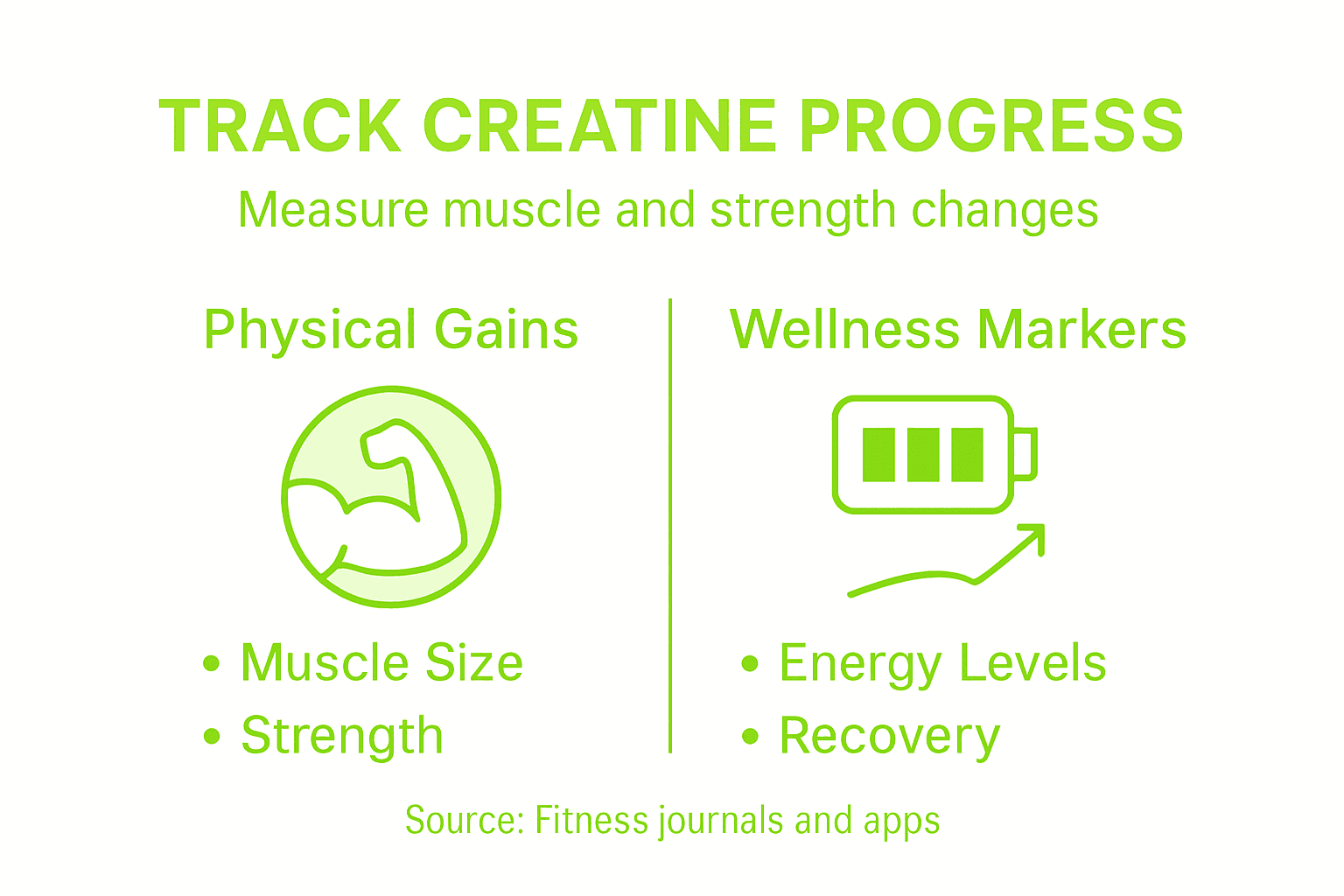
Use this table to monitor progress and understand key evaluation methods:
| Aspect Monitored | Example Metric | Significance | Action If Concern Arises |
|---|---|---|---|
| Muscle Performance | Strength gains, reps | Indicates effectiveness and adaptation | Adjust dose or seek advice |
| Body Composition | Muscle mass percentage | Shows progress towards physique goals | Review nutrition, consult GP |
| Recovery Rate | Time between workouts | Highlights impact on energy and recovery | Modify schedule or supplement |
| Physical Symptoms | GI discomfort, fatigue | Warns of side effects or compatibility | Reduce intake, see specialist |
Consistent monitoring enables safe and effective supplementation.
Expert tip: Use a dedicated fitness tracking app or journal to document your progress systematically, creating a comprehensive record of your supplementation journey.
Unlock Your Full Muscle Gain Potential with the Right Creatine Support
Starting creatine supplementation involves careful planning and precise execution to overcome challenges like choosing the ideal product and maintaining a consistent intake schedule. If you are eager to enhance muscle performance while ensuring purity and safety, it is important to access trusted supplements that align with your goals and physiological needs. Avoid common pitfalls such as low-quality products or improper dosage by exploring options that fit your personalised supplementation plan.
MyGymSupplements.shop offers a comprehensive selection of creatine supplements alongside other essentials like proteins, pre-workouts, and recovery aids to support every stage of your fitness journey. Discover high-quality, thoroughly tested products with detailed information to help you make the best choices. Ready to take control of your muscle gain progress? Visit MyGymSupplements.shop now and start building the muscle gains you deserve with confidence and clarity.
Explore our range of creatine supplements designed for maximum absorption and purity. Don’t wait to see results when expert guidance is just a click away.
Frequently Asked Questions
How can I assess my suitability for creatine supplementation?
Before starting creatine supplementation, evaluate your current health status, age, fitness level, training goals, and any potential medication interactions. Consult with a healthcare professional to ensure that creatine is appropriate for your individual circumstances.
What type of creatine product should I choose for muscle gain?
Select a creatine product based on purity, molecular form, and dietary compatibility. Creatine monohydrate is widely recognised as the most effective option due to its extensive research backing.
How should I plan my creatine supplementation schedule?
Implement a supplement schedule that typically includes a loading phase of around 20 grams per day for 5-7 days, followed by a maintenance phase of 3-5 grams daily. Aim to take creatine close to your workout sessions for optimal results.
What is the proper way to implement my creatine intake routine?
Mix the creatine powder thoroughly in water or a protein shake and drink it within 30 minutes of preparation. Ensure to hydrate by drinking 250-500ml of water with each dose to aid in absorption.
How can I effectively monitor my progress while on creatine?
Track your strength gains, body composition, and recovery rate to evaluate your response to creatine supplementation. Keep a detailed journal to note any physical symptoms and adjust your dosage or consult a healthcare professional if necessary.
What should I do if I experience side effects from creatine supplementation?
If you encounter any side effects, such as digestive discomfort, consider reducing your intake or starting with smaller doses before gradually increasing to your target level. Monitor your body’s response and if symptoms persist, consult with a healthcare professional for tailored advice.

0 comments