

Tough workouts put your body to the test, so finding effective support for recovery is key. For active British fitness enthusiasts, understanding how collagen hydrolysate works could be a game changer in maintaining strong joints and effective muscle repair. This guide breaks down the science and choices behind collagen hydrolysate, helping you make informed decisions to optimise your recovery, boost performance, and keep your body resilient for every challenge.
Table of Contents
- Collagen Hydrolysate Defined And Demystified
- Types And Sources Of Collagen Hydrolysate
- How Collagen Hydrolysate Works In The Body
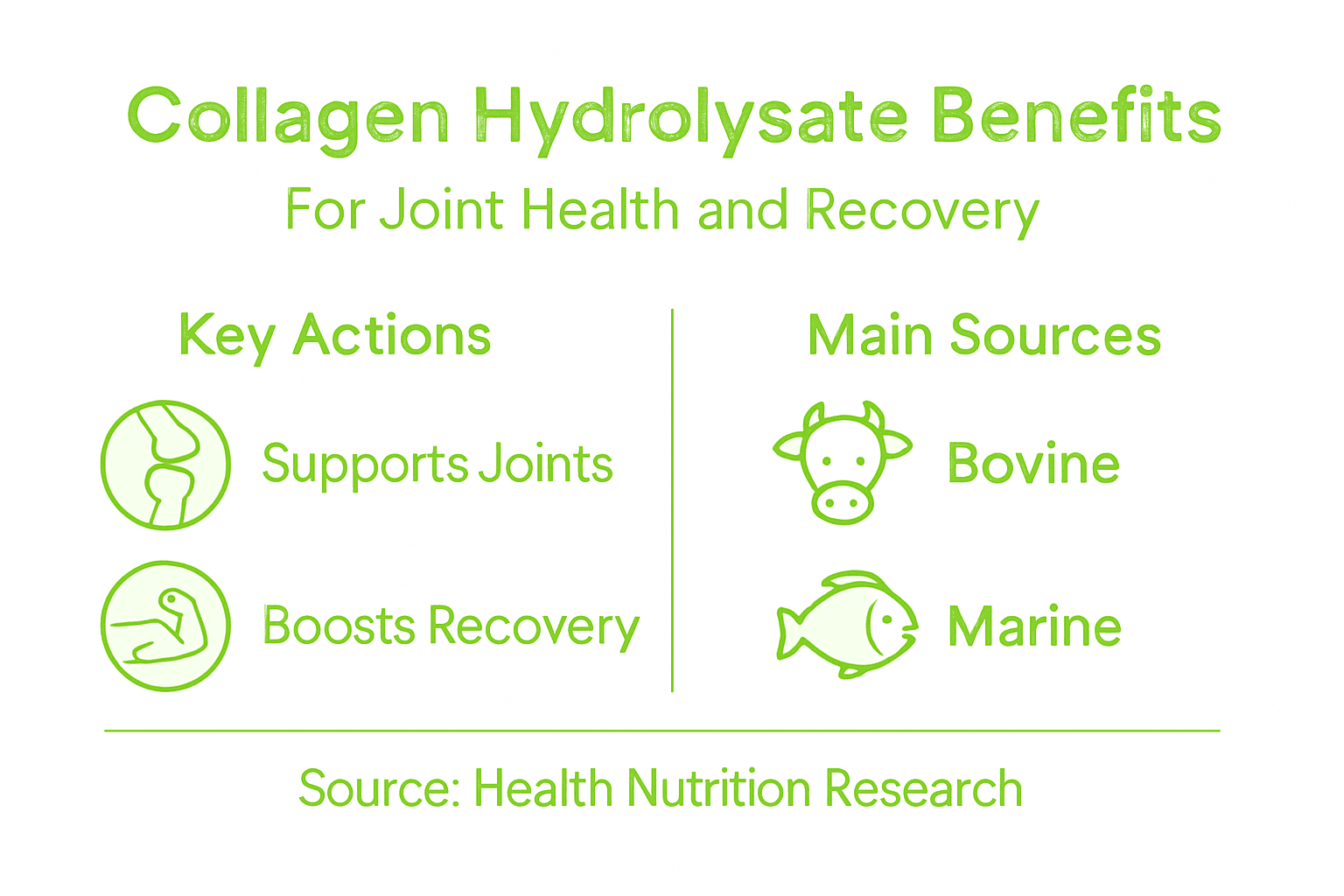
- Benefits For Joint Health And Recovery
- Risks, Misconceptions And What To Avoid
- Choosing And Supplementing Collagen Hydrolysate
Key Takeaways
| Point | Details |
|---|---|
| Collagen Hydrolysate Definition | A sophisticated protein supplement that offers enhanced bioavailability and absorbs quickly due to its smaller peptides. |
| Sources of Collagen Hydrolysate | Major sources include Bovine, Porcine, Marine, and Poultry, each offering distinct benefits and characteristics. |
| Health Benefits | Supports joint health, muscle recovery, and tissue repair, making it beneficial for athletes and individuals with joint discomfort. |
| Selection Considerations | Choose high-quality products with low molecular weight, verified sourcing, and clinical testing to ensure effectiveness and safety. |
Collagen hydrolysate defined and demystified
Collagen hydrolysate represents a sophisticated protein supplement derived through advanced enzymatic processing. Unlike standard collagen, this form undergoes hydrolysis, breaking down protein molecules into smaller, more absorbable peptides that offer enhanced bioavailability for the human body.
The production process involves carefully controlled enzymatic reactions that transform gelatin into bioactive peptide fragments. These refined peptides possess unique characteristics that make them particularly valuable for fitness enthusiasts and individuals seeking targeted nutritional support.
Key characteristics of collagen hydrolysate include:
- Rapid absorption by the body
- Enhanced digestibility compared to traditional protein sources
- Potential support for joint and muscle recovery
- Potential antioxidant properties
- Smaller molecular weight enabling easier metabolic processing
Nutritionists and researchers have identified multiple potential benefits across various domains. Enzymatic hydrolysis enables complex bioactive peptide generation that can potentially support pharmaceutical, nutritional, and wellness applications.
Pro tip: Consider consulting a healthcare professional to determine the optimal collagen hydrolysate dosage tailored to your specific fitness and recovery goals.
Types and sources of collagen hydrolysate
Collagen hydrolysates represent a diverse family of protein supplements derived from multiple animal sources, each offering unique characteristics and potential health benefits. Collagen extraction involves complex industrial processes that transform raw materials into bioactive peptide supplements.
The primary sources of collagen hydrolysate include:
- Bovine (Cattle): Most common source, widely available
- Porcine (Pig): Frequently used in nutritional supplements
- Marine (Fish): Increasingly popular for sustainability and unique peptide profile
- Poultry: Emerging alternative source with specific protein characteristics
Each animal source contributes distinct molecular structures and potential physiological benefits. Industrial production techniques generate low molecular weight peptides through precise enzymatic hydrolysis, enhancing the supplement’s bioavailability and metabolic potential.

Marine-derived collagen peptides are particularly intriguing, offering potential advantages in sustainability and bioactive properties. These peptides are often extracted from fish processing by-products, creating a more environmentally conscious protein supplement option for health-conscious consumers.
Here is a comparison of main animal sources for collagen hydrolysate:
| Source | Distinctive Feature | Typical Use |
|---|---|---|
| Bovine | High protein concentration | Widely found in supplements |
| Porcine | Similar to human collagen | Popular in food applications |
| Marine | Lower allergen potential | Favoured for sustainability |
| Poultry | Unique protein composition | Used in emerging products |
Pro tip: When selecting a collagen hydrolysate supplement, consider your specific health goals and choose a source that aligns with your dietary preferences and nutritional requirements.
How collagen hydrolysate works in the body
Collagen peptide absorption involves complex metabolic processes that transform protein supplements into bioactive components capable of supporting human physiological functions. When ingested, collagen hydrolysate breaks down into smaller peptides that can be readily absorbed and utilised by the body.
The key mechanisms of collagen hydrolysate metabolism include:
- Rapid digestion: Quick breakdown into amino acids and peptides
- Bloodstream absorption: Direct transportation of peptides to target tissues
- Cellular stimulation: Triggering of collagen synthesis processes
- Tissue repair support: Promoting regeneration of connective structures
Low molecular weight peptides enable systematic distribution throughout the body, reaching critical areas like joints, skin, and muscle tissues. These peptides interact with cellular mechanisms, potentially stimulating the body’s natural collagen production and supporting structural protein regeneration.
Upon absorption, collagen hydrolysate peptides can potentially activate fibroblasts and chondrocytes, cells responsible for producing collagen and maintaining connective tissue integrity. This biological interaction suggests promising implications for muscle recovery, joint health, and overall tissue maintenance.
Pro tip: Consume collagen hydrolysate supplements consistently and pair with vitamin C to potentially enhance peptide absorption and utilisation.
Benefits for joint health and recovery
Clinical trials demonstrate significant joint health improvements through collagen hydrolysate supplementation, offering promising potential for athletes and individuals experiencing joint discomfort. These bioactive peptides work strategically to support musculoskeletal system functionality and promote tissue regeneration.
Key benefits for joint health and recovery include:
- Pain reduction: Decreasing joint discomfort and inflammation
- Mobility enhancement: Improving range of motion and flexibility
- Cartilage support: Promoting structural joint tissue restoration
- Inflammation management: Modulating inflammatory responses
- Performance recovery: Accelerating post-exercise tissue repair
Collagen supplementation shows promising rehabilitation potential for athletes and fitness enthusiasts. The supplement’s ability to support cartilage matrix restoration and reduce inflammatory processes makes it particularly valuable for individuals engaged in high-intensity training or experiencing age-related joint degradation.
Research indicates that consistent collagen hydrolysate intake can potentially mitigate joint discomfort, enhance functional performance, and support long-term musculoskeletal health. By targeting cellular mechanisms responsible for tissue repair, these supplements offer a proactive approach to maintaining joint integrity and overall physical resilience.
Pro tip: Combine collagen hydrolysate supplementation with resistance training and adequate protein intake to maximise joint health and recovery benefits.
Risks, misconceptions and what to avoid
Collagen hydrolysate supplement risks require careful consumer awareness, as not all products are created equal. Understanding potential pitfalls helps individuals make informed decisions about supplement selection and usage.
Common misconceptions about collagen hydrolysate include:
- Instant results: Expecting immediate physiological changes
- Universal effectiveness: Assuming all collagen products work identically
- Unlimited benefits: Believing more supplementation equals better outcomes
- Quality equivalence: Thinking all supplements have identical sourcing standards
- Medical replacement: Considering supplements as direct medical treatments
Consumer awareness is crucial for supplement safety, with potential risks including allergic reactions and product contamination. Individuals with known protein allergies, particularly those sensitive to bovine or marine sources, should exercise additional caution and consult healthcare professionals before starting supplementation.
To mitigate risks, consumers should prioritise high-quality, clinically tested collagen hydrolysate supplements from reputable manufacturers. Verification of product sourcing, third-party testing, and understanding individual health conditions remain paramount in making responsible supplement choices.
Pro tip: Always review supplement ingredient lists, check for potential allergens, and consult a healthcare professional before starting any new dietary supplement regimen.
Choosing and supplementing collagen hydrolysate
Effective collagen hydrolysate selection requires understanding key supplement characteristics that impact overall nutritional value and potential health benefits. Consumers must evaluate multiple factors to ensure they choose high-quality, bioavailable supplements.
Key considerations when selecting collagen hydrolysate include:
- Molecular weight: Lower peptide weight indicates better absorption
- Source origin: Bovine, marine, or porcine protein sources
- Hydrolysis degree: Determines peptide breakdown and bioavailability
- Purity standards: Third-party testing and quality certifications
- Protein concentration: Total collagen peptide content per serving
Clinical trials provide essential guidance for optimal supplementation strategies, recommending dosage ranges typically between 2.5 to 15 grams daily. Individual requirements vary based on specific health goals, age, and physical activity levels.
Supplementation approaches should be personalised, considering individual fitness objectives, existing health conditions, and potential interactions with other nutritional interventions. Consulting healthcare professionals can help develop a targeted supplementation strategy that maximises potential benefits while minimising potential risks.
Key factors influencing collagen hydrolysate supplement selection are summarised below:
| Selection Factor | Why It Matters | Example Guidance |
|---|---|---|
| Molecular Weight | Impacts absorption efficiency | Prefer peptides <5,000 Da |
| Source Origin | Affects allergies, preferences | Check for bovine, fish, etc. |
| Purity & Certification | Ensures product safety | Look for third-party tested |
| Protein Concentration | Determines nutritional value | Compare grams per serving |
Pro tip: Start with lower collagen hydrolysate doses and gradually increase while monitoring your body’s response, ensuring optimal tolerance and effectiveness.
Enhance Your Joint Health and Recovery with Targeted Collagen Hydrolysate Supplements
If you are struggling with joint discomfort or seeking to accelerate your fitness recovery, collagen hydrolysate offers a scientifically supported solution. This advanced protein supplement provides rapid absorption and bioactive peptides that support tissue repair and collagen synthesis. Key benefits include reduced inflammation, improved mobility and enhanced muscle recovery, helping you stay active and resilient.
Explore a wide range of premium collagen and performance supplements tailored to your goals at MyGymSupplements.shop. Take control of your joint health today by choosing high-quality products designed for optimal absorption and efficacy. Visit https://mygymsupplements.shop now and start supporting your body’s natural recovery processes with expert-approved collagen hydrolysate options.
Frequently Asked Questions
What is collagen hydrolysate and how does it benefit the body?
Collagen hydrolysate is a protein supplement made from collagen that has been enzymatically broken down into smaller, more absorbable peptides. Its benefits include rapid absorption, enhanced digestibility, support for joint and muscle recovery, and potential antioxidant properties.
How should I take collagen hydrolysate for optimal results?
For optimal results, consider taking collagen hydrolysate consistently at doses typically ranging from 2.5 to 15 grams daily. Pairing it with vitamin C may enhance absorption, and it’s advisable to consult a healthcare professional when determining the right dosage for your specific needs.
What are the different sources of collagen hydrolysate, and do they have different benefits?
Collagen hydrolysate can be sourced from bovine, porcine, marine, and poultry. Bovine is common and rich in protein, porcine is similar to human collagen, marine has lower allergen potential, and poultry offers unique protein compositions. Each source gives distinct benefits based on individual health goals and dietary preferences.
Are there any risks or misconceptions associated with collagen hydrolysate supplementation?
Yes, common misconceptions include expecting immediate results, assuming all products are equally effective, and considering supplements as medical replacements. Potential risks include allergic reactions and contamination, so it’s essential to choose high-quality products and consult healthcare professionals if you have known allergies.
Recommended
- Unlock the Power of Marine Collagen: Elevate Your Health and Beauty Regimen – MyGymSupplements
- Collagen Peptide: Supporting Recovery and Joint Health
- Discover Optimum Nutrition Clear + Collagen Benefits Now – MyGymSupplements
- 7 Key Advantages of Collagen Peptides for Fitness Recovery
- 7 Top Hair Growth Supplements for Stronger, Fuller Hair | MyHair

0 comments