

Finding the right approach to muscle recovery and joint support can be a challenge for fitness enthusiasts pushing their limits in the United Kingdom. With intense training routines often leaving muscles sore and joints under pressure, knowing what works matters. The science shows that hydrolysed collagen peptides offer superior absorption and bioavailability, serving as powerful messengers that stimulate new collagen production and support tissue repair. This guide uncovers how collagen peptides work, why their source matters, and how to select supplements that deliver real results for demanding physiques.
Table of Contents
- What Is Collagen Peptide and How It Works
- Types of Collagen Peptides in Supplements
- Benefits for Muscle Recovery and Joint Support
- How to Choose Quality Collagen Peptides UK
- Safety, Side Effects, and Common Misconceptions
Key Takeaways
| Point | Details |
|---|---|
| Collagen Peptide Absorption | Hydrolysed collagen peptides are easily absorbed due to their smaller size, reaching the bloodstream quickly to support tissue repair. |
| Types of Collagen | Different collagen types, such as Type I and Type II, target various tissues; choose a supplement that aligns with your recovery goals. |
| Supplement Quality | Opt for hydrolysed collagen supplements with clear sourcing and third-party testing to ensure effectiveness and safety. |
| Dosage Consistency | Consistent daily intake of 10 to 20 grams is crucial for visible benefits; sporadic high doses are less effective. |
What Is Collagen Peptide and How It Works
Collagen peptides are short chains of amino acids created by breaking down full-length collagen molecules into smaller, more digestible fragments. This breakdown process, called hydrolysation, transforms collagen into a form your body can actually absorb and utilise effectively. Unlike whole collagen proteins that pass through your digestive system largely unused, hydrolysed collagen peptides are already broken down into amino acid chains measuring just 2 to 3 kilodaltons in molecular weight. This matters because smaller molecules cross your intestinal barrier with considerably less resistance, reaching your bloodstream and the tissues that need them most.
Once inside your body, collagen peptides function as signalling molecules rather than just building blocks. When you consume these peptides, they stimulate specialised cells called fibroblasts to ramp up production of new collagen, elastin, and hyaluronic acid. Think of them as messengers telling your connective tissues, cartilage, and skin cells to start repairing and reinforcing themselves. The research shows that collagen acts as an anti-inflammatory and antioxidant, whilst simultaneously providing the raw materials your body needs for structural remodeling. For fitness enthusiasts and bodybuilders, this dual action proves invaluable. Your joints experience considerable stress during heavy lifting and intense training, and collagen peptides help both soothe inflammation and rebuild the connective tissue that keeps your movement quality intact.
The absorption advantage of peptides over whole collagen becomes even more apparent when you consider timing. Standard collagen supplements might take hours to break down if your body even manages to extract usable amino acids. Peptides, however, become bioavailable within 30 to 60 minutes of consumption, meaning the amino acids can start supporting tissue repair during your post-workout window when your body is primed to build and recover. In terms of real-world application for recovery, this rapid availability aligns perfectly with your body’s heightened protein synthesis state after training sessions.
Pro tip: Consume your collagen peptides with vitamin C and a source of protein immediately after training to maximise collagen synthesis and combine forces with your muscle-building efforts.
Types of Collagen Peptides in Supplements
Not all collagen peptides are created equal, and understanding the differences between types matters when choosing a supplement for your recovery goals. Collagen peptides come from three primary sources: bovine (beef), porcine (pork), and marine (fish). Each source yields different collagen types through enzymatic hydrolysis and thermal treatment processes. The source you choose directly influences which collagen types dominate your supplement and, consequently, which tissues benefit most from supplementation. For example, bovine collagen typically contains higher ratios of Type I and III, whilst marine collagen sources tend to concentrate Type I collagen with superior bioavailability due to smaller peptide chains.
The collagen types themselves vary significantly in function and tissue distribution. Type I collagen represents roughly 90 percent of the collagen in your body and forms the structural foundation of skin, tendons, ligaments, and bones, making it the most relevant for joint support during intense training. Type II collagen concentrates specifically in cartilage tissue, providing the cushioning and load-bearing capacity your knees, hips, and elbows rely on during compound movements and heavy lifting. Type III collagen works alongside Type I in skin and blood vessels, supporting connective tissue integrity and circulation. The different collagen types have distinct tissue distributions and functions, so a quality supplement should deliver the types matching your primary recovery goals. If your focus is protecting cartilage during intense training, you might prioritise a blend containing Type II. If you’re aiming for overall connective tissue resilience, a bovine or marine source delivering primarily Type I offers broad-spectrum support.

Here’s a summary comparing the most common collagen peptide types and their key benefits:
| Collagen Type | Main Source | Primary Benefit | Target Tissue |
|---|---|---|---|
| Type I | Bovine, Marine | Improves skin and tendon strength | Skin, tendons, bones |
| Type II | Chicken, Porcine | Enhances cartilage resilience | Cartilage, joints |
| Type III | Bovine | Supports blood vessel and organ structure | Vessels, connective tissues |
Molecular weight and hydrolysation degree also separate one collagen peptide from another. Peptides measuring between 2,000 to 5,000 daltons absorb more readily than heavier molecules, reaching your bloodstream faster and stimulating collagen synthesis more efficiently. When evaluating supplements, look for those explicitly stating their peptide size and hydrolysation process. Premium supplements from MyGymSupplements often specify these details because bioavailability directly determines whether you’re genuinely supporting your recovery or simply spending money on a product your body struggles to utilise. The purification process matters too, as it concentrates the specific collagen types whilst removing excess gelatin or fillers that add weight without benefit.
Pro tip: Match your collagen source to your primary goal: marine or bovine Type I for overall joint and connective tissue support, or seek blends containing Type II if protecting cartilage during heavy compound lifts is your priority.
Benefits for Muscle Recovery and Joint Support
Collagen peptides deliver measurable benefits across two critical areas for anyone serious about training: accelerating muscle recovery and protecting joint integrity. When you perform intense resistance training, your muscles experience micro-tears and structural damage. Your body then enters a repair phase lasting 24 to 72 hours, during which protein synthesis peaks and connective tissues rebuild stronger. Hydrolysed collagen peptides mitigate muscle damage and enhance recovery by providing the specific amino acids your body prioritises during this window, particularly glycine and proline, which comprise roughly one-third of collagen’s amino acid profile. This targeted amino acid composition accelerates tissue repair more efficiently than generic protein sources, meaning you experience less delayed onset muscle soreness and regain functional strength faster between training sessions.
Joint support represents the second major benefit, and this is where collagen truly separates itself from standard whey protein. Your joints contain cartilage, ligaments, tendons, and synovial fluid, all structures that depend on collagen integrity for load-bearing capacity and mobility. Heavy compound lifts squats, deadlifts, and bench presses place enormous stress on these structures daily. Collagen peptides strengthen joint architecture by stimulating fibroblasts to rebuild cartilage matrix and reinforce ligament tissue. When combined with supporting micronutrients, collagen peptides combined with vitamin D and calcium enhance bone mineral density and improve bone turnover markers, which translates directly to stronger joints capable of handling progressively heavier loads. This matters because stronger joints allow you to train harder and longer without injury, ultimately supporting greater muscle gains through increased training volume.
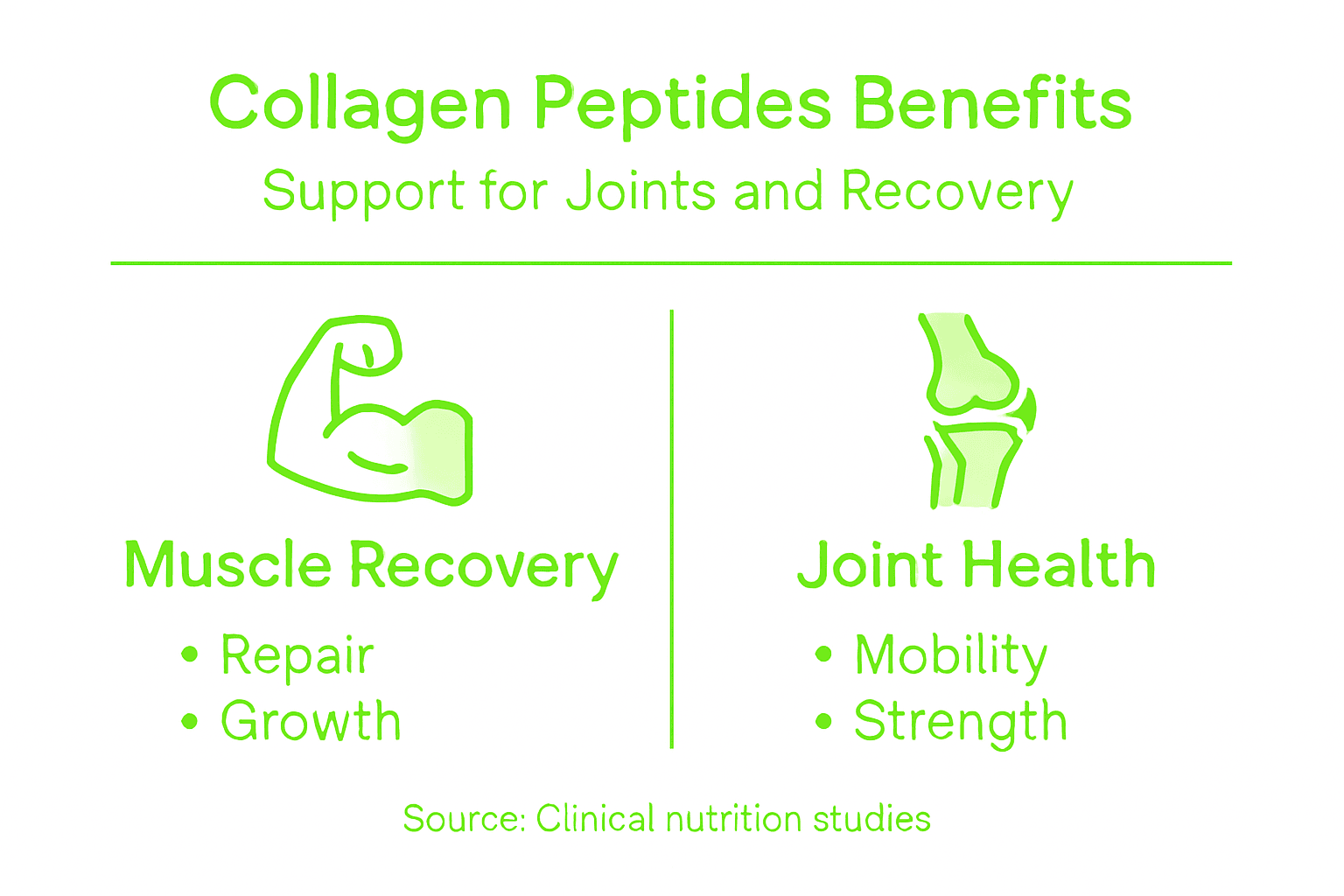
The practical benefit you’ll notice first appears in recovery quality. Within two to three weeks of consistent supplementation, most lifters report reduced joint soreness and faster functional recovery between sessions. This isn’t placebo either. The amino acid composition of collagen peptides triggers specific signalling pathways that reduce inflammation whilst simultaneously providing structural building blocks. You’re essentially giving your joints and connective tissues premium repair materials exactly when your body needs them most. For bodybuilders and serious fitness enthusiasts training multiple times weekly, this translates to better session quality, fewer nagging injuries, and the capacity to maintain progressive overload over months and years rather than hitting plateaus or suffering setbacks.
Pro tip: Consume collagen peptides with vitamin C and calcium in your post-workout window to maximise the synergistic effect on bone density, collagen synthesis, and connective tissue repair.
How to Choose Quality Collagen Peptides UK
Choosing a quality collagen peptide supplement separates lifters who see genuine recovery improvements from those who waste money on ineffective products. The most critical factor is verifying that the product contains hydrolysed collagen, not regular collagen powder. Hydrolysed collagen has already been broken down into peptide chains, making it bioavailable and absorbable. Regular collagen powder remains largely undigested in your system, passing through relatively untouched. When browsing UK retailers like MyGymSupplements, look for explicit labelling stating “hydrolysed collagen peptides” or “collagen peptides” on the ingredient list. This single distinction determines whether you’re investing in a product that actually reaches your tissues or spending money on something your body struggles to utilise.
Transparency in sourcing matters considerably for both effectiveness and ethics. Quality collagen peptide products should specify their collagen source, whether bovine, marine, or porcine, since each delivers different amino acid profiles and tissue-targeting benefits. Marine collagen offers superior absorption due to smaller peptide chains, whilst bovine collagen provides broader connective tissue support. Porcine collagen sits between the two. Reputable UK suppliers list this information prominently because they understand that informed customers make better choices. Beyond source, examine whether the product includes supporting nutrient cofactors, particularly vitamin C, which actively enhances collagen synthesis in your body. Without sufficient vitamin C, your body struggles to convert collagen peptides into actual structural collagen. This means a standalone collagen supplement minus vitamin C delivers only partial benefit compared to a formulation including this critical cofactor.
Third-party testing and certifications provide objective assurance of quality and safety. Look for products tested by independent laboratories and carrying certifications from recognised standards bodies. UK consumers benefit from products meeting standards that verify ingredient accuracy, absence of heavy metals, and freedom from harmful additives. MyGymSupplements prioritises next-day UK delivery alongside quality assurance, ensuring you receive tested products with transparent ingredient sourcing. When evaluating specific products, cross-reference the dosage against research standards, typically 10 to 20 grams daily for measurable recovery benefits. Cheaper options often sacrifice dosage or hydrolysation quality to hit lower price points, which means you either consume insufficient quantities or receive poorly absorbed peptides. The best value isn’t the lowest price but the product delivering optimal bioavailability, appropriate dosage, and genuine third-party verification at a reasonable cost.
To help you choose a high-quality collagen supplement, consider this quick reference of important factors:
| Quality Factor | Why It Matters | What To Look For |
|---|---|---|
| Hydrolysation | Increases absorption rate | Clearly labelled ‘hydrolysed’ |
| Source Transparency | Determines tissue targeting and ethics | Bovine, marine, or porcine declared |
| Third-party Testing | Ensures product safety | Certification or lab testing shown |
| Added Nutrients | Boosts collagen formation | Includes vitamin C or calcium |
| Appropriate Dosage | Delivers effective results | 10–20 grams per daily serving |
Pro tip: Stack your collagen peptides with vitamin C and consume immediately post-workout with a carbohydrate source to maximise absorption and collagen synthesis during your body’s prime recovery window.
Safety, Side Effects, and Common Misconceptions
Collagen peptides carry an excellent safety profile for most people when used appropriately. Collagen peptides are generally considered safe when taken orally in doses up to 10 grams daily for extended periods, with side effects remaining rare. When side effects do occur, they’re typically minor and digestive in nature, such as mild bloating or subtle stomach discomfort that usually resolves within days as your system adapts. Most lifters experience zero adverse effects whatsoever, particularly when consuming quality products from reputable suppliers like MyGymSupplements that prioritise ingredient purity and third-party testing. The key distinction worth noting is that collagen peptides differ fundamentally from gelatin, so if you’ve had reactions to gelatin-based products in the past, collagen peptides won’t necessarily trigger the same response. That said, pregnant or breastfeeding individuals should exercise caution and consult their healthcare provider before supplementing, as reliable safety data specifically for these populations remains limited.
Misconceptions about collagen supplementation run rampant throughout fitness communities and social media, leading many people to harbour unrealistic expectations. The most damaging myth suggests that collagen alone reverses aging or dramatically transforms your appearance overnight. Reality is considerably less glamorous. Oral collagen peptides work as building blocks and signalling molecules, not magic bullets. Your body must absorb them properly, then use the amino acids and signals to stimulate your own collagen production. This process takes time, typically 8 to 12 weeks before noticeable improvements emerge. Additionally, many people conflate topical collagen creams with oral supplementation, believing that rubbing collagen onto your skin somehow replenishes internal collagen. Topical collagen sits on your skin’s surface and cannot penetrate deeply enough to reach collagen fibres beneath. Only oral supplementation delivers collagen peptides systemically to tissues that need repair. Another persistent misconception treats collagen as a standalone solution, when in reality collagen supplements work best combined with healthy lifestyle practices including sun protection, proper nutrition, adequate sleep, and consistent resistance training.
Dosage matters considerably for both safety and efficacy. The sweet spot for most lifters falls between 10 to 20 grams daily, taken consistently for at least 8 weeks before expecting meaningful results. Consuming significantly higher doses won’t accelerate results and may cause unnecessary digestive stress. Consistency trumps quantity every single time with collagen supplementation. Taking 30 grams sporadically produces inferior results compared to 15 grams taken daily without fail. Quality products from MyGymSupplements include clear dosing guidance on packaging, helping you avoid the common mistake of underdosing cheap supplements hoping to save money. That penny-pinching approach backfires when you consume insufficient quantities and see no results, then abandon supplementation believing collagen doesn’t work.
Pro tip: Start with 10 grams daily and increase gradually to 15 to 20 grams if you have a sensitive digestive system, allowing your body to adapt whilst monitoring for any unusual responses.
Enhance Your Recovery and Joint Health with Premium Collagen Peptides
If you struggle with joint soreness or slow muscle recovery after intense workouts the key lies in targeted nutrition. This article highlights the power of hydrolysed collagen peptides to support connective tissue repair, reduce inflammation and strengthen cartilage. By choosing collagen supplements that deliver optimal peptide size and include vital cofactors like vitamin C you empower your body to rebuild collagen efficiently and maintain training longevity.
Discover how you can transform your recovery routine with expert-selected collagen products from MyGymSupplements.shop. Our range is designed specifically to help athletes and fitness enthusiasts like you optimise muscle repair and protect joint integrity. Dont let joint discomfort or delayed recovery hold you back Take action today by exploring our collagen peptide solutions and enhance your post-workout results like never before at MyGymSupplements.shop.
Ready to support your connective tissues and move pain-free? Visit MyGymSupplements.shop now to find the ideal collagen peptides tailored for your needs and start experiencing faster recovery and stronger joints immediately.
Frequently Asked Questions
What are collagen peptides and how do they work?
Collagen peptides are short chains of amino acids derived from breaking down full-length collagen. This process makes them more absorbable, allowing your body to use them effectively to stimulate collagen production and improve joint and skin health.
How do I choose a quality collagen peptide supplement?
Look for hydrolysed collagen on the label, as this ensures better absorption. Additionally, check the source (bovine, marine, porcine) for targeted benefits, and opt for products that include supporting nutrients like vitamin C to boost collagen synthesis.
What are the main benefits of collagen peptides for recovery?
Collagen peptides aid in muscle recovery by providing essential amino acids that help repair micro-tears caused by intense training. They also support joint health by strengthening connective tissues and reducing inflammation in the joints during workouts.
Can I take collagen peptides if I have dietary restrictions?
Most people can safely consume collagen peptides as they are typically free from common allergens, but if you have specific dietary restrictions or health conditions, it’s best to consult with a healthcare provider before starting supplementation.
Recommended
- Unlock the Power of Marine Collagen: Elevate Your Health and Beauty Regimen – MyGymSupplements
- 7 Key Advantages of Collagen Peptides for Fitness Recovery
- 7 Key Advantages of Collagen Peptides for Fitness Recovery – MyGymSupplements
- Unlock Marine Collagen: Enhance Health & Beauty Naturally
- 7 Top Hair Growth Supplements for Stronger, Fuller Hair | MyHair

0 comments