

Finding the right approach to maximise muscle gain without sacrificing leanness often leaves UK fitness enthusiasts searching for an edge. Carb cycling is gaining traction as a flexible nutrition method for adjusting energy intake around training, but separating myths from real benefits is a challenge. This guide uncovers how personalisation is crucial for success, explores the true impact of cycling carbohydrates, and offers practical advice on using supplements to support your goals safely and effectively.
Table of Contents
- Carb Cycling Basics And Common Myths
- Main Types Of Carb Cycling Methods
- How Carb Cycling Works For Athletes
- Key Benefits For Bodybuilding And Fitness
- Potential Risks And Common Pitfalls
- Adapting Carb Cycling With Supplements
Key Takeaways
| Point | Details |
|---|---|
| Understanding Carb Cycling | Carb cycling involves alternating carbohydrate intake to optimise metabolism and performance, necessitating personalisation based on individual responses. |
| Methods of Carb Cycling | There are several approaches to carb cycling, including daily, weekly, targeted, and modified methods, each tailored to specific fitness goals. |
| Potential Risks | Careful management is essential to avoid hormonal imbalances and nutrient deficiencies commonly associated with improper carb cycling practices. |
| Supplement Integration | Incorporating targeted supplements can enhance the effectiveness of carb cycling by addressing nutritional gaps and supporting metabolic goals. |
Carb Cycling Basics and Common Myths
Carb cycling is a strategic dietary approach where carbohydrate intake is intentionally varied across different days to optimise metabolism, athletic performance, and body composition. Nutritional research suggests this method can help athletes and fitness enthusiasts manage energy levels and metabolic adaptations more effectively.
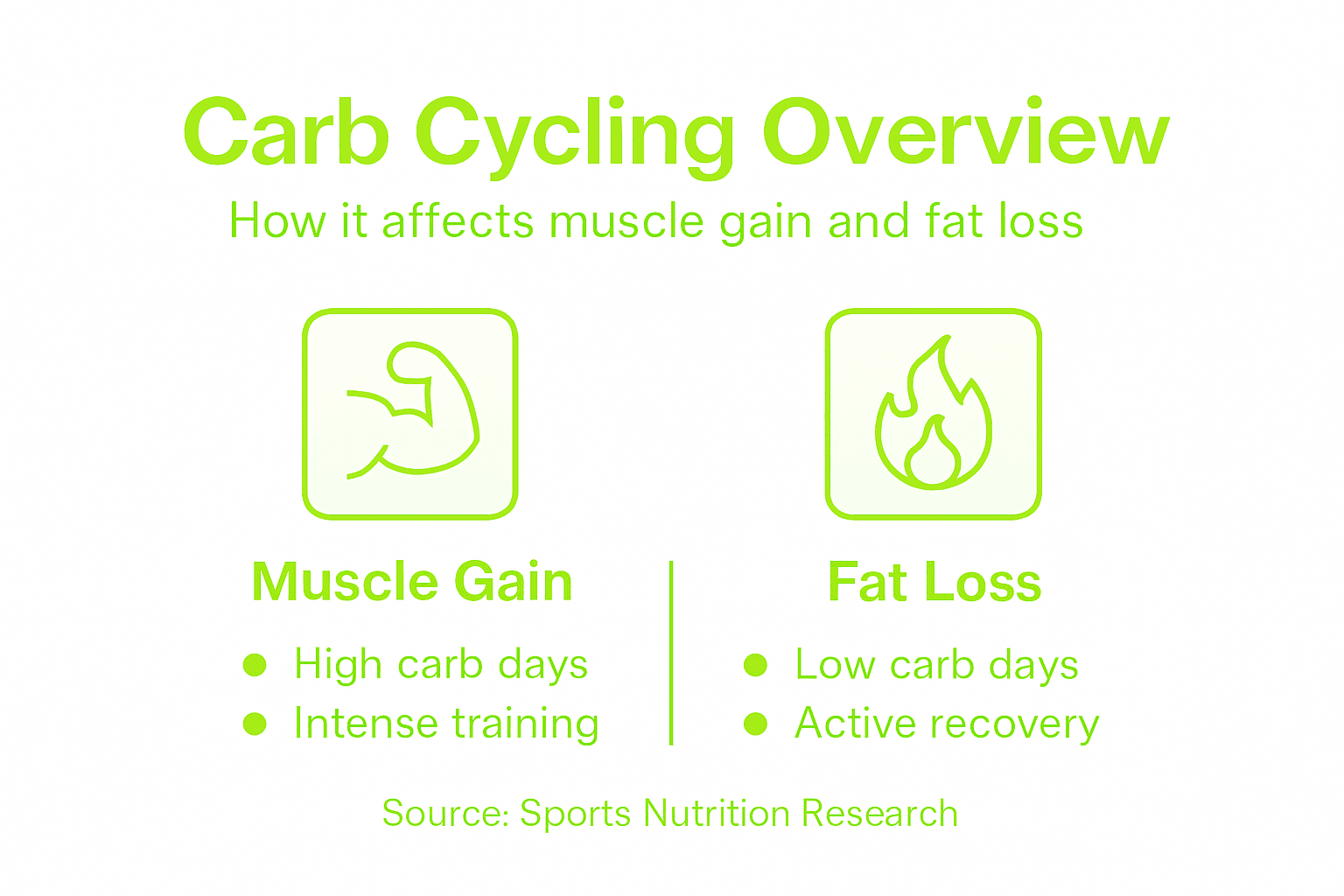
The fundamental concept involves alternating between high and low carbohydrate consumption days, which creates metabolic flexibility. By cycling carbohydrates, individuals can potentially achieve multiple physiological benefits:
- Maintain muscle glycogen stores for intense workouts
- Promote fat burning during low-carbohydrate periods
- Support hormonal balance and metabolic health
- Prevent metabolic adaptation and plateau effects
Common misconceptions about carb cycling often stem from oversimplified understanding. Many people mistakenly believe it’s a one-size-fits-all strategy, when in reality, individual metabolic responses vary significantly. Personalisation is crucial. Not everyone will experience identical results, and factors like activity level, body composition, and fitness goals dramatically influence effectiveness.
Carb cycling requires careful planning and understanding of individual metabolic responses, not just blind adherence to a generic protocol.
While some individuals report successful fat loss and muscle maintenance through carb cycling, scientific evidence remains limited. More comprehensive research is needed to definitively establish its long-term efficacy across diverse populations.
Pro tip: Start with a conservative carb cycling approach, tracking your body’s responses carefully and adjusting your strategy based on personal performance and energy levels.
Main Types of Carb Cycling Methods
Carb cycling involves strategic manipulation of carbohydrate intake across different timeframes, with multiple approaches for metabolic optimization. Understanding these methods allows athletes and fitness enthusiasts to tailor their nutrition for specific performance and body composition goals.
The primary carb cycling methods include:
- Daily Carb Cycling: Varying carbohydrate intake within a single day based on activity levels
- Weekly Carb Cycling: Alternating high and low carbohydrate days across a week
- Targeted Carb Cycling: Concentrating high carbohydrate intake around intense training sessions
- Modified Carb Cycling: Balancing carbohydrate consumption with specific timing and individual metabolic needs
Targeted carb cycling represents a particularly nuanced approach. This method involves strategically timing high-carbohydrate intake around workout periods to maximise muscle glycogen replenishment and support intense training performance. By consuming more carbohydrates during and immediately after high-intensity exercise, individuals can potentially enhance muscle recovery and growth.
Effective carb cycling is not about rigid rules, but adaptive nutritional strategies tailored to individual metabolic responses and fitness objectives.
The selection of an appropriate carb cycling method depends on multiple factors, including training intensity, body composition goals, metabolic flexibility, and individual physiological responses. Nutrition experts recommend personalising the approach rather than following a universal template.
Here is a comparison of the main carb cycling methods and their ideal use cases:
| Method | Timing Focus | Best For | Adaptability |
|---|---|---|---|
| Daily Carb Cycling | Varies by meal/time | Advanced dieters, athletes | High flexibility |
| Weekly Carb Cycling | Set high/low days | Beginners, routine trainers | Moderate adaptability |
| Targeted Carb Cycling | Around workouts | Performance-oriented athletes | Custom to training |
| Modified Carb Cycling | Personalised schedule | Individuals with unique needs | Maximum individualisation |
Pro tip: Begin experimenting with carb cycling by tracking your energy levels, workout performance, and body composition to determine the most effective method for your unique metabolic profile.
How Carb Cycling Works for Athletes
Carbohydrate cycling represents a sophisticated nutritional strategy specifically designed for athletes seeking optimal performance and metabolic adaptation. Athletes strategically manipulate carbohydrate intake to synchronise nutrition with training demands, creating a dynamic approach to fuelling and recovery.
The core mechanism of carb cycling for athletes involves several key physiological processes:
- Optimising glycogen reserves for high-intensity training
- Enhancing metabolic flexibility
- Supporting muscle protein synthesis
- Regulating hormonal responses like insulin and cortisol
- Promoting fat metabolism during low-carbohydrate periods
Metabolic adaptability is the cornerstone of successful carb cycling. By varying carbohydrate intake, athletes can potentially trigger different metabolic pathways, allowing the body to become more efficient at utilising both carbohydrates and fat as energy sources. This approach helps prevent metabolic plateaus and supports continuous performance improvements.
Carb cycling is not a one-size-fits-all strategy, but a personalised nutritional approach that requires careful monitoring and adjustment.
Practical implementation involves aligning carbohydrate intake with training intensity. High-carbohydrate days typically coincide with challenging strength or endurance sessions, while lower carbohydrate days support recovery and metabolic reset periods. This strategic timing helps maintain muscle glycogen levels and supports overall athletic performance.

Pro tip: Experiment with carbohydrate intake timing by tracking your energy levels, workout performance, and body composition to develop a personalised carb cycling strategy.
Key Benefits for Bodybuilding and Fitness
Carb cycling offers a sophisticated nutritional approach for bodybuilders and fitness enthusiasts seeking optimal performance and body composition. Targeted carbohydrate manipulation supports muscle growth and fat loss through strategic metabolic programming.
The key benefits for bodybuilding and fitness include:
- Enhanced muscle glycogen replenishment
- Improved hormonal regulation
- More efficient fat metabolism
- Sustained energy during high-intensity workouts
- Reduced risk of metabolic adaptation
- Better muscle protein synthesis
Muscle preservation stands out as a critical advantage of carb cycling. By carefully timing high and low carbohydrate intake, bodybuilders can maintain lean muscle mass while simultaneously promoting fat oxidation. This approach allows athletes to create a more nuanced nutritional strategy that goes beyond traditional bulking and cutting cycles.
Carb cycling represents a dynamic nutritional approach that adapts to an athlete’s changing metabolic demands, rather than following a rigid dietary protocol.
Hormonal optimization plays a crucial role in carb cycling’s effectiveness. Strategically varying carbohydrate intake can help regulate insulin sensitivity, testosterone levels, and cortisol, which directly impact muscle growth, recovery, and overall body composition. This metabolic flexibility enables athletes to fine-tune their nutritional approach for maximum performance and physique development.
Pro tip: Begin your carb cycling journey by meticulously tracking your body’s responses, adjusting macronutrient ratios based on your workout intensity and individual metabolic signals.
Potential Risks and Common Pitfalls
Carb cycling is a sophisticated nutritional strategy that requires careful implementation and understanding. Metabolic disruptions can emerge from improper management of carbohydrate intake, making awareness of potential risks crucial for athletes and fitness enthusiasts.
Key potential risks and common pitfalls include:
- Hormonal imbalances from inconsistent carbohydrate intake
- Potential thyroid function suppression
- Risk of nutrient deficiencies during low-carb periods
- Energy level fluctuations and workout performance decline
- Psychological stress from restrictive dietary approaches
- Potential muscle protein breakdown
Metabolic adaptation represents a significant concern with carb cycling. Prolonged or improperly structured carbohydrate manipulation can trigger physiological responses that potentially counteract the intended benefits. Athletes might experience reduced metabolic rate, decreased insulin sensitivity, and compromised recovery mechanisms if the approach lacks sufficient nutritional balance.
Successful carb cycling demands personalisation, not a universal template applied indiscriminately to all individuals.
Psychological challenges can also emerge from this dietary approach. Nutritional research highlights potential adverse effects such as irritability, fatigue, and decreased exercise motivation when carbohydrate intake is not strategically managed. Professional guidance becomes essential in navigating these potential metabolic and psychological complexities.
The following table summarises common risks and recommended prevention strategies for carb cycling:
| Potential Risk | Typical Sign | Prevention Tip |
|---|---|---|
| Hormonal imbalance | Tiredness, mood swings | Monitor cycle duration |
| Nutrient deficiencies | Fatigue, weakness | Use quality multivitamins |
| Energy fluctuations | Poor workout results | Adjust carb intake as needed |
| Muscle loss | Decreased strength | Increase protein on low-carb days |
Pro tip: Consult a registered nutritionist or sports dietitian to develop a personalised carb cycling strategy tailored to your specific metabolic profile and fitness objectives.
Adapting Carb Cycling with Supplements
Supplement integration can significantly enhance the effectiveness of carb cycling by addressing potential nutritional gaps and supporting metabolic goals. Strategic supplementation helps optimise carbohydrate manipulation for athletes seeking precise body composition outcomes.
Key supplements for supporting carb cycling include:
- Branched-Chain Amino Acids (BCAAs): Preserve muscle during low-carbohydrate periods
- Creatine: Support strength maintenance and recovery
- Protein Powders: Ensure consistent amino acid availability
- Electrolyte Supplements: Maintain hydration during metabolic transitions
- Multivitamins: Address potential nutrient deficiencies
- Omega-3 Fatty Acids: Support hormonal balance and inflammation management
Timing is crucial when incorporating supplements into a carb cycling protocol. Precise nutrient delivery can help mitigate potential metabolic disruptions and support consistent performance across varying carbohydrate intake days. Protein and amino acid supplements become particularly important during low-carbohydrate periods to prevent muscle protein breakdown.
Supplement selection should be individualised, recognising that no universal approach fits every athlete’s metabolic profile.
Hormonal support represents another critical consideration. Nutritional research suggests targeted supplementation can help maintain metabolic flexibility and support the body’s adaptive responses during carbohydrate manipulation. This approach allows athletes to fine-tune their nutritional strategy beyond traditional dietary constraints.
Pro tip: Consult a sports nutritionist to develop a personalised supplement strategy that complements your specific carb cycling approach and individual metabolic requirements.
Unlock Your Best Muscle Gain and Fat Loss Results with Smart Supplement Support
Carb cycling offers a powerful method to optimise muscle growth and fat loss by strategically varying carbohydrate intake around your training. Yet the practice requires precise nutritional balance and personalised planning to avoid common pitfalls like energy fluctuations and muscle breakdown. If you are striving to maintain energy, preserve lean muscle, and enhance fat metabolism while following carb cycling principles, targeted supplementation is essential.
At MyGymSupplements.shop, we provide a wide range of high-quality supplements designed to perfectly complement your carb cycling regime. Whether you need branched-chain amino acids to protect muscle during low-carb days, creatine to sustain strength, or proteins that support muscle synthesis and recovery, our selection is tailored to your fitness goals. Explore our carefully curated products that help regulate hormones and maintain metabolic flexibility to maximise your performance and physique development.
Take control of your nutrition now and experience how the right supplements can amplify the benefits of carb cycling. Visit MyGymSupplements.shop to start building your personalised stack today and ensure your body gets the support it needs at every phase of your carb cycling journey.
Frequently Asked Questions
What is carb cycling and how does it affect muscle gain and fat loss?
Carb cycling is a dietary strategy that alternates carbohydrate intake over varying days to optimise metabolism, athletic performance, and body composition. It can help maintain muscle glycogen stores while promoting fat metabolism, potentially aiding muscle gain and fat loss.
How do athletes benefit from carb cycling?
Athletes use carb cycling to sync their carbohydrate intake with training demands, optimising glycogen reserves for intense workouts, enhancing metabolic flexibility, and supporting muscle recovery and growth.
What are the risks associated with carb cycling?
Potential risks include hormonal imbalances, nutrient deficiencies, energy fluctuations, and psychological stress from restrictive eating. Proper management and personalization of the approach are essential to mitigate these risks.
Can supplements support a carb cycling strategy?
Yes, certain supplements such as BCAAs, creatine, and protein powders can enhance the effectiveness of carb cycling by preserving muscle, supporting recovery, and addressing potential nutrient gaps during low-carbohydrate periods.
Recommended
- Why Carbo Load: Complete Guide for Fitness Success – MyGymSupplements
- What is Muscle Catabolism? Understanding Its Importance – MyGymSupplements
- What is Muscle Fatigue? Understanding Its Causes and Effects – MyGymSupplements
- What is Lean Muscle? Understanding Its Importance and Function – MyGymSupplements

0 comments