

Over 60 percent of british endurance athletes rely on carbo loading strategies to push through marathons and long-distance events. For anyone aiming to boost performance and stay energised, understanding how to maximise muscle glycogen stores is crucial. Discover how this science-backed nutrition method can help british runners, cyclists, and swimmers gain an edge and avoid hitting the dreaded wall.
Table of Contents
- What Is Carbo Loading and How It Works
- Different Carbo Loading Strategies Explained
- Key Benefits for Fitness and Sports Performance
- Optimal Timing and Amounts for Carbo Loading
- Common Pitfalls and Safety Considerations
Key Takeaways
| Point | Details |
|---|---|
| Carbohydrate Loading Strategy | Increase carbohydrate intake to 7-12g per kilogram of body weight starting two days before endurance events for optimal glycogen storage. |
| Performance Benefits | Enhanced glycogen stores lead to delayed muscle fatigue, improved endurance, and sustained high-intensity performance during events. |
| Timing and Quality | Implement a careful approach combining a depletion phase four days prior to an event with a subsequent replenishment phase, focusing on complex carbohydrates. |
| Safety Considerations | Monitor for potential digestive issues and individual metabolic responses to ensure compatibility with the carbohydrate loading strategy. |
What Is Carbo Loading and How It Works
Carbohydrate loading is a strategic nutrition technique designed to maximise glycogen stores in muscles before endurance events. According to research from Durham University, this approach involves increasing carbohydrate intake approximately two days before a significant athletic performance to provide sustained energy during prolonged physical activity.
The carbohydrate loading process follows a precise methodology. As explained by Sport and Fitness Birmingham, athletes typically begin by consuming minimal carbohydrates four days before an event to deliberately deplete existing glycogen stores. Then, in the final two days leading up to competition, they dramatically increase carbohydrate consumption to maximise muscle glycogen levels.
This technique offers several performance benefits for athletes across different disciplines:
- Enhanced energy reserves
- Delayed muscle fatigue
- Improved endurance capacity
- Sustained high-intensity performance
Successful carbohydrate loading requires careful planning and understanding of individual metabolic responses. Athletes must balance quantity and timing, consuming complex carbohydrates that provide steady energy release without causing digestive discomfort. Consulting with a sports nutritionist can help personalise this strategy for optimal results.
Different Carbo Loading Strategies Explained
Athlete’s approaches to carbohydrate loading vary, with research highlighting multiple strategic methods for maximising muscle glycogen stores. According to Durham University, one primary strategy involves increasing carbohydrate intake to an impressive 7-12g per kilogram of body weight daily, starting approximately two days before a significant endurance event.
Another sophisticated approach is detailed by Sport and Fitness Birmingham, which recommends a more complex carbohydrate manipulation technique. This method includes a strategic glycogen depletion phase, where athletes consume minimal carbohydrates four days before competition, followed by an intensive glycogen replenishment phase involving three to four carbohydrate-rich meals and snacks in the final two days before the event.
The most common carbo loading strategies include:
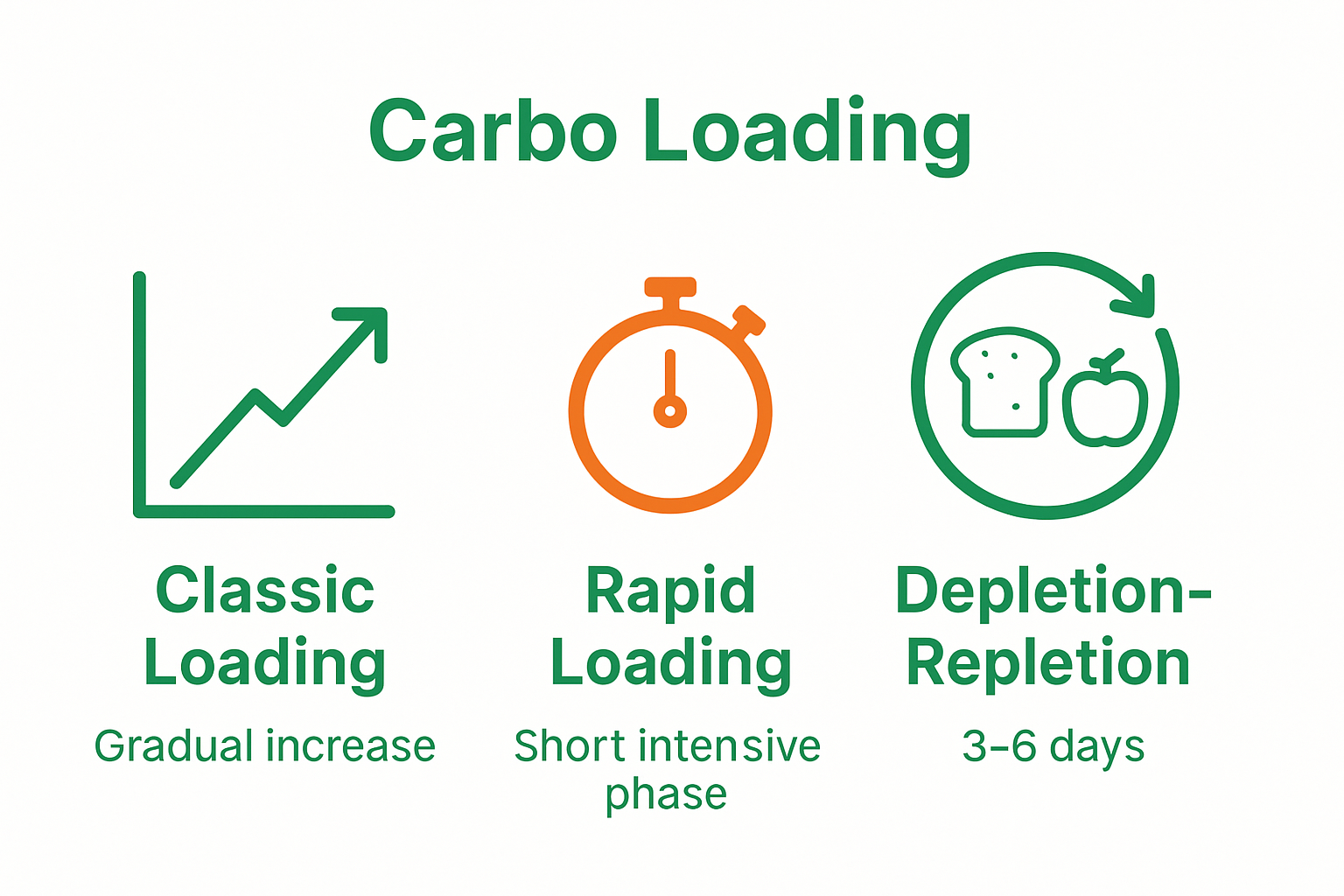
- Classic Loading: Gradual increase of carbohydrate intake over several days
- Rapid Loading: Dramatic carbohydrate intake in the final 24-48 hours
- Depletion-Repletion Method: Deliberately reducing then dramatically increasing carbohydrate consumption
- Modified Approach: Personalised strategy based on individual metabolic response
Successful implementation requires understanding individual physiological responses and carefully monitoring nutritional intake. By learning how to optimise workout nutrition naturally, athletes can fine-tune their carbohydrate loading strategy to achieve peak performance and sustained energy during demanding endurance events.

Key Benefits for Fitness and Sports Performance
Carbohydrate loading represents a critical nutritional strategy that significantly enhances athletic performance across multiple disciplines. According to Durham University, by maximising glycogen stores, athletes can sustain energy levels during endurance events and potentially mitigate the notorious performance decline known as ‘hitting the wall’.
The physiological advantages of strategic carbohydrate loading extend far beyond simple energy preservation. Athletes experience numerous performance-enhancing benefits, including improved muscular endurance, enhanced metabolic efficiency, and prolonged high-intensity output. These advantages are particularly pronounced in endurance sports such as marathon running, long-distance cycling, triathlon, and competitive swimming.
Key performance benefits include:
- Enhanced Glycogen Storage: Increased muscle energy reserves
- Delayed Muscle Fatigue: Extended time before experiencing performance degradation
- Improved Metabolic Efficiency: Better utilisation of stored energy
- Psychological Confidence: Reduced anxiety about energy depletion during competitions
To maximise these benefits, athletes should integrate sports nutrition basics for optimal results alongside their carbohydrate loading strategy. Proper implementation requires understanding individual metabolic responses, precise nutritional timing, and personalised dietary approaches tailored to specific athletic goals and physiological requirements.
Optimal Timing and Amounts for Carbo Loading
Precision is paramount when implementing a carbohydrate loading strategy. According to Durham University, athletes should aim for a targeted carbohydrate intake of 7-12g per kilogram of body weight daily, beginning approximately two days before an endurance event to effectively maximise glycogen stores.
The timing and quantity of carbohydrate consumption require nuanced understanding. Sport and Fitness Birmingham recommends a strategic approach involving an initial carbohydrate depletion phase four days before competition, followed by an intensive replenishment period featuring three to four carbohydrate-rich meals and snacks in the final 48 hours.
Key considerations for optimal carbo loading include:
- Body Weight Calculation: Precise carbohydrate intake based on individual weight
- Event Duration: Longer endurance events require more extensive loading
- Individual Metabolism: Personalised approach accounting for metabolic differences
- Nutritional Quality: Focus on complex carbohydrates with high nutrient density
To support your carbohydrate loading strategy and understand broader nutritional principles, athletes can explore building a comprehensive workout supplement routine that complements their nutritional preparation and performance goals.
Common Pitfalls and Safety Considerations
Carbohydrate loading, while a powerful nutritional strategy, demands careful implementation to avoid potential performance-limiting complications. Sport and Fitness Birmingham warns that improper carbohydrate loading can result in significant gastrointestinal discomfort and an undesirable sensation of heaviness, emphasising the critical importance of trialling the strategy during training to ensure individual physiological compatibility.
Athletes must navigate several potential risks associated with carbohydrate loading. These include digestive issues, unexpected weight fluctuations, and potential metabolic disruptions that could compromise performance. The body’s response to sudden nutritional changes varies widely, making personalised experimentation and gradual adaptation crucial for successful implementation.
Key safety considerations and potential pitfalls include:
- Digestive Sensitivity: Risk of bloating, discomfort, and reduced athletic performance
- Glycemic Response: Potential insulin sensitivity variations
- Hydration Balance: Importance of maintaining proper fluid intake
- Individual Variability: Recognising that one-size-fits-all approaches rarely work
To develop a comprehensive understanding of nutritional strategies that complement carbohydrate loading, athletes can explore key nutrients for muscle growth, ensuring a holistic approach to performance nutrition and minimising potential risks.
Fuel Your Endurance Success with Targeted Nutrition
Carbohydrate loading is a proven strategy to boost your muscle glycogen and delay fatigue for peak endurance. Yet, mastering this technique involves more than just eating carbs. Challenges like digestive discomfort and choosing the right timing can hold you back from reaching your full potential. That is why combining a well-planned carbo loading routine with reliable nutrition support is essential.

Discover powerful supplements and carefully selected products at MyGymSupplements.shop that perfectly complement your carbo loading strategy and overall fitness goals. From energy-boosting pre-workouts to performance recovery aids, our range is designed to support sustained energy, muscle replenishment, and metabolic efficiency. Take control of your preparation today and explore our expert guide to sports nutrition basics to learn how to optimise your intake naturally. Unlock your endurance potential now with the right nutritional allies by your side.
Frequently Asked Questions
What is carbohydrate loading?
Carbohydrate loading is a nutritional strategy aimed at maximising glycogen stores in muscles before endurance events, involving increased carbohydrate intake in the days leading up to the competition.
How do I implement a carbohydrate loading strategy?
To effectively implement carbohydrate loading, gradually reduce carbohydrate intake four days before the event, then dramatically increase it to 7-12g per kilogram of body weight in the final two days.
What are the benefits of carbohydrate loading for athletes?
Carbohydrate loading enhances energy reserves, delays muscle fatigue, improves endurance capacity, and helps sustain high-intensity performance during endurance events.
Are there any risks associated with carbohydrate loading?
Yes, improper carbohydrate loading can lead to gastrointestinal discomfort, unexpected weight fluctuations, and metabolic disruptions, so it’s important to trial your strategy during training and personalise your approach.

0 comments